


• India CSR Awards 2025
  • India CSR Leadership Summit
  • Guest Posts
  • Login
Thursday, April 23, 2026
India CSR
  • Home
  • Corporate Social Responsibility
    • Art & Culture
    • CSR Leaders
    • Child Rights
    • Culture
    • Education
    • Gender Equality
    • Around the World
    • Skill Development
    • Safety
    • Covid-19
    • Safe Food For All
  • Sustainability
    • Sustainability Dialogues
    • Sustainability Knowledge Series
    • Plastics
    • Sustainable Development Goals
    • ESG
    • Circular Economy
    • BRSR
  • Corporate Governance
    • Diversity & Inclusion
  • Interviews
  • SDGs
    • No Poverty
    • Zero Hunger
    • Good Health & Well-Being
    • Quality Education
    • Gender Equality
    • Clean Water & Sanitation – SDG 6
    • Affordable & Clean Energy
    • Decent Work & Economic Growth
    • Industry, Innovation & Infrastructure
    • Reduced Inequalities
    • Sustainable Cities & Communities
    • Responsible Consumption & Production
    • Climate Action
    • Life Below Water
    • Life on Land
    • Peace, Justice & Strong Institutions
    • Partnerships for the Goals
  • Articles
  • Events
  • हिंदी
  • More
    • Business
    • Finance
    • Environment
    • Economy
    • Health
    • Around the World
    • Social Sector Leaders
    • Social Entrepreneurship
    • Trending News
      • Important Days
        • Festivals
      • Great People
      • Product Review
      • International
      • Sports
      • Entertainment
    • Case Studies
    • Philanthropy
    • Biography
    • Technology
    • Lifestyle
    • Sports
    • Gaming
    • Knowledge
    • Home Improvement
    • Words Power
    • Chief Ministers
No Result
View All Result
  • Home
  • Corporate Social Responsibility
    • Art & Culture
    • CSR Leaders
    • Child Rights
    • Culture
    • Education
    • Gender Equality
    • Around the World
    • Skill Development
    • Safety
    • Covid-19
    • Safe Food For All
  • Sustainability
    • Sustainability Dialogues
    • Sustainability Knowledge Series
    • Plastics
    • Sustainable Development Goals
    • ESG
    • Circular Economy
    • BRSR
  • Corporate Governance
    • Diversity & Inclusion
  • Interviews
  • SDGs
    • No Poverty
    • Zero Hunger
    • Good Health & Well-Being
    • Quality Education
    • Gender Equality
    • Clean Water & Sanitation – SDG 6
    • Affordable & Clean Energy
    • Decent Work & Economic Growth
    • Industry, Innovation & Infrastructure
    • Reduced Inequalities
    • Sustainable Cities & Communities
    • Responsible Consumption & Production
    • Climate Action
    • Life Below Water
    • Life on Land
    • Peace, Justice & Strong Institutions
    • Partnerships for the Goals
  • Articles
  • Events
  • हिंदी
  • More
    • Business
    • Finance
    • Environment
    • Economy
    • Health
    • Around the World
    • Social Sector Leaders
    • Social Entrepreneurship
    • Trending News
      • Important Days
        • Festivals
      • Great People
      • Product Review
      • International
      • Sports
      • Entertainment
    • Case Studies
    • Philanthropy
    • Biography
    • Technology
    • Lifestyle
    • Sports
    • Gaming
    • Knowledge
    • Home Improvement
    • Words Power
    • Chief Ministers
No Result
View All Result
India CSR
No Result
View All Result
Home Sustainability

India’s Carbon Market: Driving Green Growth

India CSR by India CSR
July 4, 2025
in Sustainability
Reading Time: 6 mins read
India CSR
Share Share Share Share
WhatsApp icon
WhatsApp — Join Us
Instant updates & community
Google News icon
Google News — Follow Us
Get our articles in Google News feed

India Forges Ahead: Paving the Way for a Robust Carbon Market to Drive Climate Action and Sustainable Growth

India is rapidly emerging as a key player in global climate finance and carbon pricing frameworks among emerging economies. Actively developing a comprehensive rate-based Emissions Trading System (ETS) and associated voluntary carbon crediting mechanisms, this strategic move represents a pivotal shift in the nation’s climate policy architecture. Underpinned by a clear policy roadmap and robust domestic backing, India aims to incentivize emission reductions, mobilize private capital, and meticulously balance its developmental needs with crucial environmental sustainability objectives.

The Foundation of Carbon Pricing in India

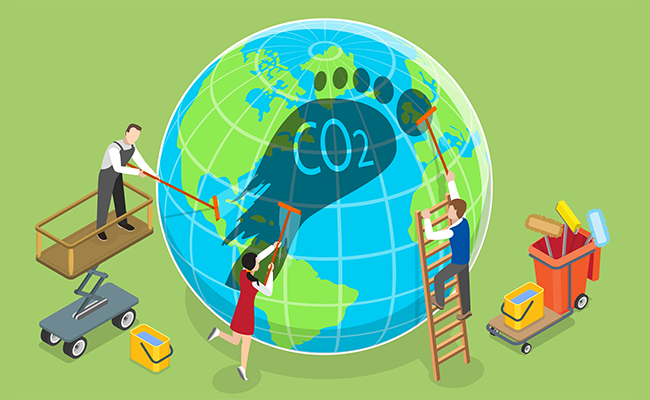
Carbon pricing is a sophisticated policy tool designed to impose a financial cost on greenhouse gas emissions, primarily carbon dioxide. Its fundamental purpose is to incentivize pollution reduction and foster a transition towards cleaner energy sources by making emitters financially accountable for the environmental damage they cause. India’s swift advancement towards a structured and regulated carbon pricing ecosystem has been globally recognized, notably by the World Bank in its “State and Trends of Carbon Pricing 2025” report. India stands prominently among leading middle-income and emerging economies, including Brazil and Türkiye, that are making significant progress in carbon pricing implementation.

Admissions Open for BBA in CSR, Sustainability and ESG

***

India’s Pioneering Rate-Based Emissions Trading System (ETS)

At the core of India’s evolving carbon market strategy is its rate-based Emissions Trading System (ETS), which gained legal establishment with the adoption of the Carbon Credit Trading Scheme (CCTS) in July 2024. Unlike cap-based systems that impose an absolute limit on total emissions, a rate-based ETS allocates a performance benchmark to individual entities, effectively setting a limit on their net emissions intensity. This innovative approach offers crucial flexibility in navigating future growth uncertainty and addressing international competitiveness concerns for a developing economy like India.

The CCTS is meticulously designed to reduce greenhouse gas (GHG) emissions through carbon pricing, integrating both a compliance mechanism for obligated entities (primarily industrial sectors) and an offset mechanism for voluntary participation. Initially, this national ETS will encompass nine energy-intensive industrial sectors. Under this pioneering scheme, Credit Certificates will be issued to facilities that outperform benchmark emissions intensity levels, thereby providing a strong incentive for decarbonization efforts across the Indian economy. The CCTS has successfully laid the essential institutional framework for the broader Indian Carbon Market (ICM).

***

Cultivating a Domestic Voluntary Carbon Market

In parallel with its compliance ETS, India is dedicated to developing a robust domestic voluntary crediting mechanism. This market is specifically tailored for non-ETS sectors, encompassing areas such as agriculture, afforestation, and clean cooking, with the overarching objective of mobilizing private capital for climate-positive projects.

A significant stride in this direction occurred on March 28, 2025, when India’s Ministry of Power approved eight distinct crediting methodologies for generating voluntary carbon credits. These crucial methodologies include:

  • Renewable Energy
  • Green Hydrogen Production
  • Industrial Energy Efficiency

***

Mangrove Afforestation and Reforestation

This approval also signifies a planned gradual transition from the current market-based energy efficiency program, Perform, Achieve, and Trade (PAT) scheme, to these new programs, set to occur in 2025. The PAT scheme, effectively implemented by the Bureau of Energy Efficiency (BEE) since 2012, has already demonstrated remarkable success, reducing emissions intensity in designated sectors by 15–25% over its lifecycle.

The Pillars of Domestic Policy Backing India’s ambitious carbon market initiatives are firmly anchored by a foundation of strong domestic policy and legal frameworks:

  • Energy Conservation (Amendment) Act, 2022: This pivotal legislation provided the legal basis for India’s carbon market, empowering the central government to issue carbon credit certificates.
  • National Green Hydrogen Mission: This critical mission is substantially supported by the carbon credit methodologies approved in March 2025. It establishes an ambitious target for India to produce 5 million metric tonnes (MMT) of green hydrogen per annum by 2030.
  • Renewable Energy Targets: Furthermore, India is committed to installing 500 GW of non-fossil fuel-based capacity by 2030, underscoring its profound commitment to a clean energy transition.

***

Strengthening Governance and Market Readiness

To ensure the effective establishment and optimal operation of the Indian Carbon Market, the government has undertaken significant preparatory steps, emphasizing a balance between developmental needs and lower carbon emissions through Common but Differentiated Responsibilities and Respective Capabilities (CBDR-RC) principles. Key institutional structures have been robustly put in place:
National Steering Committee for the Indian Carbon Market (NSCICM)

This committee serves as the highest authority overseeing the establishment and functioning of India’s carbon market. Composed of representatives from various ministries, state governments, and industry experts, the NSC-ICM provides crucial recommendations to the Bureau of Energy Efficiency on a range of critical areas:

  • Institutionalizing the carbon market, including procedures, rules, and regulations.
  • Formulating GHG emission intensity targets for obligated entities.
  • Setting guidelines for credit issuance, validity, renewal, and international trading.
  • Constituting working groups and monitoring market operations. The formation of the NSCICM, alongside the BEE under the Ministry of Power, signifies a robust governance framework.

***

Bureau of Energy Efficiency (BEE)

  • Established in 2002 under India’s Energy Conservation Act (2001), BEE is a quasi-regulatory body explicitly mandated to spearhead national energy efficiency efforts. Operating as a “systems operator,” BEE employs a mix of market-based and regulatory tools to promote energy conservation. It develops policies, sets standards, monitors performance, and enforces compliance across key sectors, including industry, buildings, transport, and agriculture. Its principal strategies include:
  • Standards and labelling for appliances and equipment.
  • Energy codes for buildings.
  • Efficiency norms for industries.
  • Public awareness and capacity-building programs.

Broader Climate Initiatives: Mission LiFE and Green Credit Program Beyond direct carbon market mechanisms, India is championing broader initiatives that actively promote sustainable living and environmental conservation, further enhancing its carbon market readiness:

Mission LiFE (Lifestyle for Environment): Launched by India, this is a global movement designed to promote sustainable living through mindful, eco-friendly daily habits, encouraging individuals worldwide to become “Pro-Planet People”. Mission LiFE aims to gently nudge behavioral change in areas like saving energy, reducing plastic, and composting, while also influencing markets and driving policy reforms for environmental sustainability. Its ambitious goals include mobilizing 1 billion people globally by 2028 to take individual and collective action for environmental protection, transforming 80% of Indian villages and urban bodies into green communities, and driving measurable climate impact.

Green Credit Program (GCP): Notified on October 12, 2023, under the Environment Protection Act, 1986, the GCP establishes a voluntary, market-based mechanism to incentivize tree plantation on degraded forest lands. Participants receive Green Credits, with the entire process managed via a digital portal and registry.

How it works: Forest departments register degraded forest parcels into a dynamic “land bank” on the GCP portal, from which participants choose plantation blocks. Government bodies, PSUs, NGOs, companies, philanthropies, societies, and individuals registered on the portal can participate. After planting within two years and maintaining for 10 years, credits are awarded based on the number of trees planted, verified through digital tracking, field monitoring, and third-party audits.

Objectives: The GCP’s core goals are to expand India’s forest/tree cover, build a comprehensive inventory of degraded land, and reward voluntary “pro‑planet” actions via Green Credits.

India’s Global Standing in Carbon Pricing India’s strategic choice of a rate-based ETS positions it alongside other significant economies in the global carbon pricing landscape:

India: Rate-based, covering 9 industrial sectors, currently in the regulatory stage.
China: Operates a rate-based ETS covering power, cement, steel, and aluminum sectors, and is operational.
Brazil: Has a cap-based ETS with a law passed in December 2024, set to cover all sectors except agriculture.
Indonesia: Features a rate-based ETS, which expanded its coverage in 2024 to include Grid-connected coal/gas power plants, and is operational. This comparison underscores India’s tailored and pragmatic approach, emphasizing flexibility for a developing economy balancing rapid growth with crucial decarbonization commitments.

(India CSR)
Ambedkar Chamber
ADVERTISEMENT
ESG Professional Network
ADVERTISEMENT
India Sustainability Awards 2026
ADVERTISEMENT
India CSR Image 1 India CSR Image 2
Tags: Indian Carbon Market

India CSR Day CSR, Sustainability, and ESG success stories hindustan zinc
ADVERTISEMENT
India CSR

India CSR

India CSR is the largest media on CSR and sustainability offering diverse content across multisectoral issues on business responsibility. It covers Sustainable Development, Corporate Social Responsibility (CSR), Sustainability, and related issues in India. Founded in 2009, the organisation aspires to become a globally admired media that offers valuable information to its readers through responsible reporting.

Related Posts

Varroc Reaffirms Commitment to Kham River Restoration and Sustainability on World Earth Day
Sustainability

Varroc Reaffirms Commitment to Kham River Restoration and Sustainability on World Earth Day

PepsiCo India Boosts Water Security, Restores 1.48 Billion Litres
Sustainability

PepsiCo India Boosts Water Security, Restores 1.48 Billion Litres

DBS Sustainability Report
Sustainability

DBS Bank’s Sustainable Financing Reaches SGD 102 billion in 2025, Up 14% Year-on-Year

Bisleri
Sustainability

Bisleri International, ORF Release Water Governance Report for Viksit Bharat 2047

Acronis Releases 2025 ESG Report Highlighting Progress in Sustainability, Workforce Engagement, and Responsible Technology
Sustainability

Acronis Releases 2025 ESG Report Highlighting Progress in Sustainability, Workforce Engagement, and Responsible Technology

Crore Green Infrastructure Bond. Image: India CSR
ESG

Bank of Baroda Sets ESG Milestone with ₹10,000 Crore Green Infrastructure Bond

Load More
BBA - CSR, Sustainability and ESG, Rungta International Skills University Bhilai
ADVERTISEMENT

LATEST NEWS

Non-Stick Kadai vs Regular Kadai: Pros, Cons & What to Buy?

How to Choose the Right Home Locker Size for Your Documents and Jewellery

Design Exams Are Testing Thinking, Not Drawing Skills, Say Creative Edge

Varroc Reaffirms Commitment to Kham River Restoration and Sustainability on World Earth Day

Top NBFCs in India Driving Growth through Technological Innovation

OOTER Launches to Build India’s First Structured Marketplace for Outdoor Advertising

Ambedkar Chamber
ADVERTISEMENT

TOP NEWS

Neela Sangameshwar Joins Lithium Urban Technologies as Head – P&L After Key Leadership Role at Delhivery

Genius30 Unveils Large-Scale Public Opinion Study Using Tech-Driven Methodology

Digital Marketing Services: What Businesses Actually Need vs. What Agencies Sell

Bennett University Opens Admissions for Online MBA Programme Focused on Flexible, Future-Ready Learning

Hindustan Zinc Launches Rajasthan’s First EV Bus Fleet, Accelerating Green Mobility

The Essential Office Cleaning Checklist for Daily Maintenance

Load More
India Sustainability Awards 2026
ADVERTISEMENT
Ad 1 Ad 2 Ad 3
ADVERTISEMENT
Economy India Largest Media on Indian Economy and Business
ADVERTISEMENT

Interviews

R. Pavithra Kumar, CEO, JSW Foundation
Interviews

Redefining CSR and Driving Sustainable Social Impact: An Interview with R. Pavithra Kumar of JSW Foundation

by India CSR

Exploring impact-driven CSR models focused on skilling, sustainability, and inclusive growth

Read moreDetails
Jyoti Sagar, Founder Trustee, Genesis Foundation

Interview: Jyoti Sagar on 25 Years of Saving Young Lives at Genesis Foundation

Satish Singh, Chief People Officer at PNB Housing Finance

Interview: Satish Singh on ESG Leadership and CSR Impact at PNB Housing Finance

Ajeet Kumar Singh, Co-Founder and Managing Director of SAVE Solutions

Driving Financial Inclusion: Ajeet Kumar Singh on SAVE Solutions’ Growth Journey

Load More
ESG Professional Network
ADVERTISEMENT
STEM Learning STEM Learning STEM Learning
ADVERTISEMENT
Facebook Twitter Youtube LinkedIn Instagram
India CSR Logo

India CSR is the largest tech-led platform for information on CSR and sustainability in India offering diverse content across multisectoral issues. It covers Sustainable Development, Corporate Social Responsibility (CSR), Sustainability, and related issues in India. Founded in 2009, the organisation aspires to become a globally admired media that offers valuable information to its readers through responsible reporting. To enjoy the premium services, we invite you to partner with us.

Follow us on social media:


Dear Valued Reader

India CSR is a free media platform that provides up-to-date information on CSR, Sustainability, ESG, and SDGs. We need reader support to continue delivering honest news. Donations of any amount are appreciated.

Help save India CSR.

Donate Now

Donate at India CSR

  • About India CSR
  • Team
  • India CSR Awards 2026
  • India CSR Leadership Summit
  • Partnership
  • Guest Posts
  • Services
  • ESG Professional Network
  • Content Writing Services
  • Business Information
  • Contact
  • Privacy Policy
  • Terms of Use
  • Donate

Copyright © 2025 - India CSR | All Rights Reserved

Welcome Back!

Login to your account below

Forgotten Password?

Retrieve your password

Please enter your username or email address to reset your password.

Log In
INDIA CSR DAY
Watch Now
No Result
View All Result
  • Home
  • Corporate Social Responsibility
    • Art & Culture
    • CSR Leaders
    • Child Rights
    • Culture
    • Education
    • Gender Equality
    • Around the World
    • Skill Development
    • Safety
    • Covid-19
    • Safe Food For All
  • Sustainability
    • Sustainability Dialogues
    • Sustainability Knowledge Series
    • Plastics
    • Sustainable Development Goals
    • ESG
    • Circular Economy
    • BRSR
  • Corporate Governance
    • Diversity & Inclusion
  • Interviews
  • SDGs
    • No Poverty
    • Zero Hunger
    • Good Health & Well-Being
    • Quality Education
    • Gender Equality
    • Clean Water & Sanitation – SDG 6
    • Affordable & Clean Energy
    • Decent Work & Economic Growth
    • Industry, Innovation & Infrastructure
    • Reduced Inequalities
    • Sustainable Cities & Communities
    • Responsible Consumption & Production
    • Climate Action
    • Life Below Water
    • Life on Land
    • Peace, Justice & Strong Institutions
    • Partnerships for the Goals
  • Articles
  • Events
  • हिंदी
  • More
    • Business
    • Finance
    • Environment
    • Economy
    • Health
    • Around the World
    • Social Sector Leaders
    • Social Entrepreneurship
    • Trending News
      • Important Days
      • Great People
      • Product Review
      • International
      • Sports
      • Entertainment
    • Case Studies
    • Philanthropy
    • Biography
    • Technology
    • Lifestyle
    • Sports
    • Gaming
    • Knowledge
    • Home Improvement
    • Words Power
    • Chief Ministers

Copyright © 2025 - India CSR | All Rights Reserved

This website uses cookies. By continuing to use this website you are giving consent to cookies being used. Visit our Privacy and Cookie Policy.

