


New analysis of 28 influential Chinese institutional investors with 115.6 trillion CNY (US$17 trillion) in collective assets under management (AUM).
NEW DELHI: Chinese institutional investors are increasing commitments to climate solutions and transition finance, according to a China-focused analysis released by the Asia Investor Group on Climate Change (AIGCC). The assessment covered 28 Chinese institutional investors, including 12 asset owners and 16 asset managers, with combined assets under management of CNY 115.6 trillion, or about US$17 trillion. It forms part of AIGCC’s State of Investor Climate Transition in Asia 2026 report, which assessed 240 investors across Asia.
The report found that 47% of Chinese investors have committed to increasing investments in climate solutions or transition finance, compared with 20% in 2024. The 27-percentage-point rise places China broadly in line with the 48% recorded across the wider Asian investor sample. Asset owners showed stronger disclosure of climate-solutions activity than asset managers. Seventy-five per cent of asset owners disclosed full or partial activity, compared with 26% of asset managers, the report said.
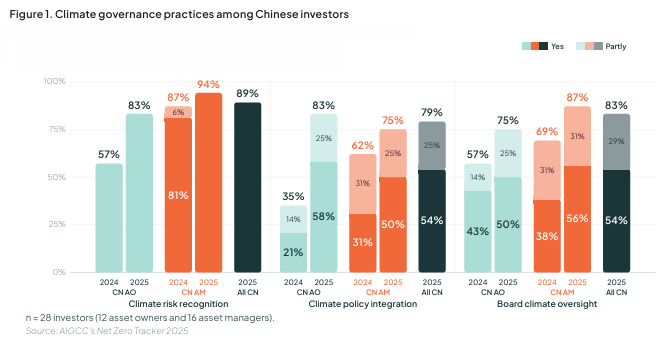
The review recorded progress in climate governance and disclosure. Seventy-nine per cent of assessed investors have integrated climate considerations into investment policies, up 29 percentage points and above the Asia-wide average of 75%. Sixty per cent publish climate-related disclosures aligned with international standards, including International Sustainability Standards Board framework. Meanwhile, 64% disclose physical climate risk, a 24-percentage-point increase and above the 52% Asia-wide average.
AIGCC said net-zero commitments and interim emissions targets remain relatively uncommon among the Chinese investors assessed. It also identified corporate engagement and investor stewardship as developing areas, where adoption remained below the broader Asian sample. Rebecca Mikula-Wright, AIGCC CEO, said China is a global leader in renewable technologies and low-carbon industrial development. She said investors have an important role in directing capital towards the transition while working with companies and policymakers to strengthen economic resilience.
The report comes as climate hazards continue to produce financial losses in China.
Overall, the Chinese investor cohort has made significant in important aspects of climate governance and disclosure:
- Climate policy integration: 79% of investors have now integrated climate considerations into their investment policies. (a 29-pp increase, ahead of overall Asia investor average of 75%)
- Aligned climate-related disclosures: 60% of investors now publish climate-related disclosures in line with international standards, for example, International Sustainability Standards Board (ISSB). (a 20pp increase,
in line withoverall Asia investor average of 59%) - Physical climate risk: 64% of investors now disclose physical climate risk as they recognise the financial impacts of extreme weather events on their portfolios. (24pp increase, ahead of overall Asia investor average of 52%)
Despite this progress, AIGCC has identified two areas where Chinese investors have further to go:
- Net-zero commitments and interim emissions targets remain relatively uncommon among the Chinese investors assessed. At the same time, China’s policy and investment framework has placed considerable emphasis on financing the real-economy transition. The relationship between these two observations requires further examination.
Corporate engagement and investor stewardship remain developing areas of practice, based on the indicators covered by this assessment, adoption among Chinese investors is lower than the average recorded across the Asian investor sample.
A spokesperson at Southern Asset Management said: “We integrate our climate commitments into our broader investment approach, while maintaining diversified portfolios and strategies. As part of this approach, we selectively seek opportunities in climate solutions, particularly in grid infrastructure, green infrastructure upgrades, and low-carbon data centre REITs. These investments have the potential to support the transition of China’s real economy while generating sustainable, long-term value for our beneficiaries”.
Rebecca Mikula-Wright, AIGCC CEO, said: “China is on the front foot in developing climate solutions. They are a global leader – championing renewable technologies and low-carbon industrial development. We’re pleased to see Chinese investors follow through on their commitments by allocating the capital needed for such investments and the numbers year on year show this progress. “The financial consequences of climate-related hazards are already evident across China, from damage to property and infrastructure to disruption of businesses, communities and supply chains. The unusually active typhoon period reinforces the urgency of turning climate-risk recognition into practical investment, stewardship and resilience measures. “Chinese investors have an important role in directing capital towards the transition while working with companies and policymakers to strengthen the resilience of China’s economy. “AIGCC plans to ensure Chinese investors are well supported throughout this journey – through peer-to-peer knowledge sharing, capacity building, and collaboration with other critical stakeholders to the climate transition such as businesses and regulators.