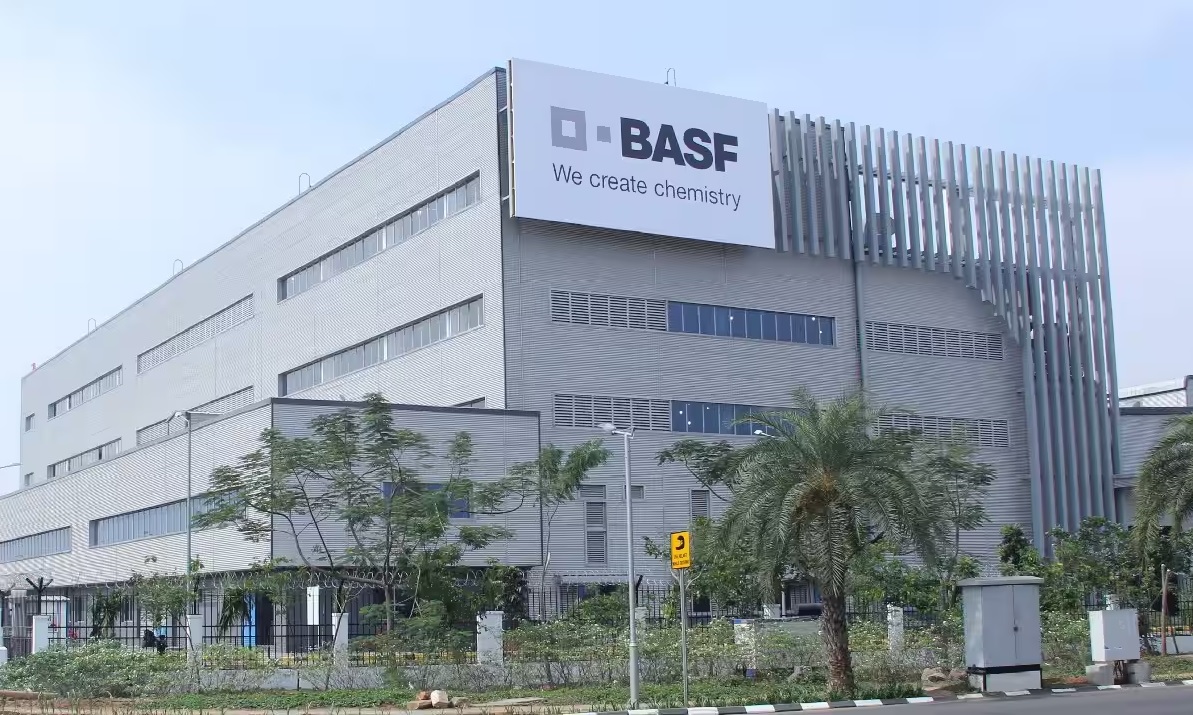


The chemicals company spent Rs 4.07 crore from its current-year CSR obligation and utilised Rs 11.54 crore from earlier-year funds.
MUMBAI (India CSR): BASF India Limited, a chemicals company, transferred Rs 8.86 crore from its FY 2025-26 Corporate Social Responsibility (CSR) obligation to a designated Unspent CSR Account for ongoing projects, while spending Rs 4.07 crore directly during the year, according to the company’s annual report and standalone financial disclosures.
The company’s prescribed CSR obligation for FY 2025-26 stood at Rs 12.93 crore, based on an average net profit of Rs 646.50 crore calculated under Section 135 of the Companies Act, 2013.
BASF India also utilised Rs 11.54 crore during the year from CSR funds carried forward from earlier financial years for ongoing projects. As a result, the company’s total actual CSR expenditure during FY 2025-26 stood at Rs 15.61 crore when current-year spending and earlier-year fund utilisation are considered together.
The Rs 8.86 crore transferred on April 8, 2026, remains earmarked for eligible ongoing CSR projects and cannot be treated as general corporate funds.
CSR Obligation
Under Section 135 of the Companies Act, eligible companies are required to spend at least 2% of their average net profits from the three immediately preceding financial years on approved CSR activities.
For BASF India, the average net profit used for this calculation stood at Rs 646.50 crore.
This resulted in a CSR obligation of Rs 12.93 crore for FY 2025-26.
During the year, the company spent Rs 4.07 crore directly against this obligation.
The remaining Rs 8.86 crore related to ongoing projects and was transferred to an Unspent CSR Account in accordance with Section 135(6) of the Companies Act.
The transfer was made on April 8, 2026, within the period prescribed under law.
Unspent Account
An Unspent CSR Account is used for amounts earmarked for approved ongoing projects that are not fully spent within the financial year.
Funds transferred to such an account remain dedicated to CSR and must be utilised for the specified ongoing projects within the prescribed period.
In BASF India’s case, Rs 8.86 crore was transferred for multi-year projects that were still under implementation at the end of FY 2025-26.
The transfer should therefore be understood as an accounting and compliance mechanism for ongoing CSR projects rather than as an amount returned to the company for unrestricted use.
The source material does not provide a complete project-wise reconciliation of the Rs 8.86 crore transferred during the year. Such a breakdown would help show which projects received future funding and their expected completion timelines.
Prior-Year Funds
BASF India also continued to utilise funds transferred to separate CSR accounts in earlier financial years.
At the beginning of FY 2025-26, the company reported a balance of Rs 2.95 crore in its separate CSR bank account.
Additional amounts of Rs 12.22 crore linked with earlier-year ongoing projects were deposited during the year, according to the supplied information.
From these funds, BASF India utilised Rs 11.54 crore during FY 2025-26.
The closing balance in the separate CSR bank account stood at Rs 3.63 crore as of March 31, 2026.
This illustrates the multi-year nature of ongoing CSR projects, where funds may be transferred in one year and utilised in subsequent reporting periods based on implementation milestones.
ALSO READ | BASF India Spends Rs 15.61 Cr on CSR in FY 2025-26, Focuses on Education, WASH and Climate Action
Total CSR Outlay
The company reported Rs 4.07 crore as direct spending from its FY 2025-26 obligation.
It also deployed Rs 11.54 crore from prior-year CSR funds during the same year.
Taken together, this resulted in actual CSR expenditure of Rs 15.61 crore during FY 2025-26.
The higher actual expenditure compared with the current-year obligation of Rs 12.93 crore does not mean that the company overspent the FY 2025-26 obligation by the full difference.
A substantial part of the Rs 15.61 crore represented utilisation of CSR amounts already transferred in previous financial years.
For accurate reporting, current-year obligation, current-year expenditure and utilisation of earlier-year funds should therefore be presented separately.
Education Projects
Education and skilling were among the major areas covered by ongoing CSR projects.
Under the iTeach initiative in Navi Mumbai, Maharashtra, BASF India reported a total project allocation of Rs 1.66 crore.
Of this, Rs 71.30 lakh was spent during the year and Rs 94.20 lakh was transferred for future implementation.
The programme focused on school education, teaching support and digital learning.
A separate Customer Collaboration Skill Development programme in Pune had an allocation of Rs 60.90 lakh.
The company spent Rs 30.40 lakh during the year, while Rs 30.50 lakh remained earmarked for future project milestones.
BASF India also reported spending Rs 1.54 crore on scholarships, education support and DIY learning kits across locations including Mumbai, Mangalore, Bengaluru and Dahej.
Science Education
The company continued its Kids’ Lab 3.0 programme, which uses hands-on experiments to introduce school students to chemistry and science.
BASF India reported expenditure of about Rs 1.70 crore on the programme in Nashik.
The initiative reportedly reached more than 7,500 students.
Another programme, ChemAmaze 2.0, reached approximately 22,000 students through chemistry-based learning activities.
These reach figures indicate the scale of participation, although additional data on learning outcomes, attendance, school retention and academic progression would provide stronger evidence of long-term educational impact.
WASH Projects
Water, sanitation and hygiene remained another focus area.
Under the Sulabh Sanitation Mission in Bharuch and Dahej, Gujarat, the company spent Rs 27.20 lakh on public sanitation facilities.
The project was reported to serve more than 7,000 users annually.
A separate WASH and school facilities programme in Mangalore, Karnataka, had an allocation of Rs 58 lakh, which was reported as fully utilised during the financial year.
The company also installed seven school water purification systems across Dahej and Mangalore.
These facilities reportedly benefit around 1,200 children daily.
For WASH interventions, future reporting could include water quality indicators, usage frequency, maintenance arrangements and sanitation-related health outcomes.
Circular Economy
BASF India also supported an environmental sustainability initiative in Calicut, Kerala, focused on recycling polyurethane footwear waste.
The company spent Rs 7.50 lakh on the programme.
Waste polyurethane material was collected, processed into rebounded foam products and supplied to schools and community institutions.
The initiative combined waste recovery with community use.
The source material does not provide the total volume of polyurethane waste processed or diverted from disposal.
Such information would strengthen the environmental impact assessment of the project.
Green Power
The company’s annual report also refers to a separate operational sustainability investment in Clean Max Amalfi Private Limited.
BASF India acquired a 26% equity stake for Rs 6.59 crore to access renewable electricity from a hybrid solar and wind project.
The arrangement was linked with approximately 28,854 MWh of green power.
This investment is relevant to the company’s ESG and decarbonisation strategy but should be distinguished from statutory CSR unless specifically included in the CSR annexure.
Operational investments in renewable power generally relate to business sustainability rather than community-focused CSR expenditure.
CSR Governance
BASF India’s CSR Committee was chaired by Independent Director Bahram Vakil.
Other members included Independent Director Sonia Singh and Manufacturing Head and Whole-time Director Anil Kumar Choudhary.
The committee met on July 30, 2025, and February 13, 2026.
Its responsibilities included reviewing CSR projects, monitoring implementation, recommending annual action plans and overseeing fund utilisation.
The company’s financial statements were audited by Deloitte Haskins & Sells LLP, according to the source material.
The Business Responsibility and Sustainability Report also referred to independent assurance by TÜV SÜD South Asia Private Limited for relevant sustainability parameters.
These assurance mechanisms should, however, be distinguished from a project-level CSR impact assessment.
Beneficiary Reach
BASF India’s various CSR programmes reportedly reached more than 50,000 people during the year.
ChemAmaze 2.0 reached around 22,000 students, Kids’ Lab 3.0 reached approximately 7,500 students, and the Bharuch sanitation programme served more than 7,000 users annually.
The Gadchiroli livelihood programme covered 5,657 people, while smart-board initiatives reached around 5,000 students.
The polyurethane recycling programme reportedly reached about 4,000 people, and the Mangalore WASH programme covered around 2,500 beneficiaries.
These figures should not automatically be treated as unique beneficiaries because some participants may have been covered under more than one programme.
A consolidated methodology for counting unique beneficiaries would make the reporting more precise.
Key Facts
| Particulars | Details |
|---|---|
| Company | BASF India Limited |
| Financial Year | FY 2025-26 |
| Business Sector | Chemicals |
| Average Net Profit for CSR | Rs 646.50 Cr |
| Prescribed CSR Obligation | Rs 12.93 Cr |
| Current-Year Direct CSR Spend | Rs 4.07 Cr |
| Transferred to Unspent CSR Account | Rs 8.86 Cr |
| Transfer Date | April 8, 2026 |
| Earlier-Year CSR Funds Utilised | Rs 11.54 Cr |
| Total Actual CSR Expenditure | Rs 15.61 Cr |
| Opening Separate CSR Account Balance | Rs 2.95 Cr |
| Prior-Year Funds Deposited During Year | Rs 12.22 Cr |
| Closing Separate CSR Account Balance | Rs 3.63 Cr |
| iTeach Project Allocation | Rs 1.66 Cr |
| iTeach Spend | Rs 71.30 lakh |
| iTeach Amount Carried Forward | Rs 94.20 lakh |
| Skill Development Allocation | Rs 60.90 lakh |
| Skill Development Spend | Rs 30.40 lakh |
| Skill Development Balance | Rs 30.50 lakh |
| Scholarships and Learning Support | Rs 1.54 Cr |
| Kids’ Lab Spending | About Rs 1.70 Cr |
| Sulabh Sanitation Spend | Rs 27.20 lakh |
| Mangalore WASH Programme | Rs 58 lakh |
| PU Recycling Spend | Rs 7.50 lakh |
Frequently Asked Questions
Why did BASF India transfer Rs 8.86 crore to an Unspent CSR Account?
The amount was earmarked for approved ongoing CSR projects that were not fully completed during FY 2025-26.
What was BASF India’s CSR obligation for FY 2025-26?
The company’s prescribed CSR obligation stood at Rs 12.93 crore.
How much did BASF India spend directly from the current-year obligation?
The company spent Rs 4.07 crore during FY 2025-26 from the current-year CSR obligation.
Why was total CSR expenditure Rs 15.61 crore?
The figure includes Rs 11.54 crore utilised from earlier-year CSR funds in addition to Rs 4.07 crore spent from the current-year obligation.
When was the unspent amount transferred?
The Rs 8.86 crore was transferred to the designated Unspent CSR Account on April 8, 2026.
What were the main CSR focus areas?
The programmes covered education, skilling, WASH, livelihoods, environmental sustainability and circular economy initiatives.
Copyright@India CSR®