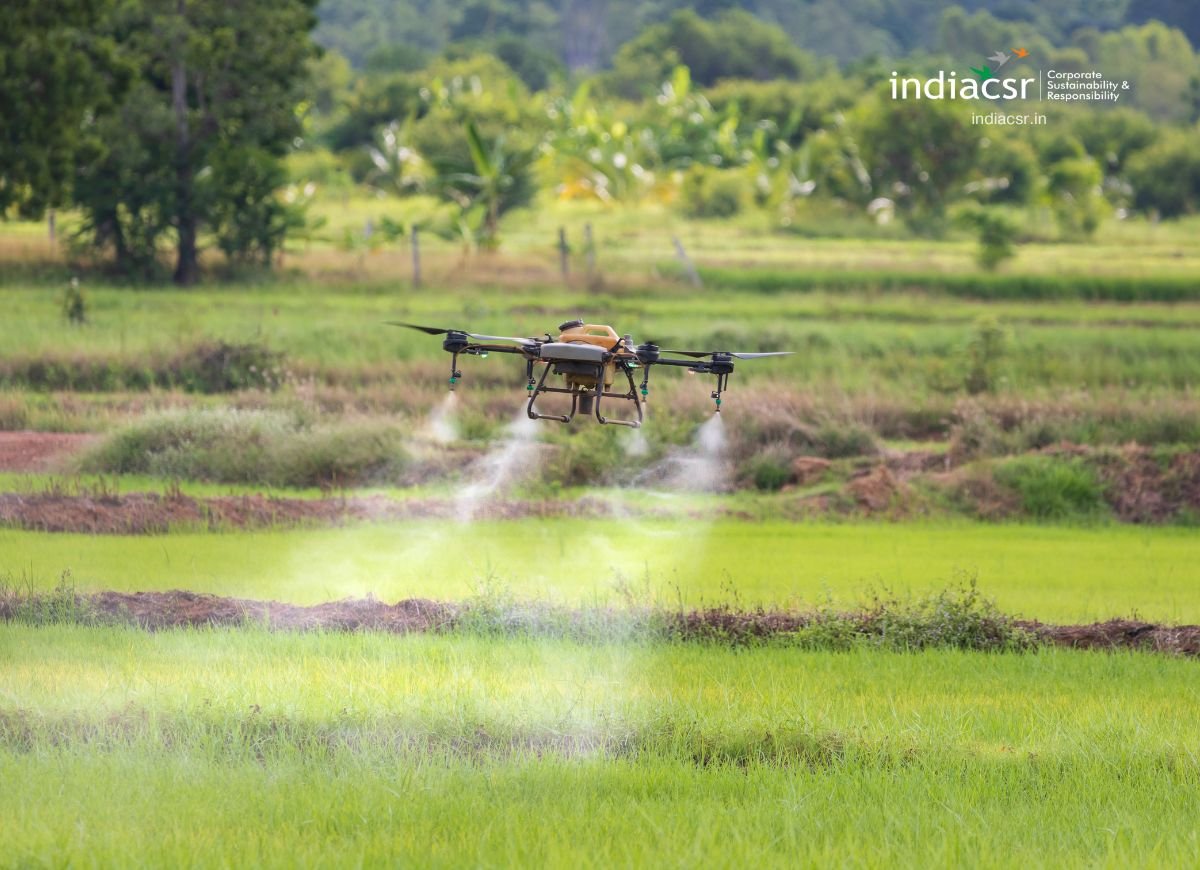



The reduction of GST on drones to a uniform 5% marks a decisive moment in India’s technological journey.
India is witnessing a turning point in its journey toward becoming a global leader in drone technology. Once considered niche, drones are today transforming agriculture, logistics, infrastructure, and defence operations. They are no longer futuristic gadgets but practical tools driving efficiency, safety, and productivity.
From spraying pesticides in farms to aiding rescue missions during natural disasters, drones have proven their versatility. Recognising this, the Government of India has been aggressively working to build a robust ecosystem for the drone industry. The latest move—rationalising the Goods and Services Tax (GST) on drones—has the potential to accelerate adoption, boost domestic manufacturing, and create thousands of jobs.

GST Reform: The Big Step Forward
At the 56th Meeting of the GST Council held on September 3, 2025, the government announced a landmark decision: GST on unmanned aerial vehicles (drones) will now be charged at a uniform 5% rate, slashed from the earlier 18% and 28%.
This seemingly technical move carries far-reaching implications. By removing ambiguities in classification and taxation, the reform provides long-term clarity and stability to the drone industry. More importantly, it makes drones affordable for end-users—farmers, logistics operators, survey agencies, and government departments—opening the door to mass adoption.
Industry experts have hailed the decision as a “game-changer” that aligns with the broader Make in India and Atmanirbhar Bharat missions.
Why GST Reduction Matters
Ending Classification Disputes
Until now, drones fitted with cameras attracted a higher GST of 28%, while those without cameras were taxed at 18%. This led to frequent disputes, confusion, and litigation. The new flat 5% rate brings parity and ensures policy certainty.
Boosting Domestic Manufacturing
Lower GST will reduce costs for manufacturers and buyers alike. With government support already coming through the Production Linked Incentive (PLI) Scheme for drones, the new tax regime will complement existing efforts and make India an attractive hub for drone production.
Driving Adoption Across Sectors
Affordable drones will encourage industries and state governments to scale up usage in agriculture, mining, logistics, infrastructure, and defence. As demand rises, the ecosystem for innovation, training, and services will expand.
Government’s Broader Push for Drone Ecosystem
The GST reform is not an isolated measure. It fits into a larger framework of policies and programmes aimed at making India a global drone hub by 2030.
Key Policy Initiatives
- Drone Rules, 2021: Liberalised to ease compliance and encourage innovation.
- DigitalSky Platform: A single-window system for drone registration and flight permissions.
- PLI Scheme for Drones: Financial incentives to boost local manufacturing of drones and components.
- Drone Shakti Scheme: Encourages startups to provide Drone-as-a-Service (DaaS) solutions.
- Skill Development: DGCA-approved training institutes are building a pool of certified drone pilots and technicians.
- Bharat Drone Mahotsav: A platform to showcase indigenous innovations and promote global collaboration.
These steps collectively aim to position India not just as a consumer but as a leading producer and exporter of drone technologies.
Sectoral Benefits of the GST Reform
Agriculture
Drones are already being used for spraying pesticides, monitoring crops, and assessing soil health. Under the ‘Namo Drone Didi’ scheme, women-led Self-Help Groups (SHGs) are receiving drones to provide agricultural services. Lower GST will reduce acquisition costs, empowering more women entrepreneurs and small farmers to adopt drone solutions.
Mining and Petroleum
Mining companies are increasingly using drones for surveying, pipeline inspections, and asset monitoring. With reduced taxation, these industries can deploy drones more extensively for safety and efficiency.
Infrastructure Development
Drones are crucial for land surveys, mapping, and monitoring construction progress. Affordable access will accelerate infrastructure projects and reduce delays caused by manual surveys.
Logistics and E-commerce
The dream of drone-based deliveries in India is inching closer. With lower costs, logistics firms can pilot more last-mile delivery solutions, particularly in rural and hard-to-reach areas.
Defence and Security
From border surveillance to monitoring sensitive installations, drones are integral to modern warfare and national security. The GST cut will further incentivise defence procurement from domestic manufacturers.
Disaster Response and Relief
Drones are lifesavers during floods, earthquakes, and fires. Lower costs will encourage disaster management agencies and NGOs to expand drone-based relief operations.
Economic and Employment Impact
The drone economy is not just about machines—it is about jobs, innovation, and data.
New Jobs Across the Value Chain
- Manufacturing and Assembly: Setting up production units, component suppliers, and assembly lines.
- Software Development: Building AI-powered analytics platforms to interpret drone-generated data.
- Field Operations: Drone pilots, maintenance engineers, and field service staff.
- Training and Education: A growing need for institutes to train certified operators.
According to industry estimates, the drone sector could create over 1 lakh jobs in the next five years if supported by favourable policies.
Economic Multiplier Effect
Wider adoption of drones will reduce costs in agriculture, logistics, and infrastructure while improving efficiency. These savings, in turn, will contribute to economic growth and productivity gains across sectors.
Industry Reactions
Leaders from the drone industry and agriculture sector have welcomed the reform.
- Drone Manufacturers’ Association of India (DMAI): “This decision levels the playing field and gives confidence to startups to invest in innovation.”
- Agri-tech Entrepreneurs: “For small farmers, every rupee matters. A lower GST means faster adoption of drone-based services.”
- Defence Analysts: “With domestic production incentivised, India can reduce dependence on imports for critical drone technologies.”
Challenges Ahead
While the GST cut is a major positive, challenges remain:
- Ensuring access to financing for farmers and small businesses.
- Building infrastructure for training and certification.
- Encouraging research and development to match global standards.
- Tackling privacy and safety concerns with stronger regulations.
The government will need to balance rapid adoption with safeguards to ensure ethical and safe drone usage.
A New Era for India’s Drone Economy
The reduction of GST on drones to a uniform 5% marks a decisive moment in India’s technological journey. It brings affordability, clarity, and stability to an industry with immense potential. Combined with Make in India, PLI incentives, and schemes like Drone Shakti, the reform will accelerate adoption across sectors and generate large-scale employment.
Drones are no longer luxury technology—they are becoming essential tools for India’s development story. With this reform, India is not only preparing for a drone-powered future but also laying the foundation to become a global leader in the drone economy by 2030.
(India CSR)