




Responsible procurement for an indoor play space starts with the people expected to use it and the responsibilities that continue after installation. Supplier accountability cannot be reduced to a certificate logo or a low quotation. Buyers need a measured floor plan, a clear installation scope and a maintenance handover that matches the actual equipment they are purchasing.
Commercial venues bring together owners, equipment suppliers, site contractors and operating teams. Each party can complete its own assignment while a question between assignments remains unanswered. Who confirms the usable clear height? Who briefs the local assembly crew? Who receives the information needed to inspect a component after the opening team has changed?
Those are practical governance questions. They deserve a place in the purchasing process because the consequences of an unclear answer will fall on people using and maintaining the venue. Treat the following steps as a way to organise a project discussion, with applicable technical and local requirements checked by competent specialists for the proposed installation.

Define the intended audience and the usable premises
Describe the intended age groups before selecting activities. A toddler area and a more demanding activity zone serve different purposes, even when both appear in the same commercial proposal. Ask how the arrangement will support those users and the adults accompanying them. Do not assume that a single rendering explains all of their needs.
Document the premises with the same care. An accurate floor plan should identify entrances, fixed columns and areas unavailable for equipment. Clear height should reflect the space beneath relevant services rather than just the distance to the structural ceiling. Measurements provide a basis for the design discussion; uncertain dimensions should remain marked as uncertain.
Dreamlandplus.com asks prospective buyers for the floor plan, clear height below ducts and sprinklers, intended age bands and target market. These requests illustrate how supplier accountability begins before fabrication. Dreamland Playground needs those inputs to discuss a configuration, while the buyer remains responsible for establishing who has verified the information supplied.
Include the operating team early. Staff may identify a transition that is difficult to observe or a route that becomes awkward when visitors pause near an entrance, and that observation can help the designer ask better questions before an apparently small issue is incorporated into the soft contained play layout and becomes harder to change. Record the reason for each request.
Ask what supplier claims actually cover
Capability statements help buyers identify potential suppliers. They are not substitutes for evidence tied to a proposal. Ask which documents cover the selected equipment, what the stated testing or assessment involved and whether the scope includes the configuration being ordered. Keep the answers with the quotation rather than relying on a remembered sales conversation.
Soft contained play, trampoline courts and ninja activities involve different design and operating questions. A standard mentioned for one category should not be assumed to govern every other category in the catalogue. The same caution applies when a supplier describes meeting requirements for several markets. Confirm the relevant basis for the actual destination.
Dreamland Playground describes design against relevant EN and ASTM requirements according to product type and market. That wording should remain a design claim until the buyer has examined the applicable supporting evidence. Avoid presenting it to investors or visitors as independent certification of every possible arrangement.
Published guidance can support the conversation. The US Consumer Product Safety Commission’s Public Playground Safety Handbook discusses equipment, supervision and maintenance, but readers must check its scope rather than treating it as approval for enclosed soft play, trampoline systems or projects outside the United States. Local and product-specific questions still need appropriate review.
Make the installation scope visible across organisations
Write down who supplies the equipment and who installs it. Continue the exercise through transport, unloading, movement into the building and site preparation. Even when a quotation includes assembly, other tasks may remain with the buyer. Responsibility should be explicit before different organisations begin planning against incompatible assumptions.
On Dreamlandplus.com, installation is described through either trained supplier installers or a local crew supported by installation drawings. That choice changes the questions in the installation scope. If a local crew is used, confirm how it receives the approved drawings, how it communicates with the supplier and who resolves discrepancies found on site.
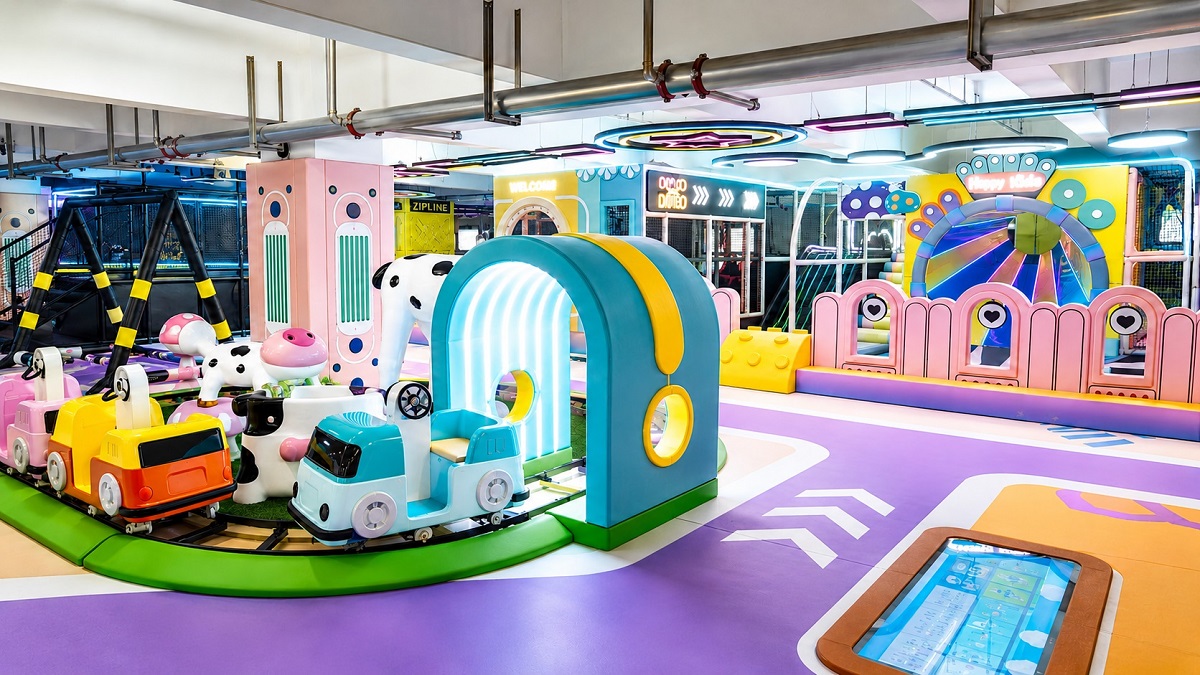
Coordinate the installation scope with the governing floor plan. Access through the building, temporary storage and the availability of the room all affect how the work can be organised. These issues belong in the project discussion even though they may not appear in the image used to present the finished venue.
Do not hide an unresolved obligation behind a general phrase such as complete service, because the supplier, freight provider and site contractor may each understand that phrase within their own part of the project while the buyer interprets it as a promise that someone has accepted every task between the factory and an operational indoor playground. Name the responsible party.
Plan the maintenance handover before opening
Purchasing teams naturally concentrate on what will arrive. Operating teams also need to understand how it will be inspected, cleaned and supported. Request the proposed maintenance handover during supplier selection, so that support information is considered while the contract can still define what the buyer expects to receive.
Request equipment-specific information. General guidance may help frame questions, but it cannot tell staff how every installed component should be assessed. Identify the instructions and records relevant to the selected equipment and determine who will explain them to the people responsible for the venue.
Discuss replacement parts as a practical service question. Ask how a component is identified, which information should accompany a request and who will respond. If recommended spares are offered, understand their purpose and the proposal’s assumptions. Do not turn an unconfirmed statement about availability into a promise to the operating team.
Preserve the handover record. When responsibilities change after opening, new staff should be able to find the applicable drawings and instructions without reconstructing the project from personal messages. Supplier accountability works better when the buyer has also assigned responsibility for maintaining its own project information.
Keep public promises aligned with the approved project
Communication about a new venue should reflect what has actually been approved and verified. A colourful concept drawing is not evidence of an installed feature. A proposed equipment mix is not proof that every user need has been addressed. Make descriptions specific and avoid adding performance or accessibility claims that the project evidence does not support.
For a supplier conversation, Dreamland Playground presents commercial indoor play options including soft contained play and other activities. Use those options to prepare a project-specific enquiry. The buyer’s floor plan, intended audience and maintenance handover requirements should determine which features proceed into the proposal.
Review the finished purchasing record before authorising fabrication. It should connect the approved drawing, quotation, installation scope and requested documentation, while identifying the open decisions and their owners. That record gives the organisations involved a common reference when a change is proposed or a delivery question arises.
Responsible procurement is visible in these ordinary decisions. It means asking who will do the work, checking what a claim covers and making sure that useful information reaches the next team. For an indoor play space, those habits support a more accountable project from the first supplier enquiry through the operating handover.


