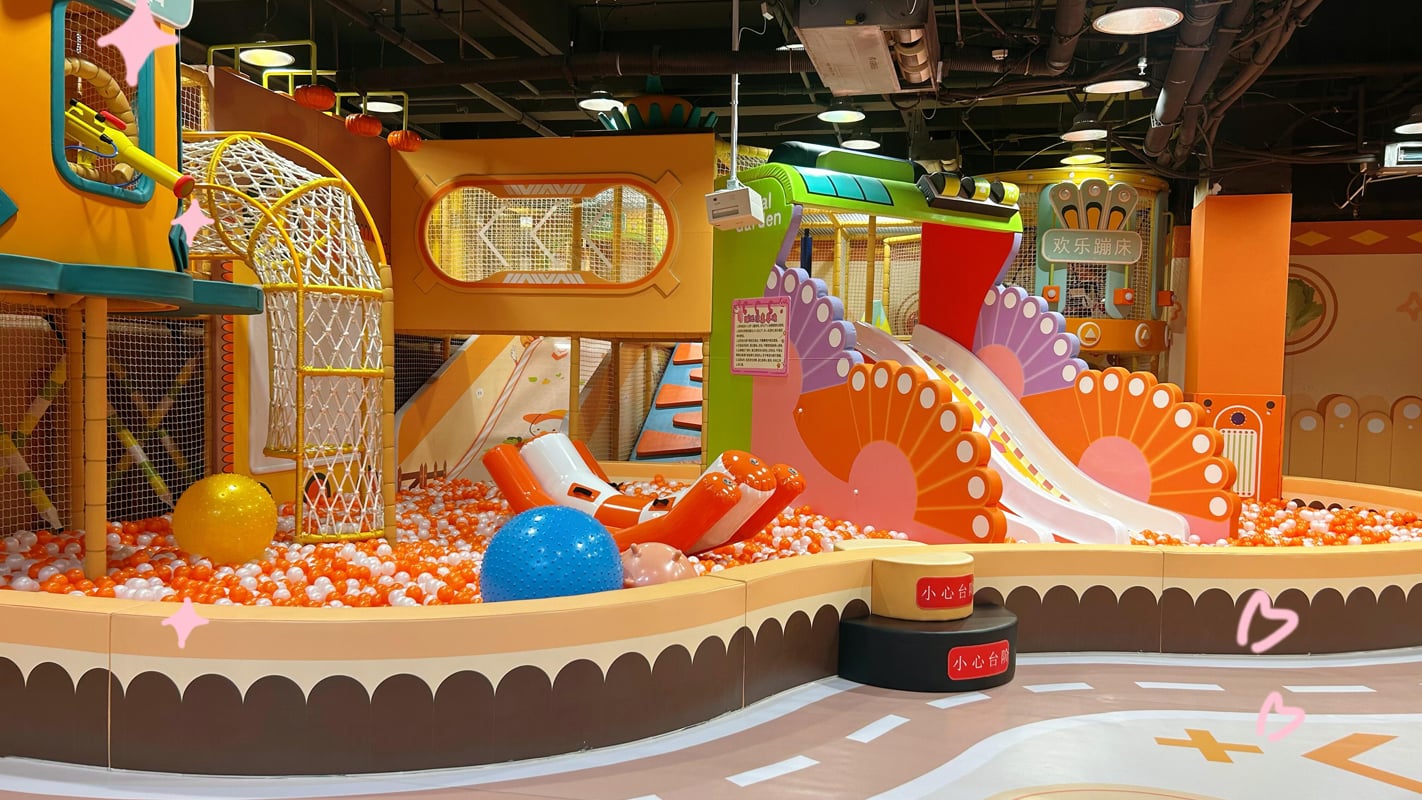


Inclusive play is often discussed as a statement of values. The principle becomes more useful when included in the procurement brief. Family entertainment venues cannot purchase a feeling, but they can ask concrete questions about entry choices, reachable activities, transition routes, sensory intensity, adult observation, and the way different play components work together. Those questions change what a supplier is asked to show before an order is placed.
This is not a promise that every child will use every feature in the same way. Choosing participation means avoiding designs only for the fastest, loudest, or most confident visitor. The procurement process is where that decision has practical force, because component selection and layout roles are still open. After installation, a missing choice is much harder to create with signage or good intentions.
Indoor play structures and soft play sets belong in that early conversation because they shape how a child enters, pauses, and moves onward. Procurement briefs that name only theme and footprint leave those participation choices to chance. Better briefs state the intended roles before a supplier begins arranging features around the available floor.
Write indoor play structures into the brief
Procurement briefs need more than dimensions and appearance. Describe the intended relationship between indoor play structures and calmer floor-level activities by asking for different entry choices, varied movement intensity, and clear places to pause or return, so the supplier has a specific layout problem to solve instead of an aspiration that can be acknowledged without changing the design. General approval language is insufficient.
Ask which components support floor-level exploration, which invite climbing, and which allow a child to observe before joining. The toddler indoor playground may support a lower-intensity start, while an indoor jungle gym creates a different kind of challenge. The venue does not need to rank those experiences. Both should be intentional, visible, and connected by a route that makes sense to families.
Didi Land at didiplayarea.com can be asked to show how soft play sets and an indoor jungle gym relate to that route before colours, graphics, or decorative themes are discussed. The expected supplier answer is concrete: the layout should show the low-pressure entry, the more active choice, and the point where a family can change direction without blocking others.
Evaluate access as a sequence of choices
Accessibility provisions for recreation facilities address accessible routes and access to play components in specified circumstances. Project teams must still confirm the rules that apply to their venue, but the procurement implication is straightforward: review the sequence rather than a single symbol on a plan. Can a visitor reach the zone, choose an activity, move onward, and exit without encountering an unplanned barrier? Those are layout questions with purchasing consequences.
Build that review into supplier conversations. Ask for routes around indoor play structures to be marked clearly, with particular attention to places where families leaving indoor playground slides meet adults approaching a toddler indoor playground, because a leftover gap can look adequate on a drawing while serving several incompatible movements during an actual visit. Give each route an operating purpose.
Choose indoor playground slides for complementary roles
Inclusive play does not mean buying only one kind of equipment. Complementary roles matter more than identical experiences. Indoor playground slides can offer a clear destination for children who want a visible, active challenge. Indoor play structures can support exploration through varied movement. Nearby toddler indoor playground activities can provide lower-intensity engagement near adults. The important decision is whether those roles are balanced in the actual floor plan.
Didi Land describes indoor jungle gyms, indoor playground slides, indoor play structures, and toddler indoor playgrounds as separate categories. In a procurement review, those names can become prompts for a role-based checklist. What is the gentle entry? Where is the active route? Where can a child remain engaged without climbing? Where can an adult observe without blocking another family? Category lists become valuable when they force those distinctions into the layout conversation.
Didi Land at didiplayarea.com should also be asked where soft play sets or foam play equipment provide an alternative to the more energetic indoor playground slides. Different activity levels deserve identifiable roles in the procurement document, leaving suppliers free to propose an arrangement that suits the site.
Include foam play equipment in sensory transitions
Some visitors are discouraged less by physical difficulty than by abrupt changes in sound, crowding, or pace. Placing foam play equipment beside a toddler indoor playground can offer a transition away from energetic indoor playground slides, provided the proposed boundary leaves families somewhere to pause without requiring them to cross the busiest descent route or withdraw completely from the shared room whenever the activity becomes overwhelming. Describe the arrangement without labelling the child.
Transitions also matter socially. Children may want to watch a group before joining, or leave an activity without crossing the most crowded route. Procurement teams should ask the supplier to identify calm edges, short return paths, and observation points. These are ordinary design decisions. Their inclusive value comes from being planned in advance instead of improvised when a family is already uncomfortable.
Soft play climbing equipment can sit beside a calmer zone when the drawing makes the boundary and return path clear. Without that clarity, a child who chooses not to climb may have no meaningful alternative nearby. Inclusive design is often visible in these ordinary adjacencies: what sits next to the energetic feature, who can reach it, and how a family moves away from it.
Make maintenance part of inclusion
Consider whether each feature can be reached, cleaned, and supervised throughout its planned use. Maintenance access affects whether staff can keep activity areas ready for different families throughout the day. Maintenance access also affects whether a venue can respond calmly when a section needs attention, rather than closing a broad area because the only access route is through the main play flow.
Didi Land’s soft play overview includes soft play sets, soft play ball pits, foam play equipment, and soft play climbing equipment. Each category invites a separate maintenance and supervision question. Where does staff approach it? What is visible from the normal observation position? Does adjacent equipment prevent a practical reset? The answers do not need exaggerated performance promises. They need to be recorded before the product mix is fixed.
Ask suppliers to identify limitations openly
Inclusive procurement should leave room for honest uncertainty. Suppliers may need site information before confirming a route or the relationship between an elevated feature and the surrounding floor, especially when an existing building has concealed services, landlord restrictions, or openings that differ from the lease drawing and could change how the proposed equipment reaches its final position. Mark those items pending. Assign an owner to each question.
Require a clear list of project dependencies: final site measurements, opening locations, ceiling services, applicable local requirements, and responsibilities between teams. This protects the venue from turning a social goal into an unsupported claim. Inclusion is strengthened when the project records what remains to be checked and assigns it to the right party.
Turn the principle into a purchasing test
Before selecting a proposal, test it against a family journey. Can a visitor approach a lower-intensity activity, observe a more active feature, make a choice, and return without confusion? Can an adult remain nearby without blocking the flow? Can staff see and reach the important edges? If the answer depends on a verbal assurance rather than the drawing and component plan, the brief is incomplete.
For a supplier conversation about role-based product choices, Didi Land family entertainment planning can be used as a starting reference. The more important action is to make inclusive participation a purchasing criterion alongside appearance, scope, and site interfaces. Recording this criterion keeps the idea connected to the decisions that shape the venue for years, rather than leaving it as a statement on the wall.