

• India CSR Awards 2026
  • India CSR Leadership Summit
  • Guest Posts
Thursday, October 1, 2026
India CSR®
  • Home
  • Corporate Social Responsibility
    • Art & Culture
    • CSR Leaders
    • Child Rights
    • Culture
    • Education
    • Gender Equality
    • Around the World
    • Skill Development
    • Safety
    • Covid-19
    • Safe Food For All
  • Sustainability
    • Sustainability Dialogues
    • Sustainability Knowledge Series
    • Plastics
    • Sustainable Development Goals
    • ESG
    • Circular Economy
    • BRSR
  • Corporate Governance
    • Diversity & Inclusion
  • Interviews
  • SDGs
    • No Poverty
    • Zero Hunger
    • Good Health & Well-Being
    • Quality Education
    • Gender Equality
    • Clean Water & Sanitation – SDG 6
    • Affordable & Clean Energy
    • Decent Work & Economic Growth
    • Industry, Innovation & Infrastructure
    • Reduced Inequalities
    • Sustainable Cities & Communities
    • Responsible Consumption & Production
    • Climate Action
    • Life Below Water
    • Life on Land
    • Peace, Justice & Strong Institutions
    • Partnerships for the Goals
  • Articles
  • Events
  • हिंदी
  • More
    • Business
    • Finance
    • Environment
    • Economy
    • Health
    • Around the World
    • Social Sector Leaders
    • Social Entrepreneurship
    • Trending News
      • Important Days
        • Festivals
      • Great People
      • Product Review
      • International
      • Sports
      • Entertainment
    • Case Studies
    • Philanthropy
    • Biography
    • Technology
    • Lifestyle
    • Sports
    • Gaming
    • Knowledge
    • Home Improvement
    • Words Power
    • Chief Ministers
No Result
View All Result
  • Home
  • Corporate Social Responsibility
    • Art & Culture
    • CSR Leaders
    • Child Rights
    • Culture
    • Education
    • Gender Equality
    • Around the World
    • Skill Development
    • Safety
    • Covid-19
    • Safe Food For All
  • Sustainability
    • Sustainability Dialogues
    • Sustainability Knowledge Series
    • Plastics
    • Sustainable Development Goals
    • ESG
    • Circular Economy
    • BRSR
  • Corporate Governance
    • Diversity & Inclusion
  • Interviews
  • SDGs
    • No Poverty
    • Zero Hunger
    • Good Health & Well-Being
    • Quality Education
    • Gender Equality
    • Clean Water & Sanitation – SDG 6
    • Affordable & Clean Energy
    • Decent Work & Economic Growth
    • Industry, Innovation & Infrastructure
    • Reduced Inequalities
    • Sustainable Cities & Communities
    • Responsible Consumption & Production
    • Climate Action
    • Life Below Water
    • Life on Land
    • Peace, Justice & Strong Institutions
    • Partnerships for the Goals
  • Articles
  • Events
  • हिंदी
  • More
    • Business
    • Finance
    • Environment
    • Economy
    • Health
    • Around the World
    • Social Sector Leaders
    • Social Entrepreneurship
    • Trending News
      • Important Days
        • Festivals
      • Great People
      • Product Review
      • International
      • Sports
      • Entertainment
    • Case Studies
    • Philanthropy
    • Biography
    • Technology
    • Lifestyle
    • Sports
    • Gaming
    • Knowledge
    • Home Improvement
    • Words Power
    • Chief Ministers
No Result
View All Result
India CSR®
No Result
View All Result
Home Technology

Why Vegetable Washing Waste Reduction Starts Before the Dryer

India CSR by India CSR
Reading Time: 6 mins read
India CSR®
Share Share Share Share
WhatsApp icon
WhatsApp — Join Us
Instant updates & community
Google News icon
Google News — Follow Us
Get our articles in Google News feed
india csr awards
ADVERTISEMENT

Food manufacturers often discuss waste reduction after a product has already reached drying, packaging, or disposal. The buyer problem begins earlier: raw material that is poorly sorted, cut without a usable route, or transferred with uncontrolled surface water can consume processing effort before anyone decides whether it should have continued. A sustainability plan that starts at the dryer misses the point where a plant can still separate usable material, recover a workable process path, and prevent avoidable value loss.

The practical thesis is straightforward. Sorting and drying must be planned as one material-management route, with clear decisions at intake, after preparation, and before preservation. Actual savings must be measured for the material and line in question. The route gives a factory a way to see where product is being downgraded, where a side stream may be viable, and where the right decision is to stop adding value to unsuitable material.

Sort before high-value processing begins

Incoming vegetables arrive with variation in soil, size, maturity, surface condition, and damage. A plant should decide which conditions can move to washing, which need a different route, and which should be excluded before cutting, blanching, or drying add further labour and utilities. That choice is both a sustainability action and a production decision because it prevents unsuitable material from travelling through stages that cannot restore its value.

19th India CSR Leadership Summit 2026
ADVERTISEMENT

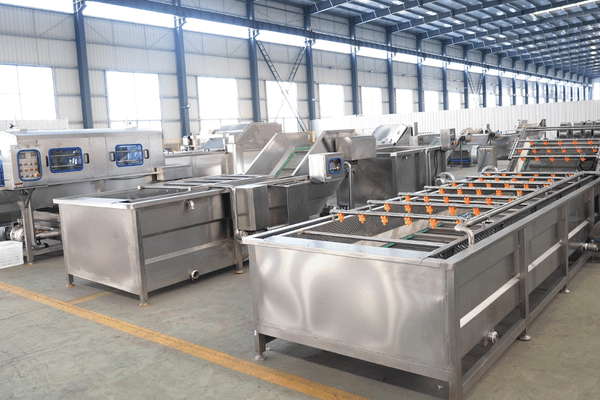
SHENGTU describes its root vegetable route as washing, peeling, sorting, optional cutting, and dewatering, with pre-washing and de-stoning positioned before peeling. That sequence supports a simple waste-reduction rule: remove soil and unsuitable incoming material before a surface-contact or cutting step turns uncertainty into extra handling, contamination risk, or product loss.

Vegetable washing should not become a reason to postpone sorting. Air bubble washing can help handle delicate or irregular produce, while brush washing addresses a different surface-cleaning situation. Neither mechanism decides whether a damaged, highly variable, or inappropriate lot deserves more processing. Operators need a written rule for inspection, diversion, and disposition before the line makes the problem less visible.

On shengtumachinery.com, SHENGTU presents washing and sorting as connected stages rather than isolated equipment. Buyers should request the same connection in their own material map: where the product is observed, who decides its route, and what record shows why material was accepted, held, redirected, or removed.

Choose the useful output before cutting creates a loss

Cutting can increase the value of a prepared vegetable, but it also narrows the options for handling it. Once a crop becomes slices, dice, or other pieces, surface exposure and product handling change. A factory needs to know the intended destination before it cuts, whether that destination is a fresh product, a frozen item, a dried ingredient, or a controlled side stream.

The decision is not an argument against cutting. It is an argument against cutting material first and searching for a route later. Material that does not meet the specification for one product may still have a usable route if its condition, hygiene status, and process requirements are assessed before the next stage. Material with no approved route should not continue merely because it has already absorbed labour.

Dewatering is where the decision becomes visible. Surface water carried from washing or cutting can complicate transfer, freezing, drying, or packing. Operators should identify the condition that is acceptable for the chosen next step and record departures from it. A dewatering unit is therefore part of waste prevention when it supports a defined handoff, rather than functioning as an unexplained final pass before the product disappears into another department.

Use blanching and drying to preserve a defined feed

SHENGTU presents fruit and vegetable dehydration as a route that can include washing, peeling, cutting, blanching, cooling, drying, and packing. The order matters because drying does not correct every upstream decision. It receives whatever geometry, surface condition, and material consistency the previous stages provide.

The Food and Agriculture Organization explains that drying involves heat and removal of water vapour, and that product geometry, arrangement, and drying-medium conditions influence the process. A waste-reduction route should therefore define the material entering the dryer instead of assuming that any prepared vegetable can be dried to the same outcome.

Blanching and cooling deserve the same discipline. When the product route requires them, the plant should define the transfer condition and the decision owner before drying begins. A batch held too long, cut inconsistently, or carried forward with unresolved surface moisture can create rework or rejection downstream. Recording the reason for a hold helps the factory correct the earlier stage instead of repeatedly treating the dryer as the source of the problem.

Measure loss at each material decision point

Measure loss at each decision point instead of assuming a universal percentage reduction. Start by observing where material changes status: receiving inspection, pre-wash removal, sorting, cutting, dewatering, and dryer feed. Each point can show whether product moves to the intended route, a defined alternative, or an approved discard stream.

Give each decision a reason code that people can understand. Examples include excessive soil burden, unsuitable size distribution, visible damage, route mismatch, or an unresolved transfer condition. The point is not to create paperwork for its own sake. The point is to distinguish raw-material variability from an equipment issue, a training gap, or a route that was never defined.

Reviewing those records across a production period can reveal whether loss begins at receiving, follows a particular crop condition, appears after a specific cutting decision, or concentrates at a handoff where nobody owns the disposition. Such patterns do not establish a universal environmental result, but they give the team a factual starting point for changing a material route before more value is added.

Stop before value disappears.

SHENGTU food processing equipment belongs inside that map as part of a process route, not as a stand-alone sustainability claim. Buyers should define the incoming material, the accepted product state at each handoff, and the responsibility for material that no longer fits the route. That makes supplier discussions more useful because the requested equipment scope is tied to an actual loss-prevention decision.

Build a raw-material loss review around the line

Short reviews can help a plant improve without waiting for a major capital project. Use the same record during normal production and during product trials so the team can compare why material leaves the intended route.

  1. Describe the incoming crop condition and the intended finished output.
  2. Record the sorting decision before washing and preparation add value.
  3. Identify whether vegetable washing, air bubble handling, or brush washing matches the material condition.
  4. Confirm the approved destination before cutting and note the owner of any diversion.
  5. Check the dewatering handoff against the needs of freezing, drying, or packing.
  6. Document the feed condition accepted by blanching and drying operators.

Keep the review honest about its limits. Line observation does not prove lifecycle impact, establish a product claim, or replace food-safety validation. It does help the factory find a preventable pattern before more resources are committed to material that has already lost its intended use.

Procurement can support the same discipline by asking for layouts and scopes that keep inspection, diversion, and transfer points accessible. Equipment that performs a task but leaves no practical place to observe material, remove a defined side stream, or clean between product conditions can create a hidden loss problem that is difficult to correct after installation.

Waste prevention is a route-design discipline

Food processing waste reduction starts with the decision to handle raw material according to its real condition. Sorting, washing, cutting, dewatering, blanching, and drying become more sustainable when every handoff has a stated purpose and an alternative for material that does not fit. The approach keeps the conversation on material value rather than unsupported efficiency slogans.

Procurement teams can use the route as a comparison tool. Ask suppliers which interfaces are included, which material conditions the equipment expects, and which decisions stay with the plant. Clearer answers at that stage make it easier to reduce avoidable loss later.

csr education cybernetyx
ADVERTISEMENT
India CSR Image 1 India CSR Image 2

CSR, Sustainability, and ESG success stories hindustan zinc
ADVERTISEMENT
India CSR

India CSR

India CSR® is the largest media on CSR and sustainability offering diverse content across multisectoral issues on business responsibility. It covers Sustainable Development, Corporate Social Responsibility (CSR), Sustainability, and related issues in India. Founded in 2009, the organisation aspires to become a globally admired media that offers valuable information to its readers through responsible reporting.

Related Posts

Data Science Training
Technology

Why Choose Data Science Training In Pune Today?

Apurva AI Evolves Apurva LENS. India CSR Image
Artificial Intelligence

Apurva AI Evolves Apurva LENS into AI Platform for Development Ecosystem Learning

Energy-Efficient HVAC Solutions
Technology

A School HVAC Budget Is a Stewardship Decision About Fresh Air and Repairability

Stainless Steel Plate
Technology

Stainless Steel Plate: How Responsible Procurement Prevents Waste Before Fabrication

Industrial Water-Pump
Technology

How Industrial Water-Pump Procurement Can Support Water Stewardship

India CSR®
Technology

Making Inclusive Play a Procurement Decision for Family Entertainment Venues

Load More
csr education cybernetyx
ADVERTISEMENT
bba
ADVERTISEMENT

Interviews

Dr Rajeev Gautam, President, HORIBA India @Indiacsr
Interviews

“Wellness Doesn’t Replace Ambition, It Makes Ambition Sustainable”: Shilpa Bhagat, Co-Founder, Fitistan

by India CSR

Fitistan Co-Founder Shilpa Bhagat discusses wellness, balance, community support and the small habits behind sustainable health.

Read moreDetails
From L to R- Olayinka Hakeem Babalola, Rotary International President (2026-27) and M. Muruganandam (MMM), Vice President (2026-27)

“Peace Is the Foundation That Allows All Other Progress to Take Root”: Rotary International

India CSR®

Interview: Ravi Mahajan on India’s Shift from Diesel to Solar-Powered Telecom Towers

Sanjay Hande, Head Of Manufacturing And Technology Management, Bosch India @india csr

Giving Becomes Participation, and Participation Creates a Deeper Connection: Sanjay Hande, Bosch India

Load More
Ad 1 Ad 2 Ad 3 Ad 4 Ad 5 Ad 6
ADVERTISEMENT

CSR UPDATES

Tecumseh CSR Initiative Kaushal Setu Strengthens Manufacturing Skills at Haryana Polytechnic

CSR: Dalmia Bharat Foundation Starts Tailoring Training for 25 Women in Cuttack

Malabar Group Signs LOI With West Bengal to Expand CSR, Commits Rs 20 Crore

M3M Foundation’s ‘Threads of India – Bharat Ka Taana Baana’ Brings India’s Textile Heritage, Fashion and Purpose Together

CSR: Niva Bupa Contributes Rs. 1.27 Cr Towards Gurugram Urban Forest Regeneration

Castrol India Opens First CSR Skilling Centre in Kolkata Under Ujjwal Kal

STEM Learning STEM Learning STEM Learning
ADVERTISEMENT
Facebook Twitter Youtube LinkedIn Instagram
India CSR Logo

India CSR® is the largest tech-led platform for information on CSR and sustainability in India offering diverse content across multisectoral issues. It covers Sustainable Development, Corporate Social Responsibility (CSR), Sustainability, and related issues in India. Founded in 2009, the organisation aspires to become a globally admired media that offers valuable information to its readers through responsible reporting. To enjoy the premium services, we invite you to partner with us.

Follow us on social media:

Subscribe to Our Newsletter

Don't miss out on the latest updates in corporate social responsibility. Subscribe to our newsletter at indiacsr.in and be part of the positive change.
Please enable JavaScript in your browser to complete this form.
Loading

  • About India CSR®
  • Team
  • India CSR® Awards 2026
  • India CSR® Leadership Summit
  • Partnership
  • Guest Posts
  • Services
  • ESG Professional Network
  • Content Writing Services
  • Business Information
  • Contact
  • Privacy Policy
  • Terms of Use
  • Donate

Copyright © 2026 - India CSR® | All Rights Reserved

No Result
View All Result
  • Home
  • Corporate Social Responsibility
    • Art & Culture
    • CSR Leaders
    • Child Rights
    • Culture
    • Education
    • Gender Equality
    • Around the World
    • Skill Development
    • Safety
    • Covid-19
    • Safe Food For All
  • Sustainability
    • Sustainability Dialogues
    • Sustainability Knowledge Series
    • Plastics
    • Sustainable Development Goals
    • ESG
    • Circular Economy
    • BRSR
  • Corporate Governance
    • Diversity & Inclusion
  • Interviews
  • SDGs
    • No Poverty
    • Zero Hunger
    • Good Health & Well-Being
    • Quality Education
    • Gender Equality
    • Clean Water & Sanitation – SDG 6
    • Affordable & Clean Energy
    • Decent Work & Economic Growth
    • Industry, Innovation & Infrastructure
    • Reduced Inequalities
    • Sustainable Cities & Communities
    • Responsible Consumption & Production
    • Climate Action
    • Life Below Water
    • Life on Land
    • Peace, Justice & Strong Institutions
    • Partnerships for the Goals
  • Articles
  • Events
  • हिंदी
  • More
    • Business
    • Finance
    • Environment
    • Economy
    • Health
    • Around the World
    • Social Sector Leaders
    • Social Entrepreneurship
    • Trending News
      • Important Days
      • Great People
      • Product Review
      • International
      • Sports
      • Entertainment
    • Case Studies
    • Philanthropy
    • Biography
    • Technology
    • Lifestyle
    • Sports
    • Gaming
    • Knowledge
    • Home Improvement
    • Words Power
    • Chief Ministers

Copyright © 2026 - India CSR® | All Rights Reserved

This website uses cookies. By continuing to use this website you are giving consent to cookies being used. Visit our Privacy and Cookie Policy.
