

• India CSR Awards 2026
  • India CSR Leadership Summit
  • Guest Posts
Wednesday, September 9, 2026
India CSR
  • Home
  • Corporate Social Responsibility
    • Art & Culture
    • CSR Leaders
    • Child Rights
    • Culture
    • Education
    • Gender Equality
    • Around the World
    • Skill Development
    • Safety
    • Covid-19
    • Safe Food For All
  • Sustainability
    • Sustainability Dialogues
    • Sustainability Knowledge Series
    • Plastics
    • Sustainable Development Goals
    • ESG
    • Circular Economy
    • BRSR
  • Corporate Governance
    • Diversity & Inclusion
  • Interviews
  • SDGs
    • No Poverty
    • Zero Hunger
    • Good Health & Well-Being
    • Quality Education
    • Gender Equality
    • Clean Water & Sanitation – SDG 6
    • Affordable & Clean Energy
    • Decent Work & Economic Growth
    • Industry, Innovation & Infrastructure
    • Reduced Inequalities
    • Sustainable Cities & Communities
    • Responsible Consumption & Production
    • Climate Action
    • Life Below Water
    • Life on Land
    • Peace, Justice & Strong Institutions
    • Partnerships for the Goals
  • Articles
  • Events
  • हिंदी
  • More
    • Business
    • Finance
    • Environment
    • Economy
    • Health
    • Around the World
    • Social Sector Leaders
    • Social Entrepreneurship
    • Trending News
      • Important Days
        • Festivals
      • Great People
      • Product Review
      • International
      • Sports
      • Entertainment
    • Case Studies
    • Philanthropy
    • Biography
    • Technology
    • Lifestyle
    • Sports
    • Gaming
    • Knowledge
    • Home Improvement
    • Words Power
    • Chief Ministers
No Result
View All Result
  • Home
  • Corporate Social Responsibility
    • Art & Culture
    • CSR Leaders
    • Child Rights
    • Culture
    • Education
    • Gender Equality
    • Around the World
    • Skill Development
    • Safety
    • Covid-19
    • Safe Food For All
  • Sustainability
    • Sustainability Dialogues
    • Sustainability Knowledge Series
    • Plastics
    • Sustainable Development Goals
    • ESG
    • Circular Economy
    • BRSR
  • Corporate Governance
    • Diversity & Inclusion
  • Interviews
  • SDGs
    • No Poverty
    • Zero Hunger
    • Good Health & Well-Being
    • Quality Education
    • Gender Equality
    • Clean Water & Sanitation – SDG 6
    • Affordable & Clean Energy
    • Decent Work & Economic Growth
    • Industry, Innovation & Infrastructure
    • Reduced Inequalities
    • Sustainable Cities & Communities
    • Responsible Consumption & Production
    • Climate Action
    • Life Below Water
    • Life on Land
    • Peace, Justice & Strong Institutions
    • Partnerships for the Goals
  • Articles
  • Events
  • हिंदी
  • More
    • Business
    • Finance
    • Environment
    • Economy
    • Health
    • Around the World
    • Social Sector Leaders
    • Social Entrepreneurship
    • Trending News
      • Important Days
        • Festivals
      • Great People
      • Product Review
      • International
      • Sports
      • Entertainment
    • Case Studies
    • Philanthropy
    • Biography
    • Technology
    • Lifestyle
    • Sports
    • Gaming
    • Knowledge
    • Home Improvement
    • Words Power
    • Chief Ministers
No Result
View All Result
India CSR
No Result
View All Result
Home Technology

How Industrial Water-Pump Procurement Can Support Water Stewardship

India CSR by India CSR
September 9, 2026
in Technology
Reading Time: 6 mins read
Industrial Water-Pump
Share Share Share Share
WhatsApp icon
WhatsApp — Join Us
Instant updates & community
Google News icon
Google News — Follow Us
Get our articles in Google News feed
india csr awards
ADVERTISEMENT

Water stewardship in an industrial setting is often discussed as a broad commitment. Procurement makes it practical. Purchasing a pump can either preserve visibility into water movement and losses or hide them behind a generic equipment description. The better question is not whether a pump is labelled sustainable. It is whether the proposed pump, controls, and handover information help an operator measure water, find leakage, and run within clear operating boundaries.

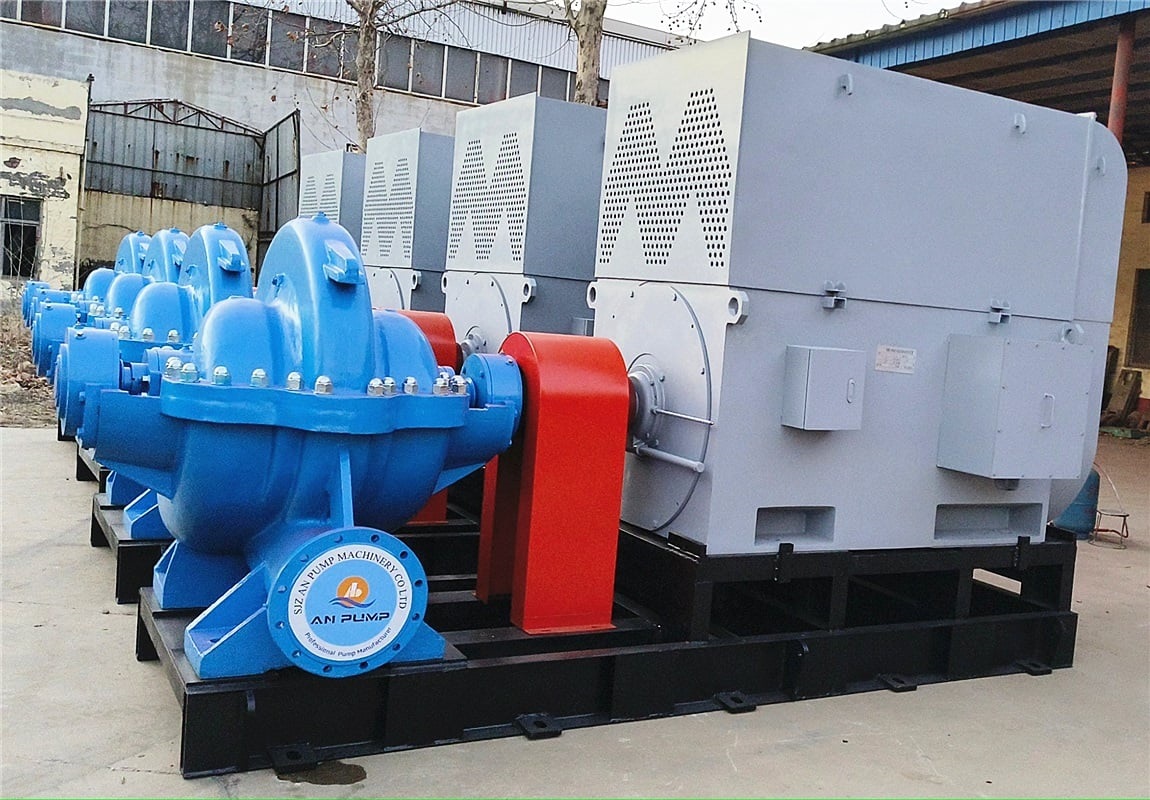
That starts with a plain equipment scope. BBP industrial water pumps sit within a live catalogue that names centrifugal-water-pump families including end suction pump, self-priming pump, double suction pump, sludge pump, and trash pump types. Those names help a buyer ask where the pump sits in the water path. They do not prove water savings for a particular site.

Put water measurement in the purchase requirement

Grundfos presents water management as covering the full water cycle and describes using data to detect leaks and manage pressure. The transferable procurement lesson is that measurement points should be specified before the pump arrives. Instrumentation such as a flow meter, pressure measurement, level signal, or run-status signal has value only when the team knows what decision it will support.

19th India CSR Leadership Summit 2026
ADVERTISEMENT

Ask for an instrumentation drawing with the purchase package. This drawing should show the source, discharge point, meter location, control valve, bypass, drain, and return line where relevant. Include the signal owner and the system that receives the signal. An instrument that cannot be read by the operating team is not a stewardship control.

Metering also needs a normal operating context. Record the process mode, expected liquid, pump speed where a drive is used, and any conditions that make the reading unusual. The purpose is not to generate a headline figure. Instead, the record helps a plant distinguish a real change in water use from a changed production state or a changed water level.

Make leakage investigation part of normal operation

The same Grundfos water-utility material connects data with early leak detection and pressure management. Buyers can apply that idea without adopting a vendor claim: procure access points for troubleshooting. Isolation valves, test points, readable gauges, and a clear map of branches make it easier to determine whether an apparent loss comes from pipework, a valve, overflow, seal leakage, or a process change.

Self-priming service deserves a different question from an end suction pump. During self-priming operation, the team should understand the suction arrangement and any recurring air entry or priming issue. With an end suction pump in a recirculating process, the focus may be pressure, flow rate, and the position of a control valve. The right operating boundary follows the service, not a generic environmental label.

Grundfos notes that seal condition can be affected by alignment, movement, abrasive fluid, and contamination at the seal face. That is a reminder to give mechanical seal inspection a place in operating records. A pump that moves water at the intended flow rate can still create an avoidable water-loss issue if seal problems are noticed only after a visible leak becomes serious.

Specify operating boundaries, not a vague efficiency promise

Grundfos explains that a pump curve relates flow and head, and that efficiency changes with the duty point. Procurement should therefore state the required process condition and permitted operating range. Someone who asks only for a pump size makes it hard to judge whether the selected centrifugal pump will work sensibly once pipe resistance, liquid condition, or demand changes.

State what should cause a review: low suction level, high discharge pressure, a persistent bypass, abnormal vibration, reduced flow rate, or seal leakage. These are operating signals, not proof of a particular failure. Their value is that they prompt investigation before a water-management problem is concealed by routine workarounds.

BBP can enter the specification conversation in a grounded way. Discussing BBP products can identify whether the application calls for a centrifugal pump, an end suction pump, a self-priming pump, or another listed water-pump family. The final choice still depends on the liquid, head, flow rate, solids exposure, materials, installation, and local operating rules.

Connect the pump record to the water balance

An industrial water balance does not need to begin as a polished sustainability report. Begin with a process map that shows intake, storage, use, return, discharge, and known losses. The pump record should indicate which part of that map it serves and which measurement can reveal a meaningful change there.

For a booster or transfer duty, compare source and destination readings during a stable process state. For a drainage or wastewater duty, keep the run record alongside level information and maintenance notes. For a sludge pump, include the solids context, because a changing liquid condition can alter both the hydraulic duty and the meaning of a flow reading.

The BBP catalogue is useful as a controlled description of available pump types, not as a substitute for site data. BBP’s centrifugal-water-pump section lists multiple families, which lets procurement separate the product-type question from the later water-balance and commissioning questions.

Use the record to ask a narrow question at each boundary: did water enter, move, return, or leave as the process expected? That question makes a water balance usable during normal work. Tracing these boundaries also avoids attributing a change to a pump when it may be caused by cleaning, production, storage level, or another part of the process.

BBP product terminology can remain in the operating file without becoming a sustainability claim. When a BBP centrifugal pump is installed, the handover can identify its service, its flow rate observation points, and its mechanical seal arrangement. The monitoring method belongs to the site, where the actual water path can be checked.

Hand over information that operators can use

The delivery file should include the selected pump description, duty assumptions, pump curve, impeller information, motor and drive data where applicable, mechanical seal arrangement, materials, installation drawing, and maintenance points. Also name the normal operating signals and the person or team that owns the readings.

Leave room for limits. Meter data can be wrong, instruments can drift, and a lower flow reading can arise from a production change rather than a leak. The purpose of a water-stewardship procurement requirement is not to claim a fixed reduction before operation. Instead, these requirements make the next investigation faster and more defensible.

Procurement can also request a simple training handoff. Operators should know which readings are routine, which changes need attention, and where to find the installed pump and control records. Maintenance staff should know the isolation boundaries and the evidence needed before changing an impeller, control setting, or mechanical seal arrangement.

Keep the final record alive after commissioning. A replacement end suction pump, revised process line, or changed duty can alter the meaning of the original baseline. Updating the water-side map and the operating boundary prevents a useful purchase record from becoming an archive that no longer describes the plant.

When water stewardship is treated as an operating discipline, pump procurement becomes more useful. The purchase provides a traceable place to measure water movement, observe abnormal conditions, and maintain the mechanical details that keep a water path under control.

Consider a cleaning-water transfer line whose meter records increased flow after a production change: before attributing that increase to leakage, the responsible operator needs the cleaning schedule, tank-level trend, valve arrangement, meter condition, and pump run record for the same period, together with an account of any bypass or return path that the meter does not measure.


India CSR Image 1 India CSR Image 2

CSR, Sustainability, and ESG success stories hindustan zinc
ADVERTISEMENT
India CSR

India CSR

India CSR® is the largest media on CSR and sustainability offering diverse content across multisectoral issues on business responsibility. It covers Sustainable Development, Corporate Social Responsibility (CSR), Sustainability, and related issues in India. Founded in 2009, the organisation aspires to become a globally admired media that offers valuable information to its readers through responsible reporting.

Related Posts

India CSR
Technology

Making Inclusive Play a Procurement Decision for Family Entertainment Venues

India CSR
Technology

What Responsible Procurement Looks Like for a Commercial Indoor Play Space

India CSR
Technology

Minister Dr. Mahabir Pun Appreciates Garuda Aerospace’s Drone Flood Relief Efforts

India CSR
Technology

Responsible Qualification of a Hyperbaric Chamber Supplier

India CSR
Technology

Web Workers for Multithreading: Offloading Heavy Computation from the Main JavaScript Thread

Data-Driven Recruitment: Leveraging Analytics for Better Hiring Decisions
Technology

Cleaning the Mess: 80% of Your Job Will Be Data Wrangling — Here Is How Top Courses Prepare You for It

Load More
bba
ADVERTISEMENT

Interviews

Sanjay Hande, Head Of Manufacturing And Technology Management, Bosch India @india csr
Interviews

Giving Becomes Participation, and Participation Creates a Deeper Connection: Sanjay Hande, Bosch India

by India CSR

Spark of Joy began in 2015 as a cultural fundraising event but has grown into something much larger over the...

Read moreDetails
Vivek Prakash, Senior Vice President & Head, CSR at Jubilant Ingrevia Limited

Didi Ki Dukaan is Helping Rural Women Become Independent Entrepreneurs: Vivek Prakash, Sr VP & Head–CSR, Jubilant Ingrevia

India CSR

Responsible Business Must Turn Research into Real Impact: Prof Bob Doherty

Akanksha Sharma, Vice President – Sustainability, Subcontinent, Central Asia, Levant and; Egypt DP World

DP World’s Sustainability Strategy: Building Greener, Inclusive Logistics in India

Load More
Ad 1 Ad 2 Ad 3 Ad 4 Ad 5 Ad 6
ADVERTISEMENT

CSR UPDATES

Bharti Airtel Foundation Reaches 7.8 Million Beneficiaries Through 25 Years of Education Initiatives

CSR: M3M Foundation’s iMpower Marks Seven Years with Expansion to Lucknow, Inaugurates Two Multi-Activity Resource Centres

CSR: Devyani Jaipuria’s Shiksha Kendra Marks 20 Years, Reaches 25,000+ Students

CSR: BC Jindal Group Deepens Support for Vulnerable Communities; Benefits Over 1000 Lives Through Shelter Home Programme

CSR: BPCL Commits ₹69.21 Crore for 119 Parks, Food Streets and Heritage Corridors in Varanasi

CSR: AUMOVIO India, Centum Foundation Empower 2,700 Women for Manufacturing Careers

STEM Learning STEM Learning STEM Learning
ADVERTISEMENT
Facebook Twitter Youtube LinkedIn Instagram
India CSR Logo

India CSR is the largest tech-led platform for information on CSR and sustainability in India offering diverse content across multisectoral issues. It covers Sustainable Development, Corporate Social Responsibility (CSR), Sustainability, and related issues in India. Founded in 2009, the organisation aspires to become a globally admired media that offers valuable information to its readers through responsible reporting. To enjoy the premium services, we invite you to partner with us.

Follow us on social media:

Subscribe to Our Newsletter

Don't miss out on the latest updates in corporate social responsibility. Subscribe to our newsletter at indiacsr.in and be part of the positive change.
Please enable JavaScript in your browser to complete this form.
Loading

  • About India CSR
  • Team
  • India CSR Awards 2026
  • India CSR Leadership Summit
  • Partnership
  • Guest Posts
  • Services
  • ESG Professional Network
  • Content Writing Services
  • Business Information
  • Contact
  • Privacy Policy
  • Terms of Use
  • Donate

Copyright © 2026 - India CSR | All Rights Reserved

INDIA CSR AWARDS
APPLY NOW
No Result
View All Result
  • Home
  • Corporate Social Responsibility
    • Art & Culture
    • CSR Leaders
    • Child Rights
    • Culture
    • Education
    • Gender Equality
    • Around the World
    • Skill Development
    • Safety
    • Covid-19
    • Safe Food For All
  • Sustainability
    • Sustainability Dialogues
    • Sustainability Knowledge Series
    • Plastics
    • Sustainable Development Goals
    • ESG
    • Circular Economy
    • BRSR
  • Corporate Governance
    • Diversity & Inclusion
  • Interviews
  • SDGs
    • No Poverty
    • Zero Hunger
    • Good Health & Well-Being
    • Quality Education
    • Gender Equality
    • Clean Water & Sanitation – SDG 6
    • Affordable & Clean Energy
    • Decent Work & Economic Growth
    • Industry, Innovation & Infrastructure
    • Reduced Inequalities
    • Sustainable Cities & Communities
    • Responsible Consumption & Production
    • Climate Action
    • Life Below Water
    • Life on Land
    • Peace, Justice & Strong Institutions
    • Partnerships for the Goals
  • Articles
  • Events
  • हिंदी
  • More
    • Business
    • Finance
    • Environment
    • Economy
    • Health
    • Around the World
    • Social Sector Leaders
    • Social Entrepreneurship
    • Trending News
      • Important Days
      • Great People
      • Product Review
      • International
      • Sports
      • Entertainment
    • Case Studies
    • Philanthropy
    • Biography
    • Technology
    • Lifestyle
    • Sports
    • Gaming
    • Knowledge
    • Home Improvement
    • Words Power
    • Chief Ministers

Copyright © 2026 - India CSR | All Rights Reserved

This website uses cookies. By continuing to use this website you are giving consent to cookies being used. Visit our Privacy and Cookie Policy.
