

• India CSR Awards 2026
  • India CSR Leadership Summit
  • Guest Posts
Monday, August 24, 2026
India CSR
  • Home
  • Corporate Social Responsibility
    • Art & Culture
    • CSR Leaders
    • Child Rights
    • Culture
    • Education
    • Gender Equality
    • Around the World
    • Skill Development
    • Safety
    • Covid-19
    • Safe Food For All
  • Sustainability
    • Sustainability Dialogues
    • Sustainability Knowledge Series
    • Plastics
    • Sustainable Development Goals
    • ESG
    • Circular Economy
    • BRSR
  • Corporate Governance
    • Diversity & Inclusion
  • Interviews
  • SDGs
    • No Poverty
    • Zero Hunger
    • Good Health & Well-Being
    • Quality Education
    • Gender Equality
    • Clean Water & Sanitation – SDG 6
    • Affordable & Clean Energy
    • Decent Work & Economic Growth
    • Industry, Innovation & Infrastructure
    • Reduced Inequalities
    • Sustainable Cities & Communities
    • Responsible Consumption & Production
    • Climate Action
    • Life Below Water
    • Life on Land
    • Peace, Justice & Strong Institutions
    • Partnerships for the Goals
  • Articles
  • Events
  • हिंदी
  • More
    • Business
    • Finance
    • Environment
    • Economy
    • Health
    • Around the World
    • Social Sector Leaders
    • Social Entrepreneurship
    • Trending News
      • Important Days
        • Festivals
      • Great People
      • Product Review
      • International
      • Sports
      • Entertainment
    • Case Studies
    • Philanthropy
    • Biography
    • Technology
    • Lifestyle
    • Sports
    • Gaming
    • Knowledge
    • Home Improvement
    • Words Power
    • Chief Ministers
No Result
View All Result
  • Home
  • Corporate Social Responsibility
    • Art & Culture
    • CSR Leaders
    • Child Rights
    • Culture
    • Education
    • Gender Equality
    • Around the World
    • Skill Development
    • Safety
    • Covid-19
    • Safe Food For All
  • Sustainability
    • Sustainability Dialogues
    • Sustainability Knowledge Series
    • Plastics
    • Sustainable Development Goals
    • ESG
    • Circular Economy
    • BRSR
  • Corporate Governance
    • Diversity & Inclusion
  • Interviews
  • SDGs
    • No Poverty
    • Zero Hunger
    • Good Health & Well-Being
    • Quality Education
    • Gender Equality
    • Clean Water & Sanitation – SDG 6
    • Affordable & Clean Energy
    • Decent Work & Economic Growth
    • Industry, Innovation & Infrastructure
    • Reduced Inequalities
    • Sustainable Cities & Communities
    • Responsible Consumption & Production
    • Climate Action
    • Life Below Water
    • Life on Land
    • Peace, Justice & Strong Institutions
    • Partnerships for the Goals
  • Articles
  • Events
  • हिंदी
  • More
    • Business
    • Finance
    • Environment
    • Economy
    • Health
    • Around the World
    • Social Sector Leaders
    • Social Entrepreneurship
    • Trending News
      • Important Days
        • Festivals
      • Great People
      • Product Review
      • International
      • Sports
      • Entertainment
    • Case Studies
    • Philanthropy
    • Biography
    • Technology
    • Lifestyle
    • Sports
    • Gaming
    • Knowledge
    • Home Improvement
    • Words Power
    • Chief Ministers
No Result
View All Result
India CSR
No Result
View All Result
Home Articles

MSMEs Could Lead India’s Next Freight Revolution

India CSR by India CSR
August 24, 2026
in Articles
Reading Time: 5 mins read
India CSR
Share Share Share Share
WhatsApp icon
WhatsApp — Join Us
Instant updates & community
Google News icon
Google News — Follow Us
Get our articles in Google News feed
india csr awards
ADVERTISEMENT

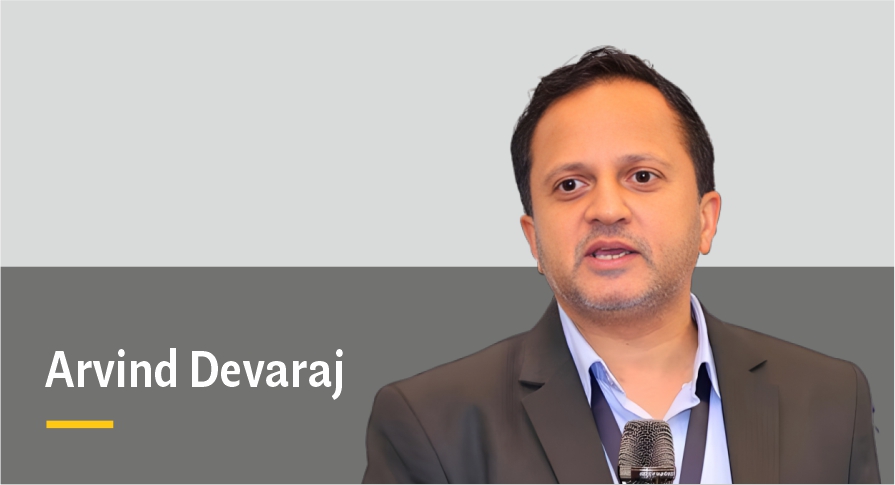
Arvind Devaraj, COO of NLDSL, explains how cargo aggregation, rail connectivity and digital logistics platforms can help MSMEs drive India’s next freight revolution.
India CSR

By Arvind Devraj

India’s freight system has traditionally been shaped by large industrial users moving high volumes of cargo through established transport networks. The next phase of growth, however, could come from a far more distributed source: the country’s micro, small and medium enterprises. MSMEs operate across manufacturing clusters, industrial towns and regional production hubs. Individually, many move relatively small consignments. Collectively, they generate significant freight demand and contribute more than 35% of India’s manufacturing output and nearly half of its exports. Making logistics more accessible to these businesses could create a new freight market while strengthening their ability to compete nationally and globally.
19th India CSR Leadership Summit 2026
ADVERTISEMENT

The Opportunity Is Already Distributed Across India

India’s MSMEs are not concentrated in one sector or metropolitan region. They operate across engineering, textiles, food processing, chemicals, pharmaceuticals, auto components, handicrafts and several other industries. This geographic distribution creates both a challenge and an opportunity. Unlike large manufacturers that may generate enough cargo to book full trains or dedicated capacity, smaller businesses usually move fragmented loads at different times. Their freight demand exists, but it must be identified, consolidated and connected to suitable transport services.

A recent FICCI–KPMG analysis estimates that MSMEs could represent an annual freight opportunity of about 100 million metric tonnes for Indian Railways. It identifies accessibility, cargo aggregation, terminal infrastructure and wagon availability as important areas for enabling greater participation.

Aggregation Could Change Freight Economics

Smaller consignments do not always align easily with freight systems designed around large, predictable volumes. An individual MSME may not have enough cargo to justify rail movement, even when rail offers an attractive long-distance transportation cost.

Aggregation can help close this gap

Cargo originating from different companies within an industrial cluster can be aggregated at a common logistics platform and transported as a single shipment that has commercial value. Digital platforms can facilitate matching of compatible shipments, identify common destinations, and provide clear information on schedules, capabilities, and costs. The result would be that MSMEs can benefit from the economies of scale without having to become large operators themselves. It can also lead to more consistent freight demand from rail and multi-modal operators.

Digital Access Can Be as Important as Physical Access

Even if a railway terminal or logistics park is located close to an MSME cluster, it still may be complicated for businesses to use it in case of difficulties with obtaining information, booking, and other documents. Digital access makes using freight services much clearer and easier for businesses because they will be able to obtain essential information regarding modes of transport, expected delivery time, cargo requirements, required paperwork and so on.

The Unified Logistics Interface Platform (ULIP), developed by NICDC Logistics Data Services Limited (NLDSL) under the National Logistics Policy has been designed as a nationwide logistics data gateway that connects information from different government systems. Its stated capabilities include multimodal visibility, digital verification, route insights, process simplification and API-based information exchange between public and private stakeholders.

For MSMEs, such shared digital foundations can enable service providers to build simpler freight-booking tools, tracking interfaces and documentation support. The objective is not merely to place existing processes online, but to make logistics easier for businesses with limited specialist resources.

Visibility Can Protect Working Capital

Small and medium-sized enterprises (SMEs) often find themselves in more limited working capital situations than larger companies. A delay in shipment can prevent a customer from making their payment, interfere with production or force a business to maintain extra inventory. Therefore, predicting shipments becomes incredibly important.

As long as businesses have the ability to track cargo along its entire route – ports, terminals, inland facilities and transport corridors, they can plan their production and client commitments much better. By comparing results, businesses can also see which routes or locations are more reliable. Such information is extremely useful for small and medium-sized enterprises, allowing them to protect working capital as well as plan their future transportation processes.

A More Inclusive Freight Network Can Be Greener Too

Improving MSME access to rail and multimodal services can also support India’s sustainability goals.Rail offers a structural cost advantage over road for many long-distance freight movements, but smaller businesses often continue to depend on road because it provides greater flexibility and easier first- and last-mile access. According to the FICCI–KPMG Unlocking Rail Freight Growth report, the average transportation cost is Rs. 1.96 per tonne-kilometre for rail, compared with Rs. 3.78 for road. However, the report also notes that first- and last-mile connectivity, along with other non-freight costs, significantly influence the final modal choice.

Better aggregation, terminal connectivity and coordinated first- and last-mile services could make lower-emission modes practical for a broader group of businesses.

Conclusion

India’s next freight revolution may not be driven only by larger trains, terminals or industrial users. It could emerge by making the freight network easier for millions of smaller businesses to access. MSMEs already create substantial economic activity. The opportunity lies in converting their distributed cargo demand into connected, visible and efficiently aggregated freight flows.

Physical infrastructure will provide the capacity. Digital platforms can simplify access. Shared logistics facilities can create scale, while reliable visibility can give smaller businesses the confidence to use new routes and transport modes. When India’s freight system begins working as effectively for a small manufacturer as it does for a large industrial shipper, MSMEs will not merely benefit from the logistics transformation. They could become one of its most important drivers.

The Author: Arvind Devaraj is the COO at NICDC Logistics Data Services Ltd. (NLDSL).

Tags: Arvind Devaraj
India CSR Image 1 India CSR Image 2

CSR, Sustainability, and ESG success stories hindustan zinc
ADVERTISEMENT
India CSR

India CSR

India CSR® is the largest media on CSR and sustainability offering diverse content across multisectoral issues on business responsibility. It covers Sustainable Development, Corporate Social Responsibility (CSR), Sustainability, and related issues in India. Founded in 2009, the organisation aspires to become a globally admired media that offers valuable information to its readers through responsible reporting.

Related Posts

Green Buildings
Articles

Beyond Green Buildings: How Real Estate Is Embracing Conservation as a Core Design Principle

AI Generated Image: Copyright India CSR
Articles

How Digital Intelligence Is Accelerating Green Freight in India

Dr Bhaskar Chatterjee
Articles

The Next Frontier of CSR 2.0: Backing India’s Innovation Ecosystem

Dr Rajeev Gautam, President, HORIBA India @Indiacsr
Articles

How Industry-Academia Partnerships Can Power India’s Innovation Future

Green Capitalism, Green Development or Degrowth. AI Generated Image. Copyright-India CSR
Articles

Green Development, Green Capitalism or Degrowth?

HR and CSR Can Drive Inclusive Growth
Articles

How HR and CSR Can Drive Inclusive Growth and Shared Value

Load More
bba
ADVERTISEMENT

Interviews

Akanksha Sharma, Vice President – Sustainability, Subcontinent, Central Asia, Levant and; Egypt DP World
Interviews

DP World’s Sustainability Strategy: Building Greener, Inclusive Logistics in India

by India CSR

Responsible leadership means taking a long-term view, acting with transparency and ensuring that growth creates value for people, communities and...

Read moreDetails
Dr. V.K. Raju

Every Premature Baby Deserves the Right to Sight: Dr. V.K. Raju, Chairman, Goutami Eye Institute & Founder, Eye Foundation of America

India CSR Interview with George Muthoot George, Deputy Managing Director of Muthoot Finance

Muthoot Finance CSR Is About Empowerment, Not Dependency: George Muthoot George

Hardeep S. Brar - BMW Group India CEO

Skills Are the Starting Line, Jobs Are the Finish Line: BMW Group India CEO Hardeep S. Brar

Load More
Ad 1 Ad 2 Ad 3 Ad 4 Ad 5 Ad 6
ADVERTISEMENT

CSR UPDATES

IDFC FIRST Bank and IIM Calcutta Innovation Park Commit ₹2 Crore to Support Sustainable Startups

GNFC Reports ₹5.22 Cr CSR Spent, ₹17.32 Cr Moved to Unspent CSR Account

CSR: GNFC’s 50 Viksit Villages Vision to Support Self-Reliant Rural Communities

Laxmi India Finance Spends Rs 66.57 Lakh on CSR in FY26

Kerala Eyes CSR Funds to Strengthen Government Hospital Infrastructure

Karnataka Plans CSR-Led Upgrade of 1,000 Government Schools

STEM Learning STEM Learning STEM Learning
ADVERTISEMENT
Facebook Twitter Youtube LinkedIn Instagram
India CSR Logo

India CSR is the largest tech-led platform for information on CSR and sustainability in India offering diverse content across multisectoral issues. It covers Sustainable Development, Corporate Social Responsibility (CSR), Sustainability, and related issues in India. Founded in 2009, the organisation aspires to become a globally admired media that offers valuable information to its readers through responsible reporting. To enjoy the premium services, we invite you to partner with us.

Follow us on social media:

Subscribe to Our Newsletter

Don't miss out on the latest updates in corporate social responsibility. Subscribe to our newsletter at indiacsr.in and be part of the positive change.
Please enable JavaScript in your browser to complete this form.
Loading

  • About India CSR
  • Team
  • India CSR Awards 2026
  • India CSR Leadership Summit
  • Partnership
  • Guest Posts
  • Services
  • ESG Professional Network
  • Content Writing Services
  • Business Information
  • Contact
  • Privacy Policy
  • Terms of Use
  • Donate

Copyright © 2026 - India CSR | All Rights Reserved

18th CSR Leadership Summit 2026
APPLY NOW
No Result
View All Result
  • Home
  • Corporate Social Responsibility
    • Art & Culture
    • CSR Leaders
    • Child Rights
    • Culture
    • Education
    • Gender Equality
    • Around the World
    • Skill Development
    • Safety
    • Covid-19
    • Safe Food For All
  • Sustainability
    • Sustainability Dialogues
    • Sustainability Knowledge Series
    • Plastics
    • Sustainable Development Goals
    • ESG
    • Circular Economy
    • BRSR
  • Corporate Governance
    • Diversity & Inclusion
  • Interviews
  • SDGs
    • No Poverty
    • Zero Hunger
    • Good Health & Well-Being
    • Quality Education
    • Gender Equality
    • Clean Water & Sanitation – SDG 6
    • Affordable & Clean Energy
    • Decent Work & Economic Growth
    • Industry, Innovation & Infrastructure
    • Reduced Inequalities
    • Sustainable Cities & Communities
    • Responsible Consumption & Production
    • Climate Action
    • Life Below Water
    • Life on Land
    • Peace, Justice & Strong Institutions
    • Partnerships for the Goals
  • Articles
  • Events
  • हिंदी
  • More
    • Business
    • Finance
    • Environment
    • Economy
    • Health
    • Around the World
    • Social Sector Leaders
    • Social Entrepreneurship
    • Trending News
      • Important Days
      • Great People
      • Product Review
      • International
      • Sports
      • Entertainment
    • Case Studies
    • Philanthropy
    • Biography
    • Technology
    • Lifestyle
    • Sports
    • Gaming
    • Knowledge
    • Home Improvement
    • Words Power
    • Chief Ministers

Copyright © 2026 - India CSR | All Rights Reserved

This website uses cookies. By continuing to use this website you are giving consent to cookies being used. Visit our Privacy and Cookie Policy.
