



By Dr. Rakesh Setia
For years, sustainability in real estate was largely measured by certifications, energy-efficient lighting or rooftop solar panels. While these remain important, conservation today is influencing a much bigger conversation. It is no longer an added feature but the starting point of how communities are planned, designed and built.
It is particularly visible in Mumbai, where limited land, rising population and ambitious infrastructure projects are reshaping the city’s future. As new metro corridors, the Coastal Road, Atal Setu and the Mumbai-Pune Missing Link improve connectivity and unlock new growth corridors, luxury real estate developers have an opportunity to rethink urban growth.
This shift is also being driven by larger environmental realities. India is home to nearly 18% of the world’s population but has access to only about 4% of its freshwater resources, making the efficient use of water a growing priority. As cities continue to expand, integrating water conservation into the way communities are planned and built is becoming important. As a result, water conservation is influencing the way projects are planned from the earliest design stage rather than being addressed after construction.
Building Higher, Conserving More
One of the biggest misconceptions about high-rise development is that it comes at the cost of sustainability. Whereasa thoughtfully planned vertical development can help cities use land far more efficiently.
As Mumbai continues to grow, building upwards allows more people to live closer to business districts and social infrastructure without continuously expanding the city’s footprint. The emergence of landmark residential towers rising over 300 metre or morereflects not just engineering ambition but also a practical response to land scarcity in one of the world’s most densely populated cities.
Vertical development also enables more efficient use of scarce urban land by accommodating higher densities while preserving larger open spaces for landscaping and community infrastructure. As cities become denser, compact development reduces urban sprawl, shortens travel distances and supports more efficient infrastructure utilisation, making conservation compatible with urban growth.
Efficient land utilisation also creates opportunities to preserve larger open spaces at ground level instead of replacing every available parcel with built-up areas.
Green Spaces Need to Be Planned, Not Added Later
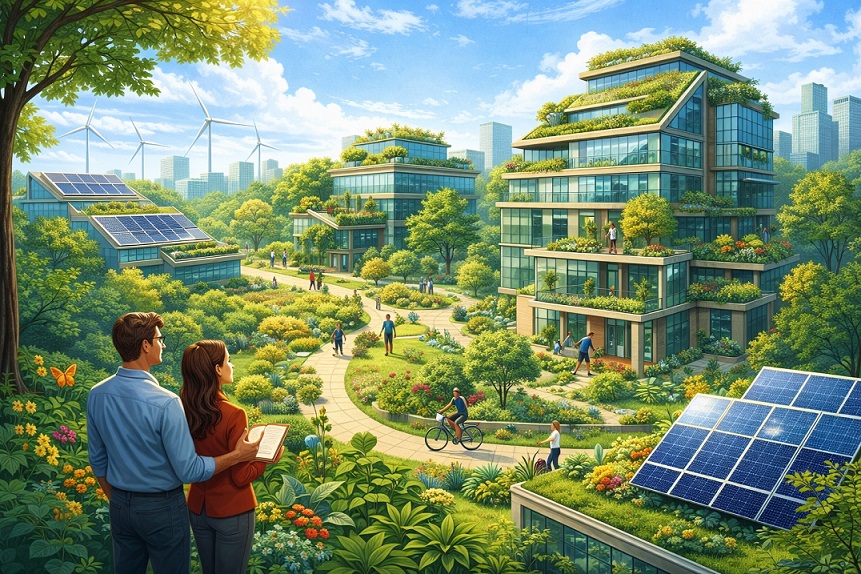
Conservation today begins well before construction starts. Developers are undertaking hydrological assessments during the master-planning stage to understand groundwater movement, natural drainage and flood resilience before finalising layouts. Native landscaping, bioswales, permeable surfaces and groundwater recharge systems are being integrated into township planning, making open spaces active environmental assets rather than purely aesthetic features.
Across Mumbai’s emerging neighbourhoods, large integrated developments are dedicating significant portions of their land to greenery, water bodies and community spaces. Large townships spanning 30 acres or more are reservingsubstantial spaces of over five acresexclusively for central greens while integrating lifestyle amenities sprawling across more than 2,00,000 square feet within the development. This reflects that green spaces are becoming a part of the project’s identity rather than decorative additions.
Planning around natural light, cross ventilation, native plantations and water-sensitive landscaping not only reduces environmental impact but also creates healthier and more comfortable living environments.
India now ranks among the global leaders in green buildings, with more than 7,500 LEED-certified projects, reflecting the increasing adoption of sustainable design across residential and commercial real estate.
Conservation Extends Beyond Individual Buildings
Conservation today is about planning complete communities, not just individual buildings.
Mixed-use developments bring homes, offices, retail and recreation together, reducing travel time, encouraging walkability and making better use of urban land. Integrated retail destinations providing large spaces of 6-8 lakh square feet are a step in this direction, bringing everyday conveniences closer to where people live.
Integrated developments also support more sustainable urban living by bringing residential, retail, workplaces, education, and recreation together within a single ecosystem. This reduces dependence on private vehicles, encourages walkability and helps optimise existing infrastructure instead of continuously expanding city boundaries.
Infrastructure is equally important. Projects such as the Mumbai-Pune Missing Link, Metro expansion, Eastern Freeway Elevated Corridor and improved road networks are opening up new growth corridors across the MMR. This allows developers to create well-connected communities instead of adding pressure on already saturated parts of the city.
Luxury Buyers Expect More
Luxury today is no longer defined only by location or amenities. Buyers are looking for homes that are efficient, comfortable and built for the long term.
Features like rainwater harvesting, wastewater recycling, EV charging, energy-efficient systems and homes designed for better natural light and ventilation are becoming essential. They lower resource consumption, improve everyday living and make developments more resilient over time.
Buyers are evaluating developments on long-term operating efficiency rather than only location or luxury amenities. Energy-efficient buildings can reduce electricity consumption significantly over their lifecycle, while water recycling, smart monitoring systems and efficient plumbing help lower dependence on external water sources, making homes more resilient against future resource constraints.
Conservation as a Long-Term Development Strategy
As India works towards its net-zero emissions target by 2070 and aims to reduce carbon intensity by 45% by 2030, sustainability is becoming a key consideration in real estate development. Developers are increasingly integrating energy-efficient systems, water conservation measures and green building practices from the planning stage itself, recognising that responsible development begins long before construction starts.
The way we design and build our cities has a lasting impact on how efficiently they use land, water and energy. That is why conservation cannot be treated as an afterthought or a checklist item. It needs to be embedded into every stage of development, from planning and design to construction and long-term operations.
For Mumbai, this is especially relevant. As new infrastructure reshapes the city and premium housing expands, developers have an opportunity to create well-planned neighbourhoods that balance growth with the responsible use of natural resources.
About the Author
Dr. Rakesh Setia, Chief Executive Officer, Runwal Enterprises.
(India CSR)



