

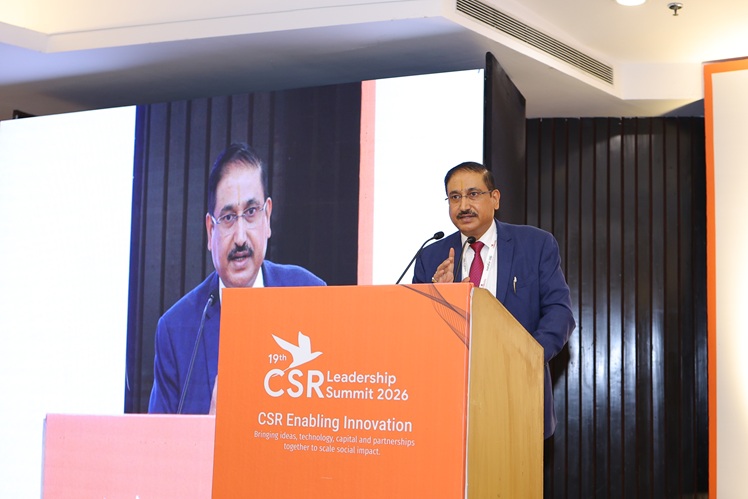


Chief Guest Address at the 19th India CSR Leadership Summit & Awards 2026
NEW DELHI (India CSR): Dr. Pushpendra Pratap Singh, Managing Director & CEO, Logitrust Global Solutions Pvt. Ltd., Chief Guest at the 19th India CSR Leadership Summit & Awards 2026, called upon business leaders to view corporate social responsibility as a sustained commitment to people and communities, rather than a routine exercise in compliance, reporting or annual expenditure. Addressing the gathering, he said CSR should not be reduced to cheques, photographs, reports or calendar-driven targets. Instead, it must be judged by whether it creates opportunities, strengthens communities and enables people to shape better futures. The summit was organised by India CSR under the theme, “CSR Enabling Innovation – Bringing Ideas, Technology, Capital and Partnerships Together to Scale Social Impact.” Dr. Singh’s address placed human dignity, responsible leadership, innovation and collaboration at the centre of that vision for meaningful and enduring social impact.
Purpose Shapes Profit
Beginning his address with questions to the audience, Dr. Singh invited leaders to reflect on whether the purpose of business ends with profit or extends to the effect that business success creates in society. He argued that the two cannot be separated in a country working towards inclusive development. Profit enables growth, investment and employment, but purpose gives that growth a wider social meaning. “Profit ke saath purpose, growth ke saath responsibility, aur success ke saath social impact,” he said, should guide responsible business thinking. His message was clear: companies need not choose between commercial success and social progress. The real test of leadership is to create a model in which business growth contributes to stronger communities, wider opportunities and a future in which more people can participate with confidence and dignity.
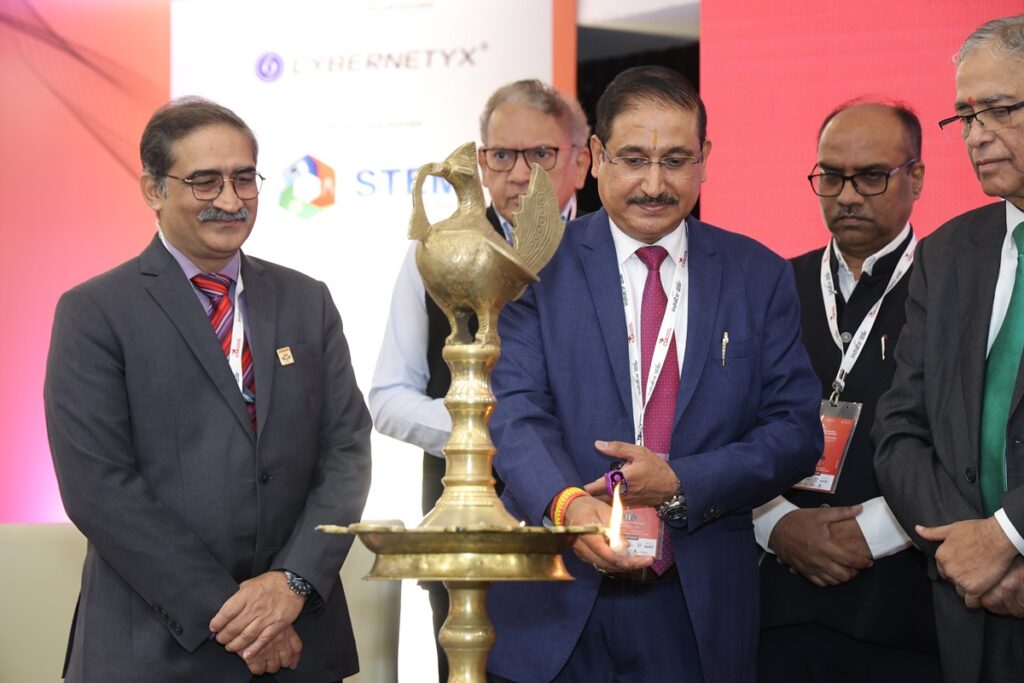
Lives Define Impact
Dr. Singh urged the audience to look beyond conventional CSR indicators and see the people behind every intervention. CSR, he said, should bring to mind a child who receives the opportunity to choose a future, a family that finds support during a difficult period, or a community that discovers a sustainable solution to a long-standing problem. This human lens is essential because it moves CSR from activity to outcome. It shifts attention from what has been spent to what has changed. “CSR is not charity for a day. It is opportunity for a lifetime,” he said. The address emphasised that the strongest CSR programmes are those that leave people more capable, communities more resilient and local institutions better equipped to continue progress after the initial intervention or funding cycle ends.
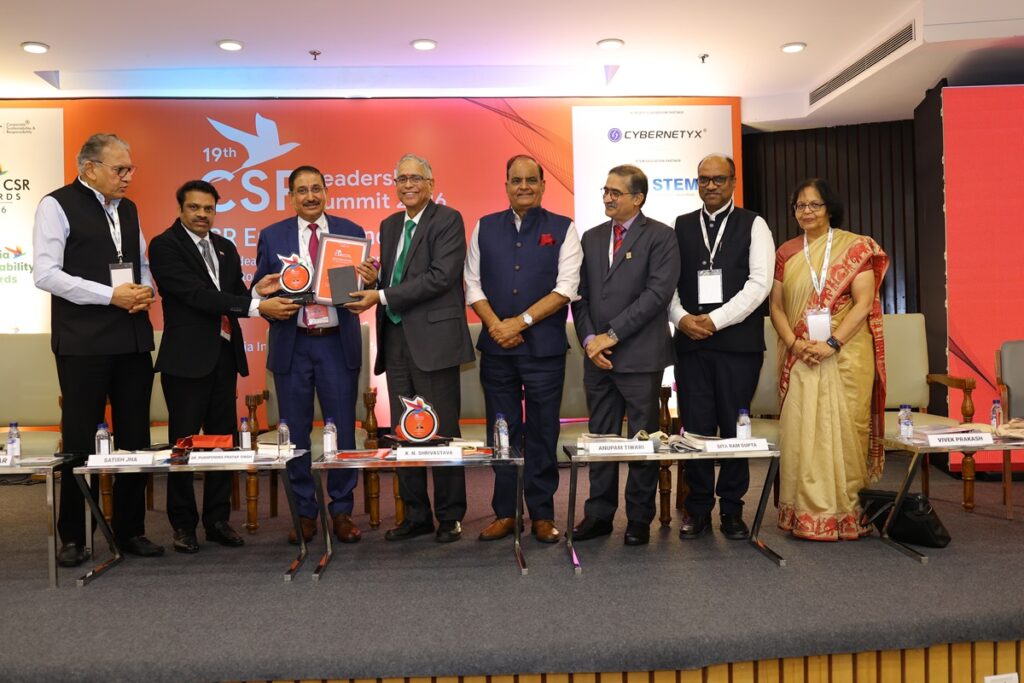
Innovation Reaches People
Speaking about the rapid growth of artificial intelligence, digital platforms, data and new technologies, Dr. Singh asked whether the benefits of innovation are reaching people with the fewest resources. Technology, he said, must not remain limited to those whose lives are already comparatively easier. Its value is greatest when it reduces distance, expands access and reaches communities that face barriers to education, healthcare, livelihoods and information. Real innovation should make learning more accessible, health support more available and public services more responsive. It should help communities not only receive assistance, but also develop the confidence and capability to identify problems and create their own solutions. The summit theme, therefore, carried a practical message: innovation becomes meaningful only when it addresses real challenges and makes social progress more inclusive.
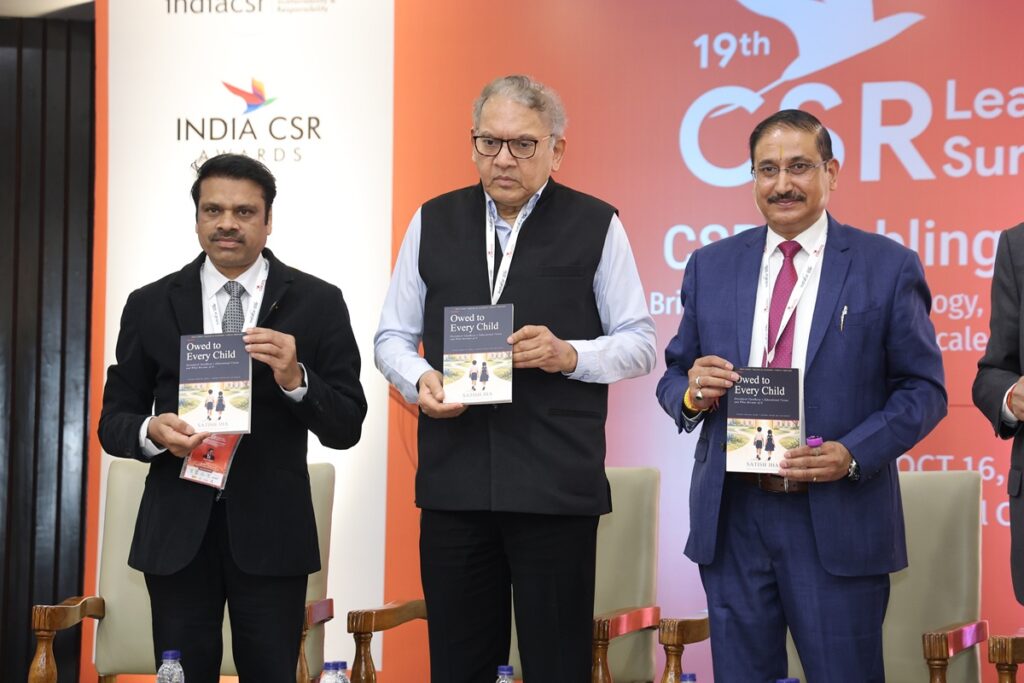
Humanity Guides Technology
The Chief Guest underlined that technology offers powerful tools, but human values must determine how those tools are used. Data can help organisations understand needs, monitor implementation and improve decisions. Digital platforms can make communication faster, services more accessible and reporting more transparent. Yet technology cannot replace empathy, local knowledge or meaningful human relationships. Dr. Singh said innovation must be measured by its ability to solve problems in people’s lives, not merely by its novelty or scale. A technology-led intervention must be designed around the realities of those it intends to serve. It must be simple enough to use, accessible enough to reach people and responsible enough to protect their dignity. “Technology humein naye tools deti hai, lekin direction humein apni humanity se leni hogi,” he said.
Opportunity Builds Agency
A central idea in Dr. Singh’s address was that CSR must help people become independent rather than creating permanent dependence. Sometimes, he said, people do not need another lecture; they need an opportunity, a mentor, a supportive environment or someone who believes in their potential. The most meaningful interventions combine immediate support with long-term capability. They enable people to gain skills, access education, improve livelihoods, build confidence and make informed decisions. “Help them today. Empower them for tomorrow,” he said. This approach changes the relationship between an organisation and a community. Instead of treating people only as beneficiaries, it recognises them as capable individuals, contributors and future leaders. CSR becomes stronger when it supports agency: the capacity of people to stand on their own feet and participate fully in social and economic life.
Courage Starts Change
Dr. Singh also challenged the belief that social change can only be created by large corporations, major budgets or high-visibility projects. Change, he said, begins with an idea, grows through courage and becomes real through commitment. Every organisation, leader and professional can make a difference at their own level. The relevant question is not how large an institution is, but how boldly it is willing to think and act. This perspective is important for India’s wider social-impact ecosystem, which includes businesses, foundations, civil society organisations, educators, innovators, public institutions and community groups. It recognises that even a focused intervention can create meaningful results when it is rooted in need, designed with integrity and supported over time. The spirit of responsible action must begin now, not wait for the ideal budget or moment.
Collaboration Multiplies Possibility
Calling collaboration essential for social progress, Dr. Singh said that no single institution has all the answers. One company may bring financial resources, another may offer technology, an NGO may understand local realities, and communities themselves may hold the clearest knowledge of the problems they face. When these strengths come together, he said, they create more than individual projects; they create possibilities. This is the partnership model reflected in the summit theme, which brought together ideas, technology, capital and partnerships to scale social impact. Dr. Singh urged organisations to keep competition within the business arena while making collaboration a shared strength for social development. Leaders should ask not only, “What have we done?” but also, “What can we do together?” Such thinking can help interventions become more relevant, trusted, scalable and sustainable.
Leadership Owns Responsibility
The address placed clear responsibility on corporate leaders to integrate social purpose into strategic decision-making. Dr. Singh said social responsibility is not the work of one department alone; it is a leadership decision, an expression of organisational values and a collective promise. This requires companies to set social goals alongside business goals, consider how innovation investments can benefit society and ensure that success is shared more widely. When companies adopt this mindset, CSR ceases to be an isolated activity and becomes connected to the organisation’s culture. It influences how leaders assess risk, choose partners, allocate resources and define success. The address also stressed that true progress cannot be assessed only through outputs and reports. It must be visible in the confidence, opportunity and dignity created for people whose lives are touched by a company’s work.
Beyond Calendar Dates
Speaking directly to corporate leaders, Dr. Singh said CSR should not be limited to a date on the calendar. “CSR ko calendar ki ek date tak mat rakhiye. Use apni company ki DNA ka hissa banaiye,” he said. This call distinguished between reporting an activity and creating genuine impact. Reporting may document a programme, but real impact requires patience, learning, accountability and sustained engagement with communities. It requires leaders to listen when a project needs to change, remain present beyond the launch phase and support solutions that can endure. A company may complete a project, but the real measure is whether the intervention remains useful to people after corporate teams step back. By embedding responsibility in organisational DNA, businesses can build a culture where social value is considered a core part of performance and leadership.
Partnerships Scale Solutions
Dr. Singh called upon the audience to move from isolated initiatives towards shared impact. He observed that a single business may not hold the solution to every social challenge, but every business possesses some capability that can contribute to solving one. It may be technical expertise, supply-chain strength, employee volunteering, financial support, market access, innovation capacity or the ability to convene partners. The need is to identify that strength and apply it purposefully. He asked whether companies, NGOs, communities, educators, innovators and government institutions could come together to transform good ideas into wider movements. “Can we move from isolated initiatives to shared impact?” he asked. The question captured the spirit of the India CSR Summit: social progress accelerates when institutions work with mutual trust, shared responsibility and a clear focus on outcomes.
Progress Includes Everyone
Concluding his address, Dr. Singh said that authentic success is not limited to a company’s name, financial performance or market position. Real success is reflected when someone else’s future becomes brighter because an organisation chose to act responsibly. He urged leaders to move beyond discussing change and begin building it; beyond funding ideas and start scaling solutions; beyond celebrating progress that reaches only a few and work towards progress that leaves no one behind. His closing message brought the hall together around a simple public commitment: “Business ka naam, samaj ka kaam. Nayi soch, nayi udaan. CSR se badhe Hindustan.” The address reinforced that CSR is not a peripheral obligation. It is a powerful opportunity for businesses to combine purpose, innovation, partnerships and leadership in service of a more inclusive India.
Also Read More on India CSR Summit and Awards
IIC Director K. N. Shrivastava Calls for CSR-Led R&D, Inclusive Innovation at India CSR Summit
Value Beyond Business: LT Foods’ Monika Chawla Jaggia Addresses India CSR Summit
LT Foods Awarded ‘Certificate of Honour’ at India CSR Awards for Sustainability Report 2024–25
Shallu Jindal Named India CSR Person of the Year 2026 – India CSR
HOPE Foundation Wins India CSR Award for Integrated Cradle-to-Career Model – India CSR



