





Foundation for Excellence leadership explains how scholarships, mentoring and career-readiness support help first-generation students secure jobs and financial independence.
NEW DELHI (India CSR): Scholarships are often measured through inputs—students supported, funds disbursed and degrees completed. However, the real test of an education intervention begins after graduation: whether a student secures meaningful employment, progresses in a career and contributes to their family’s financial independence.
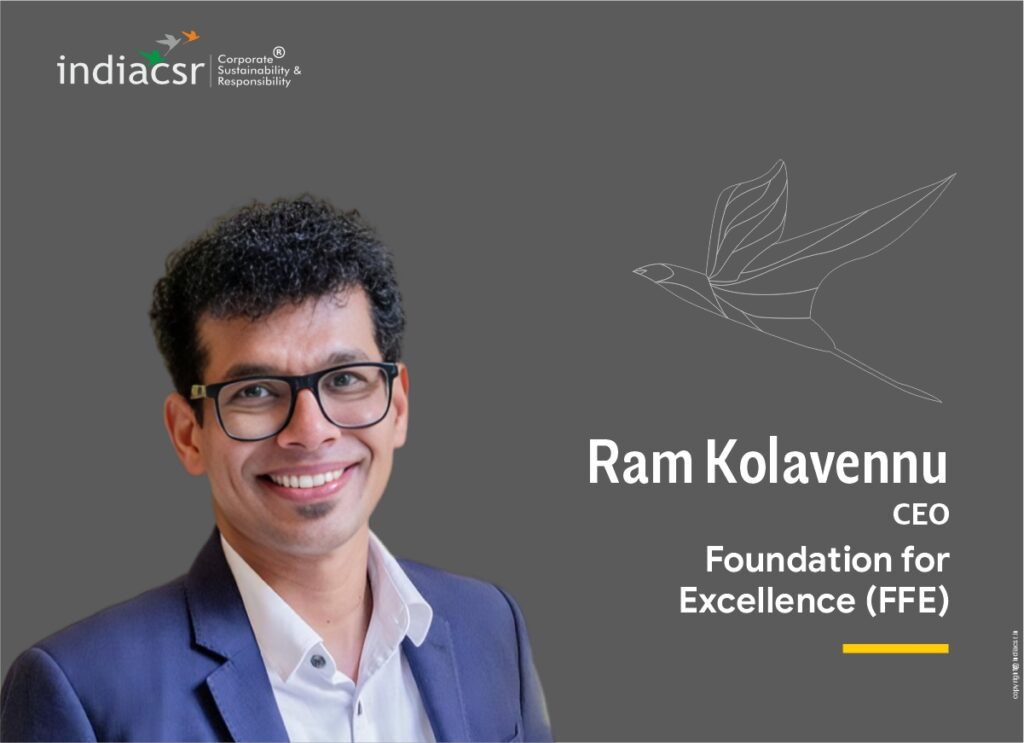
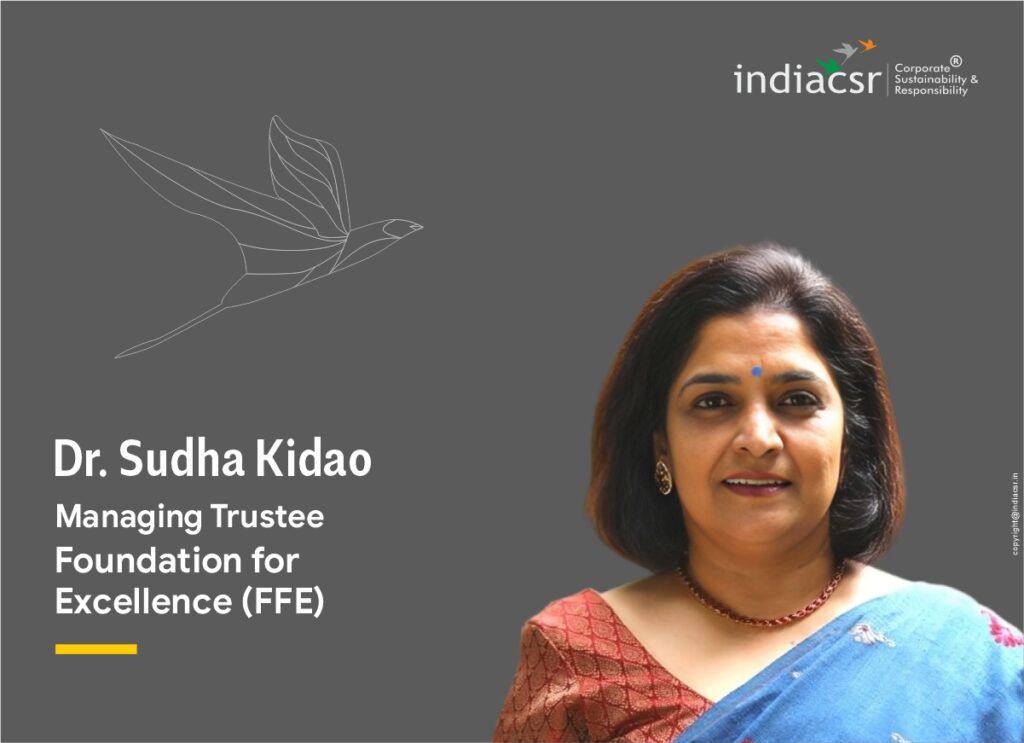
In an interaction with India CSR, Ram Kolavennu, CEO, and Dr. Sudha Kidao, Managing Trustee, Foundation for Excellence (FFE), explain why merit-cum-means scholarships must be supported by mentoring, employability training, industry exposure and sustained alumni engagement. According to FFE, 94% of its 2,594 Engineering scholars graduating in June 2025 were settled within a year through employment or higher studies, while placed scholars earned an average salary of Rs, 10.5 lakh per annum.
Q. How does FFE assess the long-term impact of its scholarships beyond enrolment and graduation?
As a sector, we have become very good at counting inputs: scholarships disbursed, students enrolled, degrees completed. These matter, but they are proxies. The question that really matters is what that support made possible years later.
At Foundation for Excellence (FFE), we treat a scholarship as the first investment in a career, not the last line of a grant report. So our relationship with scholars continues past graduation. We track each graduating cohort for a year after they leave campus: whether they are employed or in higher studies, the roles they take up, and what they earn. Because we record family income at selection, we can measure that outcome against where the scholar started, which is far more meaningful than an absolute number.
Scholar and alumni surveys add the qualitative layer: how ready they felt, where they struggled and what support they still need. That feedback shapes our ‘Beyond Scholarship’ programmes year on year.
My view is simple. An organisation that disengages at graduation cannot assess long-term impact. Staying connected is not only good measurement; it is what turns beneficiaries into alumni who come back as mentors and supporters.
Q. What do FFE’s scholars’ graduation and employment outcomes reveal about the effectiveness of merit-cum-means scholarships?
Merit-cum-means is, in many ways, the most efficient way to invest in education. Merit ensures the student can make full use of the opportunity; means ensures the support goes where it changes the outcome. India does not have a talent shortage among its low-income families. It has an access shortage.
The outcomes bear this out. Of the 2,594 Engineering scholars who graduated in June 2025, 94% were settled within a year, either employed or in higher studies. Placed scholars earned an average of Rs. 10.5 lakh per annum, many times what their families earned when they joined FFE.
The data also tells us the model works best when the cheque is not the only intervention. Merit gets a student into a good college; it does not bring a professional network, workplace English or interview confidence. That is the gap our ‘Beyond Scholarship’ work is designed to close.
Identifying talent is only half the job. Backing it all the way to the first job is what turns potential into productivity, for the scholar, their family and the industry that hires them.
Q. How important is the transition from education to employment in determining the success of an education intervention?
I would put it plainly: the transition to employment is where an education intervention either delivers its return or loses it. A degree without a job can add pressure on a low-income family that has sacrificed for it, while leaving a young person with a qualification they cannot yet convert.
Having worked in organisations like Unilever and Tesco, I have seen how hiring decisions are made. Employers rarely turn down a candidate for lack of a degree. They turn them down for gaps in communication, confidence and understanding of the workplace. These are exactly the gaps first-generation graduates carry, through no fault of their own.
That is why at FFE we work backwards from the first job, combining the scholarship with mentoring, skilling, industry exposure, internships and employment linkages.
When the transition works, the effects compound. A first salary stabilises a household, a younger sibling stays in school, and many of our alumni return to mentor and support the next set of scholars. That is impact that keeps paying forward long after any single intervention ends.
Q. What trends has FFE observed in scholars’ career progression and earning potential after they enter the workforce?
The most encouraging trend is consistency. Over the past several years, more than 90% of our scholars have settled within a year of graduation, in employment or higher studies, and average salaries among placed scholars have stayed above ₹10 lakh per annum. One strong cohort can be luck; a pattern across cohorts tells you the model is working.
We also see scholars entering a widening range of industries and roles, and a meaningful share choosing higher studies. That tells us they are making career choices, not simply accepting the first offer available. For first-generation professionals, that sense of choice is itself a marker of progress.
The trend I watch most closely is the changing nature of entry-level work. AI is reshaping what employers expect from fresh graduates, and the roles our scholars enter today will look different in five years. That is why we have begun building AI-related training into our skilling programmes.
I will be candid: our structured tracking is strongest in the first year after graduation. Building a longer view of career progression is a priority for us, and an area where industry partners can help us go further.
Q. How does FFE track whether its support contributes to financial independence for scholars and their families?
Financial independence is ultimately a household outcome, not just an individual one, so we measure it against a baseline. Because FFE scholarships are means-based, we record each scholar’s family income at selection. Comparing it with their first salary, we find that on average a scholar’s starting salary is 8 to 9 times their family’s annual income at the time they joined FFE.
That ratio is, for me, one of the most powerful numbers in our work. It captures in a single line what a scholarship, backed by employability support, can achieve within one generation.
Alongside this, our placement tracking follows each cohort for a year after graduation, covering employment status, job roles, salary levels and progression to higher studies. Scholar and alumni surveys tell us what the numbers cannot: how scholars experience the transition and what support they still need.
The broader point for anyone working in education is that baselines matter. Without knowing where a beneficiary started, it is hard to say how far they have travelled. Capturing that information at entry costs very little, and it makes every outcome that follows far more meaningful.
Q. What role does mentorship play in helping scholars navigate the transition from college to their first job and subsequent career growth?
In corporate India, careers are built as much on networks as on qualifications: someone to call for advice, someone who explains how appraisals work, someone who helps you weigh two offers. Most of our scholars are first-generation learners. They arrive with merit, but without that invisible network.
Mentorship is how we give them one. Through FFE’s Mentoring Program, scholars are paired with experienced professionals who guide them on communication, career choices and workplace expectations. As a certified career coach, I know how much one honest conversation can change a young person’s trajectory.
This is also where I see CSR evolving. It is moving from Corporate Social Responsibility, a budget line managed by one team, to Collective Social Responsibility, where employees bring their time, skills and networks alongside the company’s funding. When a professional spends an hour a month with a scholar, the scholar gains a guide, the employee gains a sense of purpose, and the company gains a more engaged workforce and a stronger talent pipeline.
Many of our own alumni now return as mentors, which is perhaps the best evidence that it works.
Q. Have FFE’s Beyond Scholarship initiatives, such as English, aptitude, technical, and interview-readiness programs translated into stronger career outcomes for scholars?
Yes, and the evidence has reshaped how we see our role. Most FFE scholars come from rural or semi-rural backgrounds and studied largely in vernacular languages. They have the technical ability, but often lack fluency in workplace English, practice with aptitude tests and interview experience, which are precisely the filters campus recruiters apply first.
Our ‘Beyond Scholarship’ programmes target those filters directly: English communication, aptitude, technical and interview-readiness training, alongside mentoring, project-based learning, AI-related sessions, industry exposure and internships.
Since we introduced them, average salaries among placed scholars have risen to 2.4 times their earlier levels. Many factors shape career outcomes, so we do not attribute this to any single programme, but a shift of that scale gives us real confidence.
The lesson is that employability is a design problem, not a talent problem. Companies that hire from campuses know exactly where the gaps are, and their employees are often best placed to close them: running mock interviews, sharing real project briefs or showing how their industry is using AI. That is far more valuable to a scholar than a guest lecture, and in my experience it is some of the most meaningful volunteering an employee can do.
Q. How can education-focused organizations move beyond measuring the number of students supported to measuring meaningful long-term outcomes?
Counting students supported measures effort. Tracking where they go next measures impact. Our sector, and CSR reporting more broadly, still leans on the first, partly because it is easier and partly because funding cycles often end before outcomes appear.
I would suggest three shifts. First, capture a baseline at entry. Family income and educational background give you the reference point against which progress becomes visible. Second, stay connected beyond graduation through placement tracking, alumni surveys and ongoing engagement, rather than letting the relationship end when funding does. Third, look across cohorts, not a single year, so you can tell a lucky batch apart from a model that genuinely works.
At FFE, this is what allows us to say with confidence that over 90% of scholars settle within a year of graduation, and that their first salaries are, on average, 8 to 9 times their family’s income when they joined.
Funders have a role here too. If CSR partners ask only for numbers reached, that is what organisations will report. If they ask for outcomes, and fund the systems needed to track them, the whole sector becomes more accountable and more effective.
Q. What does FFE’s experience suggest about the role of skills, mentorship, and career readiness alongside financial assistance in improving employment outcomes?
Our experience is that financial assistance opens the door, but skills, mentorship and career readiness decide how far a scholar walks through it. Each is useful on its own; together they compound.
The clearest evidence comes from comparing cohorts. Before we introduced structured skilling, around 80–85% of our Engineering scholars secured employment or moved into higher studies. Across the 2020–2024 graduating cohorts, with those interventions in place, that figure rose to 93–96%.
There is an important design lesson here for the sector. Education support is often split into separate scholarship and skilling programmes, funded by different partners and measured on different metrics. The scholar experiences them as one journey. When they are integrated, the return on every rupee rises, because the scholarship funds a degree that the skilling then helps convert into a career.
The softer dimensions matter as much as the technical ones: confidence, communication and an understanding of workplace expectations. They are hard to capture on a dashboard, but recruiters notice them within the first few minutes of an interview.
Q. Can the economic progress of FFE scholars help demonstrate the potential of education as a pathway to intergenerational financial mobility?
Yes, and I believe it is one of the most compelling arguments for investing in higher education. When a scholar’s first salary is many times what their family earned in a year when they joined FFE, that is not incremental progress. It is a structural shift in a household’s economic position, achieved within a single generation.
The effects travel beyond the scholar. Families gain stability and younger siblings see a path into higher education that once seemed out of reach. Many of our scholars are the first professionals in their families.
I want to be careful about what we claim. FFE does not yet directly measure intergenerational mobility over the long term. But the employment and income outcomes we track offer strong early evidence of that shift, and building a longer-term evidence base is something we would welcome partners to support.
What gives me the most hope is that this change is increasingly a collective effort. Donors fund the scholarship, professionals give their time as mentors and trainers, and alumni return as mentors, volunteers and supporters through our Circle of Giving. That is Collective Social Responsibility in practice: no single organisation owns the outcome, and the cycle keeps renewing itself.



