

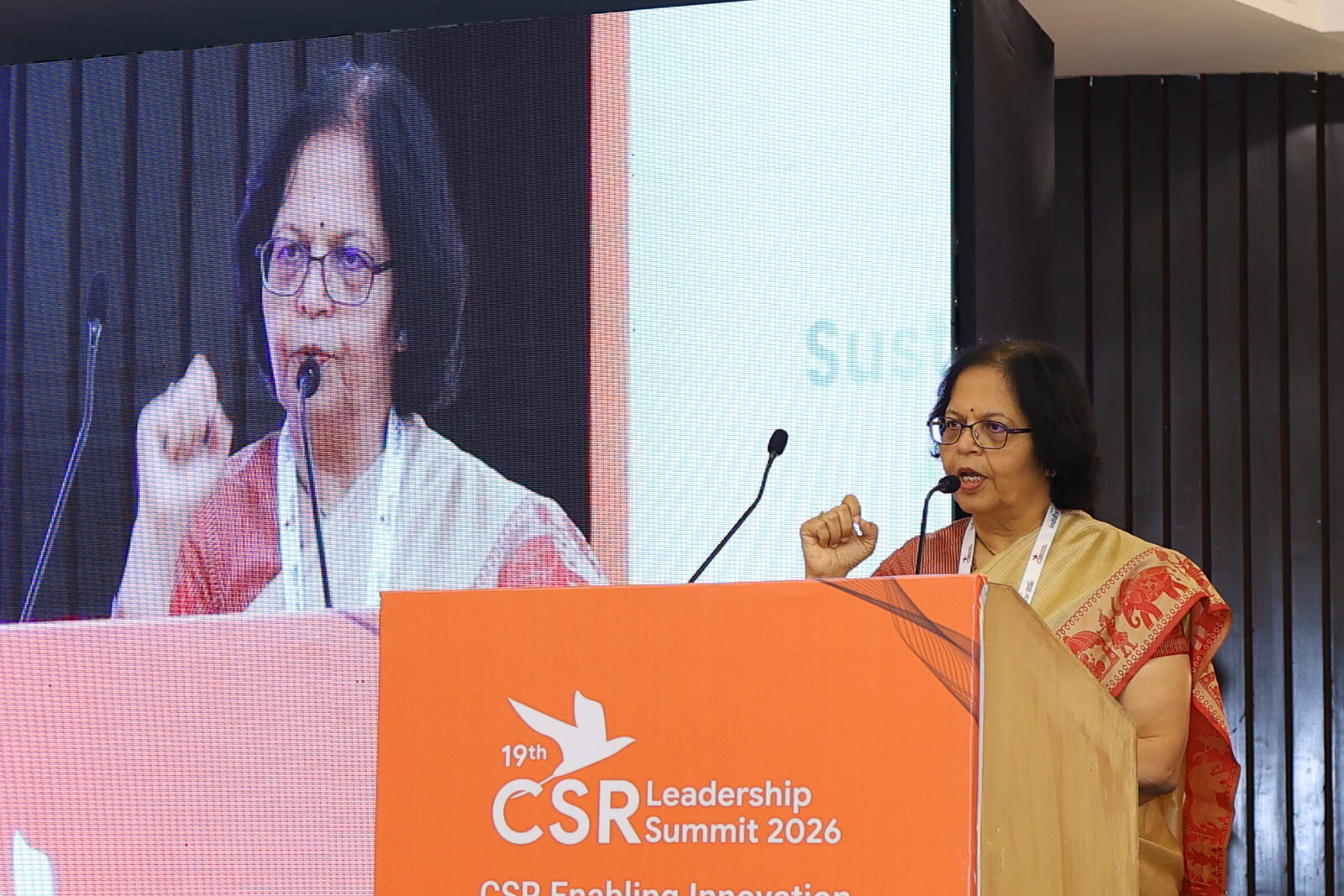


Addressing the inaugural leadership session at the 19th India CSR Summit 2026, Bharat Forge’s VP–Human Resources and Corporate Head–CSR said corporate responsibility must combine management discipline, empathy and sustained community engagement.
NEW DELHI (India CSR): “CSR is not just social work. It is a combination of management, project management and social work,” said Bharat Forge Ltd.’s Vice President–Human Resources and Corporate Head–CSR Dr. Leena Deshpande at the 19th India CSR Summit 2026. Delivering a special address during the inaugural session, CSR Enabling Innovation, at the India International Centre on October 16, the eminent CSR leader called for transformational CSR rooted in innovation, inclusion, community dialogue, professional leadership and measurable impact. She said CSR must move beyond compliance and funding by bringing corporate technology, project-management capability, vision and execution speed into social development. Bharat Forge, which operates in defence, aerospace, electric vehicles and vehicle components, has worked in the social sector for nearly five decades, she said. The address examined innovation in CSR, the need for grassroots engagement, equitable development and outcome-focused programmes.
CSR Begins Inclusion
The renowned CSR leader described the enactment of the CSR law as an important innovation in India’s development framework. India became the first country to require qualifying companies to spend a prescribed portion of their profits on CSR, creating a structured route for corporate participation in social development. However, the central purpose of the law, the speaker said, must not be reduced to expenditure alone. “Corporates are involved not just for funding. Corporates are involved to transfer their technology, their project-management skills, their vision and their speed to social processes,” the Bharat Forge leader said. She argued that this wider contribution gives CSR its relevance. In her view, statutory provisions, amendments, evolving policies and corporate discussions on social priorities should be seen as part of a continuing process of innovation. The goal, she said, should remain the inclusion of people who have not yet fully participated in India’s growth journey.
***
Innovation Needs Purpose
Distinguishing innovation from invention and discovery, the speaker said innovation is a gradual and useful change that responds to changing needs. She cited the electric bulb as an invention and the LED bulb as an innovation built upon that earlier idea. Discovery, she noted, is different again. This distinction was used to explain why innovation in CSR does not always mean a radical new programme or a technology-led intervention. It may instead begin with a better question, a more relevant delivery process or a more responsive measurement framework. “Innovation is a gradual change. It is not radical change,” she said. According to her, innovation begins at the stage when a company’s leadership and board decide their CSR priorities, formulate a policy and identify communities with whom they will work. Thoughtful programme design, she suggested, is itself an essential form of innovation.
***
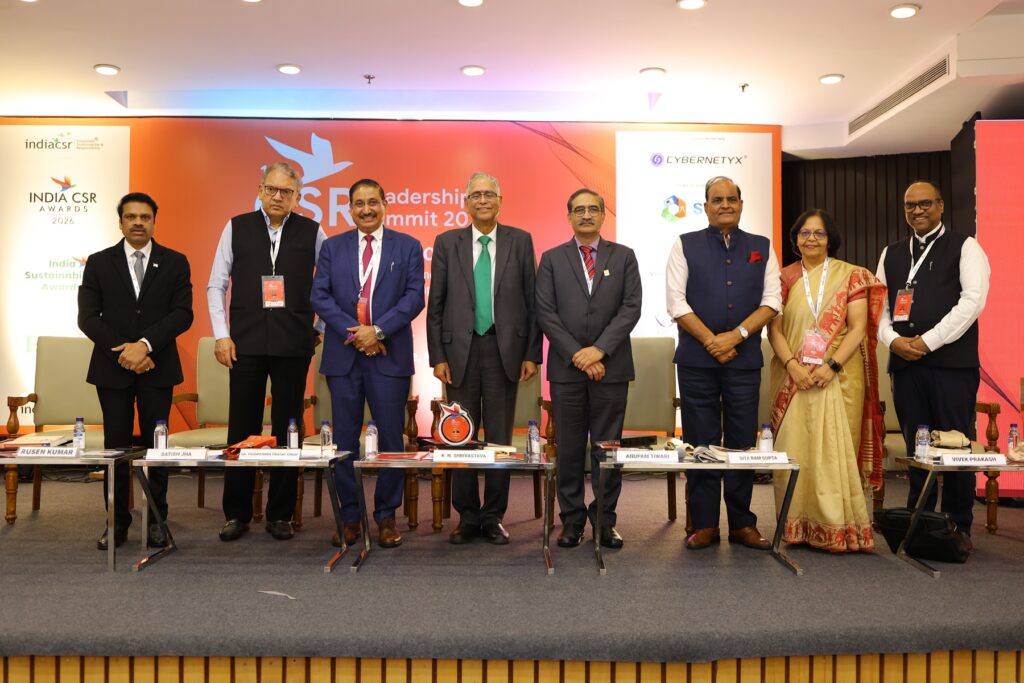
Village Dialogue Matters
Bharat Forge decided to work in villages because inclusion lies at the heart of the CSR framework, the speaker said. But she cautioned against treating rural development as an exercise in appointing an NGO and implementing a standard programme. Such an approach, she said, can lose relevance over time if companies do not remain connected to the communities concerned. “Communication is the key. We need to be in the field; we need to have dialogue,” she said. Understanding the exact needs of a particular group requires a process of listening and engagement, rather than an assumption that a project chosen from outside will necessarily be the right intervention. The address underlined the importance of field presence for CSR leaders and teams. It also suggested that the quality of dialogue between companies, implementing organisations and communities can determine whether a programme becomes responsive, trusted and capable of delivering enduring social outcomes.
***
Needs Define Interventions
Illustrating the value of listening, the Bharat Forge leader recalled a discussion on a proposed village water project. Water was believed to be the most urgent local requirement, until an elderly resident spoke about the village’s lack of a cremation ground for more than 90 years. During the rainy season, she said, people had to manage funerals in deeply difficult conditions. The example, Dr Leena noted, changed the understanding of what needed to be addressed. “We need to identify the exact needs, and for that our processes should have dialogue,” she said. The anecdote reflected a larger point: interventions designed without community consultation can overlook priorities that are immediate, dignified and deeply connected to everyday life. CSR programmes, therefore, need to include processes that allow communities to articulate their needs and participate in deciding the sequence, form and implementation of local development work.
***
Geography Shapes Equity
Dr. Leena Deshpande also raised the issue of geographic imbalance in CSR expenditure. Maharashtra, Gujarat, Karnataka and Tamil Nadu, she said, are among the states that remain at the forefront of CSR generation and attract a significant share of corporate social spending. By contrast, several regions in the North-East, including Mizoram and Nagaland, receive far less CSR support and may not generate sizeable CSR resources within their own geographies. The observation drew attention to a longstanding question in the CSR ecosystem: how can corporate resources reach communities outside major industrial and commercial centres? Companies need to assess which sectors and geographies are already receiving attention before choosing their own focus areas, Dr. Leena Deshpande suggested. Education and healthcare attract a large share of CSR activity, but other local needs may remain underserved. Inclusion, in this sense, requires both social sensitivity and a more equitable view of geography.
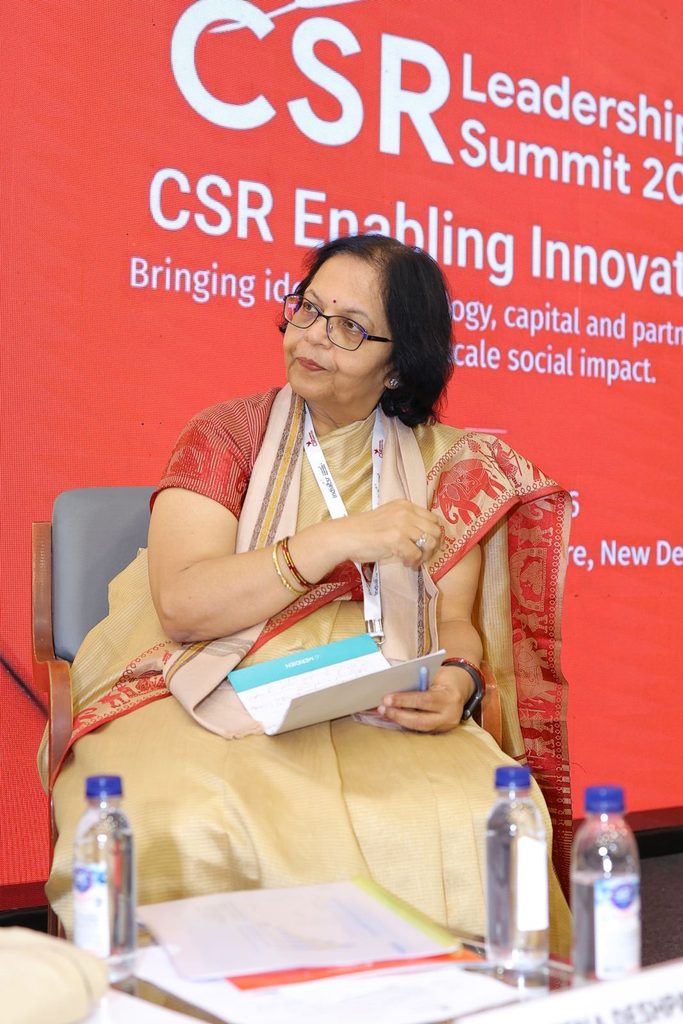
***
Measuring Real Impact
CSR reporting must increasingly explain impact in measurable terms, particularly in environmental and sustainability initiatives, said the India CSR Person of the Year awardee. She referred to carbon sequestration as one way of assessing the impact of tree plantation and other nature-based programmes. Rather than merely reporting the number of saplings planted, companies should seek to communicate the amount of carbon dioxide expected to be absorbed over time. Likewise, water-related programmes should show the relationship between industrial water consumption and the quantum of water harvested or replenished. “We need to speak about the impact of CSR,” she said. The approach calls for indicators that make the outcomes of social and environmental investment more visible, comparable and credible. While such metrics cannot capture every aspect of community well-being, they can help CSR teams move from activity reporting to evidence-based assessment. The speaker said innovation in CSR requires this sharper focus on results.
***
Leadership Drives Transformation
CSR leadership must combine management capability with social understanding, the Bharat Forge representative said. “CSR is not just social work. It is a combination of management, project management and social work,” she said. In her view, the field has become a full-fledged profession requiring vision, a disciplined approach and a genuine commitment to people. She stressed that passion and empathy are essential qualities for CSR professionals, alongside technical competence. Leaders need to understand what programmes are doing at the field level if they are to seek meaningful results. Dr. Leena Deshpandy, who also heads India’s Leagest forging company’s HR Department, linked this approach with a broader shift from transactional processes to transformative work. She called for “transformational CSR”, where programmes seek to influence systems, local capacity and long-term opportunities rather than merely complete activities within a financial year. Such leadership, she said, is necessary for innovation to translate into impact.
Dr. Leena Deshpande, Head – CSR, Bharat Forge | 19th India CSR Leadership Summit 2026 – YouTube
***
NGO Capacity Matters
Corporate responsibility also includes strengthening the capacity of non-governmental organisations that implement programmes on the ground, the speaker said. Bharat Forge works with 15 NGOs, according to the address, and the company’s Chairman and Managing Director meets these organisations annually to provide guidance. The company also conducts training programmes for its NGO partners. This emphasis on partner capacity is important because even a well-designed CSR programme depends on the ability of local institutions to implement, monitor and sustain it. CSR teams can contribute management systems, planning support, learning opportunities and access to professional expertise. The speaker argued that corporates should help build institutional strength among their partners, particularly when programmes seek to address complex issues such as livelihoods, education, health, water or environmental sustainability. Capacity building can improve implementation quality and help NGOs develop the confidence and systems needed to work at scale.
***
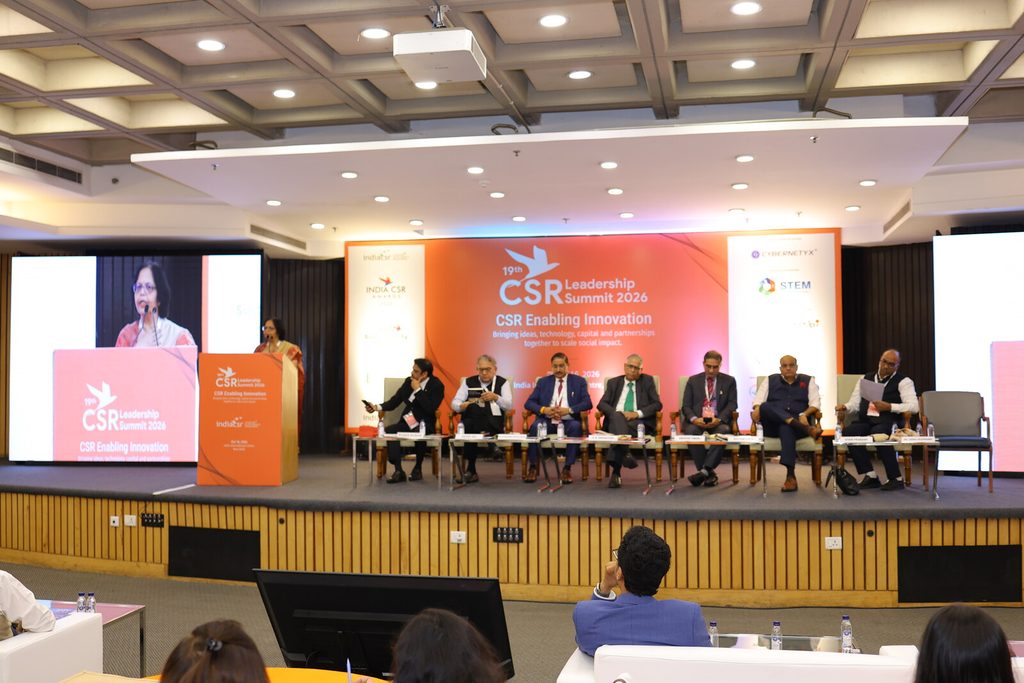
Poverty Demands Action
The address placed the need for innovation in the context of India’s wider development challenge. The speaker referred to multidimensional poverty and India’s Human Development Index position to underline that considerable work remains even as the country pursues ambitious economic goals. “We are talking about a five trillion dollar economy. We are talking about a lot of transformation. Do not forget the fact that 234 million people still live in multidimensional poverty in this country,” she said. The point was not presented as a criticism of progress, but as a reminder that economic growth and social development must advance together. CSR, she suggested, can make a meaningful contribution when it is aligned with communities’ real needs, backed by professional implementation and evaluated through credible outcomes. The challenges of poverty, inequality, education, health and climate resilience require sustained, coordinated action across sectors.
***
Professionalism Must Deepen
Her central argument was that CSR must be treated as a professional discipline rather than an extension of corporate philanthropy. Compliance remains important, but it cannot become the only measure of success. Companies need policies that reflect a clear purpose, teams that understand development contexts, partners with local credibility and systems that can track outcomes over time. Innovation in this setting can involve a new technology, but it can also involve better listening, a changed programme process or a more equitable allocation of resources. She said workshops, stakeholder dialogues and platforms for exchanging ideas can help CSR professionals learn from each other and improve their approaches. For a sector working across varied themes and geographies, this continuous learning is essential. It can help companies avoid standardised solutions and develop interventions that respond to the realities of communities, local institutions and changing social needs.
***
Future Calls Now
Concluding the address, the Bharat Forge leader urged CSR professionals and corporate leaders to strengthen their commitment to inclusive development. She said the spirit of CSR requires both a strategic vision and empathy for people who remain outside the benefits of growth. The future of CSR, according to the address, will depend on whether corporate programmes can connect innovation with inclusion, management discipline with field engagement, and environmental commitments with measurable outcomes. The call for transformational CSR reflected the summit’s wider theme of bringing ideas, technology, capital and partnerships together to scale social impact. For companies, the message was clear: meaningful CSR is not created only through budgets or annual action plans. It is built through a patient process of understanding communities, supporting capable partners, measuring outcomes and remaining accountable to the people and places that programmes are intended to serve.
Also Read
IIC Director K. N. Shrivastava Calls for CSR-Led R&D, Inclusive Innovation at India CSR Summit
Value Beyond Business: LT Foods’ Monika Chawla Jaggia Addresses India CSR Summit
HOPE Foundation Wins India CSR Award for Integrated Cradle-to-Career Model – India CSR
LT Foods Awarded ‘Certificate of Honour’ at India CSR Awards for Sustainability Report 2024–25
HOPE Foundation Wins India CSR Award for Integrated Cradle-to-Career Model



