



Krishan Shah, Chief Finance Officer, Omnicom Global Solutions (India & Philippines), discusses how experiential learning, teacher enablement and sustained partnerships can strengthen STEM education in government schools.
NEW DELHI (India CSR): As India’s focus on STEM education grows, access to laboratories, devices and enrolment must be matched by learning experiences that build curiosity, confidence and real-world problem-solving skills. In this interview with Rusen Kumar, Editor, India CSR; Krishan Shah, Chief Finance Officer, Omnicom Global Solutions (India & Philippines), shares the thinking behind OGS’s Building for Tomorrow CSR vision and its three-year partnership with the Prayoga Institute of Education Research. He explains why hands-on science must go beyond infrastructure, why empowered teachers are central to classroom transformation, and how programmes such as Future Innovators Lab Stations, I-GYM and KRIYA are helping students observe, experiment, question and learn through discovery.
Excerpts:
Q. What was the primary motivation behind OGS India’s decision to focus on experiential STEM education for government school students?
At Omnicom Global Solutions (OGS), our CSR vision, Building for Tomorrow, is rooted in the belief that access to opportunity, education, and future skills creates lasting social impact. We were particularly drawn to experiential learning of science and mathematics because it moves learning beyond memorization and into exploration. When students can observe, experiment, ask questions, and test ideas for themselves, concepts become more relevant, engaging, and meaningful. As an organization built on problem-solving, innovation, and collaboration, we believe these are exactly the kinds of skills young people will need to navigate the future. Supporting experiential learning is one way of helping create environments where curiosity can thrive.
Q. How does the partnership with the Prayoga Institute of Education Research align with OGS’s broader CSR goals?
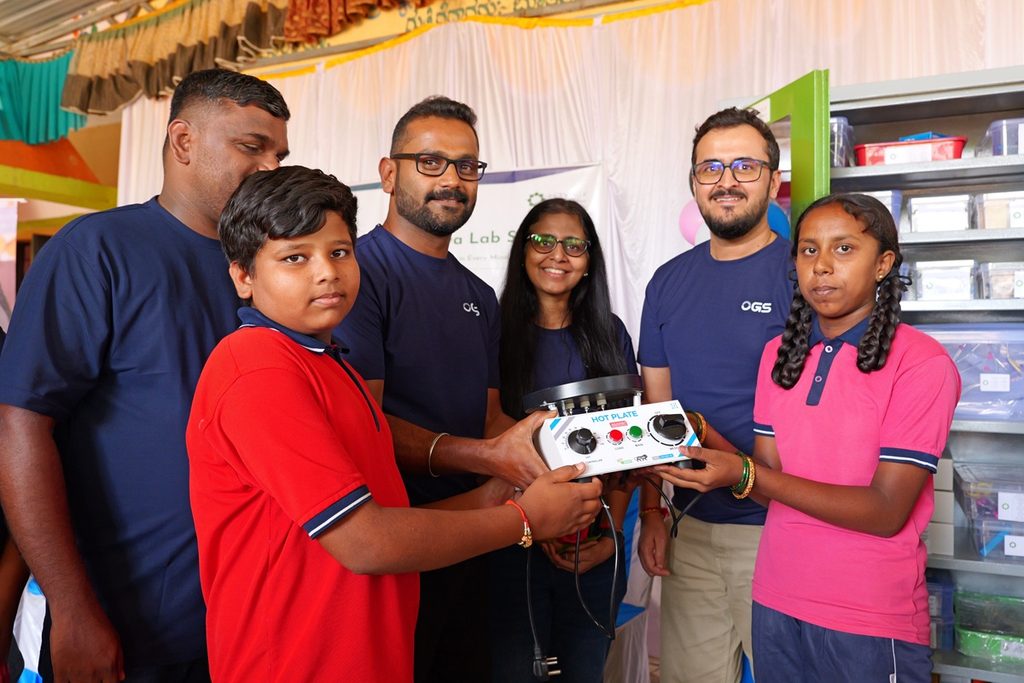
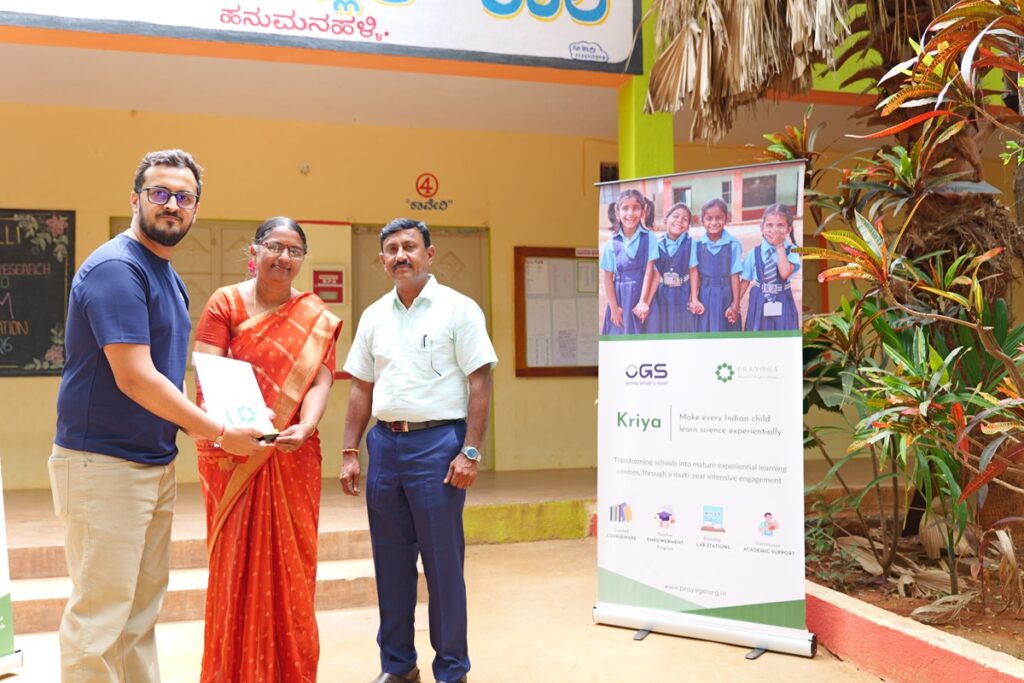
Our partnership with Prayoga aligns closely with our belief that ideas must move from rooms to the real world. Through Building for Tomorrow, we look for initiatives that create opportunities, unlock potential, and deliver sustainable impact. Education and future-skills development are important pillars of our CSR strategy, whether through our partnership with Prayoga or our support for Foundation for Excellence (FFE), which helps talented students from financially disadvantaged backgrounds pursue higher education and build pathways to professional careers. Beyond sponsorship, several OGS leaders and employees also mentor these students, helping them prepare for the transition from education to the workplace. Prayoga’s approach to experiential learning, teacher empowerment, and scientific inquiry strongly resonated with us because it focuses not only on access to education but also on the quality of learning. Over the past three years, our partnership has evolved from supporting Future Innovators Lab Stations to engaging with programs such as I-GYM and the KRIYA initiative. Throughout, the shared objective has remained the same: helping students develop curiosity, confidence, and future-ready skills through meaningful learning experiences.
Q. As the OGS-Prayoga partnership enters its third year, what outcomes or changes have you observed among students and teachers so far?
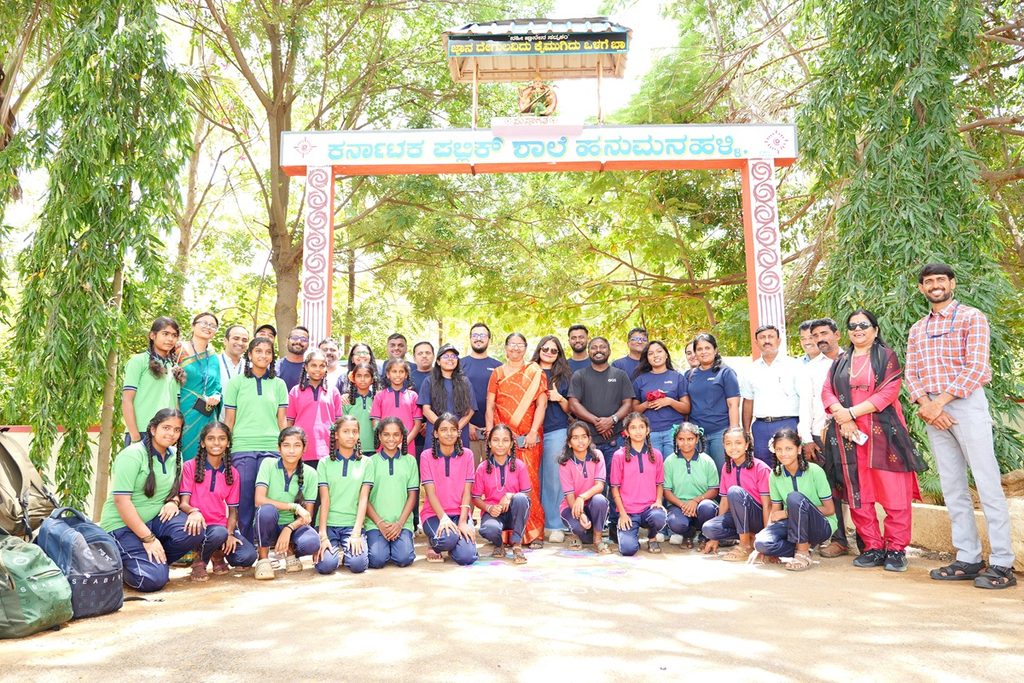
One of the most encouraging aspects of the partnership has been the enthusiasm with which students and teachers engage in hands-on learning. Through our interactions during school visits, National Science Day activities, and Prayoga-led initiatives, we have seen students participate more actively, ask more questions, and engage more deeply with scientific concepts. Equally important is the confidence it builds among educators. When teachers have access to the right tools, resources, and support, they are better equipped to create learning environments where students actively participate rather than passively receive information. While educational transformation is a long-term journey, the engagement we have witnessed among both students and teachers reinforces our belief in the value of this approach.
Q. Beyond providing physical infrastructure like LabStations, why is teacher enablement so critical to the success of this programme?
Infrastructure is important, but infrastructure alone does not transform learning outcomes. A LabStation becomes impactful when educators are confident in using it as part of everyday teaching. Teachers play a critical role in turning resources into meaningful learning experiences. That is why we strongly value Prayoga’s emphasis on teacher empowerment. By supporting educators with training, resources, and practical approaches to experiential learning, the programme helps ensure that scientific inquiry becomes part of the classroom culture rather than a one-time activity. Ultimately, empowered teachers create empowered learners.
Q. How do you measure the impact of the programme, and what indicators help you understand whether hands-on learning is making a difference for students and teachers?
We view impact through both quantitative and qualitative measures. Prayoga’s evaluation frameworks help assess programme effectiveness through indicators such as student participation, classroom engagement, teacher adoption of experiential methods, and student competencies of learning and doing science. We also value feedback from students, teachers, and school leaders because some of the most meaningful outcomes, such as greater curiosity, confidence, and willingness to ask questions, are often reflected through lived experiences in the classroom. Impact measurement is important, but so is understanding how learning experiences influence behaviour and engagement over time.
Q. With STEM enrolment rising nationally, how can corporates ensure that their CSR interventions address the quality of learning rather than just access?
Access is essential, but access alone is not enough. The real opportunity lies in helping students develop critical thinking, problem-solving abilities, and the confidence to apply knowledge in real-world situations. . Corporates can contribute by supporting stronger learning ecosystems through teacher development, experiential learning opportunities, mentorship, technology-enabled learning, and partnerships with institutions that possess deep educational expertise. The focus should not simply be on increasing participation, but on creating richer learning experiences that help students build future-ready capabilities.
Q. As the partnership evolves, what is the long-term vision for the programme? Do you see the potential to reach more schools or geographies over time?
Our immediate focus is to continue supporting high-quality implementation and meaningful outcomes through the current initiatives. The long-term aspiration is to help create scalable models that encourage curiosity, scientific thinking, and experiential learning among young people. As we continue learning from the partnership and assessing impact, we will explore opportunities to deepen and strengthen our contribution. Any future expansion would be guided by the effectiveness of the model and the ability to create sustainable impact at scale. For us, growth is not only about reaching more schools but also about ensuring that the learning experience remains meaningful and effective.
Q. What have been the biggest challenges in implementing the programme in government schools?
Every school ecosystem is unique, and meaningful educational change requires patience, collaboration, and adaptability. Implementation often involves coordinating across multiple stakeholders, understanding local contexts, supporting educators, and ensuring resources are effectively integrated into existing teaching environments. What has been encouraging is the commitment shown by teachers, school leaders, and Prayoga’s team in working through these challenges together. Their dedication has been instrumental in driving the programme forward and reinforcing the value of long-term partnerships over short-term interventions.
Q. What does Prayoga bring to the partnership that makes the model more effective?
Prayoga brings deep expertise in education research, experiential learning, and teacher empowerment. What we particularly value is their ability to connect research with classroom practice. Their programmes are designed not only to introduce new tools and resources but also to help educators use them effectively. They understand the realities of school environments and have developed approaches that encourage students to observe, experiment, question, and learn through discovery. This combination of educational expertise, implementation experience, and commitment to long-term impact makes the partnership especially meaningful.
Q. How can early hands-on exposure to science shape students’ longer-term interest in STEM?
Hands-on exposure helps students see science as something they can experience rather than simply study. When learners investigate questions, conduct experiments, and observe outcomes for themselves, they begin to develop curiosity, confidence, and a deeper understanding of scientific concepts. Importantly, experiential learning also helps students appreciate that science is not limited to laboratories or textbooks. It is connected to the world around them, from environmental sustainability and technology to healthcare and everyday problem-solving. Early exposure can inspire students to explore future opportunities in STEAM, but perhaps even more importantly, it encourages a mindset of inquiry and lifelong learning that remains valuable regardless of the career path they choose.



