

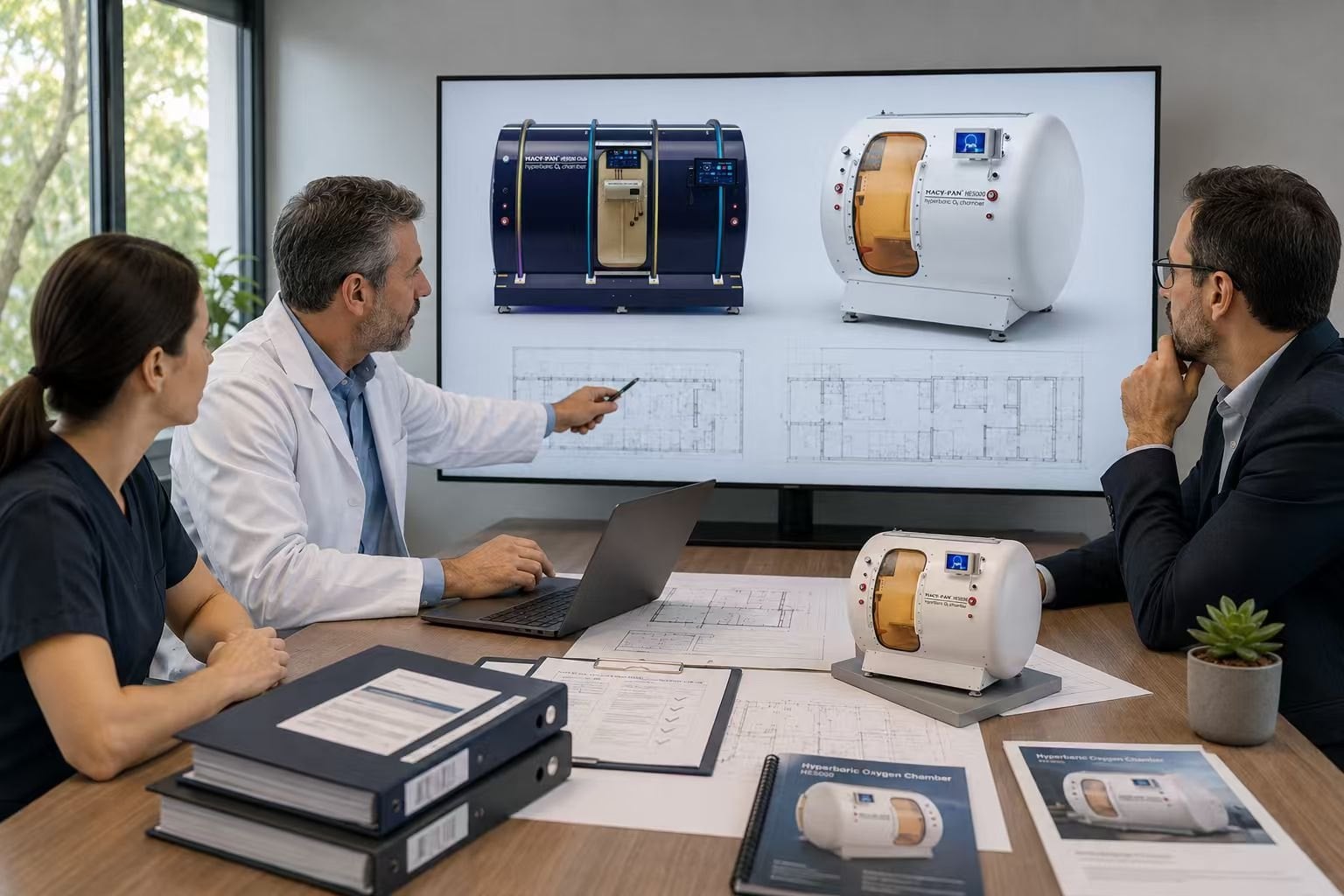



Responsible sourcing is often reduced to a supplier questionnaire. For specialized equipment, that is too narrow. A buyer qualifying an international equipment supplier needs evidence about the manufacturer, OEM role, and proposed soft chamber, hard chamber, or multiplace chamber configuration. Hyperbaric chamber projects make the point clearly: the equipment choice involves a pressure environment, a planned site, an operator, service expectations, and potentially a regulated clinical setting. Responsible procurement connects those realities instead of treating social responsibility, technical suitability, and lifecycle support as separate files.
Its purpose is not to demand universal promises from every supplier. It is to establish what the buyer needs to know before awarding business and what must remain visible after the award. That includes the manufacturing relationship, product configuration, documentation boundaries, packaging and logistics assumptions, maintenance responsibilities, and a method for handling concerns. It also includes a hard limit: no supplier qualification process can authorize clinical use or predict patient outcomes. Clinical use depends on applicable regulation, the intended use of the relevant device, and qualified professional oversight.
Begin with responsible scope definition
Scope matters. A qualification record becomes useful only when each claimed role, supplied document, installation boundary, service promise, and unresolved local responsibility is tied to a named owner who can answer for it before award and after delivery.

Write it down. When a proposed chamber moves from inquiry to award, the record should connect the named configuration, supplier responsibility, document version, installation assumption, service boundary, local review owner, and unresolved decision in one traceable chain so finance, operations, compliance, and the eventual operator can see exactly what changed and why.
A procurement team cannot judge a supplier responsibly if its own requirement is vague. The sourcing brief should identify the intended setting, the geography of delivery, the broad configuration needed, the buyer’s site constraints, and the parties who will own installation, operation, maintenance, and compliance review. macypansolutions describes OEM and wholesale sourcing; a buyer should still make the proposed manufacturer role and chamber configuration explicit in the project record. It should state what the project is not asking the supplier to decide. For example, the supplier can provide information and model-specific documentation; the buyer’s qualified advisers decide whether a proposed arrangement is appropriate under local rules.
This separation protects both parties. It stops a sales claim from becoming a compliance conclusion and stops a buyer from expecting a manufacturer to solve unknown site conditions after shipment. A clear brief also makes supplier comparison fairer. If one response includes shipping support and another assumes a buyer-appointed freight forwarder, that difference should be visible before a price is ranked.
Core questions for an accountable brief
- Which organization is the contracting supplier, and what is its role in design, manufacture, distribution, or service?
- Which proposed configuration is being evaluated, and which assumptions about use, space, power, and access are attached to it?
- Which documents are available for the proposed configuration, and which buyer-side specialist will review them?
- What is included in packing, transport coordination, installation support, training, maintenance, and spare-parts availability?
- How will concerns, defects, changed requirements, or documentation gaps be recorded and escalated?
Those questions turn “responsibility” into observable work. A supplier may not control every downstream service, but the allocation of responsibility must be recorded rather than implied.
Assess transparency before scoring performance
Supplier scorecards can create false confidence when they award points for broad statements. Before scoring a supplier’s performance, test whether the supplier can be transparent about basic facts. Can it identify the legal entity that will contract? Can it state whether it is the manufacturer or a reseller? Can it link a quotation to a model-specific configuration? Can it provide a written list of what is included and excluded? Can it identify the route for technical and warranty questions? A supplier that cannot answer these questions clearly should not be elevated by a polished sustainability page or a long list of logos.
Transparency matters even more where terminology is easy to overread. References to quality systems, standards, registration, or conformity should be treated as document requests, not as conclusions. The buyer should obtain the relevant document, identify its issuing body and scope, confirm the covered organization and configuration, and have the appropriate expert interpret whether it matters in the destination market. A certificate can be meaningful evidence; it is not a shortcut around due diligence.
| Qualification area | Responsible evidence | Buyer follow-through |
| Business identity | Contracting entity, manufacturing role, named support contacts | Verify the commercial and support chain. |
| Product traceability | Configuration identifier, specification, revision date, quotation scope | Prevent a generic brochure from standing in for a purchased system. |
| Documentation integrity | Source documents and stated applicability limits | Route documents to qualified local review. |
| Lifecycle support | Maintenance, training, spare-parts and issue-escalation scope | Set acceptance and post-delivery obligations. |
Look at the full lifecycle, not only factory gates
Responsible procurement is often associated with supplier onboarding, but the major risks can emerge after a purchase order is placed. A project may discover that the receiving site lacks a practical access route, that documentation needs more review, that training expectations were never agreed, or that an imported system has no clear support pathway. A hard chamber delivery, for example, may create different site-planning questions from a soft chamber proposal. These issues are not necessarily supplier failures; they become failures when nobody owned the question at award stage.
A lifecycle view asks what must be true at four points. Before award, the requirement and supplier scope must be clear. Before shipment, the agreed configuration and documentation should be checked against the order. At delivery, the buyer should inspect packing, model identity, visible condition, and the document set. During handover, qualified people must establish the operating arrangements appropriate for the planned setting. The last point is especially important for equipment associated with clinical environments: a commercial handover is not clinical authorization.
Use supplier engagement to improve information quality
Responsible sourcing does not mean treating every supplier as an adversary. It means asking clear questions early enough for a credible answer. Give suppliers a structured questionnaire and an opportunity to state where information is unavailable or depends on the selected model and country. A multiplace chamber option, for instance, should be identified as a specific configuration rather than a broad capability claim. An honest limitation is better evidence than a generic assurance. It allows the buyer to decide whether to pursue clarification, obtain local advice, adjust scope, or select another route.
For buyers looking for an OEM or wholesale discussion, MACY-PAN manufacturing and OEM capabilities present factory-direct sourcing and private-label support as part of the stated offering. The procurement value of that claim lies in the questions it enables: which party manufactures the proposed configuration, what support will be provided to a distributor, what documents accompany the specific unit, and how will service responsibilities be assigned after sale? Each answer should be recorded against the actual commercial proposal rather than assumed from a general web page.
Make the grievance route operational
In an equipment project, a grievance route can be simple and still effective. The purchase order or quality plan should name buyer and supplier contacts, define how a nonconformance is documented, identify response expectations, and state how unresolved technical or commercial issues escalate. The log should distinguish a safety concern, a documentation question, a delivery discrepancy, and a warranty request because each may need a different owner. A generic customer-service inbox is not a complete risk-control system if nobody can see which issues are open.
This discipline also improves supplier relationships. When an issue has a clear description, supporting evidence, a due date, and a decision owner, the supplier can respond to a known fact rather than a changing complaint. The buyer gains a record for its own governance, and the project avoids forcing field teams to make unapproved compromises under time pressure.
Handle safety and clinical boundaries responsibly
Responsible language is particularly important in the hyperbaric category. A supplier should not promise diagnoses, outcomes, or patient suitability, and a buyer should not seek those promises through a procurement questionnaire. The relevant questions are equipment-related: what are the instructions for use, what safety information is provided, what training and maintenance expectations exist, and what local review is needed for the proposed setting?
The FDA has reminded health care providers and facilities to follow manufacturer instructions for hyperbaric oxygen therapy devices, maintain fire-prevention and safety measures, provide training, and ensure appropriate monitoring and supervision. That public guidance is a reason for disciplined ownership, not an instruction for a particular facility or a substitute for its professionals. Requirements differ by jurisdiction and by use case. Buyers should obtain appropriate local advice before purchase or clinical deployment.
Publish the decision logic internally
A responsible selection decision should be explainable to people who did not attend supplier calls. The internal decision note can be concise: describe the intended project, alternatives considered, documents reviewed, important exclusions, unresolved issues, acceptance conditions, and why the selected supplier was chosen. macypansolutions should be recorded as a supplier claim source where relevant, alongside the buyer’s independent review. Where evidence is incomplete, say so and name the next action. A transparent limitation is more responsible than an unsupported claim of full compliance.
Hyperbaric chamber sourcing is a practical test of this approach because the purchase combines equipment, facility readiness, support, and regulated-use questions. The buyers who manage those threads openly are not merely reducing administrative risk. They are building a supply relationship in which technical facts, responsibilities, and limits remain visible from request for quotation through responsible handover.


