

• India CSR Awards 2026
  • India CSR Leadership Summit
  • Guest Posts
Monday, September 14, 2026
India CSR
  • Home
  • Corporate Social Responsibility
    • Art & Culture
    • CSR Leaders
    • Child Rights
    • Culture
    • Education
    • Gender Equality
    • Around the World
    • Skill Development
    • Safety
    • Covid-19
    • Safe Food For All
  • Sustainability
    • Sustainability Dialogues
    • Sustainability Knowledge Series
    • Plastics
    • Sustainable Development Goals
    • ESG
    • Circular Economy
    • BRSR
  • Corporate Governance
    • Diversity & Inclusion
  • Interviews
  • SDGs
    • No Poverty
    • Zero Hunger
    • Good Health & Well-Being
    • Quality Education
    • Gender Equality
    • Clean Water & Sanitation – SDG 6
    • Affordable & Clean Energy
    • Decent Work & Economic Growth
    • Industry, Innovation & Infrastructure
    • Reduced Inequalities
    • Sustainable Cities & Communities
    • Responsible Consumption & Production
    • Climate Action
    • Life Below Water
    • Life on Land
    • Peace, Justice & Strong Institutions
    • Partnerships for the Goals
  • Articles
  • Events
  • हिंदी
  • More
    • Business
    • Finance
    • Environment
    • Economy
    • Health
    • Around the World
    • Social Sector Leaders
    • Social Entrepreneurship
    • Trending News
      • Important Days
        • Festivals
      • Great People
      • Product Review
      • International
      • Sports
      • Entertainment
    • Case Studies
    • Philanthropy
    • Biography
    • Technology
    • Lifestyle
    • Sports
    • Gaming
    • Knowledge
    • Home Improvement
    • Words Power
    • Chief Ministers
No Result
View All Result
  • Home
  • Corporate Social Responsibility
    • Art & Culture
    • CSR Leaders
    • Child Rights
    • Culture
    • Education
    • Gender Equality
    • Around the World
    • Skill Development
    • Safety
    • Covid-19
    • Safe Food For All
  • Sustainability
    • Sustainability Dialogues
    • Sustainability Knowledge Series
    • Plastics
    • Sustainable Development Goals
    • ESG
    • Circular Economy
    • BRSR
  • Corporate Governance
    • Diversity & Inclusion
  • Interviews
  • SDGs
    • No Poverty
    • Zero Hunger
    • Good Health & Well-Being
    • Quality Education
    • Gender Equality
    • Clean Water & Sanitation – SDG 6
    • Affordable & Clean Energy
    • Decent Work & Economic Growth
    • Industry, Innovation & Infrastructure
    • Reduced Inequalities
    • Sustainable Cities & Communities
    • Responsible Consumption & Production
    • Climate Action
    • Life Below Water
    • Life on Land
    • Peace, Justice & Strong Institutions
    • Partnerships for the Goals
  • Articles
  • Events
  • हिंदी
  • More
    • Business
    • Finance
    • Environment
    • Economy
    • Health
    • Around the World
    • Social Sector Leaders
    • Social Entrepreneurship
    • Trending News
      • Important Days
        • Festivals
      • Great People
      • Product Review
      • International
      • Sports
      • Entertainment
    • Case Studies
    • Philanthropy
    • Biography
    • Technology
    • Lifestyle
    • Sports
    • Gaming
    • Knowledge
    • Home Improvement
    • Words Power
    • Chief Ministers
No Result
View All Result
India CSR
No Result
View All Result
Home Articles

Vanishing Print Media in India?

88,315 publications had been cancelled across the country

India CSR by India CSR
March 16, 2026
in Articles
Reading Time: 5 mins read
India CSR
Share Share Share Share
WhatsApp icon
WhatsApp — Join Us
Instant updates & community
Google News icon
Google News — Follow Us
Get our articles in Google News feed
india csr awards
ADVERTISEMENT

India’s print media faces penalties, cancellations, and tougher registration rules. Is this compliance or shrinking press freedom?

19th India CSR Leadership Summit 2026
ADVERTISEMENT

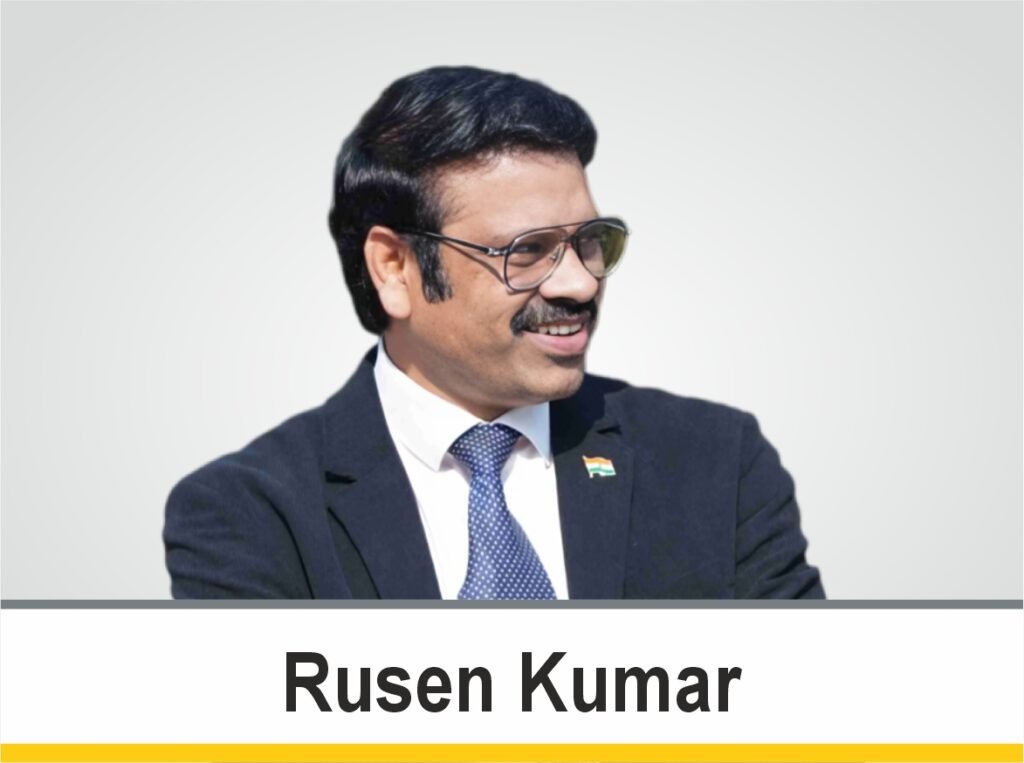
Rusen Kumar Founder and Managing Editor India CSR

By Rusen Kumar

On 11 March 2026, the Union government stood up in Parliament and dropped a number that should make every Indian who values free expression pause: penalties exceeding Rs. 5.63 crore have been slapped on periodicals through the newly minted Press Sewa Portal. Alongside this, 88,315 publications across the country have been cancelled outright. In the same breath, officials celebrated the digitisation of more than 1.5 lakh legacy records and the processing of 11,081 fresh applications since the new regime kicked in on 1 March 2024.

Numbers, as always, tell only half the story. The other half is the question we dare not ignore: Is this the long-overdue spring-cleaning of a colonial-era mess, or the beginning of a quiet, digital strangulation of India’s vibrant, messy, often inconvenient press?

Let us be clear about what has happened. The Press and Registration of Periodicals (PRP) Act, 2023 replaced the creaky 1867 law that had governed newspaper registration for 157 years. The old system was analogue, corruptible, and absurdly slow. The new Press Sewa Portal promises everything online—title registration, ownership transfer, annual statements, penalty payments, circulation verification. Districts across India (780 of them) have been wired in. Legacy paper files have been scanned and uploaded. On paper, it is modernisation at its finest.

But look closer at the casualties. Eighty-eight thousand three hundred and fifteen titles wiped out. That is not a few rogue operators; that is an entire ecosystem. Some were undoubtedly “ghost” publications—shell entities that existed only on dusty registers, never printed a single copy, yet claimed legitimacy to launder influence or evade taxes. Good riddance to them. Yet how many were small-town weeklies in Bihar, Uttar Pradesh or Tamil Nadu run by idealistic editors on shoestring budgets, who simply missed a digital deadline or could not afford the compliance machinery of the new Act?

The government will argue—rightly—that the new law demands accountability. Publishers must file annual statements. They must declare ownership transparently. Terrorist links or anti-national activity can bar entry. These are reasonable safeguards in an age of fake news and coordinated disinformation. Yet the speed and scale of cancellations raise uncomfortable questions about due process. Were notices served? Were appeals heard? Or did the algorithm simply strike off names that failed to log in on time?

Digitisation is a double-edged sword. For the urban, tech-savvy publisher in Delhi or Mumbai, the portal is liberation. For the rural editor who still files stories by hand and posts them by train, it can become a barrier. The digital divide is not just about broadband; it is about language, literacy, and the quiet assumption that every citizen now speaks the language of UPI, Aadhaar, and e-governance. When regulation outpaces the ground reality of Indian journalism, the result is not reform—it is exclusion.

There is a deeper philosophical tension here. India’s Constitution guarantees freedom of speech and expression under Article 19(1)(a). The Supreme Court has repeatedly held that the press is the lifeblood of democracy. Yet every regulatory framework carries within it the DNA of control. The old 1867 Act was a colonial tool to monitor “seditious” publications. The new PRP Act, 2023 is dressed in the language of transparency and ease. But when 88,000 titles vanish in under two years of the portal’s operation, one cannot help but wonder: have we traded one form of gatekeeping for another?

This is not a conspiracy theory. It is a provocation. What happens when the state becomes the sole custodian of who may publish and who may not? What happens when annual compliance becomes a sword hanging over every small magazine that dares criticise local power? The big corporate media houses will survive—they have lawyers, accountants, and IT teams. The independent, the regional, the dissenting—these are the ones who bleed first.

At the same time, let us not romanticise chaos. Before the portal, the registration system was a joke. Duplicate titles, fictitious circulations, and zero accountability were rampant. The digitisation of 1.5 lakh records is genuine progress. The processing of 11,000-plus applications shows that genuine new voices are still entering the system. Penalties collected mean the law has teeth. The question is not whether regulation is needed; the question is whether this regulation is proportionate, transparent, and protective of diversity.

India’s media landscape has always been gloriously chaotic—various languages, viewpoints, and ideologies clashing daily on newsstands. That chaos is its strength. It reflects a nation that refuses to speak in one voice. When we cancel 88,315 titles in the name of order, we must ask ourselves: are we pruning a garden or paving it over?

The Press Sewa Portal is here to stay. The challenge before us—as citizens, journalists, and lawmakers—is to ensure it becomes a gateway, not a guillotine. We need clear guidelines on what constitutes grounds for cancellation. We need grievance redressal that is fast and fair. We need support mechanisms for small and medium publications so that compliance does not become a privilege of the rich.

Most of all, we need to keep asking the uncomfortable question every time a number like 88,315 is thrown at us in Parliament: Who exactly disappeared from the register today—and whose voice did India lose in the process?

The portal has modernised the system. Now the real test begins: will it strengthen Indian democracy, or will it quietly silence the very press that democracy needs to survive?


Rusen Kumar, Editor of India CSR, is a renowned thought leader in the field of Corporate Sustainability and Corporate Social Responsibility (CSR). He regularly writes insightful articles and conducts interviews with industry leaders, policymakers, and development practitioners, promoting dialogue on responsible business and sustainable development.


Tags: Print MediaRusen Kumar
csr education cybernetyx
ADVERTISEMENT
India CSR Image 1 India CSR Image 2

CSR, Sustainability, and ESG success stories hindustan zinc
ADVERTISEMENT
India CSR

India CSR

India CSR® is the largest media on CSR and sustainability offering diverse content across multisectoral issues on business responsibility. It covers Sustainable Development, Corporate Social Responsibility (CSR), Sustainability, and related issues in India. Founded in 2009, the organisation aspires to become a globally admired media that offers valuable information to its readers through responsible reporting.

Related Posts

Saarang Ganapathi, Chief Executive Officer, Embassy Services Pvt. Ltd.
Articles

From Construction Waste to Circular Value: Rethinking the Built Environment

India CSR
Articles

‘The Octopus Theory’ Redefines Corporate Communication’s Fragmented Approach: Pavan Kaushik, Communication Economist

Ameet Rele, Vice President – Communications & CSR, Nuvoco Vistas Corp. Ltd.
Articles

Beyond Compliance: The Next Chapter of CSR in India

Dr. Heera Lal Patel, IAS
Articles

From Beneficiaries to Custodians: What Corporate India Can Learn from Dr. Heera Lal’s Community-Led Development Model

India CSR
Articles

MSMEs Could Lead India’s Next Freight Revolution

Green Buildings
Articles

Beyond Green Buildings: How Real Estate Is Embracing Conservation as a Core Design Principle

Load More
csr education cybernetyx
ADVERTISEMENT
bba
ADVERTISEMENT

Interviews

Sanjay Hande, Head Of Manufacturing And Technology Management, Bosch India @india csr
Interviews

Giving Becomes Participation, and Participation Creates a Deeper Connection: Sanjay Hande, Bosch India

by India CSR

Spark of Joy began in 2015 as a cultural fundraising event but has grown into something much larger over the...

Read moreDetails
Vivek Prakash, Senior Vice President & Head, CSR at Jubilant Ingrevia Limited

Didi Ki Dukaan is Helping Rural Women Become Independent Entrepreneurs: Vivek Prakash, Sr VP & Head–CSR, Jubilant Ingrevia

India CSR

Responsible Business Must Turn Research into Real Impact: Prof Bob Doherty

Akanksha Sharma, Vice President – Sustainability, Subcontinent, Central Asia, Levant and; Egypt DP World

DP World’s Sustainability Strategy: Building Greener, Inclusive Logistics in India

Load More
Ad 1 Ad 2 Ad 3 Ad 4 Ad 5 Ad 6
ADVERTISEMENT

CSR UPDATES

Muthoot Group to Give ₹1 Crore CSR Support to Young AI Innovators

CSR: IIT Madras Signs Technology License Agreement with Spark Minda Foundation for ‘Kadam’

CSR: M3M Foundation Supports Kamya Bhardwaj Through ‘Samudra Se Shikhar Tak’ to Take on the Oceans Seven

Vishnu Prakash R Punglia Ltd Spends ₹2.46 Crore on CSR in FY2025-26, Exceeds Statutory Obligation

Aga Khan V Meets PM Modi, President Murmu and India’s National Leadership During First Official India Visit

CSR: SBI Foundation, IIS Support 40 Indian Track & Field Athletes

STEM Learning STEM Learning STEM Learning
ADVERTISEMENT
Facebook Twitter Youtube LinkedIn Instagram
India CSR Logo

India CSR is the largest tech-led platform for information on CSR and sustainability in India offering diverse content across multisectoral issues. It covers Sustainable Development, Corporate Social Responsibility (CSR), Sustainability, and related issues in India. Founded in 2009, the organisation aspires to become a globally admired media that offers valuable information to its readers through responsible reporting. To enjoy the premium services, we invite you to partner with us.

Follow us on social media:

Subscribe to Our Newsletter

Don't miss out on the latest updates in corporate social responsibility. Subscribe to our newsletter at indiacsr.in and be part of the positive change.
Please enable JavaScript in your browser to complete this form.
Loading

  • About India CSR
  • Team
  • India CSR Awards 2026
  • India CSR Leadership Summit
  • Partnership
  • Guest Posts
  • Services
  • ESG Professional Network
  • Content Writing Services
  • Business Information
  • Contact
  • Privacy Policy
  • Terms of Use
  • Donate

Copyright © 2026 - India CSR | All Rights Reserved

INDIA CSR AWARDS
APPLY NOW
No Result
View All Result
  • Home
  • Corporate Social Responsibility
    • Art & Culture
    • CSR Leaders
    • Child Rights
    • Culture
    • Education
    • Gender Equality
    • Around the World
    • Skill Development
    • Safety
    • Covid-19
    • Safe Food For All
  • Sustainability
    • Sustainability Dialogues
    • Sustainability Knowledge Series
    • Plastics
    • Sustainable Development Goals
    • ESG
    • Circular Economy
    • BRSR
  • Corporate Governance
    • Diversity & Inclusion
  • Interviews
  • SDGs
    • No Poverty
    • Zero Hunger
    • Good Health & Well-Being
    • Quality Education
    • Gender Equality
    • Clean Water & Sanitation – SDG 6
    • Affordable & Clean Energy
    • Decent Work & Economic Growth
    • Industry, Innovation & Infrastructure
    • Reduced Inequalities
    • Sustainable Cities & Communities
    • Responsible Consumption & Production
    • Climate Action
    • Life Below Water
    • Life on Land
    • Peace, Justice & Strong Institutions
    • Partnerships for the Goals
  • Articles
  • Events
  • हिंदी
  • More
    • Business
    • Finance
    • Environment
    • Economy
    • Health
    • Around the World
    • Social Sector Leaders
    • Social Entrepreneurship
    • Trending News
      • Important Days
      • Great People
      • Product Review
      • International
      • Sports
      • Entertainment
    • Case Studies
    • Philanthropy
    • Biography
    • Technology
    • Lifestyle
    • Sports
    • Gaming
    • Knowledge
    • Home Improvement
    • Words Power
    • Chief Ministers

Copyright © 2026 - India CSR | All Rights Reserved

This website uses cookies. By continuing to use this website you are giving consent to cookies being used. Visit our Privacy and Cookie Policy.
