

India’s CSR ecosystem is moving beyond compliance towards outcome-led, technology-enabled and community-driven social change. Ameet Rele, Vice President – Communications & CSR, Nuvoco Vistas Corp. Ltd., outlines the road ahead.
By Ameet Rele
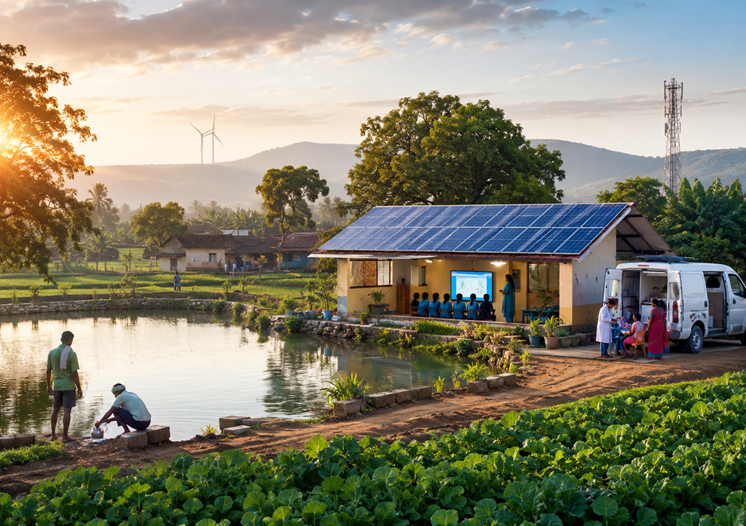
A school building repaired, a village pond rejuvenated, a health van providing access to healthcare in remote areas, a first-generation young woman finding her livelihood – the real value of CSR is in the quiet shifts such as these that help make youth skilled, children educated, healthier neighbourhoods, and resilient communities at large. For more than a decade, India’s CSR framework has ensured that corporate social investment is backed by structure, budgets and accountability. Now, CSR is at an inflection point, as India’s development priorities are becoming more complex. CSR has evolved from philanthropy and charity to a broader focus on social engagement and social impact through sustainable initiatives.
Across the country, businesses are increasingly recognising that meaningful CSR begins where compliance ends. Increased access to information and digital connectivity has created more informed beneficiaries, who now expect meaningful and measurable impact. The next phase of CSR will be driven by community engagement in the backdrop of technology-led transformation.
Technology as the future of CSR
The ultimate benchmark of an effective CSR framework has officially shifted from inputs to long-term, verifiable outcomes. As Indian corporations navigate increasingly intricate socio-economic challenges, traditional tracking methods, such as fragmented spreadsheets, are now giving way to digital infrastructure. Technology is now more essential than ever to make social initiatives measurable, scalable, and robust.
Historically, organisations evaluated success through raw outputs, such as funds disbursed or the number of physical kits distributed. Today, driven by the rise of stringent Environmental, Social, and Governance (ESG) frameworks and rigorous CSR Impact Assessment guidelines, companies require quantifiable data to optimise resource utilisation. Emerging tech-driven platforms are bridging this gap, allowing corporate boards to monitor complex field operations and track project lifecycles through centralised dashboards in real time.
The integration of advanced tools is radically expanding what is possible on the ground. Forward-thinking enterprises are leveraging Geographic Information Systems (GIS) and AI-driven predictive modelling to map climate vulnerabilities, optimise water conservation projects, and precisely target marginal communities.
Moving forward, sustainable corporate leadership will belong to those who move away from archaic, compliance-only check-boxing. Future success depends on a technology-enabled commitment, one where data analytics, automation, and real-time community feedback converge to unlock transparent, generational transformation.
Impact across core CSR pillars
The true measure of a tech-enabled, compliant strategy is how effectively it translates into progress across India’s primary developmental verticals. Rather than operating in isolated silos, modern CSR initiatives seamlessly bridge the gaps between environmental sustainability, equitable healthcare, quality education, and grassroots livelihood creation.
- Skilling and livelihood
Among the most transformative CSR interventions are those that strengthen sustainable livelihoods. India’s demographic dividend can translate into inclusive growth only when the youth have access to relevant skills, credible certification and pathways to employment or enterprise.
Skill development is particularly meaningful when linked to the local economic demand. Digital learning tools are expanding access to education and skill development beyond traditional classrooms. This is enabling learners to learn at their own pace by giving them access to recorded content, online modules, and knowledge platforms.
Skilling is no longer a one-time intervention and technology enables continuous learning, allowing individuals to revisit lessons, build new competencies and stay connected to evolving opportunities. When supported by practical training, soft skills, certification and placement linkages, digital access can significantly improve employability and open pathways to better quality of life.
Thus, the future of CSR must treat livelihood programs not as a short-term training exercise, but as a social mobility pathway.
- Environment and water conservation
Environmental sustainability is one of the most critical areas where CSR can create long-term community value. In many parts of India, water availability, soil health, rainfall variability and local resource management directly influence livelihoods, health and overall quality of life. CSR interventions in this space should focus on building resilience at the community level.
Technology can play an important role in making these interventions more effective. Tools that help assess groundwater levels, water availability and local resource use can give companies and communities a clearer understanding of the challenges they are trying to solve.
This data-driven approach can improve both planning and implementation of water conservation and environmental sustainability initiatives. Environmental CSR must combine community participation with scientific planning, i.e. local knowledge of lived realities and data-backed evidence for better accuracy and scalability. When both come together, sustainability initiatives can move from short-term asset creation to long-term resource stewardship.
- Health and education
Health and education remain two of the most important areas where CSR can create intergenerational impact. They influence not only immediate well-being, but also long-term opportunity, productivity and resilience. The COVID-19 pandemic showed how quickly access to both healthcare and education can be disrupted, especially for underserved communities. It also demonstrated how technology can become a powerful bridge when physical systems are strained.
Digital health and learning solutions can help extend access beyond traditional delivery models. In healthcare, technology-enabled interventions can support awareness, early screening, teleconsultation, maintenance of health records, follow-up care and last-mile outreach. This is particularly valuable in rural and semi-urban areas, where distance, cost and limited availability of services often delay timely access to healthcare.
In education, smart classrooms, recorded lessons, online resources and digital content platforms help students continue learning even when regular access to teachers or institutions is interrupted. They can also support teachers with better teaching aids, improve student engagement and create more equitable access to knowledge.
CSR investments in digital health and education, when implemented thoughtfully, can bridge accessibility gaps, improve learning and health outcomes.
- Infrastructure development
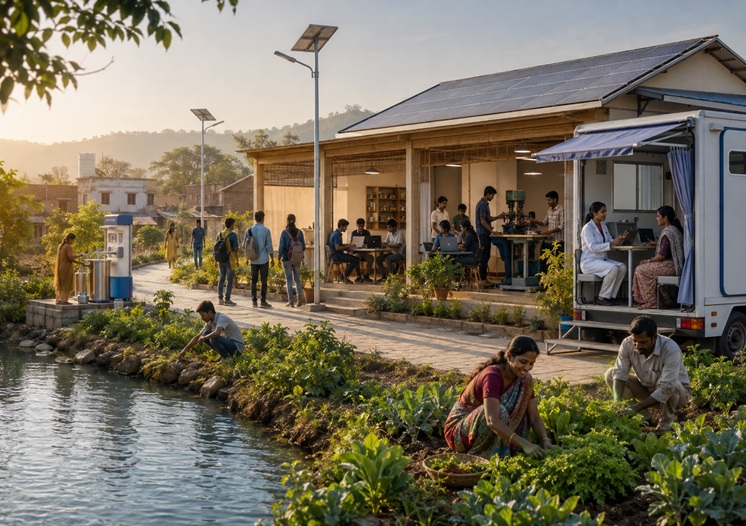
Infrastructure development has long been a visible part of CSR; but its true value lies not in the asset created, but in the social outcomes it enables. A classroom, sanitation facility, community centre, health sub-centre, internal road, water filtration system, or solar lighting system is meaningful only when it improves access, safety, dignity and participation for the people who use it.
This is particularly important in rural and underserved communities, where gaps in basic infrastructure can directly affect education, health, mobility and livelihoods. Community infrastructure that improves access to healthcare, clean water, digital resources or safe public spaces can strengthen overall quality of life.
CSR-led infrastructure initiatives must be designed with inclusion and access at the centre. Community participation in planning and upkeep can help ensure that infrastructure responds to real needs and remains functional beyond the initial investment.
Future outlook for CSR
The future of CSR in India will be shaped by companies’ ability to shift from activity-based interventions to outcome-led social engagement. As development challenges become more complex, long-term impact will depend on how effectively CSR programmes use resources, engage beneficiaries and measure change on the ground.
Technology will play a central role in this shift. It can help companies and implementation partners plan better, allocate resources more efficiently, monitor progress in real time and identify gaps. Equally important is the need for measurable outcomes. The next phase of CSR will require companies to look beyond the number of activities conducted or assets created, and focus instead on what has changed for the community, as this will define the effectiveness of future CSR programmes.
Beneficiary engagement will also become a critical success factor. Communities cannot remain passive recipients of CSR. They must be active participants in identifying needs, shaping interventions, using resources and sustaining outcomes. The future of CSR, therefore, lies at the intersection of social engagement, technology, and infrastructure-led development. Technology can help complete the impact cycle by connecting companies, implementation partners and communities alike.
About the Author
Ameet Rele is the Vice President – Communications and CSR at Nuvoco Vistas Corp. Ltd.
© Copyright Disclaimer: All rights reserved. No part of this report may be reproduced, republished, distributed or transmitted in any form without prior written permission from India CSR®.