

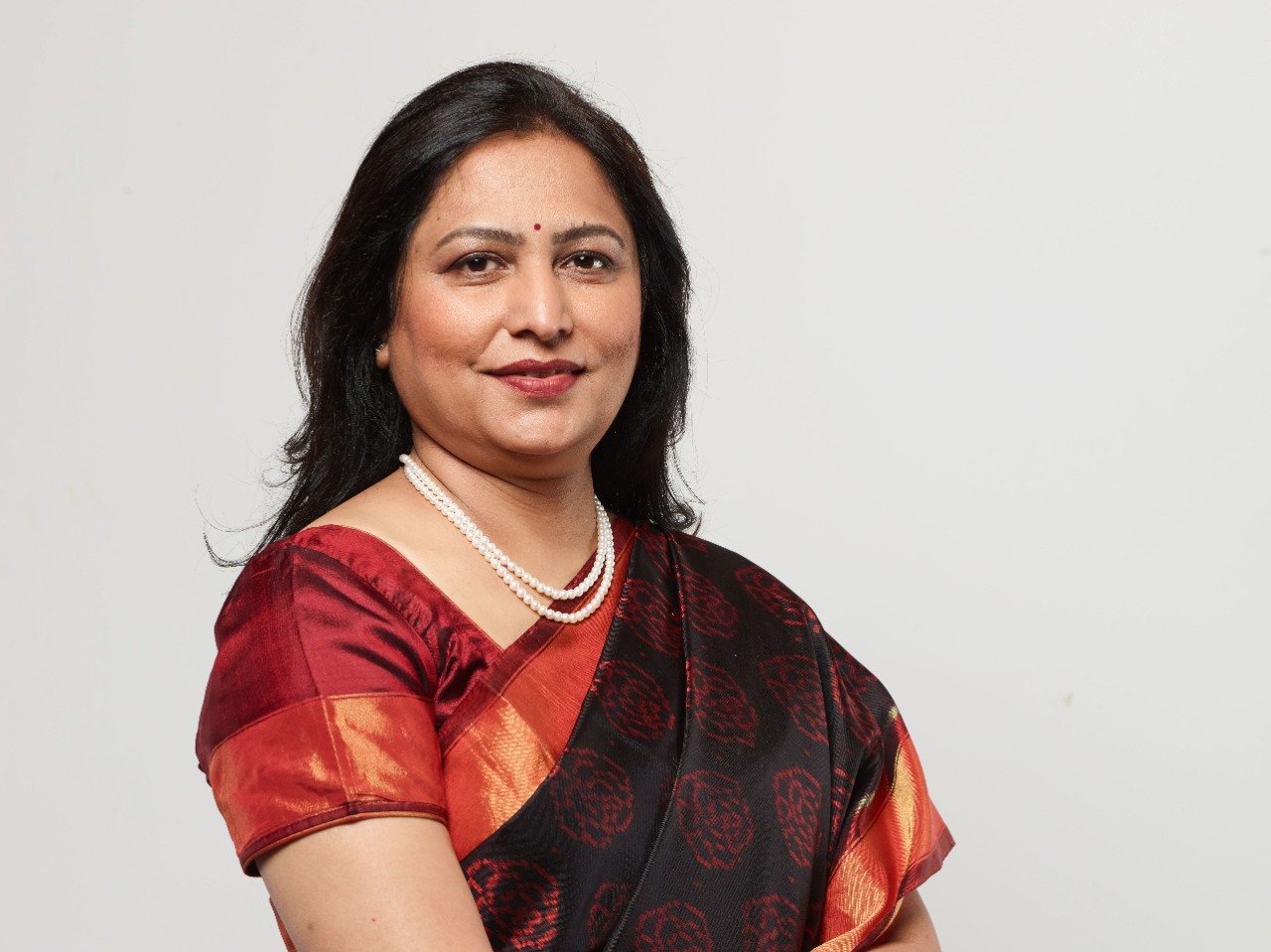



Adani Foundation Chairperson urges philanthropy to strengthen people, institutions and community-led solutions at AVPN Global Conference 2026
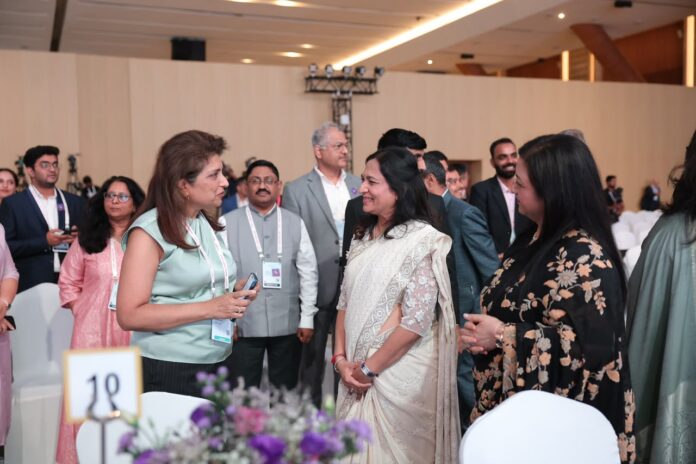
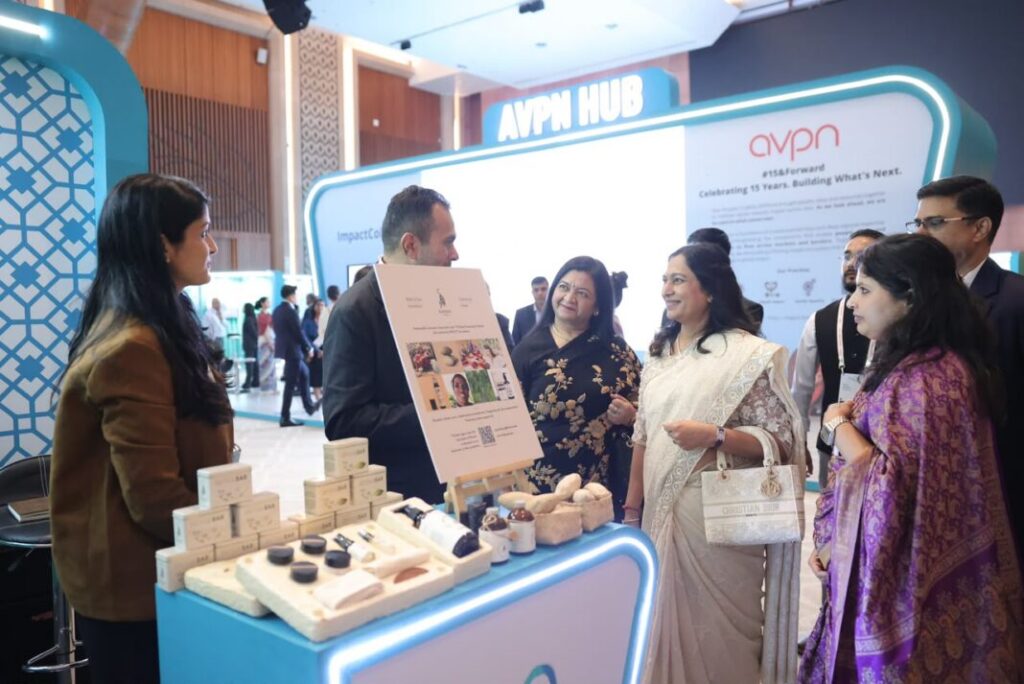
NEW DELHI (India CSR): Philanthropy needs to evolve from simply funding immediate needs to strengthening the people, institutions and systems that can deliver lasting social change, Adani Foundation Chairperson Dr Priti Adani said at the AVPN Global Conference 2026. Dr Adani made the remarks at a welcome dinner hosted by the Adani Foundation at Bharat Mandapam for nearly 2,000 national and international delegates. The 13th edition of the AVPN Global Conference was held in India for the first time, bringing together philanthropists, social-impact leaders, policymakers, corporates and development practitioners from around the world to discuss the future of social investment and collaborative development.
Asia’s Growing Voice
Welcoming the delegates, Dr Adani said India and Asia are emerging as significant engines of growth, opportunity and innovation. She said the region has valuable grassroots experience and practical development knowledge to share with the global philanthropic community. Drawing on the Adani Foundation’s three decades of work at the grassroots, she said meaningful and sustained transformation takes place when communities are empowered to decide their own futures. “As social challenges become more complex, we must learn from one another, share what works and build partnerships that take impact further,” she said, calling for stronger collaboration among stakeholders working to solve social challenges.

“As social challenges become more complex, we must learn from one another, share what works and build partnerships that take impact further.” — Dr Priti Adani
Capacity Over Charity
A central theme of Dr Adani’s address was what she termed “Capital for Capacity”. She said philanthropy should increasingly invest in building stronger, self-sustaining communities and institutions. Support for survival and immediate relief remains necessary, she said, but funding must also enable behavioural change, institution-building, skills, innovation, climate action and stronger social connections. The purpose is to ensure that effective interventions do not remain limited to isolated programmes. Instead, they should endure, expand and benefit a greater number of communities. Philanthropic capital, she said, must help create systems capable of delivering long-term outcomes at scale.
Empowering Personal Agency
Dr Adani said the underlying principle of capacity-building is to give people the means and leverage to improve their own lives. Philanthropy, in this view, should not only seek to change a beneficiary’s present circumstances; it should equip individuals and communities with the skills, opportunities and confidence to shape their future. This approach moves development from dependence towards self-reliance. It also makes local communities partners in progress rather than passive recipients of aid. By supporting capable institutions, skilled people and community ownership, philanthropic efforts can create a multiplier effect that continues even after a specific programme or grant cycle has concluded.
“Philanthropy should not simply seek to change people’s lives, but provide them with the means and leverage to change their own lives.” — Dr Priti Adani
Grassroots Innovation Rising
Dr Adani also highlighted the growing role of grassroots entrepreneurship and local innovation in India’s development journey. Innovation, she said, is increasingly coming from small towns and villages rather than being concentrated only in large cities. Startups across India are working on real-life challenges involving waste management, climate change, drinking water, healthcare and agriculture. She referred to the Vande Bharatam initiative led by Adani Group Chairman Gautam Adani, which received applications from more than 26,000 startups. According to Dr Adani, many participating enterprises were developing solutions with social and environmental impact at their core.
Global South Solutions
India’s combination of grassroots entrepreneurship, market-oriented skills and local innovation can create solutions relevant across the Global South, Dr Adani said. The country’s development experience demonstrates that innovation is not only about technology; it is also about solving everyday problems in ways that are accessible, affordable and scalable. She said social-sector partnerships should recognise and support these local innovations, enabling them to grow beyond their original geography. Such an approach can create jobs, improve access to essential services and strengthen resilience against climate and economic disruptions. It can also help communities participate more actively in India’s wider growth story.
“Viksit Bharat will not be built by larger budgets alone; it will be built by stronger institutions.” — Dr Priti Adani
Dairy Builds Independence
To illustrate the impact of capacity-building, Dr Adani shared the story of Kiran Harinkhede from Churdi village in Maharashtra. Harinkhede benefited from the Adani Foundation’s Livestock Development initiative, which provided guidance on improved cattle breeding and animal healthcare. Better breeds helped raise her milk production, enabling her to join a women-run dairy enterprise established through the programme. She now sells between 25 and 28 litres of milk every day to a collection centre. Her increased household income has helped finance her son’s college education and her daughter’s graduation, creating new opportunities for the next generation.
Freedom Through Livelihoods
For Dr Adani, Harinkhede’s journey shows how philanthropy can create sustainable economic opportunity when it provides people with practical tools to build livelihoods. The change is not restricted to higher income; it also brings greater independence, dignity and decision-making power. She described economic independence as a deeper form of freedom—one that includes freedom of choice, opportunity and upward mobility. Programmes that improve productive assets, knowledge, market connections and entrepreneurial confidence can help households build a more secure future. This is the kind of capacity, she suggested, that turns a social intervention into an enduring pathway for individual and community progress.
Thirty Years Impact
The gathering came as the Adani Foundation marks 30 years of grassroots development work in India. Established in 1996, the Foundation works across education, healthcare, skilling, livelihoods, disability inclusion, community infrastructure, sports and grassroots climate action. The Foundation says its programmes have reached more than 7,200 villages across 22 states and positively impacted more than 13 million lives. Its work includes maternal and newborn healthcare, primary education, market-oriented skills training, sustainable agriculture, non-agricultural livelihoods, healthcare delivery and support for persons with disabilities. These programmes reflect its focus on combining direct support with long-term community capability.
Major Social Commitment
The Adani family, led by Gautam Adani, has committed Rs. 60,000 crore towards healthcare, skilling and higher education. The commitment includes Adani Health Cities, envisaged as integrated healthcare ecosystems with 1,000-bed hospitals, research facilities and medical colleges. The first phase is planned in Mumbai and Ahmedabad. The Foundation is also establishing a 200-bed hospital in Pirpainti, Bihar. Dr Adani’s address linked these investments to the broader need for durable social infrastructure. Large commitments, she indicated, must be paired with strong institutions, trained professionals and delivery systems that can ensure that benefits reach communities consistently and sustainably.
Partnerships Across Asia
Dr Adani’s call for deeper cooperation builds on her address at the AVPN Global Conference in Hong Kong in 2025, where she proposed a Unified Collaboration Platform to connect philanthropic experience and knowledge across Asia. In New Delhi, she urged the sector to build on this idea by sharing learning, identifying proven practices and creating partnerships that can take successful solutions to more communities. She also pointed to climate instability, rapid advances in artificial intelligence and the harmful effects of excessive social-media and technology use as challenges that require purposeful, coordinated action across sectors and geographies.
Institutions Build India
As India pursues the vision of Viksit Bharat 2047, Dr Adani said development cannot be measured only by the size of budgets or the number of programmes funded. What matters equally is whether institutions, communities and people have become stronger because of those investments. “Viksit Bharat will not be built by larger budgets alone; it will be built by stronger institutions,” she said. Her message to the philanthropic community was that capital must be used to strengthen the people and systems that make programmes effective, enduring and scalable. This, she said, is essential to create lasting social change across India and beyond.
Source. Content and Image
© Copyright Disclaimer: All rights reserved. No part of this report may be reproduced, republished, distributed or transmitted in any form without prior written permission from India CSR®.



