

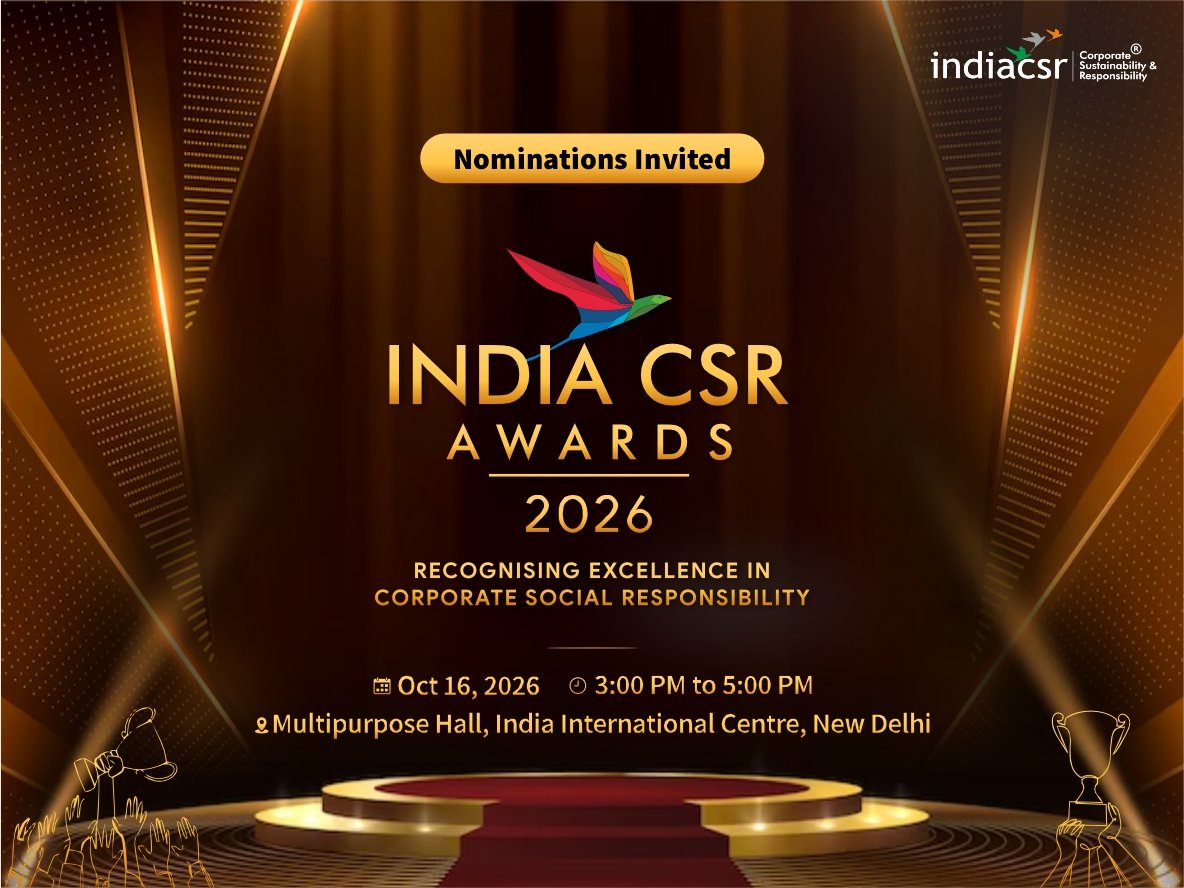
• India CSR Awards 2026
  • India CSR Leadership Summit
  • Guest Posts
Monday, August 3, 2026
India CSR
  • Home
  • Corporate Social Responsibility
    • Art & Culture
    • CSR Leaders
    • Child Rights
    • Culture
    • Education
    • Gender Equality
    • Around the World
    • Skill Development
    • Safety
    • Covid-19
    • Safe Food For All
  • Sustainability
    • Sustainability Dialogues
    • Sustainability Knowledge Series
    • Plastics
    • Sustainable Development Goals
    • ESG
    • Circular Economy
    • BRSR
  • Corporate Governance
    • Diversity & Inclusion
  • Interviews
  • SDGs
    • No Poverty
    • Zero Hunger
    • Good Health & Well-Being
    • Quality Education
    • Gender Equality
    • Clean Water & Sanitation – SDG 6
    • Affordable & Clean Energy
    • Decent Work & Economic Growth
    • Industry, Innovation & Infrastructure
    • Reduced Inequalities
    • Sustainable Cities & Communities
    • Responsible Consumption & Production
    • Climate Action
    • Life Below Water
    • Life on Land
    • Peace, Justice & Strong Institutions
    • Partnerships for the Goals
  • Articles
  • Events
  • हिंदी
  • More
    • Business
    • Finance
    • Environment
    • Economy
    • Health
    • Around the World
    • Social Sector Leaders
    • Social Entrepreneurship
    • Trending News
      • Important Days
        • Festivals
      • Great People
      • Product Review
      • International
      • Sports
      • Entertainment
    • Case Studies
    • Philanthropy
    • Biography
    • Technology
    • Lifestyle
    • Sports
    • Gaming
    • Knowledge
    • Home Improvement
    • Words Power
    • Chief Ministers
No Result
View All Result
  • Home
  • Corporate Social Responsibility
    • Art & Culture
    • CSR Leaders
    • Child Rights
    • Culture
    • Education
    • Gender Equality
    • Around the World
    • Skill Development
    • Safety
    • Covid-19
    • Safe Food For All
  • Sustainability
    • Sustainability Dialogues
    • Sustainability Knowledge Series
    • Plastics
    • Sustainable Development Goals
    • ESG
    • Circular Economy
    • BRSR
  • Corporate Governance
    • Diversity & Inclusion
  • Interviews
  • SDGs
    • No Poverty
    • Zero Hunger
    • Good Health & Well-Being
    • Quality Education
    • Gender Equality
    • Clean Water & Sanitation – SDG 6
    • Affordable & Clean Energy
    • Decent Work & Economic Growth
    • Industry, Innovation & Infrastructure
    • Reduced Inequalities
    • Sustainable Cities & Communities
    • Responsible Consumption & Production
    • Climate Action
    • Life Below Water
    • Life on Land
    • Peace, Justice & Strong Institutions
    • Partnerships for the Goals
  • Articles
  • Events
  • हिंदी
  • More
    • Business
    • Finance
    • Environment
    • Economy
    • Health
    • Around the World
    • Social Sector Leaders
    • Social Entrepreneurship
    • Trending News
      • Important Days
        • Festivals
      • Great People
      • Product Review
      • International
      • Sports
      • Entertainment
    • Case Studies
    • Philanthropy
    • Biography
    • Technology
    • Lifestyle
    • Sports
    • Gaming
    • Knowledge
    • Home Improvement
    • Words Power
    • Chief Ministers
No Result
View All Result
India CSR
No Result
View All Result
Home Articles

Corporate social responsibility (CSR): What do companies owe to the society?

Mandatory CSR is really an attempt by the government to involve business in the nation's sustainable development goals and to supplement government efforts in this regard through monetary contributions.

India CSR by India CSR
November 7, 2019
in Articles
Reading Time: 6 mins read
Share Share Share Share
WhatsApp icon
WhatsApp — Join Us
Instant updates & community
Google News icon
Google News — Follow Us
Get our articles in Google News feed
india csr awards
ADVERTISEMENT

Philanthropy, or the voluntary giving of wealth without expectation of a quid pro quo, and the oldest concept of redistributive justice, is today accused of being self-serving of ‘unfettered paternalism’ and other vices.

The heat and dust raised over the penal clauses introduced in the amendment to the Companies Act in 2019 for non-compliance with the mandatory corporate social responsibility (CSR) may have abated after the finance minister Nirmala Sitharaman’s assurances, it has led to a churn over what exactly companies owe to the society.
raigarh csr summit
ADVERTISEMENT

At one end of the debate are diehard devotees of Milton Friedman, who claim that the business of business is business and that the end goal should be to maximise profits for the shareholders. At the other end are those who believe that unbridled capitalism has had its day and needs to be replaced by some other construct. In between are the advocates of corporate philanthropy, CSR and mandatory CSR.

While each of these approaches has its advantages, none is considered perfect for an optimum corporate-society relationship for reasons seen below.

Philanthropy, or the voluntary giving of wealth without expectation of a quid pro quo, and the oldest concept of redistributive justice, is today accused of being self-serving of ‘unfettered paternalism’ and other vices. There is little trust in ‘the man of wealth considering himself the mere trustee and agent for his poor brethren, bringing to their service his superior wisdom, experience and ability to administer’. (Good to Great, Jim Collins, 2001 )

According to Edgar Vilenueva, author of the book Decolonising Wealth, philanthropy is top-down, closed-door and expert-driven. Change is a long and slow process, which needs commitment over many years. This is what today’s philanthropists, driven by markets, do not understand.

Though the concept of a voluntary and comprehensive CSR had found favour as early as the early decades of the twentieth century, it had a revival, especially after the 2008 global crisis and the formulation of the Millenium Goals, because philanthropy did not address the issue of responsible behaviour towards society by business. The concept had evolved beyond a corporate giving a portion of the company’s profit for social benefit.

It came to imply a continuing commitment by business to behave ethically, to contribute to sustainable economic and social development of all its stakeholders, not just its shareholders, but also its employees, the government, suppliers, consumers, the local community and society at large, and to protect the environment. Instead of being concerned only with the bottom line of profits, it was believed it must be conscious of the triple bottom line or commitment to people, planet and profit.

It further implied that the process of making profit is as important as the use of the profits. A company must do no harm through its processes and operations to people, that is, it must minimise negative impacts and maximise the positive ones by engaging in initiatives to promote the progress of society.

With the adoption of the mandatory CSR, the comprehensive idea of CSR has lost ground. The concept of mandatory CSR that was adopted by the government under the Companies Act of 2013 is neither philanthropy nor universally accepted concept of CSR. It is not philanthropy because it is not voluntary. How much is to be given, to whom, for what, how and within what period is specified, leaving only a small window to a company within which to exercise its will.

Mandatory CSR is really an attempt by the government to involve business in the nation’s sustainable development goals and to supplement government efforts in this regard through monetary contributions. It gives only a limited freedom to donors on how they can spend their philanthropic rupee – limited to the categories mentioned in Schedule VII of the Act, and in ways mentioned therein. It is the result not of a personal philosophy or passion of one individual or family but a considered decision of the board and part of corporate policy and action.

By taking a common view, it is likely to lack passion that leads to path-breaking changes. In true philanthropy while there is no expectation of a quid pro quo, companies are motivated to be socially responsible mainly because of the possibility it offers to promote their brand, the benefit it offers for better labour relations and a good corporate image. The moves to align CSR activities with a company’s core competence is guided less by what is deemed good and necessary for societies in the long run, and more by the short-term compulsions and interests of a company.

At the same time, it must be admitted that the outreach of CSR, because it aligns with government goals and programmes is likely to be far broader than much individual philanthropy. Only a few philanthropic investments are truly path breaking.

But, mandatory CSR is nowhere near the original concept of CSR because the emphasis is on a fixed percentage of profits to be devoted to approved activities. It is not concerned with responsible behaviour towards all stakeholders.

A company can make its required contribution and be in compliance while continuing to indulge in irresponsible social behaviour such as drawing excessively on a community’s water resources, unmindful of the hardship such depletion will cause the community in the long run; or dump its untreated waste into rivers and ground water; or clear land of trees for setting up factories, unmindful of the implications for climate change. It can condone a supply chain which is exploitative towards its labour so that products can be sourced cheaply.

Large tobacco companies continue to make money off a deadly habit and pharmaceutical companies build their fortune on super drugs, which are inaccessible and expensive to those who need them the most. Such examples can be multiplied. Corporate irresponsibility can harm society much more than individual actions because the latter can never adversely affect society as much as irresponsible corporate actions.

To be fair, before mandatory CSR, the broader concept was just an ideal to which few companies actually approximated. Though some companies used to give more than the 2 per cent of profit, they were guilty of poor governance and unethical conduct.

While Miltons Friedman’s 1962 doctrine that the end goal should be to maximise profits for the shareholders had gone out of favour after the dot com speculative boom and the financial scandals involving Enron and the callous behaviour of Union Carbide, it has found new apostles particularly after mandatory CSR came into being.

The history of India’s business communities shows that charity and even some form of non-monetary social responsibility was considered a business strategy with the goal being a more profitable business. Most of the traditional business communities – the Marwaris, the Chetiars, the Jains – set apart a part of business income for both religious charity such as feeding the poor and financing local festivals, and secular giving for helping the community in times of drought, or floods and building wells or rest houses. Doing so was a considered business decision. It gave them higher visibility and status in society, contributed to their image as trustworthy citizens and added to their credit worthiness. It helped them build goodwill and social capital. All of these helped in business expansion.

Being on the right side of rulers was important for success (as it is now) in business, in getting licenses and avoiding taxes or penalties. Therefore, giving to causes favoured by rulers such as education in British times was part of business strategy.

Chettiars and others whenever they initiated business in a new city or a new country, often built temples, or endowed existing ones and gave lavishly to local festivals or engaged in feeding the poor. Charity was an instrument to create viable social identities in new markets and get entitlements for their business. Today MNCs do the same when they enter or expand new markets.

Mandatory CSR and philanthropy are indeed under attack due to flaws in practice and irresponsible corporate behaviour, capitalism itself is facing criticism despite the fact that it has brought many benefits including pulling large numbers of people out of poverty, and making lives comfortable through technology.

Thomas Picketty, Anand Giridhardas, Dr Narayana Murthy and others have called for compassionate capitalism particularly because today’s capitalism has widened the gap between the haves and have-nots. Hunger and malnutrition continue to plague the world. But there is no clear road map as to exactly how capitalism can be made compassionate over a wide enough area to have global impact and change a widely entrenched system.

In short, though many attempts have been made to find an ideal corporate-society relationship, each has faced some flaws. At the same time, public trust in government has been steadily declining. There is talk of crony capitalism, corruption and inefficiency. So, in what model should we repose our trust? The answer is in all – after plugging the holes in each – because each brings different strengths to the table.

At the same time, the quest for an ideal solution must continue.

Source: Business Today

Tags: Anand GiridhardasDr Narayana MurthyPushpa SundarThomas Picketty
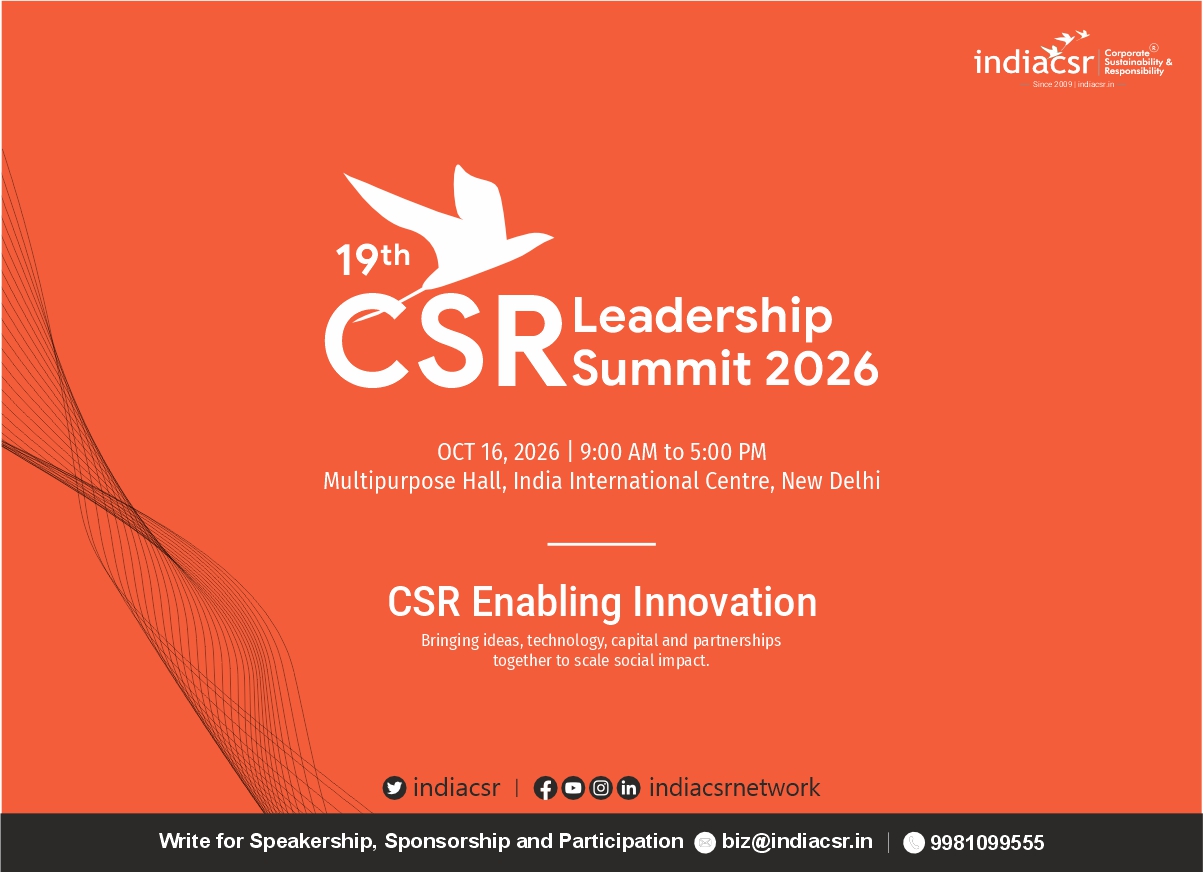
19th India CSR Leadership Summit 2026
ADVERTISEMENT
SETU Bandhan
ADVERTISEMENT
India CSR Image 1 India CSR Image 2

CSR, Sustainability, and ESG success stories hindustan zinc
ADVERTISEMENT
India CSR

India CSR

India CSR® is the largest media on CSR and sustainability offering diverse content across multisectoral issues on business responsibility. It covers Sustainable Development, Corporate Social Responsibility (CSR), Sustainability, and related issues in India. Founded in 2009, the organisation aspires to become a globally admired media that offers valuable information to its readers through responsible reporting.

Related Posts

The image is created by AI. India CSR
Articles

CSR Can Bridge the Healthcare Gap for India’s Underserved Communities

2 weeks ago
NCRBC 2026 Positions ESG as a Driver of India’s Economic Competitiveness
ESG

IICA NCRBC 2026 Positions ESG as a Driver of India’s Economic Competitiveness

3 weeks ago
India CSR
Articles

Hinduja Foundation – From Learning to Livelihood: Building Stronger Pathways for Young People

3 weeks ago
Suvarna Mishra, HR Director at Pluxee India.
Articles

Childcare as Workforce Infrastructure: Supporting Women Across Life Stages

3 weeks ago
Riya Khanduri
Articles

Real Impact Happens When Sectors Collaborate

3 weeks ago
India CSR
Articles

CSR – vivo Ignite: Empowering Young STEM Innovators for Social Transformation in India

4 weeks ago
Load More
bba
ADVERTISEMENT

Interviews

Hardeep S. Brar - BMW Group India CEO
Interviews

Skills Are the Starting Line, Jobs Are the Finish Line: BMW Group India CEO Hardeep S. Brar

by India CSR
July 21, 2026

Hardeep S. Brar discussing BMW India Foundation’s youth skill development programme.

Read moreDetails
Dr. Vikas Garg, Chairman, Ebix Group

CSR: Compliance Gives You a Floor, But Purpose Gives You a Legacy: Dr. Vikas Garg, Chairman, Ebix Group

June 29, 2026
Harkirat Kaur, CEO, Hartek Foundation

Building Resilient Communities Through Sustainable Development: Harkirat Kaur, CEO, Hartek Foundation

June 22, 2026
Indu Mehta, Chief Sustainability Officer (CSO) at Bhilwara Energy Limited @IndiaCSR

ESG in India Has Moved Beyond Storytelling: Bhilwara Energy’s Indu Mehta on Sustainability as an Operating Discipline

May 30, 2026
Load More
Ad 1 Ad 2 Ad 3 Ad 4 Ad 5 Ad 6
ADVERTISEMENT

CSR UPDATES

CSR: Konica Minolta Deploys Sixth Electric Vehicle to Support Mid-Day Meal Delivery

SETU Bandhan CSR Awards Invites Nominations to Recognise High-Impact CSR Leadership

Amara Raja Energy & Mobility Spends Rs 22.70 Crore on Corporate Social Responsibility (CSR) in FY 2025-26

CSR: Sona Comstar, Tata STRIVE Open Skill Centre in Chakan

CSR: Vedanta’s 15,000 Nand Ghars Support 9 Lakh Women and Children

CSR: NRAI Bengaluru, Mitti Café Support Equal Job Opportunities

STEM Learning STEM Learning STEM Learning
ADVERTISEMENT
Facebook Twitter Youtube LinkedIn Instagram
India CSR Logo

India CSR is the largest tech-led platform for information on CSR and sustainability in India offering diverse content across multisectoral issues. It covers Sustainable Development, Corporate Social Responsibility (CSR), Sustainability, and related issues in India. Founded in 2009, the organisation aspires to become a globally admired media that offers valuable information to its readers through responsible reporting. To enjoy the premium services, we invite you to partner with us.

Follow us on social media:

Subscribe to Our Newsletter

Don't miss out on the latest updates in corporate social responsibility. Subscribe to our newsletter at indiacsr.in and be part of the positive change.
Please enable JavaScript in your browser to complete this form.
Loading

  • About India CSR
  • Team
  • India CSR Awards 2026
  • India CSR Leadership Summit
  • Partnership
  • Guest Posts
  • Services
  • ESG Professional Network
  • Content Writing Services
  • Business Information
  • Contact
  • Privacy Policy
  • Terms of Use
  • Donate

Copyright © 2026 - India CSR | All Rights Reserved

No Result
View All Result
  • Home
  • Corporate Social Responsibility
    • Art & Culture
    • CSR Leaders
    • Child Rights
    • Culture
    • Education
    • Gender Equality
    • Around the World
    • Skill Development
    • Safety
    • Covid-19
    • Safe Food For All
  • Sustainability
    • Sustainability Dialogues
    • Sustainability Knowledge Series
    • Plastics
    • Sustainable Development Goals
    • ESG
    • Circular Economy
    • BRSR
  • Corporate Governance
    • Diversity & Inclusion
  • Interviews
  • SDGs
    • No Poverty
    • Zero Hunger
    • Good Health & Well-Being
    • Quality Education
    • Gender Equality
    • Clean Water & Sanitation – SDG 6
    • Affordable & Clean Energy
    • Decent Work & Economic Growth
    • Industry, Innovation & Infrastructure
    • Reduced Inequalities
    • Sustainable Cities & Communities
    • Responsible Consumption & Production
    • Climate Action
    • Life Below Water
    • Life on Land
    • Peace, Justice & Strong Institutions
    • Partnerships for the Goals
  • Articles
  • Events
  • हिंदी
  • More
    • Business
    • Finance
    • Environment
    • Economy
    • Health
    • Around the World
    • Social Sector Leaders
    • Social Entrepreneurship
    • Trending News
      • Important Days
      • Great People
      • Product Review
      • International
      • Sports
      • Entertainment
    • Case Studies
    • Philanthropy
    • Biography
    • Technology
    • Lifestyle
    • Sports
    • Gaming
    • Knowledge
    • Home Improvement
    • Words Power
    • Chief Ministers

Copyright © 2026 - India CSR | All Rights Reserved

This website uses cookies. By continuing to use this website you are giving consent to cookies being used. Visit our Privacy and Cookie Policy.
