JSW Foundation CEO shares insights on systemic change, skilling, women empowerment, and future of CSR in India.
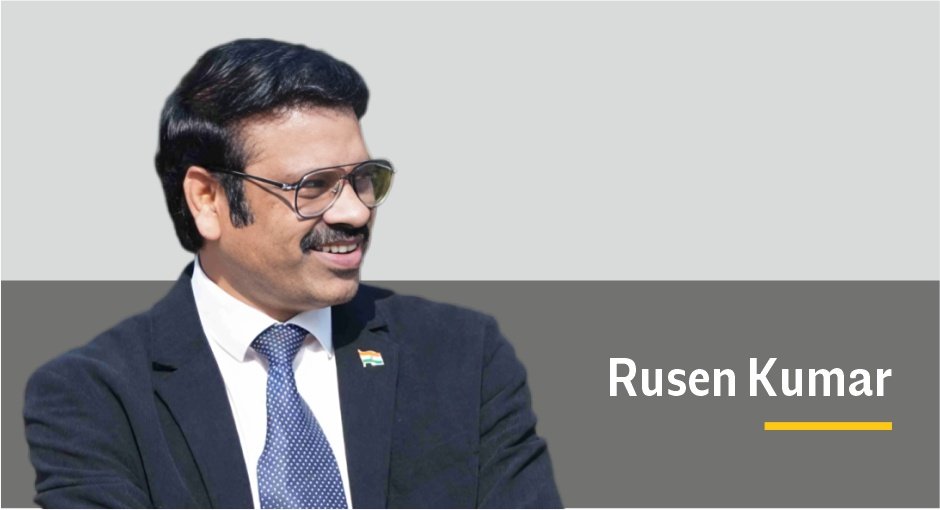
By Rusen Kumar
NEW DELHI (India CSR): In this exclusive interview, Rusen Kumar, Managing Editor, India CSR, speaks with R. Pavithra Kumar, CEO, JSW Foundation, to explore the evolving role of corporate foundations in driving long-term, sustainable social development in India. He shares how CSR is increasingly moving beyond traditional philanthropy toward systemic, outcome-driven interventions that address structural challenges across education, healthcare, livelihoods, and environmental sustainability. Drawing from JSW Foundation’s extensive on-ground experience, he highlights how integrated, community-centric approaches—supported by strong partnerships with governments and local institutions—have enabled impactful programmes reaching millions across the country.
R. Pavithra Kumar further discusses key themes shaping the future of CSR, including women’s empowerment, youth skilling, and climate-conscious development. He elaborates on innovative initiatives such as waste-to-wealth models, outcome-based skilling programmes, and women-led livelihood ecosystems that demonstrate how social impact and sustainability can go hand in hand. Emphasising the importance of collaboration, data-driven impact measurement, and adaptability, he outlines how organisations can remain relevant in a rapidly changing development landscape. The conversation offers a comprehensive perspective on how corporate-led social initiatives can contribute meaningfully to inclusive growth, community resilience, and long-term nation-building.
1. How do you see the role of corporate foundations shaping long-term social development in India today?
Corporate foundations today have the ability to move beyond philanthropy and contribute to systemic change. By combining resources with operational discipline and long-term engagement, they can help scale solutions that address structural challenges in education, livelihoods, and sustainability. In our experience at JSW Foundation, such an approach works best when programmes are aligned with community needs and supported through partnerships with local institutions and governments. Over the years, initiatives across health, education, livelihoods, and environment, etc. have collectively impacted over 3.5 million individuals across India, demonstrating how consistent, ecosystem-based interventions can contribute to inclusive and sustainable development.
2. In your view, what defines meaningful and sustainable CSR in the current development landscape?
Meaningful CSR today is less about the scale of investment and more about the sustainability of outcomes. Programmes that strengthen community institutions, build local capabilities, and create livelihood opportunities tend to deliver lasting impact. At JSW Foundation, the focus has been on integrated development combining education, healthcare, livelihoods, and environmental initiatives so that progress is mutually reinforcing. Such models help communities build resilience and continue growing even after external support reduces. With programmes operating across 17 states and multiple districts, the emphasis remains on enabling communities to become active participants in their own development journey.
3. How can industries turn environmental challenges into opportunities for social value creation?
Environmental challenges can often become opportunities when approached through a circular and community-centric lens. For instance, initiatives that focus on waste management or resource efficiency can generate both environmental and livelihood benefits. One example from JSW Foundation is Project Sakhi, a waste-to-wealth initiative in Vijayanagar where women are trained to upcycle discarded multi-layered plastics into handcrafted products. The programme upcycles over 4,000 kg of plastic every month while creating sustainable livelihood opportunities for local women. Such models demonstrate how environmental responsibility can simultaneously support community income generation and local sustainability.
4. What role does women’s empowerment play in driving lasting change in rural communities?
Women’s empowerment often becomes the foundation of sustainable community development. When women gain access to skills, financial independence, and leadership opportunities, the benefits extend to education, health, and overall family wellbeing. At JSW Foundation, several livelihood programmes have focused on strengthening women’s collectives and enabling entrepreneurship at the grassroots level. Initiatives across self-help groups and livelihood training have helped thousands of rural women access sustainable employment opportunities, reinforcing the idea that empowering women economically also strengthens community resilience and long-term development outcomes.
5. How can CSR-led skilling initiatives better prepare India’s youth for future employment opportunities?
CSR-led skilling initiatives can play a transformative role in preparing India’s youth for future employment by ensuring that training is industry-aligned, inclusive, and outcome-driven. At JSW Foundation, this approach is embedded through both partnerships and on-ground programmes.
A strong example is our collaboration with the National Skill Development Corporation (NSDC) through the Skill Impact Bond—India’s first and largest outcome-based skilling initiative. As an outcome funder, JSW Foundation supports a model that focuses not just on training numbers, but on job placement and retention, aiming to benefit around 50,000 youth, with a strong emphasis on women’s participation.
Complementing this, our on-ground CSR initiatives demonstrate how skilling is translated into real livelihoods:
- Community-Based Skilling & Rural Livelihoods: Across locations like Vijayanagar, JSW Foundation runs localised skilling programmes that include training for electricians, light and heavy motor vehicle driving, language skills development with global mobility and entrepreneurship development aligned to regional market needs. These programmes emphasise self-employment and micro-enterprise creation, ensuring that skilling leads to income generation at the grassroots level.
- Integrated Livelihood Ecosystems: Our initiatives go beyond training to include placement linkages, enterprise support, and community institution building, ensuring long-term sustainability. This reflects our belief that skilling must be part of a broader livelihood ecosystem rather than a standalone intervention.
- JSW Shakti & Women-Centric Livelihoods: A recent example is the all-women BPO centre in Dimapur, Nagaland, launched in partnership with IDAN. This initiative equips rural women with digital and service-sector skills while connecting them to employment in the global economy—bringing opportunities closer to home.
Through this dual approach—system-level partnerships with NSDC and community-driven implementation models, JSW Foundation is working to make skilling more relevant, inclusive, and outcome-oriented. The focus remains on enabling youth not just to access jobs, but to build sustainable careers and resilient livelihoods in a rapidly evolving economy.
6. How important are collaborations between corporates, governments, and communities in driving large-scale social impact?
Collaboration is often the defining factor in scaling social impact. Governments provide policy frameworks and reach, civil society organisations contribute grassroots expertise, and corporates bring resources and management capabilities. When these strengths are combined, programmes can achieve both scale and sustainability. The experience of JSW Foundation shows that multi-stakeholder partnerships are particularly effective in areas such as skilling, healthcare, and environmental initiatives. By aligning efforts with national priorities and local governance systems, collaborative models ensure that successful interventions can be integrated into existing systems and sustained over the long term.
INDIA CSR responses for Mr. R. Pavithra Kumar, CEO, JSW Foundation
7. What should organisations focus on when measuring the real impact of their CSR programmes beyond beneficiary numbers?
While beneficiary numbers provide a useful snapshot, they rarely capture the depth of change created by development initiatives. Organisations should examine indicators such as livelihood improvements, behavioural change, and stronger community institutions. At JSW Foundation, impact assessment focuses on long-term outcomes across areas like education, healthcare, livelihoods, and environmental sustainability.
For instance, programmes have contributed to improvements in child nutrition and enabled livelihood opportunities for farmers, youth, and women across multiple communities. Such outcome-based evaluation helps organisations continuously refine their strategies and ensure that initiatives deliver meaningful improvements in people’s lives.
8. What approaches are most effective in creating sustainable development in rural regions?
Sustainable rural development requires integrated approaches that address multiple challenges simultaneously. Initiatives that combine livelihoods, education, healthcare, and environmental sustainability tend to produce more durable outcomes. At JSW Foundation, programmes are designed around a lifecycle approach that supports communities across different stages of development. This includes initiatives in agriculture, skill development, and access to essential services that together help strengthen local economies. When communities actively participate in designing and implementing these programmes, they are far more likely to sustain the benefits over the long term.
9. How can organisations ensure their CSR initiatives remain relevant to evolving social and environmental challenges?
CSR initiatives remain relevant when organisations maintain close engagement with communities and continuously assess emerging needs. Data-driven monitoring, partnerships with development organisations, and flexibility in programme design all play an important role. At JSW Foundation, programmes evolve through regular evaluation and alignment with broader development priorities such as sustainability, livelihoods, and social inclusion. This adaptive approach allows organisations to respond effectively to changing economic and environmental contexts while ensuring that initiatives continue to deliver meaningful impact on the ground.
INDIA CSR responses for Mr. R. Pavithra Kumar, CEO, JSW Foundation
10. What key trends do you believe will shape the future of CSR and corporate led social impact in India?
The CSR ecosystem in India is gradually shifting toward more strategic and collaborative models. There is growing emphasis on systemic change, outcome-based measurement, and partnerships that bring together multiple stakeholders. Themes such as climate resilience, women’s economic participation, and youth employability are also gaining increasing prominence. Organisations like JSW Foundation are already exploring such approaches through programmes in sustainability, skilling, heritage conservation, and community development. As these models continue to evolve, corporate social initiatives will play a vital role in supporting inclusive growth and strengthening the country’s development ecosystem.
About the Author
Rusen Kumar, Editor of India CSR, is a renowned thought leader in the field of Corporate Sustainability and Corporate Social Responsibility (CSR). He regularly writes insightful articles and conducts interviews with industry leaders, policymakers, and development practitioners, promoting dialogue on responsible business and sustainable development.