




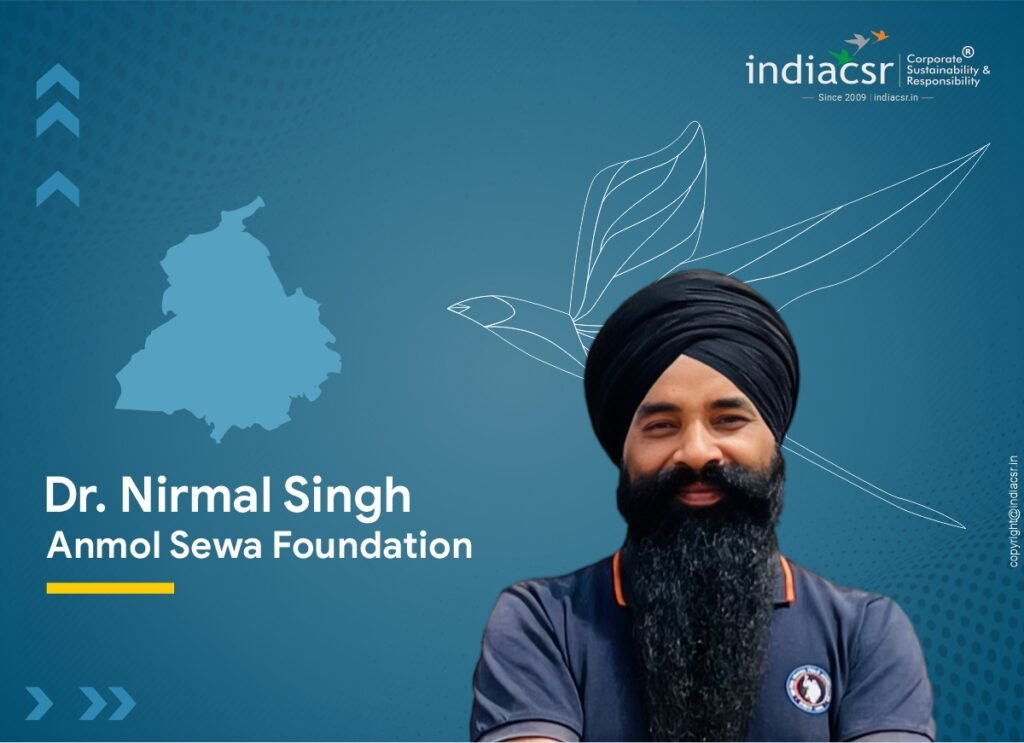
Dr. Nirmal Singh’s inspiring journey from childhood hardship to grassroots leadership shows how courage, education and sustainable farming can transform rural Punjab.
Some leaders are born into comfort. Some rise through struggle. Dr. Nirmal Singh, Founder of Anmol Sewa Foundation, belongs to the second group. His life is a story of pain, courage, hard work and service. He lost his father at the age of five. At a very young age, he had to face the difficult realities of village life. He worked in the fields, grazed cattle, walked long distances to school and carried responsibilities that usually belong to adults.
But Dr. Singh did not allow hardship to break him. Instead, he turned his pain into strength. He used his struggle as a reason to work for society. His early life gave him a deep understanding of farmers, labourers, women, youth and poor families. He knew their problems not from books, but from personal experience. This made his leadership honest, grounded and people-centred.
Despite very difficult conditions, Dr. Nirmal Singh never gave up on education. His academic journey became a strong example of determination. From farming responsibilities and village hardships, he went on to complete M.Ed., M.Phil. and Ph.D. from Master of Mass Communication (MMC). He also earned Master’s degrees in Education and Mass Communication. This gave him a rare mix of academic knowledge, communication skills and social understanding. Education did not take him away from the village. It brought him closer to rural society. His degrees gave him knowledge, while his childhood gave him wisdom. This combination shaped his unique leadership style. He could speak the language of farmers, understand the concerns of women, guide youth, work with institutions and connect with experts.
For Dr. Singh, education was never only about personal success. It became a tool for community change. His life shows that when education remains connected to the ground, it becomes a force for social development. He did not use learning to escape rural India. He used it to serve rural India better. Today, through Anmol Sewa Foundation, Dr. Singh is working in the areas of sustainable agriculture, women empowerment, climate-smart villages, disaster relief, youth awareness, crop residue management and CSR-linked rural development. His journey proves that true leadership is not measured by titles, but by the lives touched and communities strengthened.
Choosing the Soil Over Comfort
With his strong academic background, Dr. Nirmal Singh had opportunities to take prestigious government and academic positions. He was offered respected roles, including Naib Tehsildar and university Professor. Many people would have chosen such secure and comfortable careers. But Dr. Singh chose a different path. He decided to stay connected with the soil, farmers and rural communities. He chose service over comfort and responsibility over status. Instead of moving away from village life, he chose to work from within the village system. He took up the traditional role of Village Head, or Namberdar, in Nakatpur, Ambala.
This position helped him combine education with grassroots action. He started building local clusters, encouraging Self-Help Groups and supporting agricultural cooperative societies. These efforts helped rural communities move towards self-reliance. Dr. Singh’s decision shows that real change often begins at the village level. It is not always created in offices or conferences. Sometimes, it is created in farms, community meetings, village groups and local institutions. His life proves that true leadership is not about power or position. It is about standing with people and working for their dignity.
Dr. Nirmal Singh’s life offers a powerful message: hardship can become hope when it is guided by purpose.
Bringing Green Innovation to Farms
Long before climate change became a major global issue, Dr. Nirmal Singh was already promoting eco-friendly farming practices at the village level. Since 1997, he has followed a strict “no stubble burning” practice on his own land. He completely stopped burning crop residue and showed that farming can be productive without harming the environment. His farms became live learning centres for modern and sustainable agriculture. In 2004, he introduced sprinkler systems to save water. This simple but important step inspired many local farmers to think seriously about water conservation.
His work also attracted the attention of leading agricultural institutions. He collaborated with the Indian Council of Agricultural Research, CIMMYT and the International Rice Research Institute. With support linked to the Bill & Melinda Gates Foundation, his fields were used for trials of advanced agricultural machines and practices. These included Rotavators, Bed Planters, Direct Seeded Rice, Happy Seeders and Laser Land Levelers. These technologies helped farmers reduce costs, save water, manage crop residue and protect soil health. For his contribution to sustainable farming, Dr. Singh received recognition as a Champion Farmer.
His work sends a clear message: farmers are not the problem in the climate crisis. With the right knowledge, support and technology, farmers can become the strongest protectors of the environment. Dr. Nirmal Singh has been working both in Punjab and Haryana as a strong bridge between farmers, agricultural science and grassroots development, taking modern farming ideas directly to villages. Since 2005, he has been associated with Dr. M.L. Jat, Secretary, DARE and Director General, ICAR (Also, advisor to Union Agriculture Minister Shivraj Singh Chouhan on agricultural development.), whose scientific leadership and guidance have strengthened his work in sustainable farming and rural transformation.
Empowering Rural Women
For Anmol Sewa Foundation, rural development is incomplete without women’s empowerment. Dr. Nirmal Singh strongly believes that women should not remain only silent workers in agriculture and family life. They must become decision-makers, earners and leaders. The foundation has promoted kitchen gardens in rural households. These gardens help families grow fresh vegetables and improve nutrition. At the same time, they also create small income opportunities for women. This simple model supports health, savings and self-reliance.
Through Self-Help Groups, women are trained in useful skills, financial awareness and small enterprise development. They learn how to save money, manage group activities, understand basic finance and explore livelihood opportunities. This work is also important from the CSR point of view. It supports women empowerment, livelihood development, nutrition, poverty reduction and social equality, which are key areas under Schedule VII of the Companies Act.
The impact is visible at the village level. Women who were earlier limited to household roles are now participating in community activities, managing group savings, supporting climate-friendly farming and contributing to local economic growth. They are not only helping their families, but also strengthening the future of their villages.
Protecting Youth from Addiction
Punjab and Haryana have faced serious concerns related to substance abuse among youth. Dr. Nirmal Singh believes that young people need positive direction, dignity and livelihood opportunities. He and the co-founder of Anmol Sewa Foundation have personally followed a life of complete sobriety and have stayed away from intoxicants and drugs. They use this personal example to inspire youth. The foundation encourages young people to see agriculture as a respected, modern and profitable profession. Farming is not presented as backward or helpless. It is shown as a field full of innovation, technology and business opportunities.
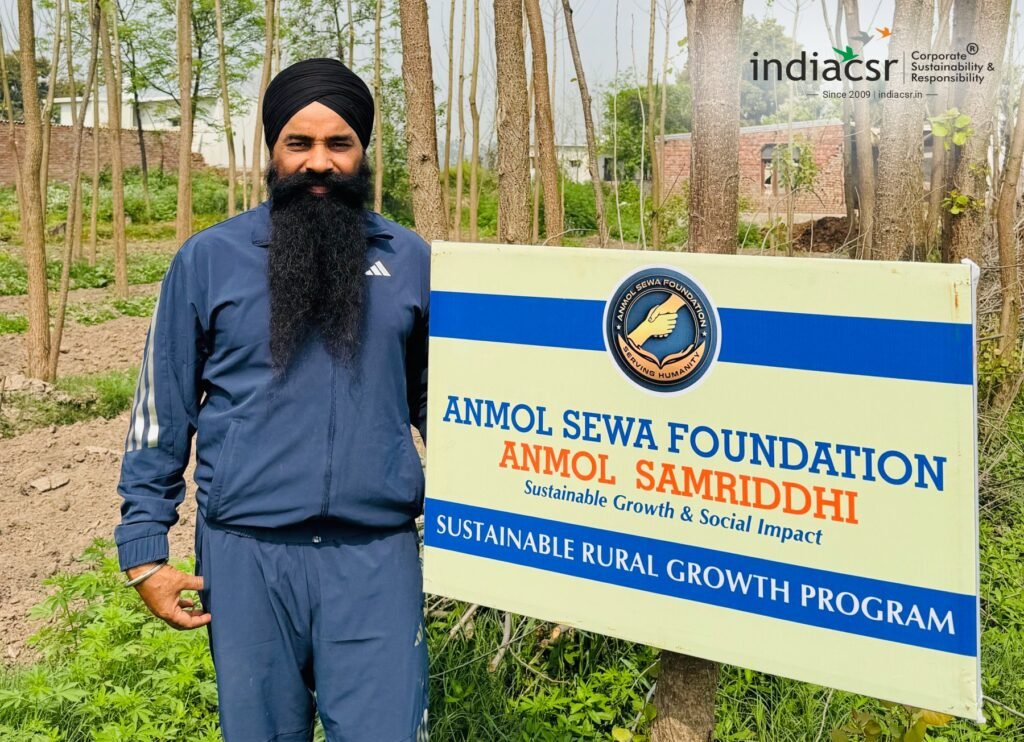
The foundation guides youth towards allied agricultural activities such as domestic biogas plants, crop diversification, crop residue management and climate-friendly farming. These activities help young people earn income while also protecting the environment. This approach addresses two major problems together: rural unemployment and drug addiction. When youth are connected with productive work, skills and income opportunities, they are more likely to stay away from harmful habits. Through mentoring, awareness and practical training, Anmol Sewa Foundation is helping young people become healthy, responsible and productive members of society.
Dr. Nirmal Singh work is changing the meaning of agriculture practice in Punjab. It is no longer only about crops. It is about dignity, environment, women’s leadership, youth development and climate resilience.
Standing with People During Disasters
When floods affected parts of Punjab and Haryana between 2023 and 2025, Dr. Nirmal Singh and Anmol Sewa Foundation came forward to help people in distress. The foundation worked directly on the ground during difficult conditions. Their disaster response included boat evacuations, distribution of food, medicines, clothes and other essential items. But the foundation did not stop at immediate relief. It also focused on long-term recovery.
One of its important efforts has been the House Rebuild Mission. Many families lost their homes during floods. Temporary help was not enough for them. They needed safety, stability and hope. The foundation worked to support the rebuilding of permanent and safe homes for affected families. For Anmol Sewa Foundation, disaster relief is not just charity. It is about restoring human dignity. It is about helping families stand again after losing everything. This kind of work is becoming even more important as climate-related disasters increase in rural regions.
A Trusted Partner for CSR Impact
Anmol Sewa Foundation is emerging as a credible grassroots NGO and implementation partner for companies looking for meaningful CSR projects. Its work is closely connected with Schedule VII of the Companies Act. The foundation’s programmes address important national priorities such as poverty reduction, sustainable agriculture, women empowerment, livelihood promotion, environmental protection, water conservation, climate-smart villages and disaster relief.
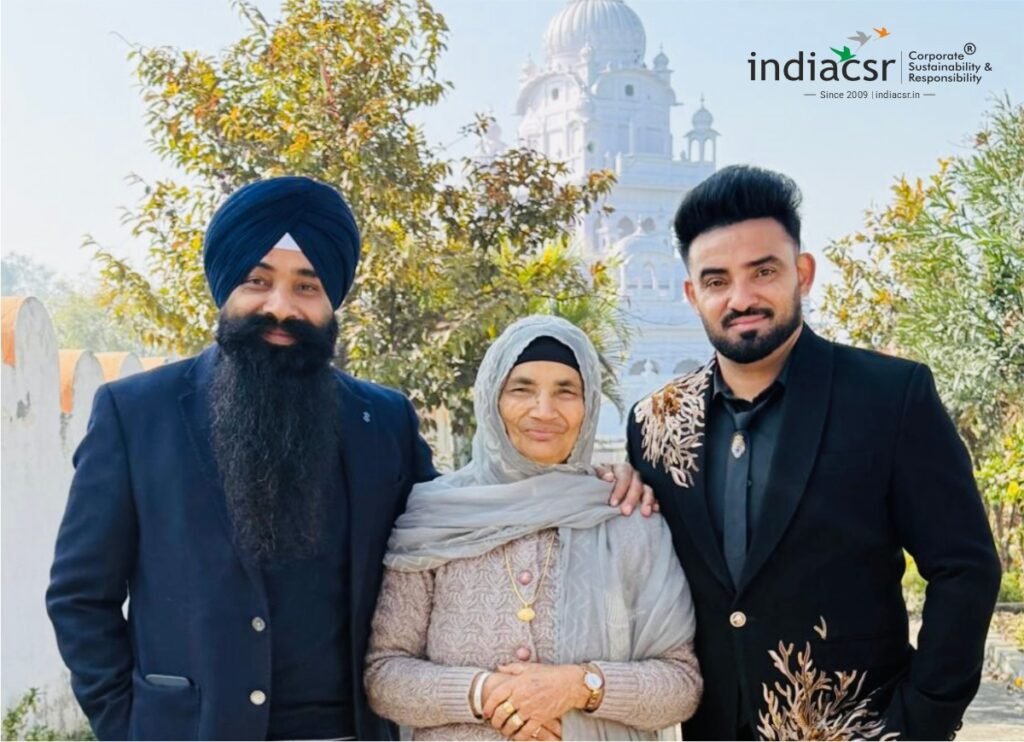
Co-founded by renowned Punjabi singer and Brand Ambassador Resham Singh Anmol, the foundation brings together public influence and grassroots action. This combination helps connect communities, institutions and corporate partners. For companies, the foundation offers a practical and transparent way to support rural development. Its work is field-based, measurable and community-driven. It can help CSR partners create real impact in villages, especially in agriculture, women empowerment, environment and rural livelihoods.
By connecting corporate CSR resources with genuine grassroots needs, Anmol Sewa Foundation is building a bridge between policy, funding and people. Its work shows that when CSR reaches the right communities through trusted local leadership, it can create lasting change.
This article has been prepared based on an exclusive interview with Dr. Nirmal Singh.


