



Accessibility is not just about disability, it is about creating an inclusive world that empowers every individual at every stage of life.
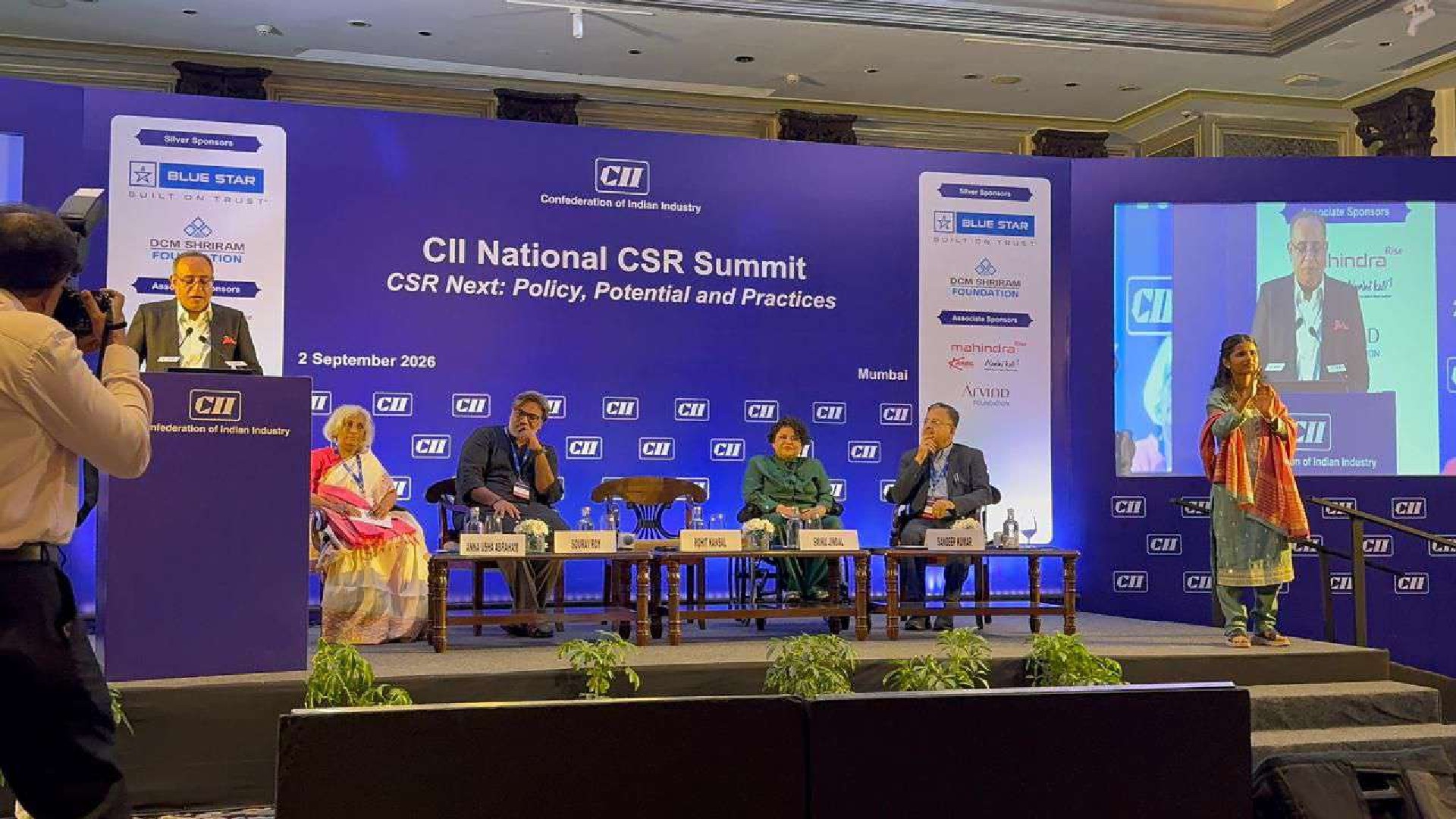
MUMBAI (India CSR): Corporate social responsibility funding must increasingly move beyond traditional charity-led interventions towards partnerships that create sustainable, scalable and inclusive impact, Sminu Jindal, Managing Director of Jindal Saw Limited, said at the CII ‘s CSR Summit 2026.
Jindal chaired and moderated a session titled “Potential Next – Where CSR Money Should Go Next” at the summit, held in Mumbai on September 2 under the theme, “CSR Next: Policy, Potential and Practices.” The discussion examined the future direction of CSR investments and the need to build long-term opportunities for communities rather than limiting support to one-time assistance.
She said accessibility should be viewed as a wider principle of inclusion, not only as an issue concerning persons with disabilities. According to Jindal, an accessible world is one that enables every individual, at every stage of life, to participate fully and realise their potential.
“Accessibility is not just about disability, it is about creating an inclusive world that empowers every individual at every stage of life,” she said in a LinkedIn post following the session.
The discussion highlighted the importance of collaboration among companies, civil society organisations, government institutions and communities. Such partnerships can help CSR programmes move from isolated activities to solutions that are sustained over time, can be scaled and respond to the diverse needs of people.
Jindal said intent alone cannot create an inclusive society. It requires strategic investment, sustained action and collective effort to build opportunities that help people participate and thrive. She underlined that CSR has the potential to serve as a catalyst for this transformation when it focuses on enabling and empowering people.
Her remarks come as companies increasingly explore outcome-oriented CSR models in areas such as education, livelihoods, healthcare, skilling, accessibility and social inclusion. The central question, she suggested, is not only how CSR money is spent, but whether it creates systems and opportunities that allow people to build stronger, more independent futures.
© Copyright Disclaimer: All rights reserved. No part of this report may be reproduced, republished, distributed or transmitted in any form without prior written permission from India CSR®.
Also Read



