

• India CSR Awards 2025
  • India CSR Leadership Summit
  • Guest Posts
  • Login
Thursday, April 23, 2026
India CSR
  • Home
  • Corporate Social Responsibility
    • Art & Culture
    • CSR Leaders
    • Child Rights
    • Culture
    • Education
    • Gender Equality
    • Around the World
    • Skill Development
    • Safety
    • Covid-19
    • Safe Food For All
  • Sustainability
    • Sustainability Dialogues
    • Sustainability Knowledge Series
    • Plastics
    • Sustainable Development Goals
    • ESG
    • Circular Economy
    • BRSR
  • Corporate Governance
    • Diversity & Inclusion
  • Interviews
  • SDGs
    • No Poverty
    • Zero Hunger
    • Good Health & Well-Being
    • Quality Education
    • Gender Equality
    • Clean Water & Sanitation – SDG 6
    • Affordable & Clean Energy
    • Decent Work & Economic Growth
    • Industry, Innovation & Infrastructure
    • Reduced Inequalities
    • Sustainable Cities & Communities
    • Responsible Consumption & Production
    • Climate Action
    • Life Below Water
    • Life on Land
    • Peace, Justice & Strong Institutions
    • Partnerships for the Goals
  • Articles
  • Events
  • हिंदी
  • More
    • Business
    • Finance
    • Environment
    • Economy
    • Health
    • Around the World
    • Social Sector Leaders
    • Social Entrepreneurship
    • Trending News
      • Important Days
        • Festivals
      • Great People
      • Product Review
      • International
      • Sports
      • Entertainment
    • Case Studies
    • Philanthropy
    • Biography
    • Technology
    • Lifestyle
    • Sports
    • Gaming
    • Knowledge
    • Home Improvement
    • Words Power
    • Chief Ministers
No Result
View All Result
  • Home
  • Corporate Social Responsibility
    • Art & Culture
    • CSR Leaders
    • Child Rights
    • Culture
    • Education
    • Gender Equality
    • Around the World
    • Skill Development
    • Safety
    • Covid-19
    • Safe Food For All
  • Sustainability
    • Sustainability Dialogues
    • Sustainability Knowledge Series
    • Plastics
    • Sustainable Development Goals
    • ESG
    • Circular Economy
    • BRSR
  • Corporate Governance
    • Diversity & Inclusion
  • Interviews
  • SDGs
    • No Poverty
    • Zero Hunger
    • Good Health & Well-Being
    • Quality Education
    • Gender Equality
    • Clean Water & Sanitation – SDG 6
    • Affordable & Clean Energy
    • Decent Work & Economic Growth
    • Industry, Innovation & Infrastructure
    • Reduced Inequalities
    • Sustainable Cities & Communities
    • Responsible Consumption & Production
    • Climate Action
    • Life Below Water
    • Life on Land
    • Peace, Justice & Strong Institutions
    • Partnerships for the Goals
  • Articles
  • Events
  • हिंदी
  • More
    • Business
    • Finance
    • Environment
    • Economy
    • Health
    • Around the World
    • Social Sector Leaders
    • Social Entrepreneurship
    • Trending News
      • Important Days
        • Festivals
      • Great People
      • Product Review
      • International
      • Sports
      • Entertainment
    • Case Studies
    • Philanthropy
    • Biography
    • Technology
    • Lifestyle
    • Sports
    • Gaming
    • Knowledge
    • Home Improvement
    • Words Power
    • Chief Ministers
No Result
View All Result
India CSR
No Result
View All Result
Home Articles

EU–India FTA 2026: A New Blueprint for Sustainability-Led Growth

For decades, environmental commitments in trade deals were either symbolic or optional.

India CSR by India CSR
March 20, 2026
in Articles
Reading Time: 7 mins read
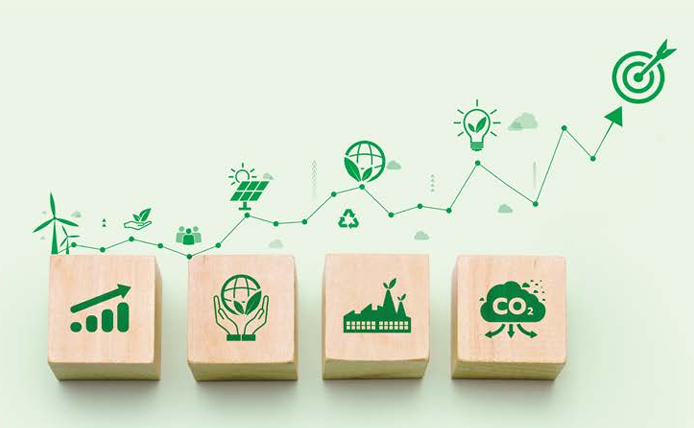
Blueprint for Sustainability-Led Growth

Blueprint for Sustainability-Led Growth. India CSR

Share Share Share Share
WhatsApp icon
WhatsApp — Join Us
Instant updates & community
Google News icon
Google News — Follow Us
Get our articles in Google News feed

The authors present the EU–India Deal of 2026 as far more than a trade pact; they frame it as a visionary bridge to a future where sustainability, clean technology, climate ambition, and economic progress rise together.
Admissions Open for BBA in CSR, Sustainability and ESG
India CSR

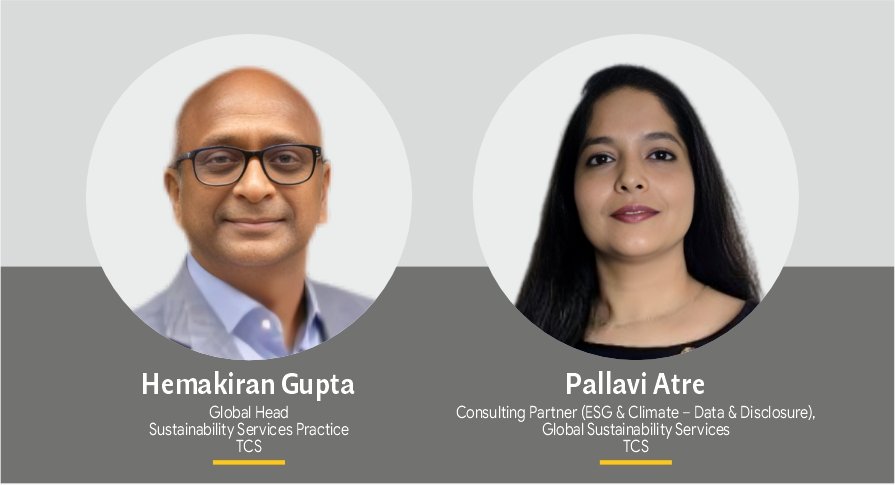
By Hemakiran Gupta and Pallavi Atre

The landmark EU–India Free Trade Agreement signed on January 27, 2026, is a deal that represents much more than a historic trade milestone. This landmark pact, considered the “mother of all deals,” represents a turning point in how major democracies can collaborate to advance sustainable economic transformation and geopolitical stability in a fragmented world.

We are entering a world where climate leadership directly shapes competitiveness, supply chain credibility, access to technology, anarket resilience. This pact recognizes that reality encodes it into policy. In doing so, it repositions India–EU relations from transactional trade diplomacy to a long-horizon climate‑- tech and clean-energy alliance.

In addition, the 2030 Joint India-EU Strategic Agenda significantly broadens India–EU climate cooperation beyond what is outlined in the FTA, embedding sustainability across every policy pillar. Together, these two instruments signal a shift in how modern partnerships are built: trade provides the momentum, but a strategic agenda provides the operating system for climate, resilience, and technology-led transformation.

Sustainability Is No Longer a Moral Add-On: It Is the Framework

For decades, environmental commitments in trade deals were either symbolic or optional. The EU–India FTA decisively breaks that pattern. It explicitly links market access to clean‑energy transition, biodiversity protection, and UN SDG-aligned action, a clear acknowledgment that economic growth and climate responsibility can no longer be pursued separately. The political message is unambiguous: sustainability has moved from the footnotes of policy to the front page of economic strategy with investment commitments exceeding €25 billion across energy, manufacturing, and infrastructure platforms. For the first time in an Indian trade deal, a standalone chapter on topics such as food safety and resource efficiency has been included as a core pillar of agri-trade.

For India, this matters because global supply‑chain anchors from– manufacturing to mobility to digital infrastructures- are now judged on carbon intensity, ethical sourcing, and transparency. Sustainability is no longer a reporting ritual; it is becoming a market‑entry barrier.

 Impact on Clean‑Tech: What the EU–India FTA 2026 Unlocks 

By slashing prices on industrial goods, the FTA lowers the cost of renewable equipment, grid infrastructure, EV components, batteries, and hydrogen technologies. For India, this means faster and cheaper deployment of clean energy at scale. This supports India’s ambition to mobilize US$10 billion in foreign investment to develop 10 gigawatts of electrolyser capacity by 2030, positioning the country as a primary supplier to European markets. For Europe, it opens access to one of the world’s fastest-growing clean‑tech markets at a time when geopolitical risk is forcing a rethink of highly concentrated supply chains. 

More importantly, the deal nudges both sides away from clean‑tech trade and toward clean‑tech manufacturing. European firms are no longer looking at India merely as a destination market, but as a production base- one that offers scale, cost competitiveness, and alignment with “trusted-partner” strategies. India, in turn, gains access to technology and capital and a chance to move up the clean tech value chain rather than remain an importer of high-end components. 

The FTA strengthens the EU-India Clean Energy and Climate Partnership (CECP) framework, operationalizes it, and provides funding pathways estimated at €12–15 billion across public finance, multilateral lending, and private capital mobilization. The CECP provides the policy, finance, and cooperation backbone, while the FTA provides the market, scale, and commercial pull. Together, they convert climate intent into climate tech deployment, accelerating progress in four areas: Renewables scale-up at the national and industrial levels; Green hydrogen partnerships, from standards to pilots; Climate-resilient infrastructure, especially in transport and utilities; and Energy-efficient manufacturing systems, where India needs rapid modernization. The deal facilitates large-scale capital flows, including a €2 billion commitment from the European Investment Bank (EIB) for climate-resilient infrastructure and the potential mobilization of funds through the EU’s €300 billion Global Gateway strategy.

The real climate muscle of the agreement, however, lies outside its green chapter. It is part of the EU’s Carbon Border Adjustment Mechanism (CBAM). The FTA does not shield Indian exporters from carbon pricing at the EU border, and that is precisely the point. The agreement secures technical cooperation and a €500 million Green Transition Assistance package to help Indian industries (specifically steel and aluminium) adapt to standards. CBAM quietly rewrites incentives, making low-carbon steel, cement, fertilizers, and power not just environmentally preferable, but commercially necessary. In effect, it turns clean technology from a “nice‑to‑have” into a survival strategy. 

The EU–India FTA will not, single‑handedly, deliver net zero. But it does something arguably more important: it makes clean technology the default pathway for growth, not an alternative one.

TTC + FTA: A New Climate‑Tech Industrial Compact

If CECP is India’s clean‑energy engine, the Trade and Technology Council (TTC) is the digital architecture that will govern the climate economy. The TTC focuses on digital governance, interoperable standards, emerging technologies, data-driven energy systems, and circular‑economy solutions.

The FTA and TTC together establish what India has long needed: A climate‑tech industrial compact with one of the world’s most advanced regulatory blocs.

This matters because low-carbon growth will be digitally enabled. Whether it is carbon accounting, supply‑chain traceability, or smart manufacturing, the backbone is digital infrastructure. Through the TTC, India can shape and adopt global standards rather than merely follow them.

The Green & Resilient Supply Chain Pivot India Cannot Ignore

One of the most consequential but underreported elements of the pact is its commitment to sustainable, rules-based, low-carbon supply chains. As geopolitics forces companies to diversify, India now has a real opportunity to become a trusted low-carbon manufacturing base. But that opportunity comes with expectations.

Global buyers will increasingly demand full visibility into supplier emissions, sustainability-led procurement, digital traceability across product cycles, and verifiable disclosures.

This is not a bureaucratic hurdle; it is an economic gateway.


If India wants to anchor global manufacturing mandates, it must build digital sustainability ecosystems, from carbon accounting to clean energy procurement to transparent logistics.

The Real Ask for India Inc.: Compete, do not Comply.

The Indian industry must internalize four imperatives emerging from this FTA:

  • Embed sustainability into core strategy, not CSR or branding.
  • Invest in climate‑tech engineering – green hydrogen, renewables integration, low-carbon mobility, energy-efficient manufacturing.
  • Prepare for regulatory convergence with EU standards – early movers will dominate future resilient supply‑chain allocations. 
  • Embrace the ‘Twin Transformation’ lens—the integration of digital and sustainability transformation. The research suggests organisations embracing Twin Transformation outperform peers in resilience, innovation, and value creation. Find out more in the Sustainability Action Barometer 2026.

This is not a compliance exercise for India alone, but a shared adjustment to the new rules of competitiveness shaping global trade.

A New Way to Climate‑Aligned Growth

The EU–India FTA is not merely a trade agreement- it is a playbook for how sustainability-driven, climate ambition, and economic ambition now move together. It positions India and the EU as co-architects of a new global economic order where growth is clean, technology is interoperable, supply chains are resilient, and sustainability is non-negotiable.


About the Authors

Hemakiran Gupta, Global Head of Sustainability Services Practice at TCS, and Pallavi Atre, Consulting Partner for ESG & Climate Data and Disclosure within TCS’s Global Sustainability Services, bring deep leadership and domain expertise in advancing sustainability, ESG strategy, climate action, and responsible business transformation.

Ambedkar Chamber
ADVERTISEMENT
ESG Professional Network
ADVERTISEMENT
India Sustainability Awards 2026
ADVERTISEMENT
India CSR Image 1 India CSR Image 2
Tags: Hemakiran GuptaPallavi AtreSustainability

India CSR Day CSR, Sustainability, and ESG success stories hindustan zinc
ADVERTISEMENT
India CSR

India CSR

India CSR is the largest media on CSR and sustainability offering diverse content across multisectoral issues on business responsibility. It covers Sustainable Development, Corporate Social Responsibility (CSR), Sustainability, and related issues in India. Founded in 2009, the organisation aspires to become a globally admired media that offers valuable information to its readers through responsible reporting.

Related Posts

Ajith Kumar, COO, Birla Opus Paints. India CSR
Articles

From Manufacturing Excellence to Community Impact: Adopting a Holistic Approach to Growth

Aakash Minda,  Executive Director, Spark Minda - India CSR
Articles

Driving Sustainability and Climate Action: Industry’s Role in Building a Greener Tomorrow

Industrial Accidents Are the Outcome of Collective Ignorance and Administrative Collapse
Articles

Industrial Accidents Are the Outcome of Collective Ignorance and Administrative Collapse

Empowering Sustainability
Articles

Why Sustainability is the Next Competitive Advantage for Indian Businesses

BBA CSR MBA CSR India CSR Rungta
Articles

Building a Career in CSR in India: Courses, Opportunities, Skills, and Pathways

Ex-IFS Officer S.S. Bajaj
Articles

Ex-IFS Officer S.S. Bajaj’s Corporate Liaison Role Raises Ethical Storm Amid Raigarh Protests and Forest Concerns in Chhattisgarh

Load More
BBA - CSR, Sustainability and ESG, Rungta International Skills University Bhilai
ADVERTISEMENT

LATEST NEWS

Non-Stick Kadai vs Regular Kadai: Pros, Cons & What to Buy?

How to Choose the Right Home Locker Size for Your Documents and Jewellery

Design Exams Are Testing Thinking, Not Drawing Skills, Say Creative Edge

Varroc Reaffirms Commitment to Kham River Restoration and Sustainability on World Earth Day

Top NBFCs in India Driving Growth through Technological Innovation

OOTER Launches to Build India’s First Structured Marketplace for Outdoor Advertising

Ambedkar Chamber
ADVERTISEMENT

TOP NEWS

The Business Philosophy Behind Rahul Malodia’s Success

Admissions Open for Executive MBA in CSR, Sustainability and ESG for Industry Professionals at Rungta International Skills University

CSR: Vedanta Drives Cultural Heritage Preservation, Impacts 8 Lakh Lives FY26

BAGGGEL Foundation Concludes 3rd Edition of ‘Being CEO Ready’ Conference, accelerating Women into CEO and Boardroom Leadership

Space on Wheels Brings ISRO Science Learning to Chhattisgarh Kids

AROH Foundation’s Dr. Neelam Gupta Honored with “Powerful Voices in Finance” Award by HDFC Securities

Load More
India Sustainability Awards 2026
ADVERTISEMENT
Ad 1 Ad 2 Ad 3
ADVERTISEMENT
Economy India Largest Media on Indian Economy and Business
ADVERTISEMENT

Interviews

R. Pavithra Kumar, CEO, JSW Foundation
Interviews

Redefining CSR and Driving Sustainable Social Impact: An Interview with R. Pavithra Kumar of JSW Foundation

by India CSR

Exploring impact-driven CSR models focused on skilling, sustainability, and inclusive growth

Read moreDetails
Jyoti Sagar, Founder Trustee, Genesis Foundation

Interview: Jyoti Sagar on 25 Years of Saving Young Lives at Genesis Foundation

Satish Singh, Chief People Officer at PNB Housing Finance

Interview: Satish Singh on ESG Leadership and CSR Impact at PNB Housing Finance

Ajeet Kumar Singh, Co-Founder and Managing Director of SAVE Solutions

Driving Financial Inclusion: Ajeet Kumar Singh on SAVE Solutions’ Growth Journey

Load More
ESG Professional Network
ADVERTISEMENT
STEM Learning STEM Learning STEM Learning
ADVERTISEMENT
Facebook Twitter Youtube LinkedIn Instagram
India CSR Logo

India CSR is the largest tech-led platform for information on CSR and sustainability in India offering diverse content across multisectoral issues. It covers Sustainable Development, Corporate Social Responsibility (CSR), Sustainability, and related issues in India. Founded in 2009, the organisation aspires to become a globally admired media that offers valuable information to its readers through responsible reporting. To enjoy the premium services, we invite you to partner with us.

Follow us on social media:


Dear Valued Reader

India CSR is a free media platform that provides up-to-date information on CSR, Sustainability, ESG, and SDGs. We need reader support to continue delivering honest news. Donations of any amount are appreciated.

Help save India CSR.

Donate Now

Donate at India CSR

  • About India CSR
  • Team
  • India CSR Awards 2026
  • India CSR Leadership Summit
  • Partnership
  • Guest Posts
  • Services
  • ESG Professional Network
  • Content Writing Services
  • Business Information
  • Contact
  • Privacy Policy
  • Terms of Use
  • Donate

Copyright © 2025 - India CSR | All Rights Reserved

Welcome Back!

Login to your account below

Forgotten Password?

Retrieve your password

Please enter your username or email address to reset your password.

Log In
INDIA CSR DAY
Watch Now
No Result
View All Result
  • Home
  • Corporate Social Responsibility
    • Art & Culture
    • CSR Leaders
    • Child Rights
    • Culture
    • Education
    • Gender Equality
    • Around the World
    • Skill Development
    • Safety
    • Covid-19
    • Safe Food For All
  • Sustainability
    • Sustainability Dialogues
    • Sustainability Knowledge Series
    • Plastics
    • Sustainable Development Goals
    • ESG
    • Circular Economy
    • BRSR
  • Corporate Governance
    • Diversity & Inclusion
  • Interviews
  • SDGs
    • No Poverty
    • Zero Hunger
    • Good Health & Well-Being
    • Quality Education
    • Gender Equality
    • Clean Water & Sanitation – SDG 6
    • Affordable & Clean Energy
    • Decent Work & Economic Growth
    • Industry, Innovation & Infrastructure
    • Reduced Inequalities
    • Sustainable Cities & Communities
    • Responsible Consumption & Production
    • Climate Action
    • Life Below Water
    • Life on Land
    • Peace, Justice & Strong Institutions
    • Partnerships for the Goals
  • Articles
  • Events
  • हिंदी
  • More
    • Business
    • Finance
    • Environment
    • Economy
    • Health
    • Around the World
    • Social Sector Leaders
    • Social Entrepreneurship
    • Trending News
      • Important Days
      • Great People
      • Product Review
      • International
      • Sports
      • Entertainment
    • Case Studies
    • Philanthropy
    • Biography
    • Technology
    • Lifestyle
    • Sports
    • Gaming
    • Knowledge
    • Home Improvement
    • Words Power
    • Chief Ministers

Copyright © 2025 - India CSR | All Rights Reserved

This website uses cookies. By continuing to use this website you are giving consent to cookies being used. Visit our Privacy and Cookie Policy.
