

• India CSR Awards 2026
  • India CSR Leadership Summit
  • Guest Posts
Saturday, September 19, 2026
India CSR
  • Home
  • Corporate Social Responsibility
    • Art & Culture
    • CSR Leaders
    • Child Rights
    • Culture
    • Education
    • Gender Equality
    • Around the World
    • Skill Development
    • Safety
    • Covid-19
    • Safe Food For All
  • Sustainability
    • Sustainability Dialogues
    • Sustainability Knowledge Series
    • Plastics
    • Sustainable Development Goals
    • ESG
    • Circular Economy
    • BRSR
  • Corporate Governance
    • Diversity & Inclusion
  • Interviews
  • SDGs
    • No Poverty
    • Zero Hunger
    • Good Health & Well-Being
    • Quality Education
    • Gender Equality
    • Clean Water & Sanitation – SDG 6
    • Affordable & Clean Energy
    • Decent Work & Economic Growth
    • Industry, Innovation & Infrastructure
    • Reduced Inequalities
    • Sustainable Cities & Communities
    • Responsible Consumption & Production
    • Climate Action
    • Life Below Water
    • Life on Land
    • Peace, Justice & Strong Institutions
    • Partnerships for the Goals
  • Articles
  • Events
  • हिंदी
  • More
    • Business
    • Finance
    • Environment
    • Economy
    • Health
    • Around the World
    • Social Sector Leaders
    • Social Entrepreneurship
    • Trending News
      • Important Days
        • Festivals
      • Great People
      • Product Review
      • International
      • Sports
      • Entertainment
    • Case Studies
    • Philanthropy
    • Biography
    • Technology
    • Lifestyle
    • Sports
    • Gaming
    • Knowledge
    • Home Improvement
    • Words Power
    • Chief Ministers
No Result
View All Result
  • Home
  • Corporate Social Responsibility
    • Art & Culture
    • CSR Leaders
    • Child Rights
    • Culture
    • Education
    • Gender Equality
    • Around the World
    • Skill Development
    • Safety
    • Covid-19
    • Safe Food For All
  • Sustainability
    • Sustainability Dialogues
    • Sustainability Knowledge Series
    • Plastics
    • Sustainable Development Goals
    • ESG
    • Circular Economy
    • BRSR
  • Corporate Governance
    • Diversity & Inclusion
  • Interviews
  • SDGs
    • No Poverty
    • Zero Hunger
    • Good Health & Well-Being
    • Quality Education
    • Gender Equality
    • Clean Water & Sanitation – SDG 6
    • Affordable & Clean Energy
    • Decent Work & Economic Growth
    • Industry, Innovation & Infrastructure
    • Reduced Inequalities
    • Sustainable Cities & Communities
    • Responsible Consumption & Production
    • Climate Action
    • Life Below Water
    • Life on Land
    • Peace, Justice & Strong Institutions
    • Partnerships for the Goals
  • Articles
  • Events
  • हिंदी
  • More
    • Business
    • Finance
    • Environment
    • Economy
    • Health
    • Around the World
    • Social Sector Leaders
    • Social Entrepreneurship
    • Trending News
      • Important Days
        • Festivals
      • Great People
      • Product Review
      • International
      • Sports
      • Entertainment
    • Case Studies
    • Philanthropy
    • Biography
    • Technology
    • Lifestyle
    • Sports
    • Gaming
    • Knowledge
    • Home Improvement
    • Words Power
    • Chief Ministers
No Result
View All Result
India CSR
No Result
View All Result
Home Articles

CSR Legislations, India’s Commitment to CSR as a Tool for Sustainable Development

India CSR by India CSR
December 7, 2024
in Articles
Reading Time: 6 mins read
Corporate Social Responsibility
Share Share Share Share
WhatsApp icon
WhatsApp — Join Us
Instant updates & community
Google News icon
Google News — Follow Us
Get our articles in Google News feed
india csr awards
ADVERTISEMENT
Debadutta Mishra

Words Debadutta Mishra

NEW DELHI (India CSR): In recent years, India has shown strong commitment to Corporate Social Responsibility (CSR), evolving it into a strategic tool to drive sustainable development. With the enactment of robust CSR laws and amendments under the Companies Act, 2013, India has not only set a global precedent but also reinforced its dedication to promoting corporate accountability, ethical business practices, and social upliftment. This article explores the developments in India’s CSR landscape and its role in advancing sustainable development.

The Legal Framework of CSR in India

India became the first country to legislate CSR obligations in 2014 with Section 135 of the Companies Act, mandating certain companies to allocate at least 2% of their average net profits from the previous three years toward CSR activities. Companies meeting specific revenue, net worth, or profit thresholds are required to spend on CSR, targeting a wide range of social issues, including poverty alleviation, education, healthcare, environmental sustainability, and rural development.
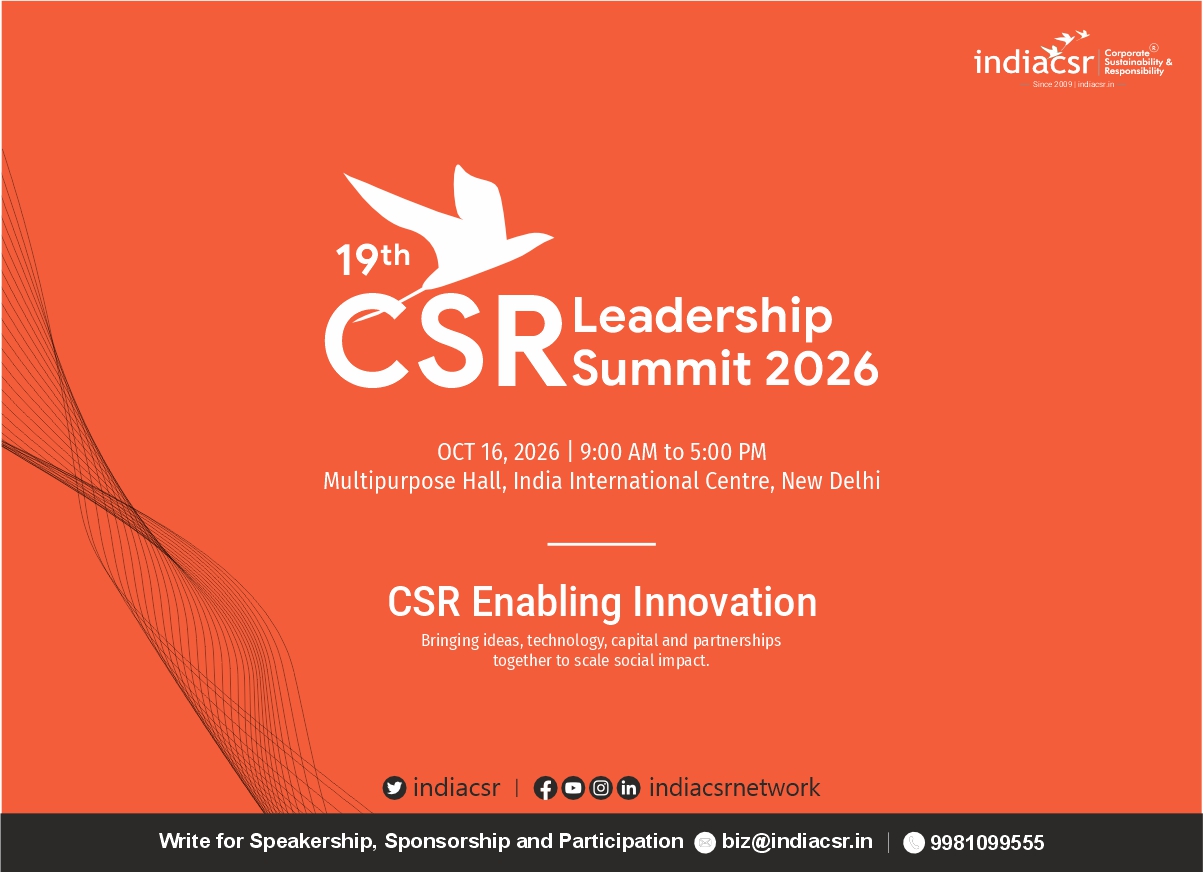
19th India CSR Leadership Summit 2026
ADVERTISEMENT

The CSR Amendment Rules of 2022 further strengthened this framework. These updates clarified the treatment of unspent funds, specified categories for CSR spending, and introduced stringent reporting standards. For example, unspent funds must be transferred to a designated “Unspent CSR Account” for ongoing projects and utilized within three years, or redirected to government funds like the PM CARES Fund if unused.

CSR as a Driver of Sustainable Development

India’s CSR policies align with the United Nations’ Sustainable Development Goals (SDGs) by incentivizing companies to tackle critical social and environmental issues. CSR spending in India supports the government’s efforts in areas like healthcare, education, and environmental protection, directly impacting SDGs such as Quality Education (SDG 4), Clean Water and Sanitation (SDG 6), and Climate Action (SDG 13).

For instance, CSR initiatives have contributed significantly to improving healthcare access and sanitation in rural areas. Companies often collaborate with NGOs and local communities to execute projects, leveraging local insights and resources for maximum impact. During the COVID-19 pandemic, numerous companies used their CSR funds to support healthcare infrastructure and provide relief to affected populations, demonstrating CSR’s potential to address urgent societal needs.

Transparency, Accountability, and Governance

The Indian government has implemented mechanisms to enhance transparency and accountability in CSR spending. Companies with substantial CSR expenditures (over INR 10 crore in the past three years) must now conduct mandatory impact assessments to evaluate the effectiveness of their CSR projects. This requirement ensures that CSR funds are not only spent but spent meaningfully, with measurable outcomes.

Moreover, recent amendments require companies to disclose detailed CSR activities, including the composition of their CSR committee, project implementation timelines, and financial allocations. These disclosures must be published on company websites and in annual reports, fostering a culture of transparency and encouraging public trust in corporate initiatives.

Empowering Local Implementation and Partnerships

A unique aspect of India’s CSR approach is the emphasis on partnerships with local implementation agencies, such as registered trusts and NGOs. The CSR rules allow companies to work with registered implementation agencies, which understand local contexts and can effectively deliver projects. By partnering with these organizations, businesses can make targeted interventions that address the specific needs of communities, whether in education, sanitation, or rural infrastructure.

The amendments also allow international organizations to assist in CSR projects, enabling cross-border knowledge transfer and collaboration. This inclusion signifies India’s willingness to adapt global best practices while addressing local challenges.

CSR as a Catalyst for Sustainable Growth

India’s CSR regime has evolved beyond compliance, with many corporations integrating CSR into their business strategies as a key pillar of sustainable growth. For instance, environmental CSR projects in renewable energy, waste management, and water conservation are reducing the ecological footprint of industries and encouraging sustainable business practices.

Several companies have gone beyond the minimum requirements, investing in long-term, impactful projects that align with their values. This shift reflects a broader trend where CSR is no longer seen as an obligation but as an opportunity to build sustainable, responsible businesses that contribute to national progress.

Key CSR Provisions and Amendments:

1. CSR Spending and Implementation: Companies meeting specific revenue, net worth, or profit thresholds are required to spend at least 2% of their average net profits over the last three financial years on CSR activities. The updated rules allow companies to set off any excess CSR spend against future CSR obligations for up to three years, but any surplus generated from CSR activities (e.g., interest earned on assets) must be reinvested in the same project or transferred to an unspent CSR account.

2. Unspent CSR Funds: Unspent CSR amounts are classified into two categories: those tied to ongoing projects and those not allocated to any project. Funds intended for ongoing projects must be moved to an “Unspent CSR Account” within 30 days of the fiscal year’s end and utilized within three years. If unused after this period, they must be transferred to a government-designated fund (e.g., the PM CARES Fund).

3. Mandatory Impact Assessments: Companies with a CSR spend of INR 10 crore or more over the last three years are now required to conduct impact assessments on projects with a budget of at least INR 1 crore. These assessments, which must be conducted by an independent agency, are capped at 5% of the total CSR expenditure or INR 50 lakh, whichever is lower.

4. CSR Committee and Disclosure Requirements: Companies with a CSR obligation above INR 50 lakh must establish a CSR committee to develop an annual action plan, oversee spending, and report on project implementation. Additionally, companies must disclose details about their CSR committee, policies, approved projects, and financial allocations on their website and annual reports to improve transparency.

5. Enhanced Governance and Penalties: The updated CSR regime includes stricter enforcement, with monetary penalties for non-compliance. For instance, companies failing to transfer unspent CSR funds as required could face fines up to INR 1 crore or twice the untransferred amount. Individual officers responsible for such lapses may also be fined.

6. Expanded Use of Implementation Agencies: A broader range of organizations—including certain Section 8 companies and registered trusts—are now eligible to serve as CSR implementation agencies, providing companies with more options to collaborate for CSR project delivery.

Challenges and the Way Forward

While India’s CSR framework has made notable strides, challenges remain. Ensuring that CSR funds reach intended beneficiaries, preventing tokenism, and enhancing the capabilities of local implementation agencies are key areas for improvement. Additionally, CSR spending is still concentrated among a few large companies, with smaller businesses often struggling to meet the requirements.

To overcome these challenges, the government could consider providing more support and incentives for smaller companies and fostering collaborations between businesses. Encouraging skill-building programs for NGOs and local partners could also strengthen the CSR ecosystem, allowing for more effective and widespread impact.

You Learn

India’s commitment to CSR demonstrates its dedication to sustainable development, addressing social inequalities, and promoting environmental stewardship. Through a well-structured CSR framework, India has laid a foundation for corporations to play an active role in nation-building, contributing to a balanced and inclusive economy. As India continues to refine its CSR policies, it sets an example for the world, proving that responsible business practices can drive substantial and lasting change.

Debadutta Mishra

About the Author

Debadutta Mishra, Adani Foundation.

(India CSR)

csr education cybernetyx
ADVERTISEMENT
India CSR Image 1 India CSR Image 2

CSR, Sustainability, and ESG success stories hindustan zinc
ADVERTISEMENT
India CSR

India CSR

India CSR® is the largest media on CSR and sustainability offering diverse content across multisectoral issues on business responsibility. It covers Sustainable Development, Corporate Social Responsibility (CSR), Sustainability, and related issues in India. Founded in 2009, the organisation aspires to become a globally admired media that offers valuable information to its readers through responsible reporting.

Related Posts

India CSR
Articles

PMKKKY: 4.70 Lakh Projects Worth ₹1.09 Lakh Crore for Mining Districts

Rachana Roy leads the Knowledge Vertical at SoulAce.
Articles

Beyond Flood Relief: Why Climate Resilience Must Become the Next CSR Priority

Saarang Ganapathi, Chief Executive Officer, Embassy Services Pvt. Ltd.
Articles

From Construction Waste to Circular Value: Rethinking the Built Environment

India CSR
Articles

‘The Octopus Theory’ Redefines Corporate Communication’s Fragmented Approach: Pavan Kaushik, Communication Economist

Ameet Rele, Vice President – Communications & CSR, Nuvoco Vistas Corp. Ltd.
Articles

Beyond Compliance: The Next Chapter of CSR in India

Dr. Heera Lal Patel, IAS
Articles

From Beneficiaries to Custodians: What Corporate India Can Learn from Dr. Heera Lal’s Community-Led Development Model

Load More
csr education cybernetyx
ADVERTISEMENT
bba
ADVERTISEMENT

Interviews

India CSR
Interviews

Interview: Ravi Mahajan on India’s Shift from Diesel to Solar-Powered Telecom Towers

by India CSR

Ravi Mahajan of Vedang Cellular Services discusses solar energy, battery storage, AI and IoT in building efficient and resilient telecom...

Read moreDetails
Sanjay Hande, Head Of Manufacturing And Technology Management, Bosch India @india csr

Giving Becomes Participation, and Participation Creates a Deeper Connection: Sanjay Hande, Bosch India

Vivek Prakash, Senior Vice President & Head, CSR at Jubilant Ingrevia Limited

Didi Ki Dukaan is Helping Rural Women Become Independent Entrepreneurs: Vivek Prakash, Sr VP & Head–CSR, Jubilant Ingrevia

India CSR

Responsible Business Must Turn Research into Real Impact: Prof Bob Doherty

Load More
Ad 1 Ad 2 Ad 3 Ad 4 Ad 5 Ad 6
ADVERTISEMENT

CSR UPDATES

From Potential to Progress: The Maashal Fellowship Story of GreenBreathe Innovations

Bata India Spends Rs 6.89 Cr on CSR in FY 2025-26, Supports Education, Health and Environment

BASF India Transfers Rs 8.86 Cr to Unspent CSR Account for Ongoing Projects in FY 2025-26

CSR: IIFCL-Supported Bharat Vann Adds 10,000 Native Saplings in New Delhi

CSR: Birlasoft Supports 215+ Visually Impaired Students With Digital Learning

CSR: Adani Gangavaram Port Distributes 1,600 Eco-Friendly Ganesh Idols

STEM Learning STEM Learning STEM Learning
ADVERTISEMENT
Facebook Twitter Youtube LinkedIn Instagram
India CSR Logo

India CSR® is the largest tech-led platform for information on CSR and sustainability in India offering diverse content across multisectoral issues. It covers Sustainable Development, Corporate Social Responsibility (CSR), Sustainability, and related issues in India. Founded in 2009, the organisation aspires to become a globally admired media that offers valuable information to its readers through responsible reporting. To enjoy the premium services, we invite you to partner with us.

Follow us on social media:

Subscribe to Our Newsletter

Don't miss out on the latest updates in corporate social responsibility. Subscribe to our newsletter at indiacsr.in and be part of the positive change.
Please enable JavaScript in your browser to complete this form.
Loading

  • About India CSR®
  • Team
  • India CSR® Awards 2026
  • India CSR® Leadership Summit
  • Partnership
  • Guest Posts
  • Services
  • ESG Professional Network
  • Content Writing Services
  • Business Information
  • Contact
  • Privacy Policy
  • Terms of Use
  • Donate

Copyright © 2026 - India CSR® | All Rights Reserved

No Result
View All Result
  • Home
  • Corporate Social Responsibility
    • Art & Culture
    • CSR Leaders
    • Child Rights
    • Culture
    • Education
    • Gender Equality
    • Around the World
    • Skill Development
    • Safety
    • Covid-19
    • Safe Food For All
  • Sustainability
    • Sustainability Dialogues
    • Sustainability Knowledge Series
    • Plastics
    • Sustainable Development Goals
    • ESG
    • Circular Economy
    • BRSR
  • Corporate Governance
    • Diversity & Inclusion
  • Interviews
  • SDGs
    • No Poverty
    • Zero Hunger
    • Good Health & Well-Being
    • Quality Education
    • Gender Equality
    • Clean Water & Sanitation – SDG 6
    • Affordable & Clean Energy
    • Decent Work & Economic Growth
    • Industry, Innovation & Infrastructure
    • Reduced Inequalities
    • Sustainable Cities & Communities
    • Responsible Consumption & Production
    • Climate Action
    • Life Below Water
    • Life on Land
    • Peace, Justice & Strong Institutions
    • Partnerships for the Goals
  • Articles
  • Events
  • हिंदी
  • More
    • Business
    • Finance
    • Environment
    • Economy
    • Health
    • Around the World
    • Social Sector Leaders
    • Social Entrepreneurship
    • Trending News
      • Important Days
      • Great People
      • Product Review
      • International
      • Sports
      • Entertainment
    • Case Studies
    • Philanthropy
    • Biography
    • Technology
    • Lifestyle
    • Sports
    • Gaming
    • Knowledge
    • Home Improvement
    • Words Power
    • Chief Ministers

Copyright © 2026 - India CSR® | All Rights Reserved

This website uses cookies. By continuing to use this website you are giving consent to cookies being used. Visit our Privacy and Cookie Policy.

