

• India CSR Awards 2026
  • India CSR Leadership Summit
  • Guest Posts
Wednesday, September 30, 2026
India CSR®
  • Home
  • Corporate Social Responsibility
    • Art & Culture
    • CSR Leaders
    • Child Rights
    • Culture
    • Education
    • Gender Equality
    • Around the World
    • Skill Development
    • Safety
    • Covid-19
    • Safe Food For All
  • Sustainability
    • Sustainability Dialogues
    • Sustainability Knowledge Series
    • Plastics
    • Sustainable Development Goals
    • ESG
    • Circular Economy
    • BRSR
  • Corporate Governance
    • Diversity & Inclusion
  • Interviews
  • SDGs
    • No Poverty
    • Zero Hunger
    • Good Health & Well-Being
    • Quality Education
    • Gender Equality
    • Clean Water & Sanitation – SDG 6
    • Affordable & Clean Energy
    • Decent Work & Economic Growth
    • Industry, Innovation & Infrastructure
    • Reduced Inequalities
    • Sustainable Cities & Communities
    • Responsible Consumption & Production
    • Climate Action
    • Life Below Water
    • Life on Land
    • Peace, Justice & Strong Institutions
    • Partnerships for the Goals
  • Articles
  • Events
  • हिंदी
  • More
    • Business
    • Finance
    • Environment
    • Economy
    • Health
    • Around the World
    • Social Sector Leaders
    • Social Entrepreneurship
    • Trending News
      • Important Days
        • Festivals
      • Great People
      • Product Review
      • International
      • Sports
      • Entertainment
    • Case Studies
    • Philanthropy
    • Biography
    • Technology
    • Lifestyle
    • Sports
    • Gaming
    • Knowledge
    • Home Improvement
    • Words Power
    • Chief Ministers
No Result
View All Result
  • Home
  • Corporate Social Responsibility
    • Art & Culture
    • CSR Leaders
    • Child Rights
    • Culture
    • Education
    • Gender Equality
    • Around the World
    • Skill Development
    • Safety
    • Covid-19
    • Safe Food For All
  • Sustainability
    • Sustainability Dialogues
    • Sustainability Knowledge Series
    • Plastics
    • Sustainable Development Goals
    • ESG
    • Circular Economy
    • BRSR
  • Corporate Governance
    • Diversity & Inclusion
  • Interviews
  • SDGs
    • No Poverty
    • Zero Hunger
    • Good Health & Well-Being
    • Quality Education
    • Gender Equality
    • Clean Water & Sanitation – SDG 6
    • Affordable & Clean Energy
    • Decent Work & Economic Growth
    • Industry, Innovation & Infrastructure
    • Reduced Inequalities
    • Sustainable Cities & Communities
    • Responsible Consumption & Production
    • Climate Action
    • Life Below Water
    • Life on Land
    • Peace, Justice & Strong Institutions
    • Partnerships for the Goals
  • Articles
  • Events
  • हिंदी
  • More
    • Business
    • Finance
    • Environment
    • Economy
    • Health
    • Around the World
    • Social Sector Leaders
    • Social Entrepreneurship
    • Trending News
      • Important Days
        • Festivals
      • Great People
      • Product Review
      • International
      • Sports
      • Entertainment
    • Case Studies
    • Philanthropy
    • Biography
    • Technology
    • Lifestyle
    • Sports
    • Gaming
    • Knowledge
    • Home Improvement
    • Words Power
    • Chief Ministers
No Result
View All Result
India CSR®
No Result
View All Result
Home Business

Zero Liquid Discharge Without a Mega-Plant: How Modular Process Skids Help Indian Factories Clean Up Wastewater

India CSR by India CSR
Reading Time: 7 mins read
India CSR®
Share Share Share Share
WhatsApp icon
WhatsApp — Join Us
Instant updates & community
Google News icon
Google News — Follow Us
Get our articles in Google News feed
india csr awards
ADVERTISEMENT

For a mid-sized dyeing unit in Tamil Nadu or a tannery in Uttar Pradesh, a modular process skid can be the difference between meeting zero liquid discharge rules and struggling to stay open. It sounds like a technical detail, but it touches some of the biggest issues in Indian industry today: water scarcity, pollution enforcement and ESG reporting.

Zero liquid discharge, or ZLD, means exactly what it says. A factory treats its wastewater so thoroughly that no liquid leaves the site. Clean water goes back into production, and what’s left ends up as solid salt or sludge.

It’s a strong idea. It’s also expensive and hard to get right, especially for smaller companies. This article looks at why ZLD matters so much in India, why smaller factories find it difficult, and where modular, factory-built equipment can help.

19th India CSR Leadership Summit 2026
ADVERTISEMENT

Why ZLD Became Non-Negotiable in India

India is home to about 18% of the world’s people but only around 4% of its fresh water. NITI Aayog’s Composite Water Management Index has warned that roughly 600 million Indians face high to extreme water stress.

Against that background, factories that take large amounts of water and release polluted effluent have come under growing pressure. The Central Pollution Control Board (CPCB) and several state pollution control boards have pushed ZLD on water-heavy sectors such as textiles, tanneries and distilleries, especially in river basins and water-stressed regions.

Tiruppur, India’s knitwear hub, is the best-known example. In 2011, the Madras High Court ordered the closure of dyeing and bleaching units that were polluting the Noyyal River. The cluster reopened only by moving to ZLD, and it has since become one of the world’s largest real-life tests of the approach.

Monitoring has tightened too. Highly polluting industries are required to install online continuous effluent monitoring systems that send data directly to regulators. In other words, “we’ll fix it later” is no longer a real option.

What a ZLD System Actually Does

Most ZLD systems follow the same basic path, even if the details change from plant to plant:

  • Pre-treatment removes oil, grit, colour and suspended solids, often with chemical dosing and settling tanks.
  • Biological treatment uses bacteria to break down organic pollution.
  • Membrane filtration, usually ultrafiltration followed by reverse osmosis (RO), recovers most of the water as clean permeate that can be reused.
  • Evaporation boils down the concentrated reject water left over from RO, often in a multiple-effect evaporator.
  • Crystallisation or drying turns the last bit of brine into solid salt.

A useful rule of thumb: membranes do most of the water recovery, but evaporation uses most of the energy. That’s why good ZLD design focuses on shrinking the volume that reaches the evaporator.

Why Smaller Factories Struggle

Large companies can afford a custom-built treatment plant with its own engineering team. Many MSMEs can’t.

The traditional route means months of civil and site work, a long list of contractors, and a plant designed for one fixed capacity. If production grows, the plant is too small. If orders drop, it’s an expensive, oversized asset. Space is often tight too, especially in older industrial estates.

The result is a familiar pattern. Some ZLD systems in India exist on paper but run only part of the time, usually because running costs and operator skills were underestimated from the start.

Where a Modular Process Skid Fits

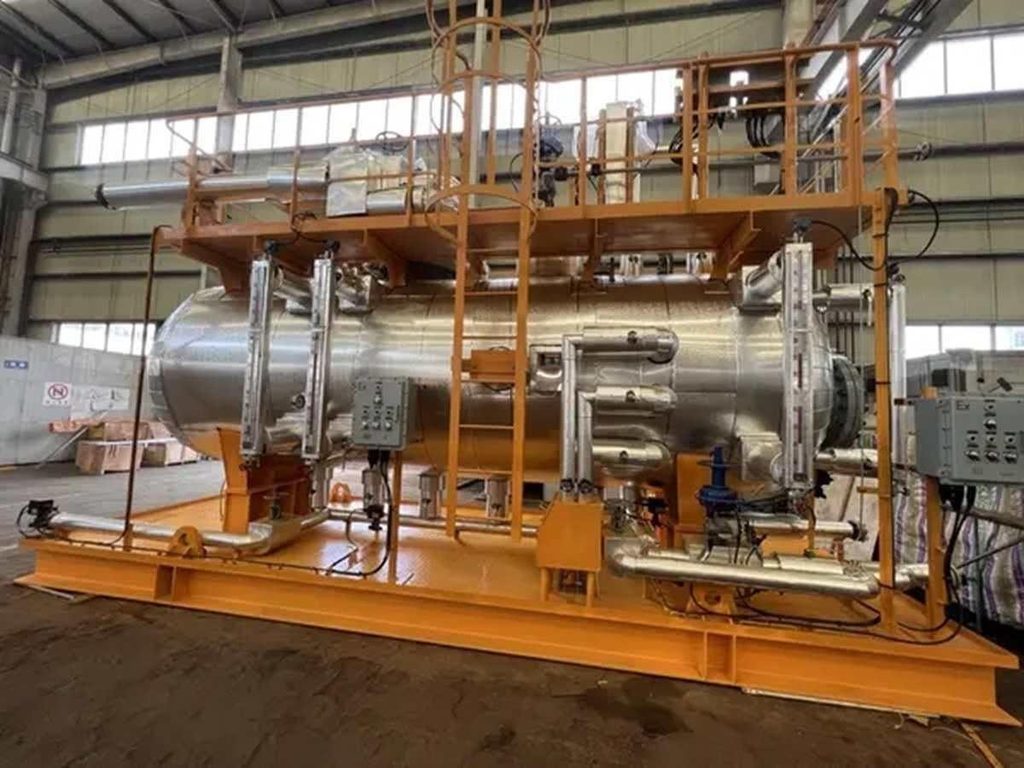
A modular process skid is a complete treatment stage built onto a single steel frame in a factory. Pumps, tanks, filters, valves, instruments and a control panel are installed, wired and tested before the unit is shipped. On site, it mainly needs to be placed, connected and started.

For ZLD, skids can be used for almost every stage: chemical dosing, ultrafiltration and RO, and even compact evaporator packages. That brings several practical benefits.

Faster start-up. Because most of the work happens in the factory, site time drops sharply. That matters when a unit is under a regulatory deadline.

Quality you can check. Every skid can go through a factory acceptance test, including pressure tests, pump runs and instrument checks, before it leaves the shop. Problems get fixed on the shop floor, not after commissioning.

Grow in steps. Instead of building for ten years ahead, a factory can start with the capacity it needs today and add another RO or evaporator skid later. That keeps early spending in line with real demand.

Smaller footprint. Skids are designed to be compact, which helps in crowded industrial estates.

A second life. If a plant relocates or changes its process, skids can be disconnected and moved. That’s much harder with concrete tanks and site-built pipework.

The Honest Trade-Offs

Modular equipment is not a magic fix, and it’s worth being clear about its limits.

  • Energy still matters. Evaporation is energy-hungry. If that energy comes from coal-based power, a ZLD system can cut water pollution while raising the plant’s carbon footprint. Designs that recover more water through membranes, or that use mechanical vapour recompression, help reduce this.
  • Salt and sludge don’t disappear. They have to be stored, reused or safely disposed of. Some textile clusters now recover salt for reuse in dyeing, which is a good example of turning waste into a resource.
  • Operation decides success. A well-built skid still needs trained operators, spare parts and a realistic running budget.
  • Upstream habits count. Separating strong and weak effluent streams, and cutting water use in the process itself, often saves more than any treatment equipment can.

Why It Matters for ESG Reporting

For listed companies, water is now firmly on the reporting agenda. SEBI’s Business Responsibility and Sustainability Report (BRSR) asks companies to disclose water withdrawal, consumption, discharge and intensity, and water footprint is one of the key indicators in BRSR Core.

One point CSR teams often raise: a company’s own ZLD system is a compliance and business cost. Under India’s CSR rules, activities carried out in the normal course of business don’t count as CSR spending.

What ZLD does do is strengthen the environmental numbers a company reports, and reduce the risk of closure orders, community complaints and lost buyers. Global fashion and leather brands increasingly check their suppliers’ wastewater performance.

Questions to Ask Before You Buy

If you’re evaluating modular treatment equipment, a few questions will tell you a lot:

  • Was the system designed around your actual effluent, based on lab tests, or a generic brochure?
  • Will the skids go through a factory acceptance test, and can you or a third-party witness it?
  • What are the expected energy use and operating costs per cubic metre of water treated?
  • Can capacity be added later without replacing what’s already installed?
  • Are pressure parts and welds built and inspected to recognised codes?

Experienced fabricators treat these as standard. Sharp Eagle, an ASME-certified manufacturer of process skids and pressure vessels, for example, runs pressure testing, instrument checks and a full factory acceptance test on its skid systems before they ship. The goal is simple: the unit should work the day it arrives, not after months of fixing on site.

The Bottom Line

ZLD is one of India’s most direct answers to industrial water stress, but only if the systems actually run. For factories that can’t justify a large custom plant, a modular process skid offers a practical path: faster installation, testable quality and room to grow.

Clean water doesn’t come from good intentions alone. It comes from equipment that’s designed properly, tested before delivery and run well every day.

csr education cybernetyx
ADVERTISEMENT
India CSR Image 1 India CSR Image 2

CSR, Sustainability, and ESG success stories hindustan zinc
ADVERTISEMENT
India CSR

India CSR

India CSR® is the largest media on CSR and sustainability offering diverse content across multisectoral issues on business responsibility. It covers Sustainable Development, Corporate Social Responsibility (CSR), Sustainability, and related issues in India. Founded in 2009, the organisation aspires to become a globally admired media that offers valuable information to its readers through responsible reporting.

Related Posts

Berberine
Business

How Does Berberine Work for Weight Loss and Metabolic Health?

India CSR®
Business

What to Consider When Looking for a Fertility Clinic in Baner?

India CSR®
Business

Video Face Swap for Interactive Museum Content

India CSR®
Business

Upload, Describe, Generate: A Practical Workflow for Editing Photos With AI

How to Fix Blurry Photos Using AI Editing Tools
Business

How to Fix Blurry Photos Using AI Editing Tools

India CSR®
Business

What Should You Know About the vivo X500 vs vivo X500 Pro?

Load More
csr education cybernetyx
ADVERTISEMENT
bba
ADVERTISEMENT

Interviews

India CSR®
Interviews

Interview: Ravi Mahajan on India’s Shift from Diesel to Solar-Powered Telecom Towers

by India CSR

Ravi Mahajan of Vedang Cellular Services discusses solar energy, battery storage, AI and IoT in building efficient and resilient telecom...

Read moreDetails
Sanjay Hande, Head Of Manufacturing And Technology Management, Bosch India @india csr

Giving Becomes Participation, and Participation Creates a Deeper Connection: Sanjay Hande, Bosch India

Vivek Prakash, Senior Vice President & Head, CSR at Jubilant Ingrevia Limited

Didi Ki Dukaan is Helping Rural Women Become Independent Entrepreneurs: Vivek Prakash, Sr VP & Head–CSR, Jubilant Ingrevia

India CSR®

Responsible Business Must Turn Research into Real Impact: Prof Bob Doherty

Load More
Ad 1 Ad 2 Ad 3 Ad 4 Ad 5 Ad 6
ADVERTISEMENT

CSR UPDATES

CSR: Titan and SVYM Partnership Reaches 5,000 People in Karnataka

CSR: Wockhardt Foundation’s Mobile Medical Unit Brings Diabetes Care to the Doorstep of Rural Chhattisgarh

18 Organisations Chart Six-Month Path for Joint CSR Project at Embassy Engage

CSR: PNB MetLife Expands Damini Initiative in Jammu and Kashmir, Bringing STEM Learning Opportunities to 2,000 Girls

Bechtel India CSR-funded Construction Robotics Lab at IIT Madras

From CSR to Care: Creating Better Healthcare Systems for Women

STEM Learning STEM Learning STEM Learning
ADVERTISEMENT
Facebook Twitter Youtube LinkedIn Instagram
India CSR Logo

India CSR® is the largest tech-led platform for information on CSR and sustainability in India offering diverse content across multisectoral issues. It covers Sustainable Development, Corporate Social Responsibility (CSR), Sustainability, and related issues in India. Founded in 2009, the organisation aspires to become a globally admired media that offers valuable information to its readers through responsible reporting. To enjoy the premium services, we invite you to partner with us.

Follow us on social media:

Subscribe to Our Newsletter

Don't miss out on the latest updates in corporate social responsibility. Subscribe to our newsletter at indiacsr.in and be part of the positive change.
Please enable JavaScript in your browser to complete this form.
Loading

  • About India CSR®
  • Team
  • India CSR® Awards 2026
  • India CSR® Leadership Summit
  • Partnership
  • Guest Posts
  • Services
  • ESG Professional Network
  • Content Writing Services
  • Business Information
  • Contact
  • Privacy Policy
  • Terms of Use
  • Donate

Copyright © 2026 - India CSR® | All Rights Reserved

No Result
View All Result
  • Home
  • Corporate Social Responsibility
    • Art & Culture
    • CSR Leaders
    • Child Rights
    • Culture
    • Education
    • Gender Equality
    • Around the World
    • Skill Development
    • Safety
    • Covid-19
    • Safe Food For All
  • Sustainability
    • Sustainability Dialogues
    • Sustainability Knowledge Series
    • Plastics
    • Sustainable Development Goals
    • ESG
    • Circular Economy
    • BRSR
  • Corporate Governance
    • Diversity & Inclusion
  • Interviews
  • SDGs
    • No Poverty
    • Zero Hunger
    • Good Health & Well-Being
    • Quality Education
    • Gender Equality
    • Clean Water & Sanitation – SDG 6
    • Affordable & Clean Energy
    • Decent Work & Economic Growth
    • Industry, Innovation & Infrastructure
    • Reduced Inequalities
    • Sustainable Cities & Communities
    • Responsible Consumption & Production
    • Climate Action
    • Life Below Water
    • Life on Land
    • Peace, Justice & Strong Institutions
    • Partnerships for the Goals
  • Articles
  • Events
  • हिंदी
  • More
    • Business
    • Finance
    • Environment
    • Economy
    • Health
    • Around the World
    • Social Sector Leaders
    • Social Entrepreneurship
    • Trending News
      • Important Days
      • Great People
      • Product Review
      • International
      • Sports
      • Entertainment
    • Case Studies
    • Philanthropy
    • Biography
    • Technology
    • Lifestyle
    • Sports
    • Gaming
    • Knowledge
    • Home Improvement
    • Words Power
    • Chief Ministers

Copyright © 2026 - India CSR® | All Rights Reserved

This website uses cookies. By continuing to use this website you are giving consent to cookies being used. Visit our Privacy and Cookie Policy.
