



A farm can have open land and still face the wrong conditions for wind power. A workshop can have a modest electricity bill and still require a demanding supply when a motor starts. For both, critical loads and battery autonomy are more useful starting points than the largest turbine a budget will buy.
Start with the difficult operating periods. Choosing between a horizontal axis wind turbine, a vertical axis wind turbine and a hybrid installation requires a buyer to connect the local wind resource with the electrical demand and practical installation, especially when essential work must continue through weather that offers little generation. A nameplate cannot promise uninterrupted supply.
Start with the work that electricity must keep running
For a farm or small enterprise, electricity has a schedule. Pumping, refrigeration, lighting and office equipment do not necessarily run together or tolerate the same interruption. Write down what must continue, what can move to another part of the day and what can stop during a supply shortage.
The US Department of Energy’s Small Wind Guidebook advises establishing an energy budget before choosing a turbine and reducing consumption where possible. It also explains that wind systems should be sized around both electricity needs and the site’s wind resource. Saving energy can reduce the generation requirement.
Describe the service before claiming the benefit. An enterprise reporting on a renewable-energy project needs to establish how much conventional electricity was displaced and whether critical loads became more secure, rather than assume that installing a turbine proves either result simply because renewable equipment is now visible on the property. That distinction makes the design brief clearer too.
Separate instant demand from energy used over time
Power and energy answer different questions. Although a system may have enough estimated annual generation to match an appliance’s consumption over time, it can still struggle when several loads run together; sufficient inverter power, in turn, does not establish that the battery stores enough usable energy to sustain them through a long operating period.
Keep the load record specific. Note normal operation, starting behavior, duty cycles and seasonal changes. Irrigation requirements may rise in a different season from the strongest wind. A refrigeration load may continue after the workshop has closed. Those differences shape both generation and storage choices.
Annual totals remain useful for comparing energy contributions, but they cannot establish supply continuity. Where interruptions would spoil goods or stop essential work, the design needs an explicit response to low generation. The answer might include load scheduling, stored energy or another supply source; the turbine rating alone does not choose among them.
When a horizontal axis wind turbine fits open land
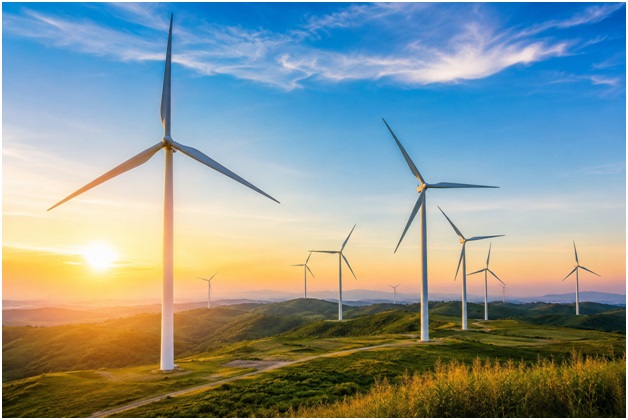
ELEGE’s horizontal axis wind turbine range is presented for home, farm, off-grid and commercial projects. Its page lists capacities from 100 W to 50 kW and describes automatic wind-direction tracking through a tail vane. The range includes a permanent magnet generator and several project voltage options.
For a farm with a feasible open location, this is a useful category to investigate. The rotor needs productive wind exposure, while the tower, cable route and maintenance access must fit the working site. A spot selected only because it is close to a building may sacrifice the airflow that makes the investment worthwhile.
Keep the working farm in view. Before choosing the largest listed machine, ask for the exact proposed model and its tower requirements, then check whether busy vehicle routes, future buildings or the space needed for repairs would make an otherwise exposed position impractical during normal farm operations. Capacity cannot resolve an access conflict.
What a vertical axis wind turbine can and cannot solve
The ELEGE EV vertical axis wind turbine page describes acceptance of wind from changing directions and use at farms and commercial sites. It lists a start-up wind speed of 1.3 m/s and a rated wind speed of 10 m/s. Those figures describe different conditions, rather than continuous rated production in light air.
A changing wind direction may make the vertical category worth considering, but a sheltered courtyard is still a sheltered location. Rotor orientation cannot create an energy resource that buildings or trees have removed. The proposed location needs assessment regardless of the selected axis.
Different power and voltage choices are also listed for the EV range. Treat that flexibility as a reason to request a matched proposal, not as permission to connect a turbine to an existing battery arrangement without checking the controls. Local demand and the electrical design remain the deciding constraints.
Where wind-solar hybrid systems help a working site
The EV page describes wind-solar hybrid systems using solar panels, a wind-solar hybrid controller, battery storage and an inverter. That product arrangement provides a basis for discussing combined generation with a supplier. It does not establish the amount or timing of either resource at the buyer’s location.
The DOE guide explains that wind and solar can complement one another when their productive periods differ. Its seasonal examples concern much of the United States; they should not be copied into an Indian farm proposal as a local weather forecast. Regional and on-site evidence must decide the expected contribution.
Calm and cloudy conditions can overlap. A hybrid proposal should show how the enterprise operates when neither source contributes enough, including what happens to work that cannot be postponed, rather than attach a year-round supply promise to the presence of wind and solar equipment on the same site. Local weather determines their combined contribution.
Battery autonomy begins with the loads you will protect
Battery autonomy describes how long stored energy can support the selected loads without enough new generation. It cannot be chosen sensibly until those loads are defined. Keeping refrigeration and essential lighting running is a different commitment from maintaining every pump, heater and workshop tool.
Ask how much stored energy is usable. Total battery capacity is not the same as the energy available for the intended duty, since the battery’s operating limits, the conversion equipment and the reserve retained for essential loads all affect how long the business can run without sufficient new generation. Establish what happens at the reserve limit.
The DOE guide states that stand-alone systems need storage for calm periods and charging control to prevent overcharging. Its hybrid discussion also includes an engine-generator when renewable generation and stored energy are insufficient. Storage bridges a supply gap; it does not eliminate the need to plan for one.
Match the controller and inverter before accepting the package
The EV specification lists voltage choices of 12 V, 24 V, 48 V and 220 V. The applicable choice must be confirmed for the selected model and system. These listed options should not be read as universal compatibility with batteries or inverters already on the farm.
A useful package quotation identifies the turbine, controller, battery arrangement and inverter together. It should also explain the intended charging behavior and how the system supplies the actual appliances. An attractive turbine-only price cannot answer questions about a motor’s starting demand or an existing electrical installation.
Responsibility matters as much as the component list. Establish who checks the complete design and who handles commissioning and maintenance. If different suppliers provide the major parts, unresolved interface questions can fall between them. The business needs a working supply system, not merely individually plausible components.
Keep the site productive and maintainable
The DOE guide warns that turbulence can lower an annual energy estimate by 15% to 25% compared with the assumptions behind power curves developed in cleaner airflow. Buildings, trees and terrain therefore deserve attention before expected generation is entered into a business plan.
A farm is also a changing environment. Trees grow, sheds are extended and access routes shift. Record the proposed turbine position with those changes in mind. Space for installation and servicing should remain available when the site is busiest, rather than only on the day of the survey.
For a small enterprise, maintenance downtime may matter more than an appealing peak specification. Ask how the machine is accessed, which tasks are expected and who can perform them locally. A location that captures good wind but cannot be serviced practically still needs a different proposal.
Buy against a defined service, then measure the result
When discussing a project with ELEGE, bring a load schedule, the proposed site and the required operating mode. Those details allow the horizontal and vertical options to be assessed alongside storage and hybrid generation. A request based only on total appliance wattage leaves too much unanswered.
Agree on the loads being supplied, the expected energy contribution and the conditions that require backup. Once installed, records of generation and load supply can show what the project contributes. Report those results rather than infer success from the presence of renewable equipment.
A well-selected small wind turbine can serve a defined role on a farm or business site. That role becomes credible when critical loads, battery autonomy and the local resource agree. Year-round reliability is a property of the complete, properly supported design, not a promise contained in the rotor’s power rating.



