


• India CSR Awards 2026
  • India CSR Leadership Summit
  • Maharashtra CSR Summit 2027
  • Guest Posts
Tuesday, November 17, 2026
India CSR®
  • Home
  • CSR
    • Art & Culture
    • CSR Leaders
    • Child Rights
    • Culture
    • Education
    • Gender Equality
    • Around the World
    • Skill Development
    • Safety
    • Covid-19
    • Safe Food For All
  • Sustainability
    • Sustainability Dialogues
    • Sustainability Knowledge Series
    • Plastics
    • Sustainable Development Goals
    • ESG
    • Circular Economy
    • BRSR
  • SUMMIT
  • AWARDS
  • Interviews
  • SDGs
    • No Poverty
    • Zero Hunger
    • Good Health & Well-Being
    • Quality Education
    • Gender Equality
    • Clean Water & Sanitation – SDG 6
    • Affordable & Clean Energy
    • Decent Work & Economic Growth
    • Industry, Innovation & Infrastructure
    • Reduced Inequalities
    • Sustainable Cities & Communities
    • Responsible Consumption & Production
    • Climate Action
    • Life Below Water
    • Life on Land
    • Peace, Justice & Strong Institutions
    • Partnerships for the Goals
  • Articles
  • Events
  • हिंदी
  • More
    • Business
    • Finance
    • Corporate Governance
      • Diversity & Inclusion
    • Environment
    • Economy
    • Health
    • Around the World
    • Social Sector Leaders
    • Social Entrepreneurship
    • Trending News
      • Important Days
        • Festivals
      • Great People
      • Product Review
      • International
      • Sports
      • Entertainment
    • Case Studies
    • Philanthropy
    • Biography
    • Technology
    • Lifestyle
    • Sports
    • Gaming
    • Knowledge
    • Home Improvement
    • Words Power
    • Chief Ministers
No Result
View All Result
India CSR®
No Result
View All Result
Home Business

Reducing Tube Bending Scrap Starts with Defects and Incoming Material

India CSR by India CSR
October 19, 2026
Reading Time: 6 mins read
A A
India CSR®
Share Share Share Share
WhatsApp icon
WhatsApp — Join Us
Instant updates & community
Google News icon
Google News — Follow Us
Get our articles in Google News feed
india csr awards
ADVERTISEMENT

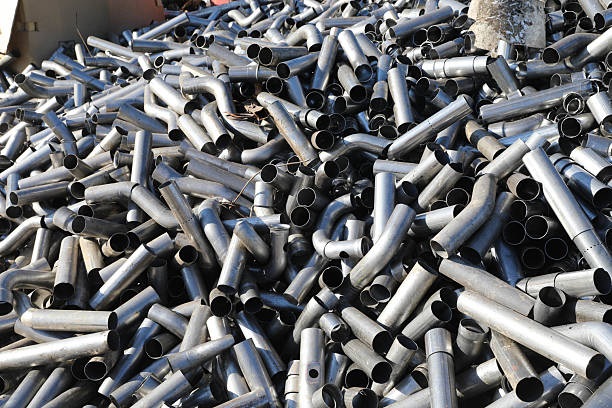
Manufacturing waste is easier to discuss than to diagnose. On a tube-bending line, a rejected component might carry wrinkles, a damaged surface or an incorrect released angle, yet all of those observations can disappear into a single scrap total. Tube bending defects and incoming material need to be tracked together, with pressure die condition, wiper die support and springback compensation kept in the process record.

The practical aim is to learn why material became unusable. A new machine or an automation project should not be credited with waste reduction before the factory has evidence connecting the change with accepted production. Start at the reject container. What failed, at which operation, and what changed before it happened?
india csr awards
ADVERTISEMENT

Give every rejected tube a useful description

A scrap label should name the failed requirement. Record a wrinkle at the inside of a bend differently from surface scoring or an endpoint outside the drawing limits. Retain the drawing revision and inspection reference with that description, because the same appearance can be acceptable for a particular application and unacceptable for another.

The Fabricator describes how bending stretches and thins the outer wall while compressing the inner region, where wrinkling can occur. It also discusses ovality and springback, showing why a defect investigation needs to distinguish cross-sectional deformation from changes in the released bend.

Use that distinction to organise the investigation. A supervisor looking at angle variation should not lose the observation inside a general category called poor bending, while an operator seeing a wrinkle needs a route to report it without guessing the cause. The description is evidence. The proposed cause is a hypothesis to test.

Photograph the location and retain a labelled sample when practical. Include the pressure die and wiper die references used for the job so the next shift can investigate the same setup rather than relying on a verbal description of what someone remembers changing.

Check what entered the process before blaming its settings

Incoming material is part of the bending process, even when its purchase specification has not changed. Preserve the supplier and lot identity, material condition and dimensional checks that matter to the job. If mixed stock reaches the machine without traceability, a later attempt to connect tube bending defects with a material change becomes much harder.

The Fabricator notes that wall thickness can vary within its specified tolerance and that this matters with close-fitting tooling and small bend radii. It also explains that the quality and consistency of a longitudinal weld can affect tube roundness.

That does not make every new lot suspect. It gives the quality team a reason to compare the actual incoming tube with the assumptions behind the approved process whenever results change, rather than accepting a familiar material name as proof that every relevant characteristic stayed the same.

Quarantine uncertain stock according to the factory’s procedure. Before approving a revised springback compensation setting, establish whether the change belongs to a known material condition or merely masks an unidentified difference. Keep the previous accepted result available for comparison; otherwise the investigation can lose its reference point as soon as the next adjustment is made.

Connect support tooling to the observed failure

Zhuoran Machinery’s CNC bending guidance includes pressure die support for controlled deformation and wiper die support for wrinkle-sensitive applications. Its tooling selection also considers tube diameter, wall thickness and centerline radius, while springback compensation is linked to material, tooling and sample results.

Those relationships are useful when defining a corrective action. Ask what evidence supports the proposed tooling intervention, which acceptance requirement it addresses and what other features need checking afterwards. Replacing or adjusting a wiper die should not become an excuse to ignore the surface condition, released geometry or cross section of the resulting sample.

A maintenance record can help separate wear from an unsuitable setup, but the record needs to identify the actual tooling used. Write down the pressure die reference, reported condition and approved service action. Keep lubrication and material observations nearby. Without that context, a note saying adjusted machine explains little to the next person investigating the same symptom.

The default should be a controlled trial under the responsible process owner’s instructions. Simultaneous undocumented changes make a better-looking sample difficult to interpret, because the team no longer knows which action deserves to be retained or reversed.

Build the supplier discussion around a failure history

A request for lower scrap is too broad to guide equipment selection. Send the supplier the part drawing, material description, inspection requirements and a factual account of the defects. Include where they occur and which approved conditions produced an accepted sample. This creates a technical question that can be answered.

For a project discussion with Zhuoran Machinery, ask how the proposed CNC bending arrangement would be evaluated against that history. The response should identify tooling and validation work relevant to the part, rather than promising a general reduction in waste. A pressure die option or a different wiper die arrangement needs an application-based explanation.

Request separate confirmation of any control feature used in the proposal. The manufacturer’s product guidance treats control functions as model-dependent, so springback compensation and related program features should be discussed for the selected machine instead of assumed from a general product category.

Keep the distinction between proposed support and proven performance visible. A supplier can describe a route for investigating the part before there is any evidence that the route has reduced rejects in the buyer’s factory. Commercial discussions benefit from that honesty because the trial can then answer a defined question.

Count accepted work before claiming environmental gains

Less rejected material is a worthwhile production goal. It is not, by itself, a measured emissions result. An environmental claim would need its own defined boundary, data and calculation method, including the effects relevant to the claim; an attractive account of better bending cannot supply those missing inputs.

Even a scrap comparison needs care. A change in product mix can alter the apparent result, and moving an inspection point can change where a rejection is recorded without changing how much material was wasted. Keep like-for-like job records wherever possible and explain departures from that comparison.

Use a reject review checklist to make the production evidence readable:

  • Identify the component, drawing revision and incoming material lot.
  • Record the failed feature and the inspection method that established rejection.
  • Check the pressure die, wiper die and other tooling references against the approved setup.
  • Compare material condition and springback compensation with the last accepted run.
  • Define the authorised corrective action and retain the trial observations.
  • Confirm accepted production separately from rework, trial pieces and rejected output.

Report what these records show. If a change remains under evaluation, say so. A factory that can explain the limits of its evidence is better placed to make a defensible improvement claim than one that substitutes a broad sustainability slogan for a traceable result.

Prevent the next shift from inheriting an unexplained fix

When a trial succeeds, hand over the reason for the change as well as the setting. Explain which material and drawing the approval covers, what was inspected and what condition should trigger another review. That turns a local troubleshooting success into something the next shift can repeat responsibly.

Zhuoran Machinery’s sample validation guidance brings the drawing, material condition, tube dimensions, bend sequence and inspection criteria into the same review. Its compensation guidance likewise ties the setting to sample evidence rather than presenting it as a universal value.

Apply that principle to the factory’s own records. Do not silently carry a correction into changed stock or a revised part, and do not erase the original defect description after an accepted sample appears. Reducing scrap is a continuing production discipline: keep the material history, the forming conditions and the acceptance decision connected closely enough that the next problem can be investigated rather than merely counted.


csr education cybernetyx
ADVERTISEMENT
India CSR Image 1 India CSR Image 2

CSR, Sustainability, and ESG success stories hindustan zinc
ADVERTISEMENT
India CSR

India CSR

India CSR® is the largest media on CSR and sustainability offering diverse content across multisectoral issues on business responsibility. It covers Sustainable Development, Corporate Social Responsibility (CSR), Sustainability, and related issues in India. Founded in 2009, the organisation aspires to become a globally admired media that offers valuable information to its readers through responsible reporting.

Related Posts

India CSR®
Business

Anyra Foods Strengthens Its Presence In The Indian Food Market Under Its Brand Anyra

14 hours ago
WaveSun Energy
Business

WaveSun Energy Announces Ambitious Pan-India Expansion

15 hours ago
India CSR®
Business

Driving Regional Mobility: Malaprabha Group Expands Transport & Infrastructure Services

15 hours ago
India CSR®
Business

Soukhya Centre Conducts Meditation and Holistic Wellbeing Workshop at NMSA Vashi, Navi Mumbai

15 hours ago
India CSR®
Business

From Old Delhi’s Historic Lanes to Global Customers: Babu Churi Wala GK Carries Forward a 200-Year Bangle-Making Legacy

15 hours ago
India CSR®
Business

Burgundy Studio’s First Five Months Bring Two National Gold Wins at afaqs! Foxglove Awards 2026

15 hours ago
Load More
csr education cybernetyx
ADVERTISEMENT
bba
ADVERTISEMENT

Interviews

Foundation for Excellence (FFE) @India CSR
Interviews

Beyond Graduation: How FFE Is Helping First-Generation Students Build Careers and Change Family Futures

by India CSR
November 13, 2026

In an interaction with India CSR, Ram Kolavennu, CEO, and Dr. Sudha Kidao, Managing Trustee, Foundation for Excellence (FFE), explain...

Read moreDetails
Isha Anand Director - Mixed Use RMZ Corp-India CSR

“ESG is Now a Core Business Strategy”: Isha Anand on Building Future-Ready Real Estate

November 12, 2026
Geetaj Channana, Chief Corporate Communications Officer, vivo India @india csr

“We Will Not Compromise on Credibility”, Says Geetaj Channana on vivo Ignite and India’s Young Innovators

November 3, 2026
Smitha Gopalkrishnan Asia Sustainability Leader & India CSR Leader 3M India-@India CSR

“Water Security Is a Shared Responsibility”: Smitha Gopalkrishnan on 3M India’s Water Stewardship Work

October 23, 2026
Load More
Ad 1 Ad 2 Ad 3 Ad 4 Ad 5 Ad 6
ADVERTISEMENT

CSR UPDATES

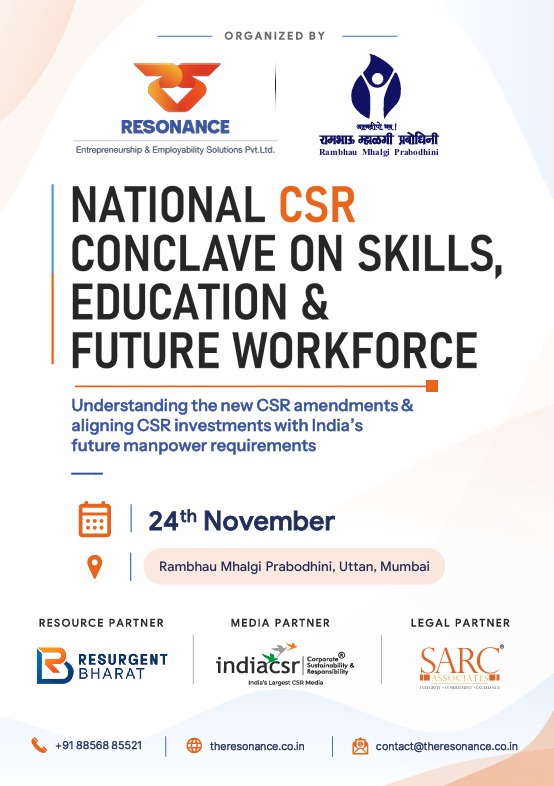
Rusen Kumar to Address National CSR Conclave on Skills, Education and Future Workforce in Mumbai

Books and Creativity Take Centre Stage at O.P. Jindal School Anugola Book Fair

National CSR Conclave to Build Roadmap for Skills, Education and Future Workforce in Mumbai

From Classrooms to Communities: How Colgate Is Helping Build Healthier Futures for India’s Children

ProTeen announces ₹10 lakh Scholarship Programme for 40 Students across India

48th Jamnalal Bajaj Awards to Honour Gandhian Warriors for their Selfless Service, Courage and Social Impact

STEM Learning STEM Learning STEM Learning
ADVERTISEMENT
Facebook Twitter Youtube LinkedIn Instagram
India CSR Logo

India CSR® is the largest tech-led platform for information on CSR and sustainability in India offering diverse content across multisectoral issues. It covers Sustainable Development, Corporate Social Responsibility (CSR), Sustainability, and related issues in India. Founded in 2009, the organisation aspires to become a globally admired media that offers valuable information to its readers through responsible reporting. To enjoy the premium services, we invite you to partner with us.

Follow us on social media:

Subscribe to Our Newsletter

Don't miss out on the latest updates in corporate social responsibility. Subscribe to our newsletter at indiacsr.in and be part of the positive change.
Please enable JavaScript in your browser to complete this form.
Loading

  • About India CSR®
  • Team
  • India CSR® Awards 2026
  • India CSR® Leadership Summit
  • Maharashtra CSR Summit 2027
  • Partnership
  • Guest Posts
  • Services
  • ESG Professional Network
  • Content Writing Services
  • Business Information
  • Contact
  • Privacy Policy
  • Terms of Use
  • Donate

Copyright © 2026 - India CSR® | All Rights Reserved

No Result
View All Result
  • Home
  • CSR
    • Art & Culture
    • CSR Leaders
    • Child Rights
    • Culture
    • Education
    • Gender Equality
    • Around the World
    • Skill Development
    • Safety
    • Covid-19
    • Safe Food For All
  • Sustainability
    • Sustainability Dialogues
    • Sustainability Knowledge Series
    • Plastics
    • Sustainable Development Goals
    • ESG
    • Circular Economy
    • BRSR
  • SUMMIT
  • AWARDS
  • Interviews
  • SDGs
    • No Poverty
    • Zero Hunger
    • Good Health & Well-Being
    • Quality Education
    • Gender Equality
    • Clean Water & Sanitation – SDG 6
    • Affordable & Clean Energy
    • Decent Work & Economic Growth
    • Industry, Innovation & Infrastructure
    • Reduced Inequalities
    • Sustainable Cities & Communities
    • Responsible Consumption & Production
    • Climate Action
    • Life Below Water
    • Life on Land
    • Peace, Justice & Strong Institutions
    • Partnerships for the Goals
  • Articles
  • Events
  • हिंदी
  • More
    • Business
    • Finance
    • Corporate Governance
      • Diversity & Inclusion
    • Environment
    • Economy
    • Health
    • Around the World
    • Social Sector Leaders
    • Social Entrepreneurship
    • Trending News
      • Important Days
      • Great People
      • Product Review
      • International
      • Sports
      • Entertainment
    • Case Studies
    • Philanthropy
    • Biography
    • Technology
    • Lifestyle
    • Sports
    • Gaming
    • Knowledge
    • Home Improvement
    • Words Power
    • Chief Ministers

Copyright © 2026 - India CSR® | All Rights Reserved

This website uses cookies. By continuing to use this website you are giving consent to cookies being used. Visit our Privacy and Cookie Policy.
