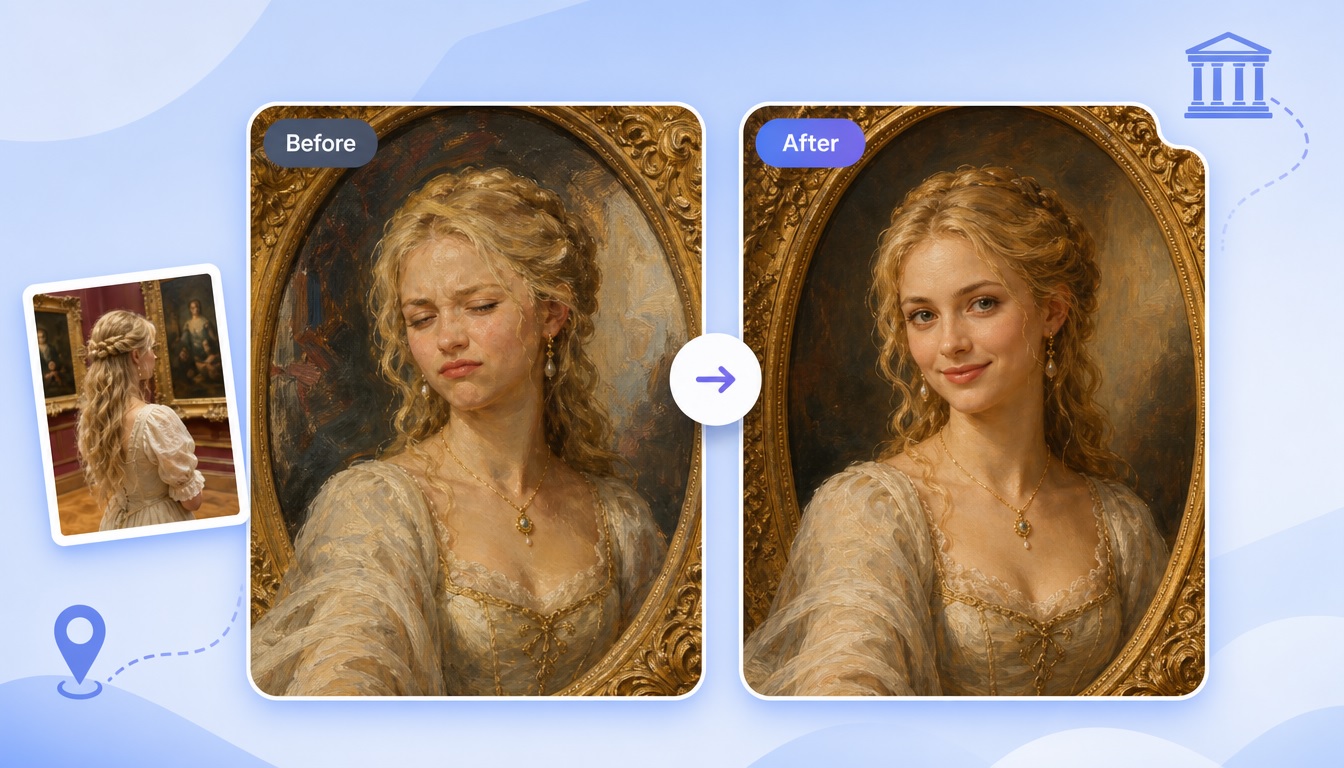


Museums have a hard job: make the past feel close without turning serious history into a gimmick. A good exhibit has to teach, hold attention, and respect the people and cultures it presents. That’s where video face swap can be useful, if it’s handled with care. It lets visitors see themselves inside a short historical scene, a craft demo, or a character led story, which can make the learning moment feel personal instead of distant.
I’ve seen interactive media work best when it supports the exhibit, not when it steals the show. A tool like EasyFaceSwap can help a museum team test ideas quickly before spending money on a full custom build. The value isn’t just novelty. It’s the chance to help a visitor pause, smile, ask a question, and remember what they learned after they leave.
For museums that already use touchscreens, projection rooms, or social media stations, Video Face Swap can fit into existing content plans. A visitor records or uploads a photo, the system maps their face into a prepared video, and the final clip plays back in a controlled format. The museum still needs strong scripts, accurate visuals, and clear consent, but the technology can turn a passive display into an active experience.
Bringing Historical Roles to Life
One strong use case is placing visitors into short scenes based on real historical roles. A local history museum could create a 20 second video of a printer setting type in the 1800s, a railway worker checking tickets, or a market seller calling out prices in a busy town square. The visitor’s face appears in the role, while the narration explains what that person’s daily work involved.
The benefit is emotional connection. Many people struggle to connect with dates, tools, and old photographs because they feel separate from them. Seeing their own face in a scene gives them a quick point of entry. It doesn’t replace the artifact, but it can make the artifact easier to care about.
This works especially well for school groups. A child who sees themselves as an apprentice blacksmith may be more likely to read the panel about trade skills, class, and labor. A teenager who sees themselves in a civil rights era newsroom may better understand that history was shaped by ordinary people making hard choices. The face swap clip becomes a doorway into the serious material.
Still, museums need to avoid making real suffering feel like dress up. I would not use this format for scenes of trauma, war death, enslavement, or sacred cultural rituals without deep review and community input. Lighter role based scenes, daily life moments, and educational reenactments are usually safer ground. The best question to ask is simple: does this help visitors understand, or does it turn someone else’s story into a souvenir?
Creating Guided Character Experiences
Another useful approach is a guided character video, where the visitor’s face appears on a fictional guide based on a time period, profession, or community role. For example, a science museum could let visitors become a 1920s lab assistant explaining early radio equipment. An art museum might place a visitor in the role of a studio apprentice preparing pigments and brushes. The character doesn’t need to claim to be a famous person. In fact, it’s often better when they don’t.
The benefit here is clarity. A character can explain a complex topic in plain language while keeping the visitor’s attention. Instead of reading a long wall panel about how pottery kilns changed over time, visitors can watch a short clip where “they” guide the process step by step. The content feels lighter, but the learning can still be solid.
This can also help with accessibility. Some visitors learn better through video and spoken explanation than through dense text. A short character led clip can reinforce the main idea before they move to the object label, audio guide, or hands on display. If the museum adds captions and keeps the script simple, the experience can support more learning styles without needing to rebuild the whole exhibit.
From a content planning view, the script matters more than the swap. The video should answer one clear question, such as “How did this tool work?” or “Why did this object matter?” If the clip tries to cover too much, visitors remember the effect but forget the lesson. I’ve found that 15 to 30 seconds is usually enough for a fun station, while 45 seconds can work if the story is strong.
Encouraging Family and Group Participation
Family museums and cultural centers can use face swap video to create shared moments. A station might let each family member appear in a different role within the same scene: one as a shopkeeper, one as a customer, one as a delivery rider, and one as a town crier. The final clip becomes a small group story tied to the exhibit theme.
The benefit is social learning. People talk more when they create something together. Parents explain what’s happening, children ask why the clothing looks different, and grandparents often add memories from their own lives. The technology gives the group a reason to slow down and discuss the content instead of walking past it.
This approach also works for temporary events. During a museum late night, heritage festival, or school holiday program, a face swap booth can support a theme without needing a permanent installation. The museum can prepare one polished video template, train staff to handle consent and basic troubleshooting, and reuse the setup across several days.
Group content does need careful design. The museum should avoid long queues, confusing upload steps, or clips that take too long to render. Visitors are more patient in a theme park than in a gallery corridor. If the station feels slow, staff will spend more time managing frustration than encouraging learning.
| Use case | Best exhibit fit | Main visitor benefit |
|---|---|---|
| Historical role scene | Local history, transport, labor, daily life | Builds empathy with ordinary people from the past |
| Character guide | Science, art, craft, industry | Explains complex ideas in a simple, memorable way |
| Family group clip | Children’s museums, festivals, community days | Sparks conversation and shared learning |
| Social media preview | Temporary shows and public programs | Extends reach while promoting the exhibit theme |
Extending Exhibits Beyond the Building
A fourth scenario is using video face swap for take home content. After a visitor creates a clip, the museum can offer a download link, QR code, or email delivery if the visitor agrees. The clip should carry the exhibit name and a short educational line, not just a logo. For example, “I learned how canal workers moved goods before railways changed the city.”
The benefit is reach. A good clip may be shared with friends or family, which gives the museum a natural way to promote the exhibit. This matters most for smaller museums with limited ad budgets. A visitor sharing a personal clip is often more trusted than a paid post.
The educational value can continue after the visit. The museum might pair the clip with a short landing page that explains the scene, shows the real artifacts, and suggests one next thing to explore. This keeps the face swap from becoming a throwaway file. It turns it into a reminder that leads back to real learning.
Privacy must be clear at this stage. Visitors should know if their image is stored, for how long, and for what purpose. If the museum serves children, parental consent is essential. I’d also avoid public galleries of visitor clips unless the permission process is very clear and separate from the basic experience.
A Practical Workflow for Museum Teams
The best projects start with the exhibit goal, not the software. Before filming anything, decide what visitors should understand after the interaction. Keep it narrow. “Visitors will understand how a letterpress printed a page” is much stronger than “Visitors will experience the 1800s.”
Next, write a short script and storyboard the scene. Museum educators, curators, and community advisors should review it before production. This step protects accuracy and tone. If the scene involves a living culture, a painful history, or a real person’s identity, bring in the right voices early and be willing to change the idea.
After that, produce the base video. Use steady lighting, clear framing, and costumes or props that match the exhibit style. You don’t need a film crew for every project, but you do need clean footage. Face swap effects look better when the head angle is not too extreme and the subject’s face is visible. Fast movement, heavy shadows, and hands crossing the face can create odd results.
Then test the interaction with staff and a small group of visitors. Watch where people hesitate. Do they understand what to do? Do they laugh at the right moment? Do they learn the point of the exhibit? Testing often reveals small fixes, like shortening the intro, moving the consent screen earlier, or adding a staff prompt beside the station.
The final setup should include clear signage. Visitors should know that the video is generated, that it is for education and fun, and that it does not show real historical footage. This matters because realistic media can blur truth for some viewers. A short label such as “This is a recreated scene using your image” can prevent confusion.
Staff training is just as important as the screen design. Front of house teams need simple answers to common questions about privacy, age limits, wait times, and downloads. They should also know when to step in if visitors use the station in a disrespectful way. Interactive content works best when staff feel confident, not surprised.
Conclusion: Use the Effect to Serve the Story
Video face swap can make museum content more personal, playful, and memorable. It can help visitors imagine daily life in another time, follow a character through a complex idea, create a shared family moment, or carry part of the exhibit home. Used well, it adds a human spark to objects and stories that might otherwise feel far away.
The trade off is responsibility. Museums need clear consent, honest labeling, accurate scripts, and good judgment about sensitive topics. The technology should never replace research, community input, or respect for the people represented. It should support those things.
The strongest museum uses are short, focused, and tied to a real learning goal. If visitors leave saying, “That was fun, and now I understand it,” the face swap has done its job.