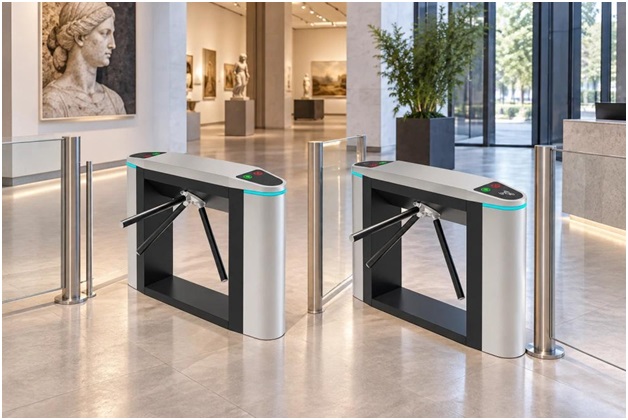


Modern workplaces need more than traditional locks and security desks to manage the movement of employees, visitors, contractors, and service personnel. As offices become larger and more technology-driven, organizations are looking for access control solutions that improve security without creating unnecessary barriers. Smart swing turnstile systems can provide an effective balance between controlled entry, convenient movement, accessibility, and efficient facility management.
Improving Workplace Security
One of the main benefits of modern access control is the ability to regulate who enters a corporate facility. Employees can use authorized credentials such as access cards, mobile credentials, QR codes, or other identification methods to pass through controlled entry points. This helps organizations reduce unauthorized access and create a more structured security environment.
Unlike conventional doors that may remain open during busy periods, automated gates can verify credentials before allowing passage. This makes them useful at entrances to office buildings, business parks, technology centers, financial institutions, and other workplaces where controlled access is important.
Efficient Employee Access
Employees often enter and leave buildings at the same time, particularly at the beginning and end of working hours. A well-designed access system can help manage this movement while maintaining security. Modern swing turnstile systems can be integrated with access control platforms, allowing authorized employees to move through designated lanes without requiring manual verification at every entrance.
This approach can also help facility managers understand general traffic patterns. Access records may provide useful information about entry events, depending on the organization’s security policies and system configuration. Such information can support building operations and help security teams respond to unusual access activity.
Supporting Visitor Management
Corporate facilities frequently welcome clients, suppliers, interview candidates, contractors, and other visitors. Managing these visitors efficiently is an important part of facility security. Smart access gates can work alongside visitor management systems to create temporary access permissions.
For example, a visitor may register at reception and receive a temporary credential. The credential can then be used at an appropriate access point for the duration of the visit. This can reduce manual checking while ensuring that visitors do not receive the same unrestricted access as permanent employees.
Accessibility Matters
Workplace security should not prevent people from moving comfortably through a building. Accessibility is therefore an important consideration when selecting pedestrian access equipment. Facilities should consider lane dimensions, opening speed, sensor placement, and the needs of people using wheelchairs, mobility aids, or other accessibility equipment.
A commercial pedestrian access gate can be selected and configured as part of a broader accessible entrance strategy. Depending on the facility layout, wider passages or dedicated accessible lanes can help employees and visitors move through controlled areas with greater convenience.
Emergency Passage and Safety
Security equipment must also support emergency procedures. During an emergency, people may need to leave a building quickly, so access control systems should be incorporated into the facility’s overall evacuation and life-safety planning.
Automated gates can be designed to work with building security and emergency systems so that appropriate passage arrangements are available when required. Organizations should always follow applicable fire codes, accessibility regulations, and local safety requirements when planning or installing access equipment.
Better Corporate Facility Management
Facility managers are responsible for much more than controlling entrances. They also coordinate security, employee movement, visitor experiences, building operations, and maintenance. Intelligent pedestrian access systems can contribute to these responsibilities by creating a more organized entrance environment.
When commercial pedestrian access gate equipment is connected with centralized management software, administrators may be able to configure permissions, review access events, and manage different user groups. This can simplify routine administration, particularly in large offices with multiple entrances or buildings.
Balancing Security With Convenience
An effective workplace entrance should feel secure without becoming unnecessarily difficult to use. If employees encounter complicated procedures every time they enter the building, productivity and user satisfaction can be affected. On the other hand, overly open entrances may create security concerns.
Smart swing gates offer a practical approach because they can combine electronic authentication with relatively natural pedestrian movement. This makes them suitable for environments where security and convenience both matter.
A Flexible Solution for Modern Offices
Corporate facilities are changing as hybrid work, flexible offices, and multi-tenant buildings become more common. Access systems may need to accommodate different employee groups, temporary workers, visitors, and changing schedules.
Modern pedestrian gates can support these changing requirements when integrated into a properly designed access control infrastructure. Their role is not simply to stop unauthorized entry but to help organizations create a controlled, organized, and accessible movement system.
Conclusion
Smart swing turnstiles can play an important role in modern workplace security by combining controlled employee access, visitor management, accessibility, emergency considerations, and facility administration. When properly selected and integrated with existing security systems, they can help corporate buildings manage pedestrian movement more efficiently while maintaining a welcoming entrance environment. For organizations planning a new access control system or upgrading an existing one, considering both security requirements and everyday user needs is essential.