

• India CSR Awards 2025
  • India CSR Leadership Summit
  • Guest Posts
Monday, February 9, 2026
India CSR
  • Home
  • Corporate Social Responsibility
    • Art & Culture
    • CSR Leaders
    • Child Rights
    • Culture
    • Education
    • Gender Equality
    • Around the World
    • Skill Development
    • Safety
    • Covid-19
    • Safe Food For All
  • Sustainability
    • Sustainability Dialogues
    • Sustainability Knowledge Series
    • Plastics
    • Sustainable Development Goals
    • ESG
    • Circular Economy
    • BRSR
  • Corporate Governance
    • Diversity & Inclusion
  • Interviews
  • SDGs
    • No Poverty
    • Zero Hunger
    • Good Health & Well-Being
    • Quality Education
    • Gender Equality
    • Clean Water & Sanitation – SDG 6
    • Affordable & Clean Energy
    • Decent Work & Economic Growth
    • Industry, Innovation & Infrastructure
    • Reduced Inequalities
    • Sustainable Cities & Communities
    • Responsible Consumption & Production
    • Climate Action
    • Life Below Water
    • Life on Land
    • Peace, Justice & Strong Institutions
    • Partnerships for the Goals
  • Articles
  • Events
  • हिंदी
  • More
    • Business
    • Finance
    • Environment
    • Economy
    • Health
    • Around the World
    • Social Sector Leaders
    • Social Entrepreneurship
    • Trending News
      • Important Days
        • Festivals
      • Great People
      • Product Review
      • International
      • Sports
      • Entertainment
    • Case Studies
    • Philanthropy
    • Biography
    • Technology
    • Lifestyle
    • Sports
    • Gaming
    • Knowledge
    • Home Improvement
    • Words Power
    • Chief Ministers
No Result
View All Result
  • Home
  • Corporate Social Responsibility
    • Art & Culture
    • CSR Leaders
    • Child Rights
    • Culture
    • Education
    • Gender Equality
    • Around the World
    • Skill Development
    • Safety
    • Covid-19
    • Safe Food For All
  • Sustainability
    • Sustainability Dialogues
    • Sustainability Knowledge Series
    • Plastics
    • Sustainable Development Goals
    • ESG
    • Circular Economy
    • BRSR
  • Corporate Governance
    • Diversity & Inclusion
  • Interviews
  • SDGs
    • No Poverty
    • Zero Hunger
    • Good Health & Well-Being
    • Quality Education
    • Gender Equality
    • Clean Water & Sanitation – SDG 6
    • Affordable & Clean Energy
    • Decent Work & Economic Growth
    • Industry, Innovation & Infrastructure
    • Reduced Inequalities
    • Sustainable Cities & Communities
    • Responsible Consumption & Production
    • Climate Action
    • Life Below Water
    • Life on Land
    • Peace, Justice & Strong Institutions
    • Partnerships for the Goals
  • Articles
  • Events
  • हिंदी
  • More
    • Business
    • Finance
    • Environment
    • Economy
    • Health
    • Around the World
    • Social Sector Leaders
    • Social Entrepreneurship
    • Trending News
      • Important Days
        • Festivals
      • Great People
      • Product Review
      • International
      • Sports
      • Entertainment
    • Case Studies
    • Philanthropy
    • Biography
    • Technology
    • Lifestyle
    • Sports
    • Gaming
    • Knowledge
    • Home Improvement
    • Words Power
    • Chief Ministers
No Result
View All Result
India CSR
No Result
View All Result
Home Articles

Satish Jha: India Has Grown But Not Flourished

India CSR by India CSR
February 5, 2026
in Articles
Reading Time: 6 mins read
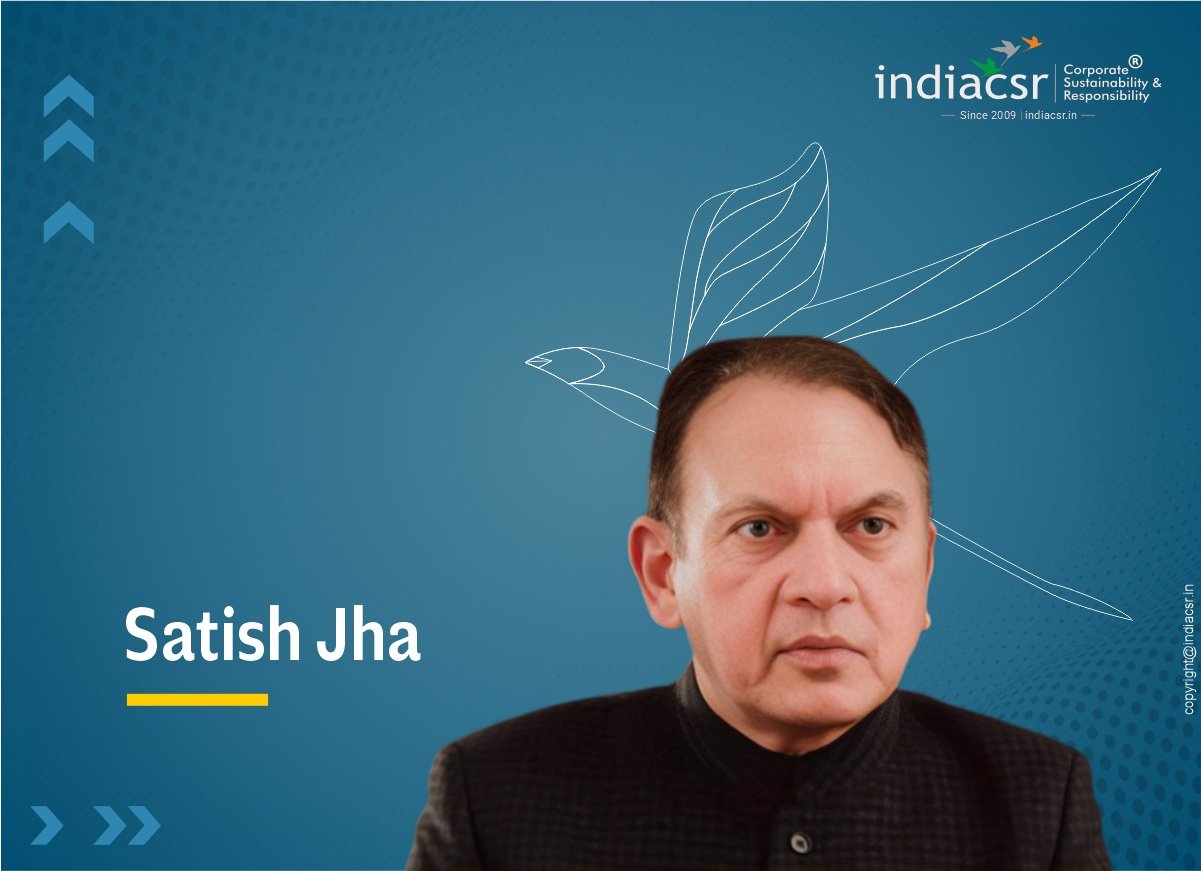
Satish Jha

Satish Jha

Share Share Share Share

India’s story since 1947 is one of the great paradoxes of the modern world.

By Satish Jha

A nation of extraordinary civilizational depth, democratic vitality, and human potential has repeatedly fallen short of its promise. It incubates world-class scientists and CEOs, yet struggles to ensure basic literacy for millions; sends spacecraft to the moon while children in government schools memorize answers they do not understand; celebrates democratic freedoms even as bureaucratic inertia and political temptations blunt their transformative power.

For nearly eight decades, India has moved forward—sometimes boldly, sometimes haltingly—but rarely in a way that unlocks the full capabilities of its people.

Why has this happened? Why has a country with vast human capital and strategic advantage consistently left so much potential unrealized?

The usual explanations—extractive institutions, neoliberal excess, insufficient redistribution—each illuminate part of the picture, but none capture the deeper failure. The more fundamental truth is this: India has never placed human flourishing at the center of its development project.

It has built industries before minds, bureaucracies before capabilities, and growth before learning. The result is a nation that has progressed, but not evolved; expanded, but not flourished.

This argument stands on the intellectual foundations laid by Amartya Sen, Abhijit Banerjee, and Jeffrey Sachs—while also moving beyond them. Sen redefined development as freedom: the expansion of capabilities that allow individuals to lead lives they value. Banerjee revealed how small, local failures in classrooms, clinics, and governance accumulate into large national stagnation. Sachs demonstrated that long-term investments in health, education, and sustainability offer the only reliable escape from poverty traps.

Yet even these giants leave crucial gaps. Sen’s framework is ethically profound but often abstract. Banerjee’s is empirically precise but necessarily narrow. Sachs’s is visionary but at times technocratic. What India now requires is a synthesis that integrates their insights while adding the missing dimensions of ethical resilience, cultural evolution, and learning-centric education. That synthesis is the flourishing-first framework.

To understand its necessity, one must revisit the dominant narratives shaping India’s development discourse.

Institutional economists argue that prosperity flows from inclusive institutions—those that distribute power broadly, protect rights, and incentivize innovation. This explains much of India’s colonial inheritance: a bureaucracy designed for control, a political economy vulnerable to elite capture, and regulatory systems that long suppressed entrepreneurship.

Yet institutional design alone cannot explain why India’s formally democratic structures have so often failed in practice. Institutions do not operate in a vacuum. They are animated—or hollowed out—by the capabilities, ethics, and agency of the people who inhabit them. Constitutions can guarantee rights; only capable citizens can defend them.

Heterodox critics emphasize inequality, agrarian distress, and neoliberal excess. They rightly highlight how growth has often bypassed the vulnerable. But their primary remedy—greater state intervention—overlooks a hard reality: India’s administrative machinery has frequently been part of the problem. Redistribution without capability-building risks entrenching dependency rather than empowering agency.

Market advocates offer a third narrative: that liberalization unleashed India’s entrepreneurial energies. This, too, contains truth. Millions were lifted out of poverty. But markets require capable participants. Where education is shallow, health systems fragile, and ethical norms weak, markets amplify inequality rather than opportunity. Jobless growth and crony capitalism are not merely market failures; they are capability failures.

This is where flourishing-first becomes indispensable.

India’s central developmental failure is not industrial, institutional, or ideological—it is human. Education has been treated as certification rather than learning; health as welfare rather than capability; democracy as procedure rather than agency. India has built schools but not learning, elections but not civic reasoning, bureaucracies but not accountability, and growth but not flourishing.

Nowhere is this clearer than in education. India produces millions of graduates annually, yet employers lament the absence of critical thinking, creativity, and problem-solving. This is not a failure of students, but of a system that rewards memorization over understanding and compliance over curiosity.

A flourishing-first model would transform education from the ground up: inquiry-based pedagogy, ethical reasoning embedded in curricula, and teachers recognized as nation-builders rather than exam supervisors. Learning would be understood not as preparation for life, but as life itself.

Health, too, must be reframed. No society can flourish when malnutrition persists amid growth and preventable diseases sap human potential. Sachs is right that health investment is foundational, but India’s deeper challenge lies in governance. A flourishing-first approach would decentralize health delivery, empower local communities, and embed accountability so that resources reach their intended beneficiaries.

Democracy must similarly evolve. Formal freedoms mean little when citizens lack the capacity to exercise them meaningfully. A flourishing-first society would nurture civic reasoning, ethical discourse, and decentralized accountability, accepting that institutional checks may slow decisions but ultimately strengthen trust, fairness, and long-term wellbeing.

Flourishing-first does not reject the insights of Sen, Banerjee, or Sachs—it completes them. It grounds Sen’s humanism in cultural transformation, scales Banerjee’s empirical insights through institutional redesign, and anchors Sachs’s long-term vision in everyday learning and agency. Development becomes not a race for GDP but a journey toward expanded human possibility.

India’s unfinished symphony can still be completed.

The nation stands at a moment of profound choice. It can continue pursuing growth without capability, reform without ethics, and democracy without agency. Or it can embrace a developmental ethos that places human flourishing at the center of national purpose.

This would require radical investment in transformative education, resilient health systems, decentralized governance, and a culture that values learning, integrity, and long-term thinking. It would require resisting short-term populism, bureaucratic expansion, and elite capture. Above all, it would require seeing people not as beneficiaries of development, but as its authors.

If India chooses this path, it can unlock the trillions in potential long left on the table. It can build institutions that are not merely inclusive in form but effective in practice. It can create a society that is not only prosperous, but fulfilled.

It can finish the symphony it began in 1947—not by adding more instruments, but by tuning the ones that matter most: the minds, hearts, and capabilities of its people.

About Satish Jha

Satish Jha is a social entrepreneur who earlier co-founded Jansatta for the Indian Express Group, was the chief Editor of newsweekly Dinamaan of The Times of India Group, a global CXO with a couple of Fortune 100 firms, founded edtech firm Edufront, chairs a family foundation Ashraya and supports about 27000 K12 students with One Tablet per Child programs.

Also Read:

  • The Kimmel Kerfuffle: When Satire Meets Suspicion
  • Ambassador Nirupama Rao Clarifies
  • Celestial Ambitions, Terrestrial Realities!
  • Failing the Future: By Design
  • Philanthropy: Satish Jha Expands Digital Learning Ecosystem to Vidya Bharati School in Meerut​
  • Ashraya chairman Satish Jha honored by Indo-American Art’s Council, New York
  • Making Smart Villages Truly Smart: Prioritizing Education as the Core
Tags: Satish Jha

CSR, Sustainability, and ESG success stories hindustan zinc
ADVERTISEMENT
India CSR

India CSR

India CSR is the largest media on CSR and sustainability offering diverse content across multisectoral issues on business responsibility. It covers Sustainable Development, Corporate Social Responsibility (CSR), Sustainability, and related issues in India. Founded in 2009, the organisation aspires to become a globally admired media that offers valuable information to its readers through responsible reporting.

Related Posts

Childcare
Articles

Stronger Families, Stronger Bottom Lines: Why Childcare Support Is a Business Imperative

2 days ago
Corporate Social Responsibility
Articles

From Compliance to Impact: Designing Site-Specific and Need-Based CSR Programs

1 week ago
Gaurav Sharma, CHRO of Balancehero India.
Articles

Youth, Rural India and Sustainability — Why CSR Must Focus on Empowerment, Not Just Relief

2 weeks ago
Carbon Neutral Manufacturing: Technology Pathways and Investment Strategies
Articles

Carbon Neutral Manufacturing: Technology Pathways and Investment Strategies

1 month ago
CSR in India
Articles

Corporate Social Responsibility (CSR) Must Include Environmental Responsibility: Supreme Court Judgment

2 months ago
CSR in India
Articles

Strategic CSR: Creating Lasting Community Impact

2 months ago
Load More
Ambedkar Chamber
ADVERTISEMENT
India Sustainability Awards 2026
ADVERTISEMENT

LATEST NEWS

‘Sandese Aate Hai’ – Where India’s Gratitude Reaches The Bravehearts On ‘Paper Of The Nation’, JK Paper

Hindustan Zinc Signs MoU for the Development of Gora Badal Sports Stadium in Chittorgarh, Rajasthan

CSR: NMDC Empowers Bastar Youth with 100% Placement Through Skill Training

‘Bonsai Blossoms 2026’ Celebrates India’s Bonsai Heritage with Rare 30–35-Year-Old Trees

Kirori Mal College Flags Off ‘Baithak’ – A New Intimate Music Series Celebrating Alumni Excellence and India’s Living Musical Heritage

AIPMA-AMTEC, EREMA Sign MoU for Recycling Skill Center in Mumbai

Ad 1 Ad 2 Ad 3
ADVERTISEMENT
ESG Professional Network
ADVERTISEMENT

TOP NEWS

IIT Jammu enters into collaboration with DIYguru to launch certificate programs in EV sector

Hindustan Zinc wins ICAI Sustainability Award for India’s Best BRSR Report in Large-Cap Manufacturing

GLAM Bets on India’s Gig Workforce, Builds Rider First Last-Mile Delivery Platform

Seminar-cum-Training on Regenerative Agriculture and Precision Farming Organized under ICAR–IARI–SMSF Collaborative Project

SAPPHIRE Technology Strengthens India Strategy for 2026, Expanding Beyond Gaming into AI and Enterprise Solutions with ARK Infosolutions

Punjab CM Bhagwant Mann Unveils Hinduja Foundation Kuninda Coin Book

Load More
STEM Learning STEM Learning STEM Learning
ADVERTISEMENT

Interviews

Prof. Kang Sung Lee, PhD
Interviews

Prof. Kang Sung Lee on Academia, Policy, and Industry-Linked Career Pathways

by India CSR
February 5, 2026

Despite being an advanced economy, South Korea faces a severe demographic crisis.

Read moreDetails
Magma Group CEO and Founder, Neal Thakker

Embedding CSR in Responsible Manufacturing at Magma Group: An Interview with Neal Thakker

January 21, 2026
Sudeep Agrawal, CFO & Head – CSR, Ashirvad by Aliaxis

Integrating Financial Leadership With Impactful CSR Initiatives: An Interview with Sudeep Agrawal, Ashirvad by Aliaxis

December 29, 2025
Satish Jha

Interview with Satish Jha: Pioneering CSR in Education

December 5, 2025
Load More
Facebook Twitter Youtube LinkedIn Instagram
India CSR Logo

India CSR is the largest tech-led platform for information on CSR and sustainability in India offering diverse content across multisectoral issues. It covers Sustainable Development, Corporate Social Responsibility (CSR), Sustainability, and related issues in India. Founded in 2009, the organisation aspires to become a globally admired media that offers valuable information to its readers through responsible reporting. To enjoy the premium services, we invite you to partner with us.

Follow us on social media:


Dear Valued Reader

India CSR is a free media platform that provides up-to-date information on CSR, Sustainability, ESG, and SDGs. We need reader support to continue delivering honest news. Donations of any amount are appreciated.

Help save India CSR.

Donate Now

Donate at India CSR

  • About India CSR
  • Team
  • India CSR Awards 2025
  • India CSR Leadership Summit
  • Partnership
  • Guest Posts
  • Services
  • ESG Professional Network
  • Content Writing Services
  • Business Information
  • Contact
  • Privacy Policy
  • Terms of Use
  • Donate

Copyright © 2025 - India CSR | All Rights Reserved

No Result
View All Result
  • Home
  • Corporate Social Responsibility
    • Art & Culture
    • CSR Leaders
    • Child Rights
    • Culture
    • Education
    • Gender Equality
    • Around the World
    • Skill Development
    • Safety
    • Covid-19
    • Safe Food For All
  • Sustainability
    • Sustainability Dialogues
    • Sustainability Knowledge Series
    • Plastics
    • Sustainable Development Goals
    • ESG
    • Circular Economy
    • BRSR
  • Corporate Governance
    • Diversity & Inclusion
  • Interviews
  • SDGs
    • No Poverty
    • Zero Hunger
    • Good Health & Well-Being
    • Quality Education
    • Gender Equality
    • Clean Water & Sanitation – SDG 6
    • Affordable & Clean Energy
    • Decent Work & Economic Growth
    • Industry, Innovation & Infrastructure
    • Reduced Inequalities
    • Sustainable Cities & Communities
    • Responsible Consumption & Production
    • Climate Action
    • Life Below Water
    • Life on Land
    • Peace, Justice & Strong Institutions
    • Partnerships for the Goals
  • Articles
  • Events
  • हिंदी
  • More
    • Business
    • Finance
    • Environment
    • Economy
    • Health
    • Around the World
    • Social Sector Leaders
    • Social Entrepreneurship
    • Trending News
      • Important Days
      • Great People
      • Product Review
      • International
      • Sports
      • Entertainment
    • Case Studies
    • Philanthropy
    • Biography
    • Technology
    • Lifestyle
    • Sports
    • Gaming
    • Knowledge
    • Home Improvement
    • Words Power
    • Chief Ministers

Copyright © 2025 - India CSR | All Rights Reserved

This website uses cookies. By continuing to use this website you are giving consent to cookies being used. Visit our Privacy and Cookie Policy.

