

• India CSR Awards 2026
  • India CSR Leadership Summit
  • Guest Posts
Thursday, September 24, 2026
India CSR®
  • Home
  • Corporate Social Responsibility
    • Art & Culture
    • CSR Leaders
    • Child Rights
    • Culture
    • Education
    • Gender Equality
    • Around the World
    • Skill Development
    • Safety
    • Covid-19
    • Safe Food For All
  • Sustainability
    • Sustainability Dialogues
    • Sustainability Knowledge Series
    • Plastics
    • Sustainable Development Goals
    • ESG
    • Circular Economy
    • BRSR
  • Corporate Governance
    • Diversity & Inclusion
  • Interviews
  • SDGs
    • No Poverty
    • Zero Hunger
    • Good Health & Well-Being
    • Quality Education
    • Gender Equality
    • Clean Water & Sanitation – SDG 6
    • Affordable & Clean Energy
    • Decent Work & Economic Growth
    • Industry, Innovation & Infrastructure
    • Reduced Inequalities
    • Sustainable Cities & Communities
    • Responsible Consumption & Production
    • Climate Action
    • Life Below Water
    • Life on Land
    • Peace, Justice & Strong Institutions
    • Partnerships for the Goals
  • Articles
  • Events
  • हिंदी
  • More
    • Business
    • Finance
    • Environment
    • Economy
    • Health
    • Around the World
    • Social Sector Leaders
    • Social Entrepreneurship
    • Trending News
      • Important Days
        • Festivals
      • Great People
      • Product Review
      • International
      • Sports
      • Entertainment
    • Case Studies
    • Philanthropy
    • Biography
    • Technology
    • Lifestyle
    • Sports
    • Gaming
    • Knowledge
    • Home Improvement
    • Words Power
    • Chief Ministers
No Result
View All Result
  • Home
  • Corporate Social Responsibility
    • Art & Culture
    • CSR Leaders
    • Child Rights
    • Culture
    • Education
    • Gender Equality
    • Around the World
    • Skill Development
    • Safety
    • Covid-19
    • Safe Food For All
  • Sustainability
    • Sustainability Dialogues
    • Sustainability Knowledge Series
    • Plastics
    • Sustainable Development Goals
    • ESG
    • Circular Economy
    • BRSR
  • Corporate Governance
    • Diversity & Inclusion
  • Interviews
  • SDGs
    • No Poverty
    • Zero Hunger
    • Good Health & Well-Being
    • Quality Education
    • Gender Equality
    • Clean Water & Sanitation – SDG 6
    • Affordable & Clean Energy
    • Decent Work & Economic Growth
    • Industry, Innovation & Infrastructure
    • Reduced Inequalities
    • Sustainable Cities & Communities
    • Responsible Consumption & Production
    • Climate Action
    • Life Below Water
    • Life on Land
    • Peace, Justice & Strong Institutions
    • Partnerships for the Goals
  • Articles
  • Events
  • हिंदी
  • More
    • Business
    • Finance
    • Environment
    • Economy
    • Health
    • Around the World
    • Social Sector Leaders
    • Social Entrepreneurship
    • Trending News
      • Important Days
        • Festivals
      • Great People
      • Product Review
      • International
      • Sports
      • Entertainment
    • Case Studies
    • Philanthropy
    • Biography
    • Technology
    • Lifestyle
    • Sports
    • Gaming
    • Knowledge
    • Home Improvement
    • Words Power
    • Chief Ministers
No Result
View All Result
India CSR®
No Result
View All Result
Home Articles

Beyond Access: How NBFCs Can Make Financial Inclusion Commercially Sustainable

Responsible NBFC lending can turn credit access into lasting economic opportunity.

India CSR by India CSR
September 24, 2026
in Articles
Reading Time: 6 mins read
Image: India CSR

Image: India CSR

Share Share Share Share
WhatsApp icon
WhatsApp — Join Us
Instant updates & community
Google News icon
Google News — Follow Us
Get our articles in Google News feed
india csr awards
ADVERTISEMENT

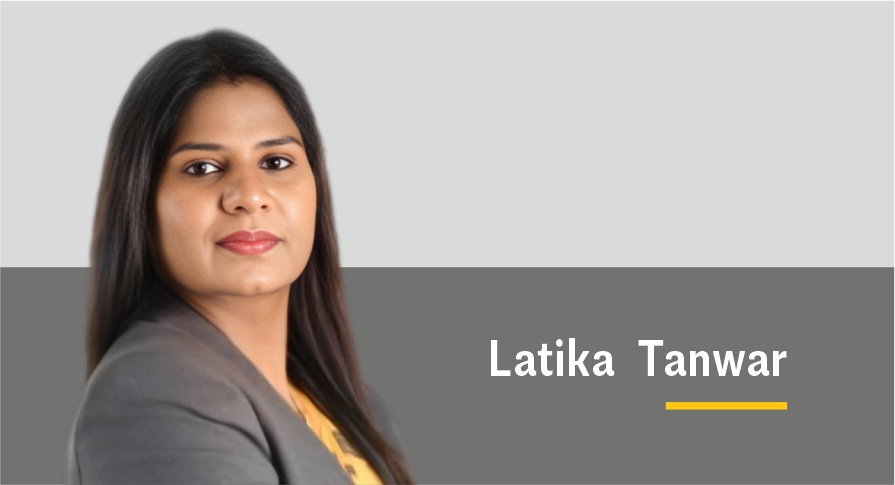
Latika Tanwar explains how NBFCs can combine responsible underwriting, technology and governance to scale sustainable financial inclusion in India.
India CSR®

By Latika Tanwar

India’s next phase of growth rests on a clear test: whether the millions of MSMEs, rural entrepreneurs, women-led businesses and first-time borrowers still outside the formal credit system can be brought into it on commercially sustainable terms. The demand for credit among these segments is well established. What has taken longer to build is a lending model capable of serving them profitably, at scale, over time. This is the space NBFCs occupy, and how they respond will shape the character of India’s growth over the coming decade.

The scale of the opportunity is well documented. The Reserve Bank of India’s Financial Inclusion Index rose to 70.0 in FY26, up from 67.0 a year earlier, a 4.48% increase driven mainly by higher usage of formal financial services rather than mere access to them. India’s underserved population is not simply being handed bank accounts; it is transacting, saving and borrowing through the formal system with growing regularity. The government has described this as India’s transition towards a high-growth, resilient economy, an ambition NBFCs can advance most directly in the semi-urban and rural markets where unmet credit demand remains largest.

As lending expands into underserved markets, credit assessment increasingly relies on a broader set of indicators beyond traditional documentation. NBFCs have built entire business models around serving exactly this segment. Reaching these borrowers, however, is the more straightforward half of the task. The consequential test is whether that lending can be sustained profitably, cycle after cycle, without compromising portfolio quality or the inclusion mandate that justified the expansion.
19th India CSR Leadership Summit 2026
ADVERTISEMENT

Financial Inclusion Beyond Credit Access

Genuine inclusion is measured by progression, not disbursement. A first-time borrower who takes a working capital loan, repays it on schedule, and qualifies for a larger loan on better terms a year later has been included in the way that matters. A borrower pushed into a loan beyond their repayment capacity, who defaults and exits the formal system, has not. That difference comes down to how the loan was structured. Tenures, repayment schedules and collateral norms must reflect how a small trader or first-generation entrepreneur actually earns and spends, in cash-flow patterns that rarely resemble a salaried, urban borrower’s monthly cycle. Pricing must be transparent enough that a borrower knows exactly what is owed and why, so credit strengthens the business rather than over-leveraging it.

This caution is not theoretical. The RBI’s own Financial Stability Report of June 2026 flagged early signs of stress in the micro-enterprise segment, even as overall retail asset quality held up well. A comparable pattern played out earlier in India’s microfinance sector, where borrower over-leveraging led to rising defaults and a contraction in credit supply, a cycle the sector is only now recovering from. Inclusion pursued without underwriting discipline produces the opposite of what it set out to achieve: borrowers pushed further from the formal system, not closer to it.

India CSR®
Image: India CSR

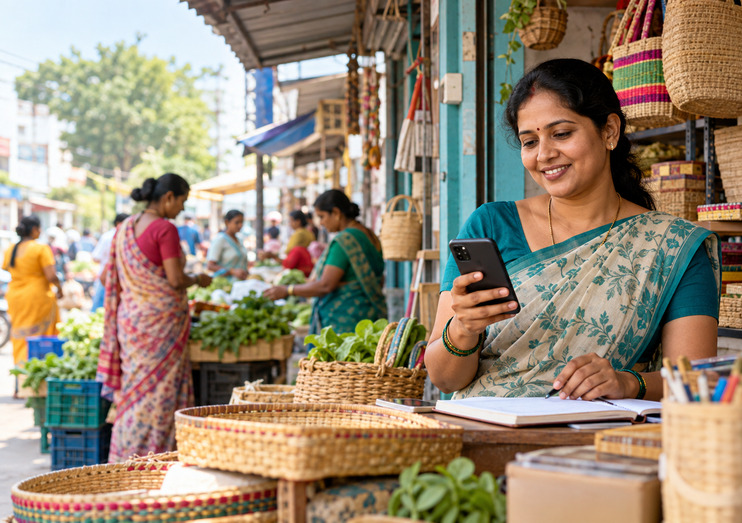
NBFCs can expand access to credit for MSMEs, women entrepreneurs and first-time borrowers only when inclusive lending is supported by disciplined underwriting, transparent pricing, digital tools and strong governance.

Building Commercially Sustainable Lending Models

Sustainability in lending is not a constraint on inclusion; it is what makes inclusion durable. An NBFC that grows its book rapidly without strengthening its risk architecture will not be around long enough to serve its next generation of customers. The fundamentals demand constant recommitment: underwriting that assesses genuine repayment capacity beyond formal income proof, portfolios that avoid concentration in any single sector or geography, and collections practices that are firm without tipping into coercion.

Governance sits underneath all of this. Boards that maintain a clear risk appetite, an independent credit assessment function and regular stress testing are better placed to absorb shocks, whether from a commodity price spike or a broader slowdown. The RBI’ June 2026 Financial Stability Report found that microfinance credit grew for the first time in seven quarters, with borrower over-leveraging easing as the share of borrowers linked to three or more lenders fell to 9.7%, indicating the guardrails adopted across the sector.

Technology as an Enabler of Scalable Inclusion

Digital infrastructure has changed what is operationally possible for lenders serving underserved segments. Nearly 55.49 crore users had been onboarded onto UPI as of June 2026, with transaction volume and value both hitting record levels during the year. Every such transaction leaves a data trail, and that trail increasingly makes a borrower visible to a lender who might otherwise have no documentation to work with.

Digital onboarding has cut the time and cost of acquiring a customer in remote geographies. Alternative credit assessment, drawing on bank statements, GST filings and transaction history, helps lenders underwrite borrowers with no prior credit record but a demonstrable economic footprint. According to data from SIDBI’s MSME Pulse, compiled with TransUnion CIBIL, the number of credit-active MSME entities increased by 65% over the five years to FY25, with new-to-credit entities accounting for 55% of originations in the sub-₹1 crore exposure segment. AI-assisted analytics layered on this data improves approval speed and portfolio monitoring, catching stress before it turns into losses. None of this replaces field judgment. It sharpens it.

NBFCs as Catalysts for Inclusive Economic Growth

The multiplier effect of NBFC lending plays out quietly, in small towns and semi-urban markets rather than in headline transactions. A working capital loan to a manufacturing MSME in a Tier III town supports the wages of its workers and the local suppliers it buys from. Credit to women entrepreneurs is one of the more striking shifts in India’s lending landscape: women’s business-purpose loan portfolios grew 7.5 times between 2017 and 2025, expanding at a 31% compound annual growth rate over the last three years, well ahead of overall commercial credit growth of 17%, as per the NITI Aayog research.  Financing a transport operator or a small contractor keeps entrepreneurial activity alive in markets larger, centrally underwritten lenders often overlook. NBFCs are not merely filling a credit gap here; they are participating in regional economic development, enterprise by enterprise.

The Road Ahead

The next phase of credit expansion in India will not be built by NBFCs alone. Policymakers have a role in shaping data-sharing and account aggregator infrastructure that makes alternative credit assessment more reliable industry-wide. Technology providers have a role in making underwriting tools accessible to mid-sized and smaller NBFCs, not only the largest players. NBFCs carry the responsibility of strengthening governance even as they scale, resisting the pull to chase growth at the expense of portfolio discipline.

Key Takeaway

The NBFCs that shape India’s lending landscape over the coming decade will be the ones that refuse to treat financial inclusion and commercial sustainability as separate objectives. Built together, they create durable value: for the customer who gains genuine access to credit, for the investor who backs a resilient balance sheet, and for an economy that grows stronger precisely because its growth reaches further.


About the Author: Latika Tanwar, Director and Co-promoter, Namdev Finvest Limited


© Copyright Disclaimer: All rights reserved. No part of this report may be reproduced, republished, distributed or transmitted in any form without prior written permission from India CSR®

Tags: Financial inclusionLatika TanwarNamdev Finvest Limited
csr education cybernetyx
ADVERTISEMENT
India CSR Image 1 India CSR Image 2

CSR, Sustainability, and ESG success stories hindustan zinc
ADVERTISEMENT
India CSR

India CSR

India CSR® is the largest media on CSR and sustainability offering diverse content across multisectoral issues on business responsibility. It covers Sustainable Development, Corporate Social Responsibility (CSR), Sustainability, and related issues in India. Founded in 2009, the organisation aspires to become a globally admired media that offers valuable information to its readers through responsible reporting.

Related Posts

Preventive Healthcare
Articles

Preventive Healthcare: A Longer View for CSR Impact

Image Copyright: India CSR
Articles

Retired Judge’s ₹1.1 Crore PM CARES Donation: Charity or Money Returned to the System?

India CSR®
Articles

FCRA Funding in India 2024 25: Full Report

India CSR®
Articles

PMKKKY: 4.70 Lakh Projects Worth ₹1.09 Lakh Crore for Mining Districts

Rachana Roy leads the Knowledge Vertical at SoulAce.
Articles

Beyond Flood Relief: Why Climate Resilience Must Become the Next CSR Priority

Saarang Ganapathi, Chief Executive Officer, Embassy Services Pvt. Ltd.
Articles

From Construction Waste to Circular Value: Rethinking the Built Environment

Load More
csr education cybernetyx
ADVERTISEMENT
bba
ADVERTISEMENT

Interviews

India CSR®
Interviews

Interview: Ravi Mahajan on India’s Shift from Diesel to Solar-Powered Telecom Towers

by India CSR

Ravi Mahajan of Vedang Cellular Services discusses solar energy, battery storage, AI and IoT in building efficient and resilient telecom...

Read moreDetails
Sanjay Hande, Head Of Manufacturing And Technology Management, Bosch India @india csr

Giving Becomes Participation, and Participation Creates a Deeper Connection: Sanjay Hande, Bosch India

Vivek Prakash, Senior Vice President & Head, CSR at Jubilant Ingrevia Limited

Didi Ki Dukaan is Helping Rural Women Become Independent Entrepreneurs: Vivek Prakash, Sr VP & Head–CSR, Jubilant Ingrevia

India CSR®

Responsible Business Must Turn Research into Real Impact: Prof Bob Doherty

Load More
Ad 1 Ad 2 Ad 3 Ad 4 Ad 5 Ad 6
ADVERTISEMENT

CSR UPDATES

CSR: IIFL Foundation, Yashlok Welfare Foundation Provide Recycled PVC Raincoats to Mumbai Police

CSR: Shree Refrigerations Funds AI, Robotics, STEM Education in Maharashtra

SKF CSR Gram Unnati to Support 1,000 Rural Households in Gujarat

CSR: ReNew and Andhra’s Anakapalli District Admn Join Hands to Skill 300 Women for Clean Energy Jobs

CSR: Omega Healthcare Skilling Initiatives Train 6,065 Youth, Support 4,469 Placements

Vasu Healthcare Promotes Ayurveda Awareness With Zeal Tablets

STEM Learning STEM Learning STEM Learning
ADVERTISEMENT
Facebook Twitter Youtube LinkedIn Instagram
India CSR Logo

India CSR® is the largest tech-led platform for information on CSR and sustainability in India offering diverse content across multisectoral issues. It covers Sustainable Development, Corporate Social Responsibility (CSR), Sustainability, and related issues in India. Founded in 2009, the organisation aspires to become a globally admired media that offers valuable information to its readers through responsible reporting. To enjoy the premium services, we invite you to partner with us.

Follow us on social media:

Subscribe to Our Newsletter

Don't miss out on the latest updates in corporate social responsibility. Subscribe to our newsletter at indiacsr.in and be part of the positive change.
Please enable JavaScript in your browser to complete this form.
Loading

  • About India CSR®
  • Team
  • India CSR® Awards 2026
  • India CSR® Leadership Summit
  • Partnership
  • Guest Posts
  • Services
  • ESG Professional Network
  • Content Writing Services
  • Business Information
  • Contact
  • Privacy Policy
  • Terms of Use
  • Donate

Copyright © 2026 - India CSR® | All Rights Reserved

No Result
View All Result
  • Home
  • Corporate Social Responsibility
    • Art & Culture
    • CSR Leaders
    • Child Rights
    • Culture
    • Education
    • Gender Equality
    • Around the World
    • Skill Development
    • Safety
    • Covid-19
    • Safe Food For All
  • Sustainability
    • Sustainability Dialogues
    • Sustainability Knowledge Series
    • Plastics
    • Sustainable Development Goals
    • ESG
    • Circular Economy
    • BRSR
  • Corporate Governance
    • Diversity & Inclusion
  • Interviews
  • SDGs
    • No Poverty
    • Zero Hunger
    • Good Health & Well-Being
    • Quality Education
    • Gender Equality
    • Clean Water & Sanitation – SDG 6
    • Affordable & Clean Energy
    • Decent Work & Economic Growth
    • Industry, Innovation & Infrastructure
    • Reduced Inequalities
    • Sustainable Cities & Communities
    • Responsible Consumption & Production
    • Climate Action
    • Life Below Water
    • Life on Land
    • Peace, Justice & Strong Institutions
    • Partnerships for the Goals
  • Articles
  • Events
  • हिंदी
  • More
    • Business
    • Finance
    • Environment
    • Economy
    • Health
    • Around the World
    • Social Sector Leaders
    • Social Entrepreneurship
    • Trending News
      • Important Days
      • Great People
      • Product Review
      • International
      • Sports
      • Entertainment
    • Case Studies
    • Philanthropy
    • Biography
    • Technology
    • Lifestyle
    • Sports
    • Gaming
    • Knowledge
    • Home Improvement
    • Words Power
    • Chief Ministers

Copyright © 2026 - India CSR® | All Rights Reserved

This website uses cookies. By continuing to use this website you are giving consent to cookies being used. Visit our Privacy and Cookie Policy.
