

• India CSR Awards 2026
  • India CSR Leadership Summit
  • Guest Posts
Saturday, August 1, 2026
India CSR
  • Home
  • Corporate Social Responsibility
    • Art & Culture
    • CSR Leaders
    • Child Rights
    • Culture
    • Education
    • Gender Equality
    • Around the World
    • Skill Development
    • Safety
    • Covid-19
    • Safe Food For All
  • Sustainability
    • Sustainability Dialogues
    • Sustainability Knowledge Series
    • Plastics
    • Sustainable Development Goals
    • ESG
    • Circular Economy
    • BRSR
  • Corporate Governance
    • Diversity & Inclusion
  • Interviews
  • SDGs
    • No Poverty
    • Zero Hunger
    • Good Health & Well-Being
    • Quality Education
    • Gender Equality
    • Clean Water & Sanitation – SDG 6
    • Affordable & Clean Energy
    • Decent Work & Economic Growth
    • Industry, Innovation & Infrastructure
    • Reduced Inequalities
    • Sustainable Cities & Communities
    • Responsible Consumption & Production
    • Climate Action
    • Life Below Water
    • Life on Land
    • Peace, Justice & Strong Institutions
    • Partnerships for the Goals
  • Articles
  • Events
  • हिंदी
  • More
    • Business
    • Finance
    • Environment
    • Economy
    • Health
    • Around the World
    • Social Sector Leaders
    • Social Entrepreneurship
    • Trending News
      • Important Days
        • Festivals
      • Great People
      • Product Review
      • International
      • Sports
      • Entertainment
    • Case Studies
    • Philanthropy
    • Biography
    • Technology
    • Lifestyle
    • Sports
    • Gaming
    • Knowledge
    • Home Improvement
    • Words Power
    • Chief Ministers
No Result
View All Result
  • Home
  • Corporate Social Responsibility
    • Art & Culture
    • CSR Leaders
    • Child Rights
    • Culture
    • Education
    • Gender Equality
    • Around the World
    • Skill Development
    • Safety
    • Covid-19
    • Safe Food For All
  • Sustainability
    • Sustainability Dialogues
    • Sustainability Knowledge Series
    • Plastics
    • Sustainable Development Goals
    • ESG
    • Circular Economy
    • BRSR
  • Corporate Governance
    • Diversity & Inclusion
  • Interviews
  • SDGs
    • No Poverty
    • Zero Hunger
    • Good Health & Well-Being
    • Quality Education
    • Gender Equality
    • Clean Water & Sanitation – SDG 6
    • Affordable & Clean Energy
    • Decent Work & Economic Growth
    • Industry, Innovation & Infrastructure
    • Reduced Inequalities
    • Sustainable Cities & Communities
    • Responsible Consumption & Production
    • Climate Action
    • Life Below Water
    • Life on Land
    • Peace, Justice & Strong Institutions
    • Partnerships for the Goals
  • Articles
  • Events
  • हिंदी
  • More
    • Business
    • Finance
    • Environment
    • Economy
    • Health
    • Around the World
    • Social Sector Leaders
    • Social Entrepreneurship
    • Trending News
      • Important Days
        • Festivals
      • Great People
      • Product Review
      • International
      • Sports
      • Entertainment
    • Case Studies
    • Philanthropy
    • Biography
    • Technology
    • Lifestyle
    • Sports
    • Gaming
    • Knowledge
    • Home Improvement
    • Words Power
    • Chief Ministers
No Result
View All Result
India CSR
No Result
View All Result
Home Articles

Industrial Waste as India’s Most Reliable New Raw Material Source

The untapped USD 15 billion opportunity inside our factories: How industrial waste is becoming India’s most reliable new raw material source

India CSR by India CSR
December 8, 2025
in Articles
Reading Time: 6 mins read
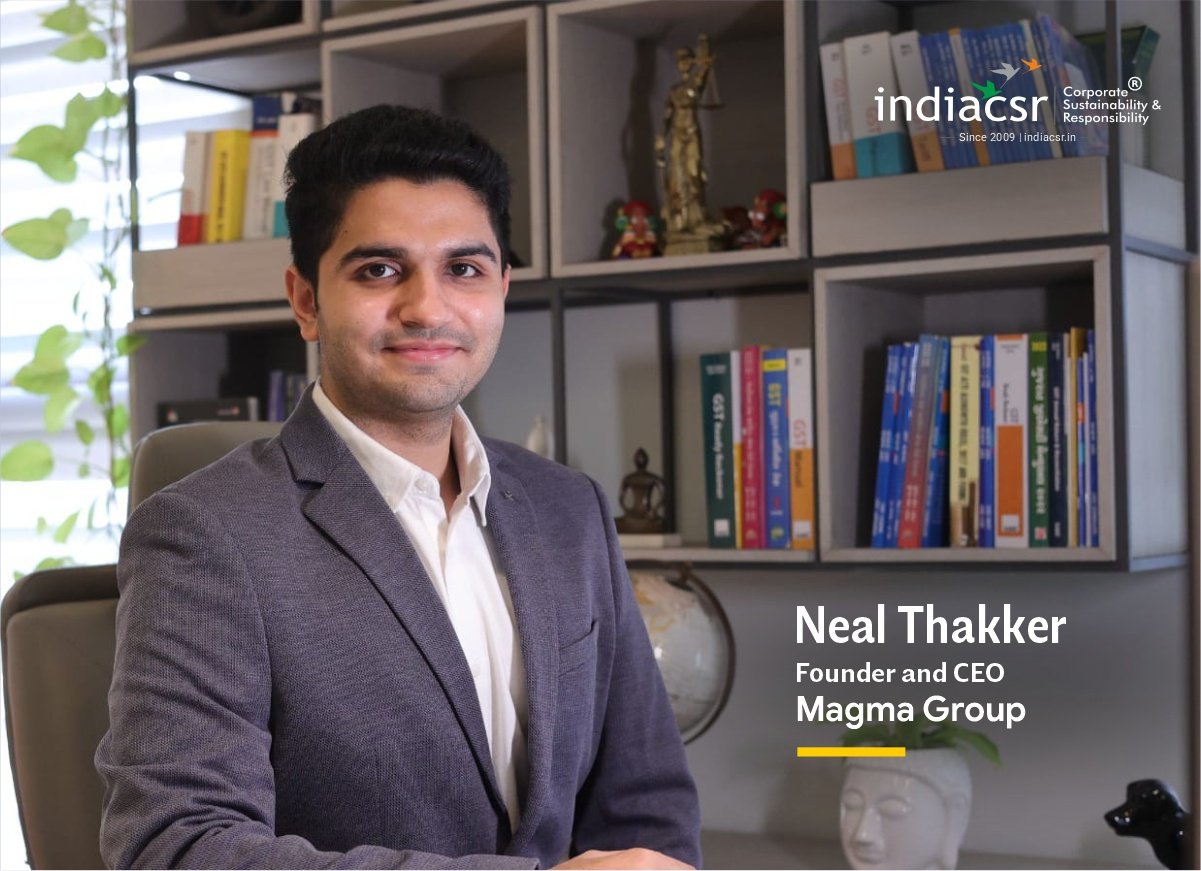
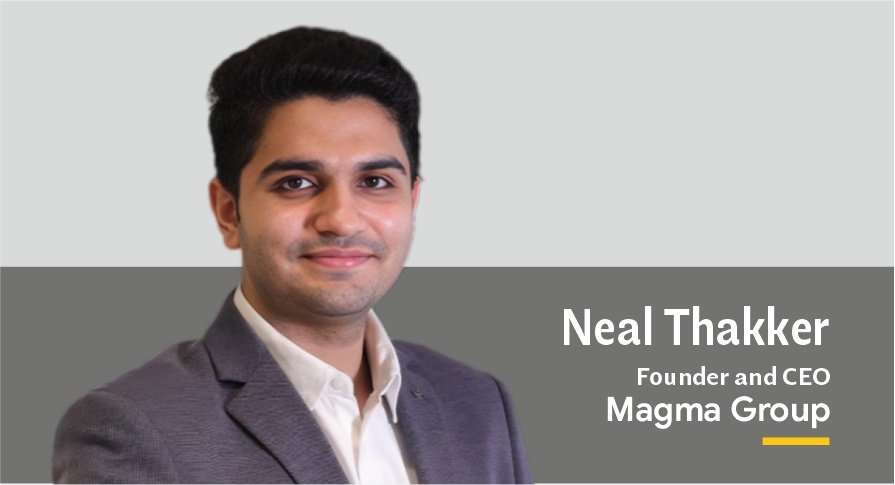
Neal Thakker Founder and CEO Magma-Group-@India CSR

Neal Thakker Founder and CEO Magma-Group-@India CSR

Share Share Share Share
WhatsApp icon
WhatsApp — Join Us
Instant updates & community
Google News icon
Google News — Follow Us
Get our articles in Google News feed
india csr awards
ADVERTISEMENT

Industrial by-products are emerging as the next big input for Indian manufacturing, with turning waste into feedstock emerging as the new model for India’s circular industrial economy
raigarh csr summit
ADVERTISEMENT
India CSR

For years, conversations around India’s circular economy have been dominated by consumer waste – plastics, packaging, e-waste, and household recyclables. But this is only a sliver of the real picture. What remains absent from mainstream discourse is the fact that India’s industrial waste is not a liability. It is the country’s largest untapped raw material reserve, and by 2030, India can reuse 750 million tonnes of industrial waste; conserve over 450 million tonnes of natural resources; and reduce 50-60 million tonnes of carbon dioxide equivalent.
From ceramics and chemicals to metals, paper, and packaging, factories across the country produce by-products that hold significant economic value, but these streams remain locked in outdated systems, opaque networks, and underdeveloped markets. If harnessed correctly, industrial waste can become a predictable, high-quality feedstock that reduces dependence on volatile virgin materials and strengthens India’s manufacturing competitiveness.

As per the FICCI-RECEIC Report, circular interventions have the potential to unlock approximately $107 bn material value by 2030. However, this is not a recycling story. It is a supply-chain and materials-science opportunity – one that India is uniquely positioned to unlock.

A Hidden Economy in Plain Sight

A typical manufacturing plant generates multiple categories of waste: process rejects, kiln waste, fly ash, sludge, off-spec material, and post-production scrap. Much of this material is reusable – in fillers, binders, industrial powders, glazes, energy substitution, or even as a primary raw material in adjacent industries. Yet, a large portion still ends up landfilled or stuck in slow-moving local scrap networks for two reasons:

  • Lack of price discovery: Industrial waste markets are primarily relationship-based. Prices vary significantly across regions, intermediaries, and buyer familiarity. Many factories that produce corrugated or plastic waste sell it quickly at whatever price they get, without knowing its true market value. The same waste can actually be recycled into higher-value products like quality kraft paper or polymer granules. Because there is no clear pricing or guidance, most manufacturers treat it as waste to dispose of, not a useful raw material.

  • Unpredictable quality and supply: Virgin materials are standardized; waste streams are not. A chemical plant’s by-product quality can vary batch-to-batch based on temperature, inputs, and process conditions. This variability discourages manufacturers from adopting waste-derived substitutes at scale. The result is an inefficient system where producers undersell valuable by-products, recyclers struggle with inconsistent availability, manufacturers rely on expensive and volatile virgin inputs, and the circular economy remains confined to consumer-facing narrativesBut this landscape is on the cusp of transformation.Waste as a predictable feedstock: A new industrial paradigmThe conversation must move from ‘waste management to ‘materials optimization.’ For industrial waste to enter mainstream production, it needs three things: standardization, predictability, and traceability – much like any other raw material.

India CSR

Engineering waste into usable materials

Across the world, advanced materials companies are transforming industrial by-products through: Particle-size refinement, chemical stabilization, blending and compounding, surface treatment, glaze and powder formulation, controlled calcination. These processes can convert waste into performance-enhancing materials for ceramics, paints, packaging, construction composites, and more. The resulting products are consistent, tested, and compliant – allowing manufacturers to use them at scale without production risk.

India is already seeing this in pockets: fly ash replacing cement clinker, slag replacing sand, and ceramic waste being repurposed for tile bodies. But these are fragmented examples. The opportunity is much larger and far more cross-industry.

India CSR

Building transparent price-discovery mechanisms

The missing link in India’s industrial circular economy is structured, data-backed price discovery. Today, materials like feldspar, quartz, calcite, kaolin, soda ash, and other industrial minerals see price fluctuations driven by fuel costs, imports, and demand cycles. Waste-derived substitutes, if standardized and priced transparently, can serve as a hedge against this volatility. A market-led price discovery system for industrial waste could benefit all players: Factories earn more from their by-products, manufacturers reduce input cost variability, India lowers dependence on imports, the industry becomes more resource efficient.

This is economics, not environmentalism, though it achieves both.

India CSR

Creating predictable supply chains

Because waste is produced continuously, industrial by-products can form stable, year-round feedstock streams – often more predictable than mined or imported raw materials. For example: A chemical plant produces consistent volume of certain residues per batch, a paper mill generates uniform types of pulp rejects and a packaging company produces recurring quantities of polymer scrap.

Once standardized, these streams behave like any other raw material category, except they come with lower cost, stored carbon efficiency, and improved supply security.

India CSR

Why This Moment Matters

India’s manufacturing economy is expanding rapidly. With this growth comes the need for reliable, cost-effective raw materials – a global challenge made sharper by geopolitical disruptions and commodity swings. Three shifts make this the right moment to unlock industrial waste as an alternate raw material system:

Government policy is supportive – Policy frameworks such as the Circular Economy Action Plans, Extended Producer Responsibility norms, and Green Manufacturing incentives have created momentum across industries. These policies encourage resource efficiency without forcing disruption.

Global investors are prioritizing sustainable industrial transformation – Funds backing India’s industrial tech ecosystem increasingly seek models that combine profitability, circularity, and supply chain resilience. Industrial waste as engineered material fits squarely into this investment thesis.

Tier-II and Tier-III manufacturing clusters are becoming innovation hubs – Cities like Surat, Ankleshwar, Morbi, Tiruppur, Bhiwadi, and Bhavnagar are evolving from production centers to ecosystems where waste, materials, and energy intersect. Their scale makes them ideal pilots for circular materials innovation.

India CSR

A USD 15 billion Opportunity Hiding in Factories

If even 15-20% of India’s industrial waste is standardized and fed back into manufacturing, it could unlock a USD 15 billion circular materials market over the coming decade – reducing dependence on virgin imports, strengthening India’s industrial competitiveness, and creating new value pools for manufacturers. India does not need to look outside for its next raw material reserve. It is already inside our factories, waiting to be engineered, standardized, and valued.The future of Indian manufacturing will not only be built on advanced materials and green manufacturing solutions – it will be built on our ability to see value where others see waste. 

The Magma Group is backed by global investors like General Catalyst, Titan Capital, Capria Ventures, Accion Venture Lab, Avinya Ventures and WEH Ventures; and has over 250 industrial customers across ceramics, industrial chemicals, and packaging sectors, including Reliance, Adani and Arvind Group among others. Profitable since its inception and based out of Ahmedabad, the Magma Group is led by Neal who at 25 years old represents a new generation of Indian industrial entrepreneurs – building a profitability-first, tech-enabled, and sustainability-driven business from outside the traditional metro ecosystems.

Author: Neal Thakker, Founder and CEO, Magma Group.
Tags: Industrial WasteMagma GroupNeal ThakkerRaw Material
19th India CSR Leadership Summit 2026
India CSR Image 1 India CSR Image 2

CSR, Sustainability, and ESG success stories hindustan zinc
ADVERTISEMENT
India CSR

India CSR

India CSR® is the largest media on CSR and sustainability offering diverse content across multisectoral issues on business responsibility. It covers Sustainable Development, Corporate Social Responsibility (CSR), Sustainability, and related issues in India. Founded in 2009, the organisation aspires to become a globally admired media that offers valuable information to its readers through responsible reporting.

Related Posts

The image is created by AI. India CSR
Articles

CSR Can Bridge the Healthcare Gap for India’s Underserved Communities

1 week ago
NCRBC 2026 Positions ESG as a Driver of India’s Economic Competitiveness
ESG

IICA NCRBC 2026 Positions ESG as a Driver of India’s Economic Competitiveness

2 weeks ago
India CSR
Articles

Hinduja Foundation – From Learning to Livelihood: Building Stronger Pathways for Young People

2 weeks ago
Suvarna Mishra, HR Director at Pluxee India.
Articles

Childcare as Workforce Infrastructure: Supporting Women Across Life Stages

3 weeks ago
Riya Khanduri
Articles

Real Impact Happens When Sectors Collaborate

3 weeks ago
India CSR
Articles

CSR – vivo Ignite: Empowering Young STEM Innovators for Social Transformation in India

4 weeks ago
Load More
bba
ADVERTISEMENT

Interviews

Hardeep S. Brar - BMW Group India CEO
Interviews

Skills Are the Starting Line, Jobs Are the Finish Line: BMW Group India CEO Hardeep S. Brar

by India CSR
July 21, 2026

Hardeep S. Brar discussing BMW India Foundation’s youth skill development programme.

Read moreDetails
Dr. Vikas Garg, Chairman, Ebix Group

CSR: Compliance Gives You a Floor, But Purpose Gives You a Legacy: Dr. Vikas Garg, Chairman, Ebix Group

June 29, 2026
Harkirat Kaur, CEO, Hartek Foundation

Building Resilient Communities Through Sustainable Development: Harkirat Kaur, CEO, Hartek Foundation

June 22, 2026
Indu Mehta, Chief Sustainability Officer (CSO) at Bhilwara Energy Limited @IndiaCSR

ESG in India Has Moved Beyond Storytelling: Bhilwara Energy’s Indu Mehta on Sustainability as an Operating Discipline

May 30, 2026
Load More
Ad 1 Ad 2 Ad 3 Ad 4 Ad 5 Ad 6
ADVERTISEMENT

CSR UPDATES

CSR: Vedanta’s 15,000 Nand Ghars Support 9 Lakh Women and Children

CSR: NRAI Bengaluru, Mitti Café Support Equal Job Opportunities

CSR: Indian Bank Contributes ₹1.20 Crore for Assam Flood Relief and Rehabilitation

FKCCI Summit Calls for Scaled, Data-Driven CSR and Sustainability Action

Aegis Logistics Allocates Rs 8.91 Crore for CSR Projects in Maharashtra and Gujarat

She Matters Camp Trains 38 Grassroots Women Leaders in Secunderabad

STEM Learning STEM Learning STEM Learning
ADVERTISEMENT
Facebook Twitter Youtube LinkedIn Instagram
India CSR Logo

India CSR is the largest tech-led platform for information on CSR and sustainability in India offering diverse content across multisectoral issues. It covers Sustainable Development, Corporate Social Responsibility (CSR), Sustainability, and related issues in India. Founded in 2009, the organisation aspires to become a globally admired media that offers valuable information to its readers through responsible reporting. To enjoy the premium services, we invite you to partner with us.

Follow us on social media:

Subscribe to Our Newsletter

Don't miss out on the latest updates in corporate social responsibility. Subscribe to our newsletter at indiacsr.in and be part of the positive change.
Please enable JavaScript in your browser to complete this form.
Loading

  • About India CSR
  • Team
  • India CSR Awards 2026
  • India CSR Leadership Summit
  • Partnership
  • Guest Posts
  • Services
  • ESG Professional Network
  • Content Writing Services
  • Business Information
  • Contact
  • Privacy Policy
  • Terms of Use
  • Donate

Copyright © 2026 - India CSR | All Rights Reserved

No Result
View All Result
  • Home
  • Corporate Social Responsibility
    • Art & Culture
    • CSR Leaders
    • Child Rights
    • Culture
    • Education
    • Gender Equality
    • Around the World
    • Skill Development
    • Safety
    • Covid-19
    • Safe Food For All
  • Sustainability
    • Sustainability Dialogues
    • Sustainability Knowledge Series
    • Plastics
    • Sustainable Development Goals
    • ESG
    • Circular Economy
    • BRSR
  • Corporate Governance
    • Diversity & Inclusion
  • Interviews
  • SDGs
    • No Poverty
    • Zero Hunger
    • Good Health & Well-Being
    • Quality Education
    • Gender Equality
    • Clean Water & Sanitation – SDG 6
    • Affordable & Clean Energy
    • Decent Work & Economic Growth
    • Industry, Innovation & Infrastructure
    • Reduced Inequalities
    • Sustainable Cities & Communities
    • Responsible Consumption & Production
    • Climate Action
    • Life Below Water
    • Life on Land
    • Peace, Justice & Strong Institutions
    • Partnerships for the Goals
  • Articles
  • Events
  • हिंदी
  • More
    • Business
    • Finance
    • Environment
    • Economy
    • Health
    • Around the World
    • Social Sector Leaders
    • Social Entrepreneurship
    • Trending News
      • Important Days
      • Great People
      • Product Review
      • International
      • Sports
      • Entertainment
    • Case Studies
    • Philanthropy
    • Biography
    • Technology
    • Lifestyle
    • Sports
    • Gaming
    • Knowledge
    • Home Improvement
    • Words Power
    • Chief Ministers

Copyright © 2026 - India CSR | All Rights Reserved

This website uses cookies. By continuing to use this website you are giving consent to cookies being used. Visit our Privacy and Cookie Policy.

