


Hinduja Foundation carries forward a long tradition of service rooted in the Hinduja Group’s philosophy of “Work to Give.”
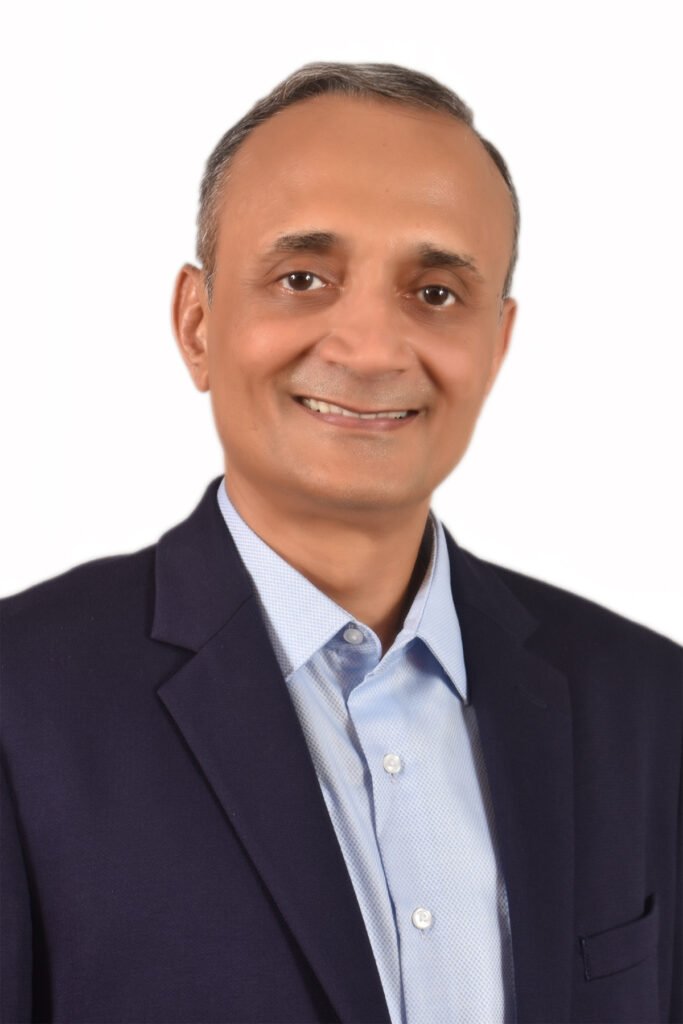
By Raman Kalyanakrishnan
Education and skilling are often treated as separate stages: children first complete school and are then expected to acquire the skills required for work. Our experience suggests that this distinction is increasingly artificial. A young person’s ability to make a successful transition to higher education, vocational training or employment is shaped much earlier by foundational literacy and numeracy, continued participation in school, confidence, communication, digital exposure and access to reliable career information. Skilling must therefore be understood as a continuum. It should begin with strong foundations, help adolescents make informed choices and continue through working life as industries and technologies change. The objective should not be limited to securing a first job. It should be to equip young people to build sustainable livelihoods and remain relevant in an evolving world of work.
Established in 1968, Hinduja Foundation carries forward a long tradition of service rooted in the Hinduja Group’s philosophy of “Work to Give.” Over the decades, the Foundation has focused on strengthening public systems and expanding equitable access to education, healthcare, water stewardship, rural development, and arts and culture. This thinking informs Road to School and Road to Livelihood, initiatives conceptualised and spearheaded by Ashok Leyland, with support from Hinduja Group companies and in collaboration with governments, implementation partners and communities.
Road to School works with students in Classes 1 to 8 in government schools, with a focus on foundational literacy and numeracy, bridging learning gaps, health and well-being, sports and creative development. Road to School has reached nearly 5 lakh students across 4300 schools in 12 states. Beyond academics, it integrates sports, arts, health and well-being into the learning experience and contributing to a 25–30% improvement in literacy and numeracy levels across intervention areas, and helping reintegrate more than 15,000 children into government schools.
World Youth Skills Day is an opportunity to reconsider what being “future-ready” actually means.
Road to Livelihood extends this support to students in Classes 9 to 12. It recognises that adolescents need more than academic instruction to prepare for life after school. The programme combines career guidance and psychometric assessment with communication, digital literacy, financial literacy and adolescent well-being. These interventions help students understand their interests and aptitudes, explore higher education and vocational options, and make more informed decisions about their future. Road to Livelihood has reached nearly 1.3 lakh students.
The programmes work within government education systems rather than establishing parallel structures. It engages teachers, parents, community resource persons, local authorities and implementation partners and adapts the delivery to the needs of each location. The wider purpose is to strengthen the environment around the learner. When families understand available pathways, teachers receive support and students have access to guidance and practical capabilities, the prospects of a successful transition improve.
World Youth Skills Day is an opportunity to reconsider what being “future-ready” actually means. It cannot be reduced to a short training course, a certificate or an initial placement. Young people need relevant technical and digital capabilities, but they also need foundational learning, communication, judgment, resilience and the capacity to learn continuously.
No single institution can deliver this alone. Government provides scale and public infrastructure; schools build foundations; civil-society organisations contribute specialised delivery capabilities; communities sustain participation; and industry brings knowledge of changing jobs and workplace expectations. Our experience has reinforced a simple lesson: lasting results come from strengthening these connections. When education and skilling are linked, existing systems are reinforced and responsibilities are shared, young people are better placed not only to find work but to build resilient careers and participate meaningfully in India’s growth.
(Raman Kalyanakrishnan, CEO, Hinduja Foundation)