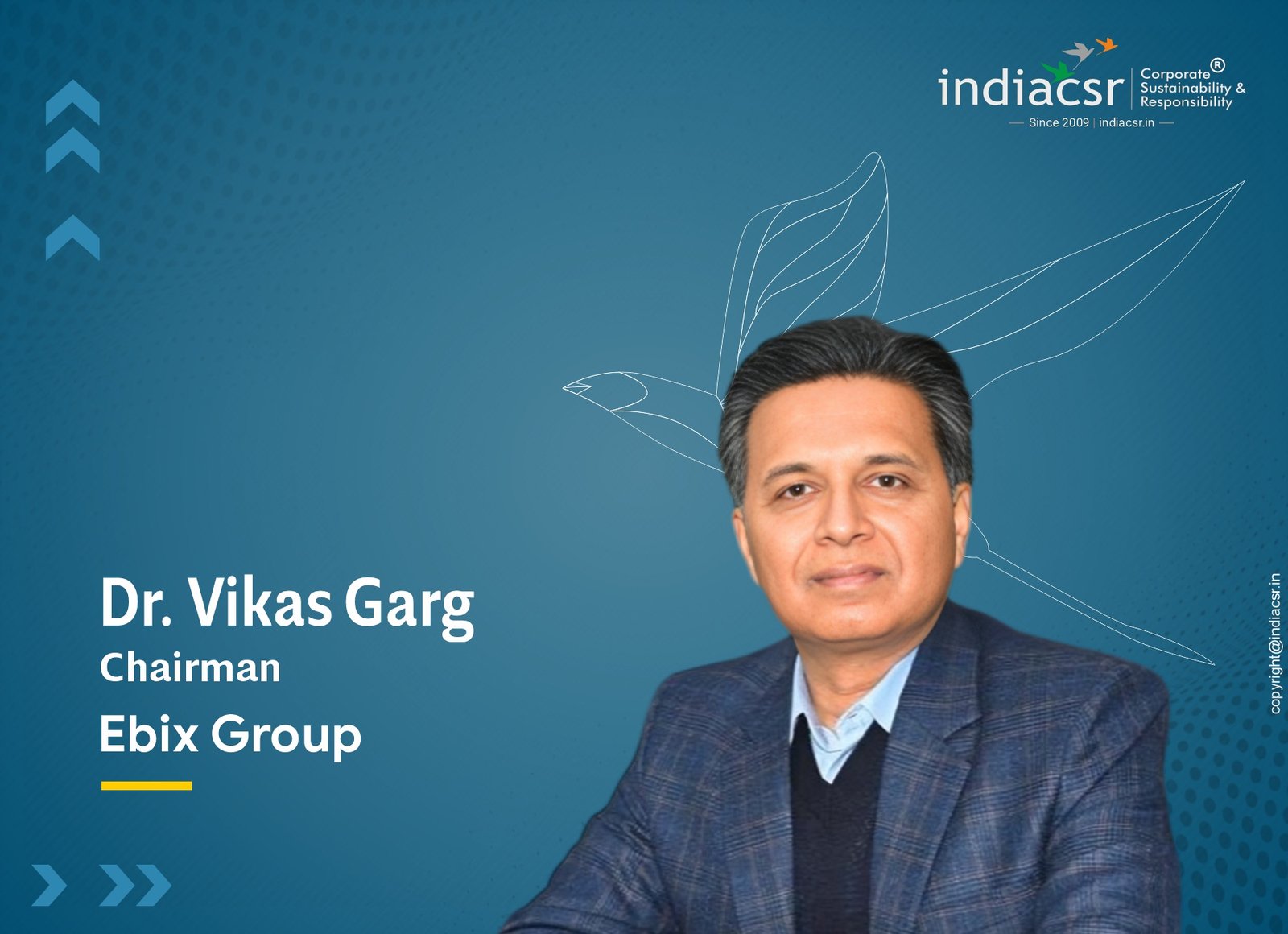


Discover how Dr. Vikas Garg, Chairman of Ebix Group, is redefining CSR in India by shifting from compliance-driven philanthropy to a tech-driven, long-term business strategy.
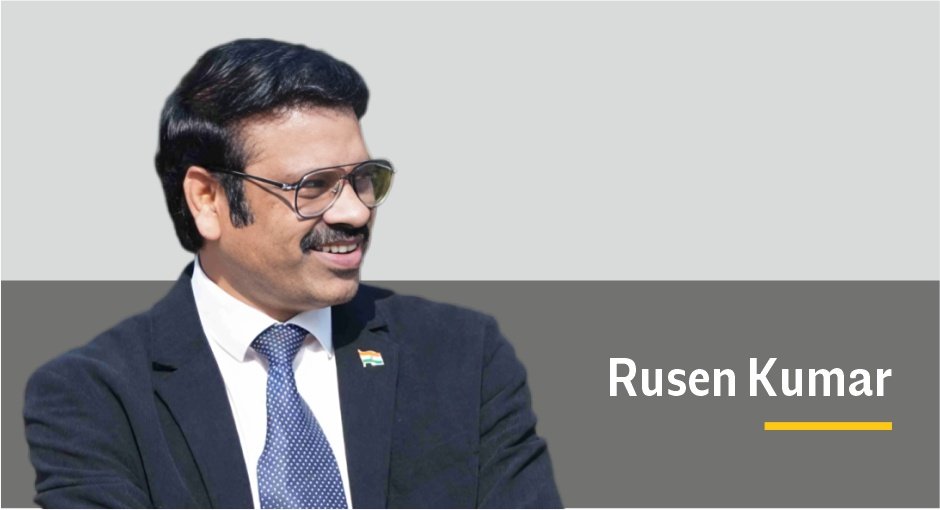
By Rusen Kumar
The definition of Corporate Social Responsibility (CSR) in India is undergoing a massive, systemic evolution. Once viewed as a back-page compliance requirement to meet regulatory mandates, modern CSR is rapidly ascending to the corporate boardroom, establishing itself as a core pillar of long-term business strategy. In this exclusive interview for India CSR, Rusen Kumar delves into the insights of Dr. Vikas Garg, Chairman of Ebix Group, to unpack this paradigm shift. Known for his forward-thinking leadership, Dr. Garg shares a compelling vision of how Ebix Group is moving past traditional ‘cheque-book philanthropy.’ By leveraging the group’s native tech expertise, building authentic public-private partnerships, and committing to generational impact rather than short-term financial cycles, Dr. Garg lays down a bold new blueprint for what responsible enterprise looks like in a modern India.
Excerpts:
Q. How do you define the role of CSR today? Should it remain a compliance-driven function, or evolve into a core business strategy for long-term impact?
Dr. Vikas Garg: CSR has undergone a fundamental reinvention. It can no longer exist as a footnote in annual reports or a line item driven purely by regulatory obligation. We are at an inflection point where the most forward-thinking businesses recognise that social responsibility is not separate from strategy, it is strategy.
At Ebix Group, our belief is simple: businesses that are deeply embedded in the communities they serve will always outperform those that are not. When you align your CSR philosophy with your organisational DNA, your values, your people, your long-term vision — the outcomes are exponentially more powerful. Compliance gives you a floor. But purpose gives you a legacy.
Q. How are your CSR initiatives aligned with your core business strengths?
Dr. Vikas Garg: Our strength has always been leveraging technology and financial ecosystems to simplify complex systems. Naturally, our social commitment flows from that same capability. We are not writing cheques from the sidelines — we are deploying our actual competencies in service of communities.
Whether it is driving digital literacy in underserved populations, championing financial inclusion, or building frameworks that make quality education more accessible — these are areas where Ebix’s operational expertise creates a genuine multiplier effect. We bring the same rigour, innovation mindset, and execution discipline to our social initiatives that we bring to building business. That is what separates meaningful impact from well-intentioned gesture.
Q. How can corporations build stronger public-private partnerships?
Dr. Vikas Garg: The honest answer is that most public-private partnerships underdeliver because they are structured as transactions rather than true collaborations. Government brings policy scale and community access; business brings speed, technology, and implementation muscle. When these are genuinely combined — not siloed — the results can be transformational.
My view is that corporates must step up beyond cheque-book philanthropy. Bring your engineers, your digital platforms, your management frameworks to the table. And equally important — listen. Government and community institutions carry ground-level intelligence that no corporate boardroom can replicate. The future of impactful PPPs lies in mutual respect, shared accountability, and outcomes that are measured and published honestly.
Q. Do you believe there is a need to shift from short-term CSR programmes to long-term, sustainable impact models?
Dr. Vikas Garg: Without question, I would go further to say that short-term CSR programmes, however well-intentioned, can sometimes do more harm than good. They create dependency without capability, visibility without value. Real transformation — in education, in health, in livelihood — operates on a different clock than a financial year.
The transition happens when organisations stop measuring CSR by activities and start measuring it by outcomes. How many lives have genuinely changed? How many communities have become more self-reliant? These questions require a multi-year commitment, consistent investment, and the humility to course-correct when programmes are not working. That is the standard we hold ourselves to at Ebix — and I believe it is the standard all of corporate India must aspire to.

Q. How do you see CSR, sustainability, and business strategy shaping the future of corporate India?
Dr. Vikas Garg: We are entering an era where the dichotomy between profit and purpose is simply no longer credible. Investors are asking deeper questions. Employees — especially the next generation of talent — want to work for organisations whose values they respect. Consumers are making choices that reflect their ethics. Regulators globally are raising the bar. The writing is clear.
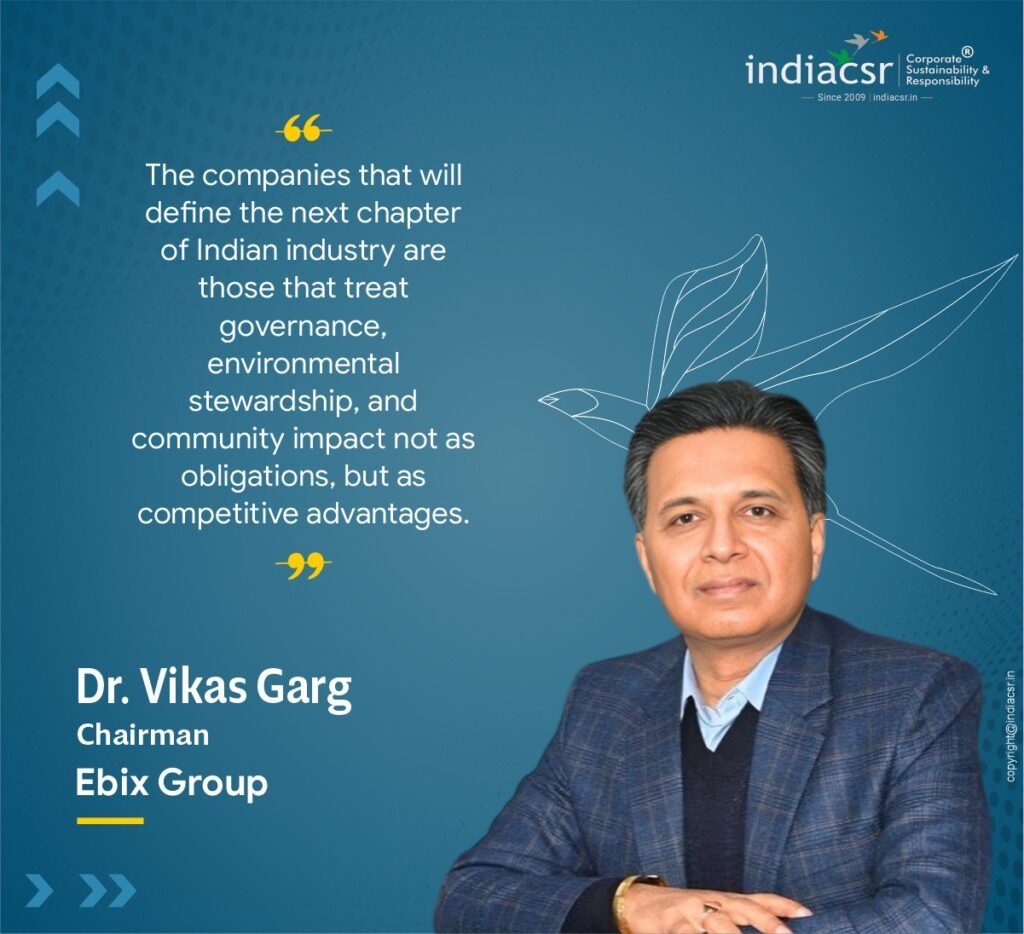
For corporate India, this is both a challenge and a historic opportunity. We have always prided ourselves on building businesses that endure. ESG and sustainability are not Western impositions — they are the natural evolution of responsible enterprise. The companies that will define the next chapter of Indian industry are those that treat governance, environmental stewardship, and community impact not as obligations, but as competitive advantages. At Ebix, that integration is not aspirational — it is operational. And that is where every serious business leader must aim to be.