

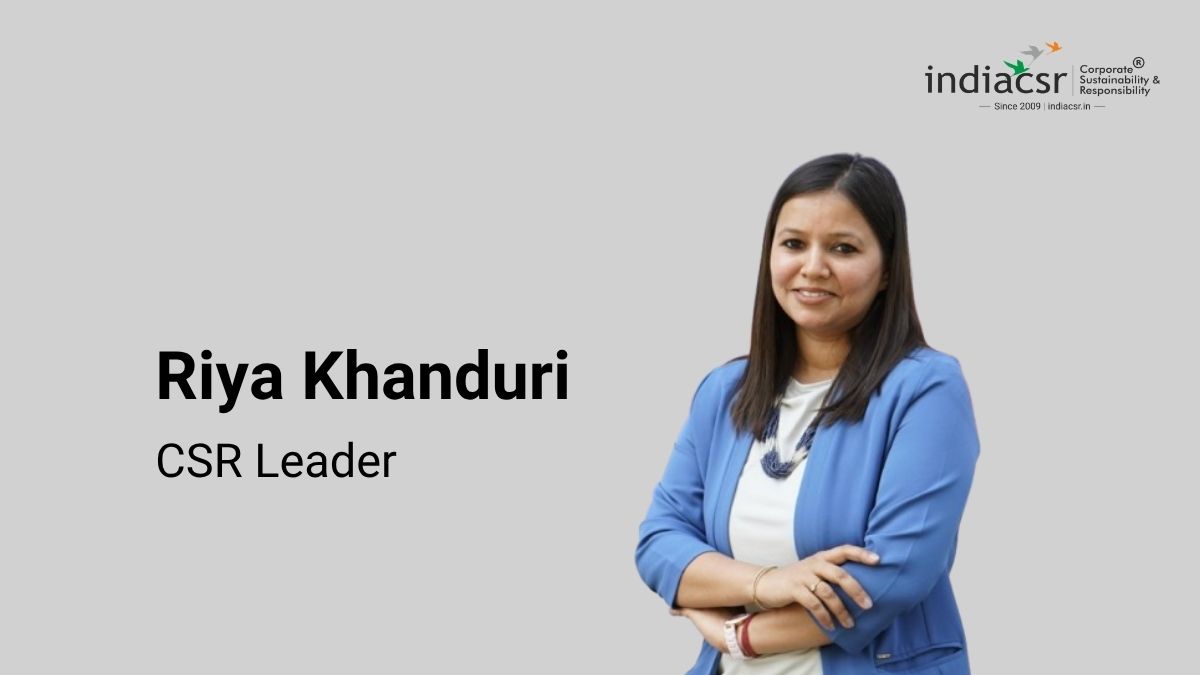


By Riya Khanduri
India’s most pressing social challenges—whether in education, healthcare, livelihoods, disability inclusion, gender equity, or climate resilience—cannot be solved by a single sector alone.
Having spent more than 13 years working across Government, NGOs, social enterprises, and Corporate CSR, I have had the opportunity to view the development ecosystem from multiple perspectives. This journey has reinforced one belief: meaningful and sustainable social impact happens when sectors collaborate, not when they work in isolation.
Early in my career as a District Disaster Management Officer in Uttarakhand, I witnessed firsthand how no single department or organization could effectively respond to complex challenges alone. During disaster preparedness and response initiatives, success depended on coordinated action between government departments, local communities, development partners, and civil society organizations. The most effective solutions emerged when diverse stakeholders came together with a shared purpose.
Later, while working with NGOs and social enterprises in areas such as sanitation, health, migration, and community development, I saw another side of the equation. NGOs often possess deep community trust and an understanding of local realities that cannot be replicated through top-down approaches. They are often the first to identify emerging needs and the last to leave when challenges persist.
My transition into Corporate CSR brought yet another perspective. Corporates contribute not only financial resources but also innovation, strategic thinking, technology, employee volunteering, governance, and a growing commitment to measuring long-term impact. Through CSR and Social Impact programs, I have worked closely with nonprofit partners, employees, and community stakeholders to build initiatives that create value both for business and society.
One lesson that has consistently stayed with me is that the strongest programs are rarely driven by a single organization. Whether it is education, skill development, gender equity, disability inclusion, or community resilience, the most successful initiatives are built on partnership.
I have seen projects achieve greater scale when government systems provide enabling policies and infrastructure, NGOs bring grassroots expertise and community trust, and corporates contribute resources, innovation, and strategic support. Individually, each sector can make progress. Together, they can create transformation.
Today, as someone working at the intersection of CSR, Diversity, Equity & Inclusion (DEI), and social impact, I firmly believe that collaboration is also essential for building a more inclusive society. Disability inclusion, LGBTQ+ inclusion, women’s empowerment, and equitable access to opportunities require collective action from policymakers, employers, nonprofits, educational institutions, and communities alike. Sustainable change cannot happen in silos.
As India continues its journey toward inclusive and sustainable development, we must move beyond transactional relationships and focus on building genuine partnerships based on trust, shared goals, and mutual accountability.
The future of social impact lies not in asking,“Who owns the problem?” but in asking,“How can we solve it together?”
(India CSR)



