

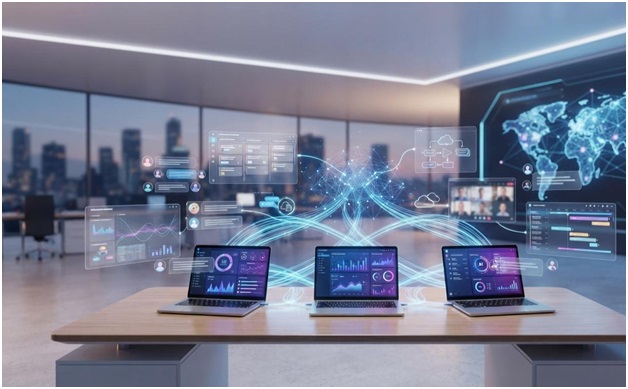



The workplace has changed dramatically over the last few years. Remote work, hybrid offices, cloud-based tools, and global teams have become the new normal. While these changes have created greater flexibility, they have also introduced new challenges. Teams now need to communicate across different locations, manage multiple projects simultaneously, and make decisions faster than ever before.
Artificial intelligence (AI) is emerging as one of the most powerful technologies for solving these challenges. In 2026, AI is no longer viewed as just another productivity tool. Instead, it has become an intelligent teammate that supports collaboration, improves communication, and helps organizations work more efficiently.

Businesses of all sizes are adopting AI solutions like Coworker AI to simplify workflows, reduce repetitive tasks, and keep teams aligned. Rather than replacing employees, AI empowers them to focus on creativity, innovation, and strategic decision-making.
The Evolution of Team Collaboration
Team collaboration has evolved significantly over the past decade.
Traditional offices relied heavily on face-to-face meetings, printed documents, and manual workflows. Today, most organizations use digital platforms to communicate, share files, assign tasks, and manage projects.
While digital transformation has improved accessibility, it has also created new problems:
- Information scattered across multiple platforms
- Too many meetings
- Long email threads
- Missed deadlines
- Communication gaps
- Repetitive administrative work
AI addresses these issues by organizing information, automating routine processes, and providing intelligent assistance throughout the workday.
AI Is Becoming a Digital Teammate
One of the biggest shifts in 2026 is the role AI plays within organizations.
Instead of functioning as a simple chatbot or writing assistant, AI now acts as a collaborative partner that helps employees complete everyday tasks more efficiently.
Coworker AI supports professionals by helping with:
- Writing emails
- Summarizing meetings
- Organizing documents
- Managing projects
- Generating reports
- Researching information
- Drafting content
- Answering workplace questions
This allows employees to spend less time on repetitive work and more time solving meaningful business problems.
Improving Communication Across Teams
Poor communication remains one of the leading causes of project delays.
When information is unclear or difficult to find, employees waste valuable time asking questions, searching for documents, or attending unnecessary meetings.
AI improves communication by helping teams:
- Draft professional emails
- Create meeting summaries
- Generate project updates
- Organize shared documentation
- Translate information into clear language
- Keep everyone informed
Instead of relying on memory or handwritten notes, employees can quickly access accurate information whenever they need it.
Reducing Meeting Overload
Many professionals spend several hours each week attending meetings.
While meetings are important, not every discussion requires everyone to be present.
AI helps reduce meeting overload by automatically creating summaries, highlighting action items, and identifying important decisions.
Employees who could not attend a meeting can quickly review the summary instead of watching an hour-long recording.
This saves time while ensuring everyone remains informed.
Making Remote Collaboration Easier
Remote and hybrid work continue to grow in 2026.
Teams are often spread across different cities, countries, and time zones.
AI helps remote employees collaborate effectively by providing instant access to shared knowledge, organizing project information, and simplifying communication.
Whether employees work from home or the office, Coworker AI helps maintain consistency across the organization.
This creates a more connected and productive workforce.
Faster Knowledge Sharing
One common challenge within organizations is knowledge management.
Important information often remains buried inside emails, chat conversations, or lengthy documents.
New employees may struggle to find answers, while experienced staff repeatedly answer the same questions.
AI improves knowledge sharing by organizing information and making it easier to search.
Instead of asking multiple coworkers for assistance, employees can quickly locate relevant information and continue working without unnecessary delays.
Supporting Better Project Management
Successful collaboration depends on organized projects.
AI helps project managers monitor progress by assisting with:
- Task organization
- Deadline tracking
- Meeting documentation
- Progress reports
- Resource planning
- Workflow summaries
Rather than manually updating project records, teams can rely on AI-generated insights that keep everyone aligned.
This reduces confusion and helps projects stay on schedule.
Encouraging Better Decision-Making
Business decisions require accurate and timely information.
Managers often review reports, customer feedback, financial data, and operational updates before making important choices.
AI helps by analyzing information quickly and presenting concise summaries.
Instead of spending hours reviewing documents, leaders can focus on evaluating options and making informed decisions.
Faster access to information leads to quicker business responses and improved organizational performance.
Enhancing Creativity Instead of Replacing It
A common misconception about AI is that it replaces human creativity.
In reality, AI serves as a productivity partner.
Employees continue to contribute ideas, solve problems, and make strategic decisions, while AI handles repetitive tasks.
For example:
- Marketing teams generate campaign ideas faster.
- Designers receive creative inspiration.
- Writers overcome writer’s block.
- Sales teams personalize customer communication.
- Managers prepare reports more efficiently.
AI enhances human capabilities rather than replacing them.
Improving Cross-Department Collaboration
Modern businesses rely on cooperation between multiple departments.
Marketing, sales, customer support, finance, operations, and HR frequently share information and collaborate on projects.
Coworker AI helps connect these departments by making information easier to organize and access.
When everyone works from accurate, up-to-date information, collaboration becomes smoother and more efficient.
Helping Different Industries
AI-powered collaboration benefits organizations across many industries.
Marketing Agencies
Coordinate campaigns, manage client projects, and create marketing content more efficiently.
Healthcare Organizations
Improve internal communication, documentation, and administrative workflows.
Educational Institutions
Support lesson planning, staff collaboration, and student communication.
Software Companies
Organize development projects, summarize technical discussions, and improve documentation.
Financial Services
Prepare reports, analyze information, and improve internal collaboration while maintaining human oversight.
E-commerce Businesses
Coordinate customer service, inventory management, product content, and marketing activities.
Challenges Businesses Should Consider
Although AI offers many benefits, successful implementation requires responsible usage.
Organizations should:
- Protect confidential information.
- Review AI-generated content before publication.
- Train employees to use AI effectively.
- Maintain human oversight for important decisions.
- Establish clear AI usage policies.
Following these practices helps businesses maximize AI’s value while maintaining quality, security, and trust.
The Future of AI Collaboration
The role of AI in workplace collaboration will continue expanding beyond automation.
Future AI assistants will become even better at understanding business context, supporting decision-making, organizing information, and helping teams solve complex challenges.
Rather than replacing collaboration, AI will make teamwork more efficient, organized, and productive.
Businesses that adopt AI responsibly today will be better prepared for the evolving workplace of tomorrow.
Frequently Asked Questions
What is Coworker AI?
Coworker AI is an AI-powered workplace assistant that helps teams automate repetitive tasks, improve communication, and increase productivity.
How does AI improve team collaboration?
AI simplifies communication, summarizes meetings, organizes information, automates repetitive tasks, and helps teams stay aligned on projects.
Is AI replacing human employees?
No. AI is designed to support employees by handling routine tasks while people continue making strategic decisions, building relationships, and solving complex problems.
Can small businesses benefit from AI collaboration tools?
Yes. Small businesses can use AI to improve communication, organize workflows, create content, and reduce administrative work without hiring additional staff.
Conclusion
Team collaboration in 2026 is no longer limited to meetings, emails, and shared documents. Artificial intelligence has become an essential part of the modern workplace, helping organizations communicate more effectively, automate repetitive work, and make faster, data-informed decisions.
By streamlining workflows, improving knowledge sharing, reducing administrative tasks, and supporting better collaboration across departments, Coworker AI enables teams to focus on what matters most—innovation, problem-solving, and delivering value to customers. As businesses continue embracing AI-powered workplaces, adopting tools like Coworker AI will be a key step toward building more productive, connected, and future-ready teams.


