

The company named in reporting on the ED complaint is Shri Bajrang Power and Ispat Limited. The case raises a larger question: can CSR funds be protected from being used as a cloak for private benefit?
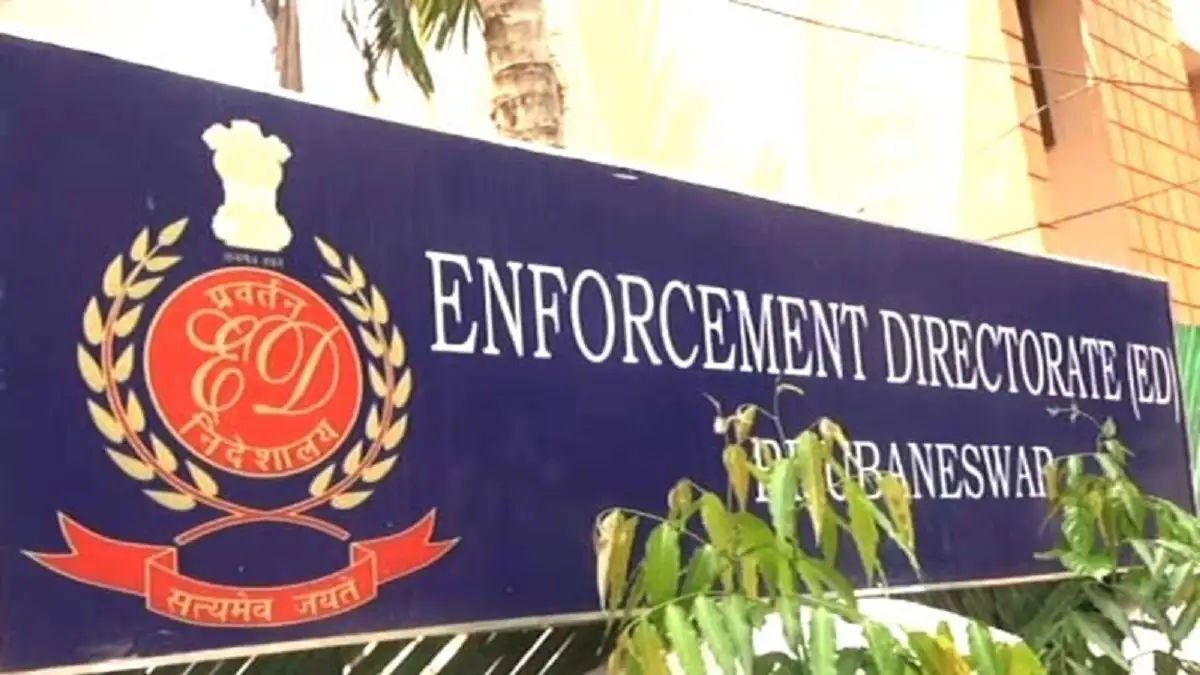
RAIPUR (India CSR): The alleged Rs. 45 lakh corporate social responsibility (CSR) payment under the Enforcement Directorate’s scanner in the Chhattisgarh Public Service Commission (CGPSC) recruitment case has been linked to Shri Bajrang Power and Ispat Limited (SBPIL), a Raipur-based steel company. According to reporting on the ED’s prosecution complaint, the agency has alleged that Rs. 45 lakh was routed through SBPIL’s CSR mechanism to Gramin Vikas Samiti (GVS), an institution allegedly controlled by former CGPSC chairman Taman Singh Sonwani. The amount was reportedly transferred in two instalments—Rs. 20 lakh and Rs. 25 lakh—and shown as institutional funding.
The ED has alleged that the payment was connected to favours shown in the 2021 CGPSC State Service Examination to the son and daughter-in-law of businessman Shravan Kumar Goyal, a director of SBPIL. The allegations are part of an ongoing money-laundering case and have not been adjudicated by a court, according to a media report.
Company Under Scrutiny
The ED’s Raipur Zonal Office filed a prosecution complaint before the Special Court under the Prevention of Money Laundering Act on September 23, 2026, against Sonwani, former Officer on Special Duty Chetan Borghariya and others in connection with alleged corruption, manipulation and question-paper leaks in CGPSC examinations held in 2020 and 2021.
The agency has alleged that illegal gratification exceeding Rs. 3 crore was collected from candidates on the assurance of leaked question papers and selection through purported influence. In a separate stream of allegations, the ED has linked the Rs. 45 lakh CSR payment to the alleged manipulation involving candidates related to the businessman.
The case requires legal determination. Yet, from a CSR perspective, the allegation alone should prompt serious reflection across corporate India.
Taman Singh Sonwani, while functioning as the Chairman of CGPSC, was involved in the manipulation of the recruitment process for securing selection of his relatives and other favoured candidates. During the investigation, Taman Singh Sonwani was arrested on 25.07.2026, Utkarsh Chandrakar on 01.09.2026 and Chetan Borghariya on 11.09.2026, under Section 19 of the PMLA, 2002.
CSR Cannot Conceal
CSR is not charity in the loose sense of the word. It is a commitment of corporate resources for public good—a promise that company money will be used to improve lives, strengthen communities and address development challenges.
If funds meant for social impact are allegedly used to mask an improper transaction, the damage goes far beyond one company, one institution or one case. It weakens public faith in CSR itself.
A CSR payment must never become a convenient label that makes a questionable transaction appear respectable. The route of payment, the purpose of the grant, the relationship between the donor and implementing agency, the beneficiaries, the utilisation of funds and the measurable outcomes must all stand up to scrutiny.
CSR cannot be a camouflage for private gain.
Due Diligence Matters
This case underlines the importance of rigorous due diligence before a company disburses CSR funds. A corporate CSR committee cannot limit itself to approving a proposal or transferring money to a registered institution. It must ask harder questions.
Who controls the implementing agency? Are any trustees, office-bearers or associates connected to public officials, company directors or decision-makers? Is there a conflict of interest? Does the proposed project meet a genuine social need? Are the stated beneficiaries identifiable? Is the money traceable from approval to final utilisation?
The answers must be documented, independently reviewed and capable of public examination.
Every CSR project should have a clear paper trail: board approval, project rationale, implementing-agency verification, conflict-of-interest declarations, bank-linked fund transfers, utilisation certificates, field monitoring and outcome reports. If such safeguards are weak, even a formally compliant payment can become vulnerable to misuse.
Trust Demands Proof
The larger concern is not that CSR has failed. Across India, thousands of companies use CSR resources to support education, healthcare, livelihoods, environment protection, skilling and community development. These efforts create genuine value.
But every allegation of diversion, favouritism or conflict of interest puts that trust at risk.
Companies must treat CSR governance with the same seriousness applied to procurement, financial controls and anti-bribery compliance. In fact, CSR may need even greater caution because it involves public expectations, vulnerable communities and the moral legitimacy of business.
Corporate boards should ensure independent verification of implementing partners, periodic third-party audits for significant grants and public disclosure of project outcomes. The test should not be whether a CSR amount has been spent. The test should be whether it has reached the intended people, for the intended purpose, through a process that is transparent and ethical.
Responsibility Beyond Compliance
The CGPSC case must not be seen only as a criminal investigation. It is also a reminder that the integrity of CSR depends on governance, transparency and accountability.
If the allegations are established, the issue would not be a minor reporting lapse. It would represent a grave breach of the principle that corporate resources allocated for social good must never be used to influence public institutions or secure personal advantage.
The question before corporate India is simple but urgent: can every rupee marked as CSR be defended with evidence, ethics and impact?
CSR must stand for Corporate Social Responsibility—never for a route to shield an alleged private transaction. The credibility of CSR depends not only on how much companies spend, but on how honestly, independently and transparently they spend it.