

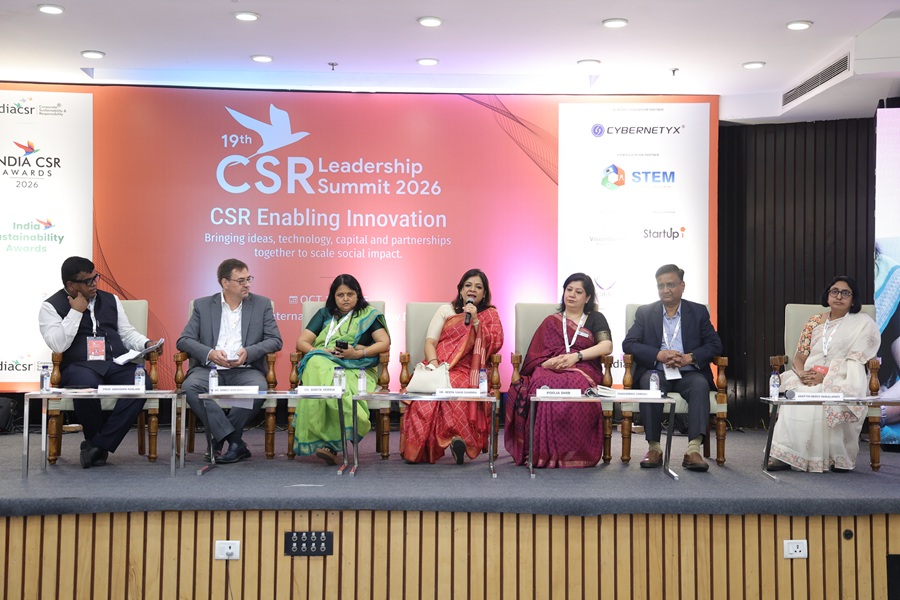


Leadership Session at the 19th India CSR Leadership Summit and Awards 2026 addressed ‘What Innovation Means for CSR Community Ownership Leadership and Patient Capital’
Leadership Session, moderated by Prof. Abhishek Ranjan, explored grassroots participation, water stewardship, women’s economic empowerment and next-generation leadership.
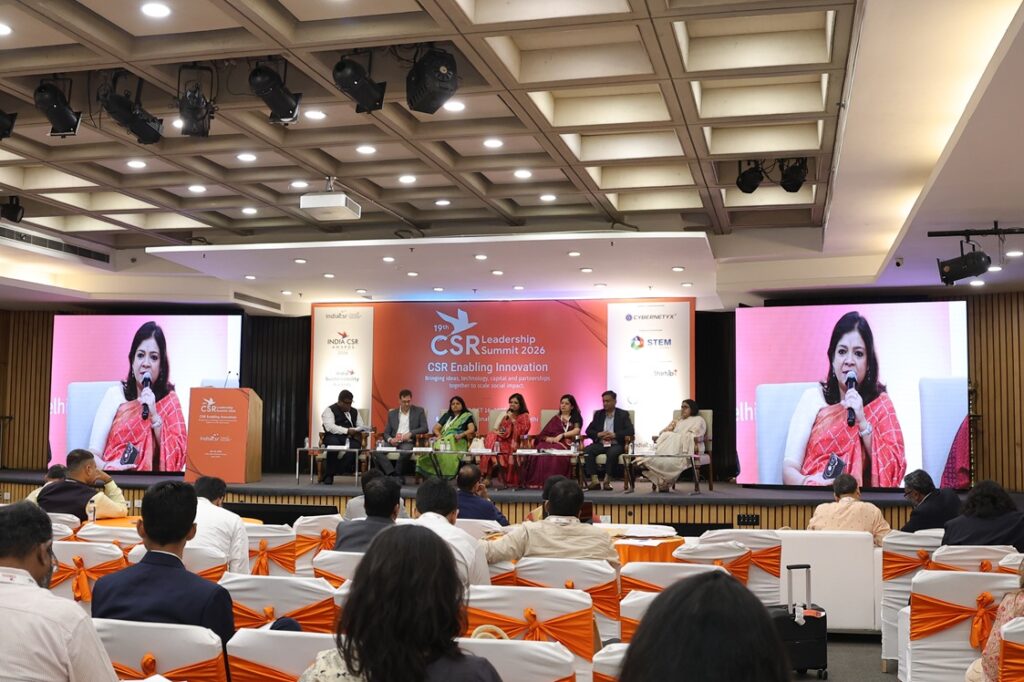
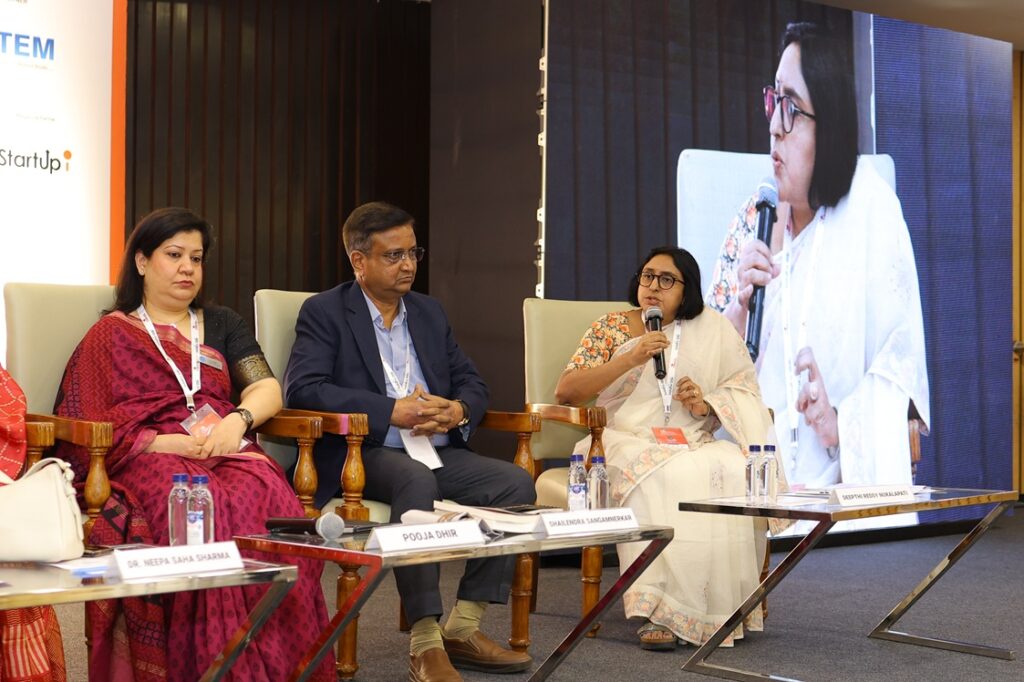
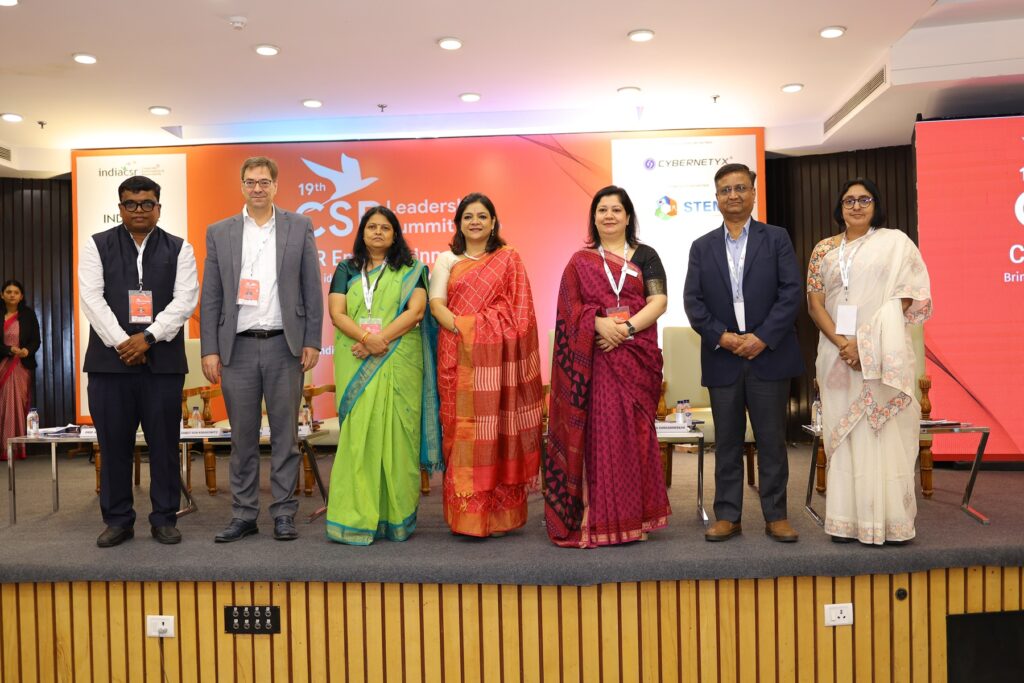
NEW DELHI (India CSR): Innovation in corporate social responsibility cannot be measured only by a new technology, an ambitious project design or a budget. It must be visible in who shapes a solution, who owns it after a grant ends and whether it strengthens people’s ability to solve their own challenges. This was a defining message at Leadership Session 2, “What Innovation Means for CSR,” at the 19th India CSR Leadership Summit & Awards 2026. Moderated by Prof. Abhishek Ranjan, Chief Impact Officer, Kindkart Inc., the conversation brought together Deepthi Reddy Nukalapati, Chief, Women Empowerment, Reliance Foundation; Shailendra Sangamnerkar of NTPC-Jhabua Power Limited, Pooja Dhir of Cybernetyx Technik, Dr. Neepa Saha Sharma of CESC, Dr. Binita Verdia, General Manager – CSR, Zydus Lifesciences Limited and Dr. Ernst von Kimakowitz, President of the Humanistic Management Network, Switzerland.
Summit Sets Context
The summit was organised by India CSR under the theme, “CSR Enabling Innovation – Bringing Ideas, Technology, Capital and Partnerships Together to Scale Social Impact.” The session gave that theme a practical meaning by connecting innovation with community participation, scientific rigour, leadership behaviour and long-term institutional support. Speakers framed innovation as a way of improving the relevance, durability and accountability of social investments. The dialogue suggested that an innovative CSR programme begins before implementation: it starts with listening, understanding local conditions and involving communities in choices that affect them. It continues after delivery through ownership, maintenance and learning. For a sector increasingly focused on measurable outcomes, this wider definition shifts attention from short-term outputs to social systems that can sustain progress beyond the initial intervention and its funding cycle.
Science Guides Recharge
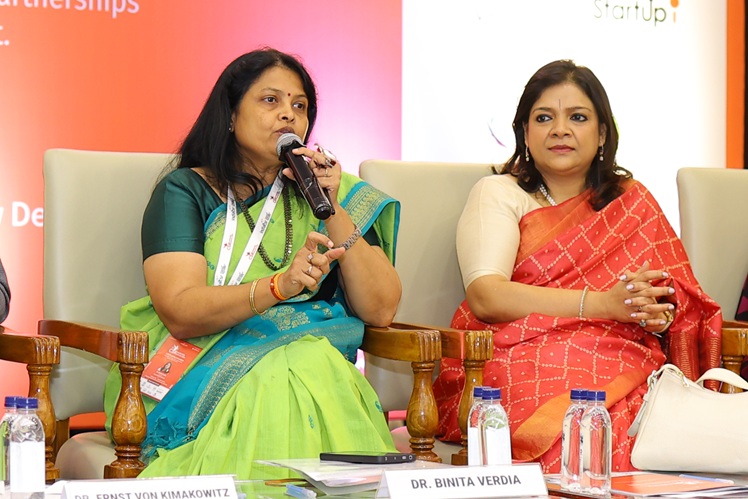
Dr. Binita Verdia, General Manager – CSR, Zydus Lifesciences Limited, illustrated this approach through work in water-stressed areas. Drawing on her professional training as a hydrogeologist, she described how technical investigation was combined with community engagement to identify promising groundwater recharge locations. The process involved surveys, satellite imagery, resistivity studies and telluric-magnetic methods to understand aquifers and recharge zones. Such tools helped the team move beyond generic structures and make decisions from local hydrogeology. Yet the scientific exercise was not positioned as a top-down expert solution. Instead, it became the starting point for a joint process with residents, who understood the landscape, water sources and seasonal realities of their villages. The example showed how evidence-led planning can become more effective when technical knowledge is made accountable to lived experience.
Local Wisdom Matters
The water intervention also reinforced the value of traditional knowledge in project design. Dr. Verdia noted that hydrogeological analysis was important, but it did not replace the insights held by people who had observed wells, rainfall, soil and water movement over generations. Community suggestions helped guide the team towards particular sites and strengthened confidence in the choices made. This combination of modern assessment and local wisdom matters in water work, where local conditions differ sharply. Innovation, therefore, was not presented as a rejection of tradition. It was described as the ability to combine appropriate technology with local understanding and use both responsibly. When communities see their own knowledge respected, participation moves from consultation towards partnership, which is essential for maintaining assets and protecting shared local natural resources over time.
Communities Shape Decisions
According to Dr. Verdia, the community was involved from “day zero” in planning as well as implementation. That principle is central to whether a CSR intervention becomes a sustainable local practice or remains a project managed from outside. Community participation gives people a role in selecting priorities, validating sites, contributing labour or oversight, and deciding how benefits should be protected after the sponsoring organisation completes its work. In the water project, participation was not merely a mobilisation activity undertaken once construction began; it was built into the design process itself. This distinction is important for CSR leaders seeking to scale innovations. Scale is not only about replicating an asset across more locations. It is about a repeatable process through which communities can understand, adapt and fully own the intervention.
Sustainable Aquifers Matter
The project’s evaluation produced an important lesson about choosing the right water solution for the local setting. In the concerned area, shallow aquifers and open dug wells proved more promising than deeper aquifers because thousands of dykes affected penetration and recharge conditions. The finding showed why CSR investments in water security should not assume that deeper extraction is always a better answer. Recharge design must respond to the characteristics of a specific watershed, rock formation, water table and existing infrastructure. The intervention’s success rested on this willingness to evaluate, learn and revise choices in line with field evidence. For companies supporting environmental projects, the message was clear: a well-intended intervention can underperform without adequate diagnosis. Innovation requires scientific assessment, testing and adaptation in the field, not a pre-decided solution.
******
Power Communities Prosper
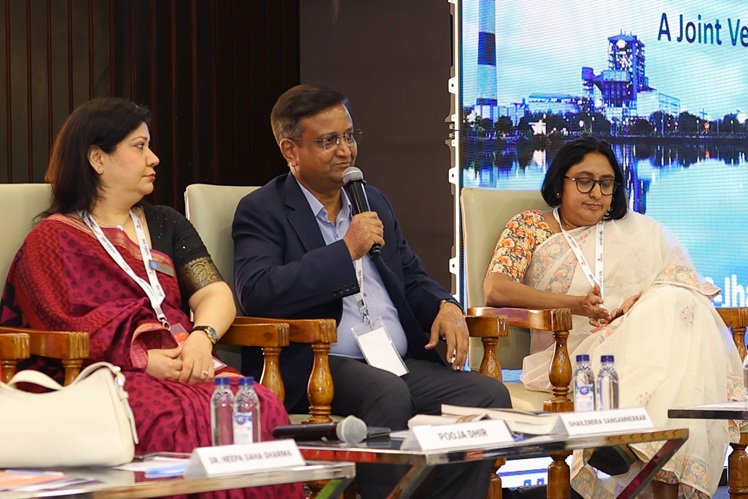
Shailendra Sangamnerkar of NTPC-Jhabua Power Limited brought a power-sector lens to a conversation centred on responsibility, community ownership and implementation. For organisations working near industrial and energy facilities, CSR innovation becomes meaningful when it responds to the priorities of communities surrounding operations, rather than treating people as project beneficiaries alone. The session’s discussion on locally informed water work, adaptive planning and long-term support offers a useful framework for this approach. It places infrastructure, environmental stewardship, livelihoods and stakeholder trust in one connected frame. Such a perspective encourages companies to treat CSR as an institutional commitment. It requires listening before designing, combining technical assessment with lived knowledge and supporting solutions long enough to build local capability, confidence and social value. It reinforces responsible growth that communities can recognise and sustain.
Partnerships Build Confidence
For Shailendra Sangamnerkar’s power-sector perspective, innovation also rests on the quality of partnerships around a company’s operating geography. Communities living near infrastructure, industry and energy assets need regular dialogue, visible responsiveness and credible avenues to participate in decisions that affect their environment and livelihoods. CSR programmes can serve as a bridge when they bring corporate teams, local institutions, civil society groups and residents into a shared process of problem-solving. This approach makes it easier to identify priorities early, build confidence in implementation and respond to concerns before they deepen. It also encourages investments that connect environmental protection with skills, income opportunities, health, water security and local resilience. The lasting measure of success is not project visibility alone, but whether people have stronger relationships, capabilities and confidence to shape their development.
******
Solutions Already Exist
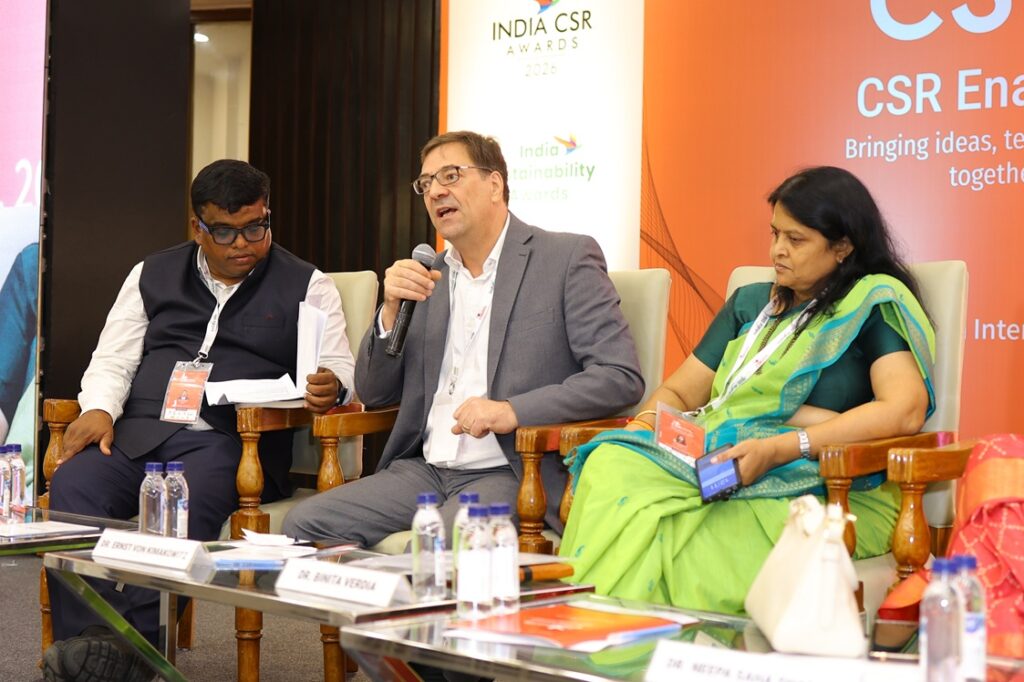
Dr. Ernst von Kimakowitz, President of the Humanistic Management Network, Switzerland, widened the discussion from individual projects to the larger challenge of implementation. He observed that the world is not short of solutions. There is already knowledge about cleaning water, producing renewable energy and enabling dignified livelihoods. The challenge, he argued, is ensuring that these solutions reach people at the pace and scale required. His intervention posed a broader leadership question: why do proven approaches remain underused amid preventable environmental and social risks? The answer is not simply a shortage of technical capability. It involves choices about priorities, accountability, collaboration and the willingness to move from pilots to sustained action. Innovation need not always begin with invention. Often, it begins by implementing what is already known, effectively and equitably.
Leadership Unlocks Action
“What is missing is leadership,” Dr. von Kimakowitz said, emphasising that leadership determines whether available solutions are actually implemented. His point highlighted the need for institutions to create conditions in which responsible decisions can be made, partnerships can work and social commitments can survive beyond annual planning cycles. In CSR, leaders must align resources with the real time horizon of change, not only short reporting windows. They must also recognise when communities, civil society organisations, researchers and public institutions have knowledge that corporate teams do not possess. Leadership, in this sense, is the discipline of enabling others to act. It requires humility, stakeholder engagement and a willingness to be judged by whether promised outcomes are delivered in people’s lives. It requires them to listen carefully to communities and partners.
Implementation Requires Courage
The discussion also raised the question of risk. Prof. Ranjan, while summarising the session, recalled a call for CSR to “punch above your weight” and take higher risks in projects where the potential social return is substantial. He acknowledged that compliance requirements can be tight, but argued that innovation requires organisations to look beyond safe, predictable interventions. It was a call to build capacity to take informed risks, learn from setbacks and support solutions that may not fit conventional project templates. This is especially relevant for grassroots organisations and underserved communities, where meaningful work can require flexible design, patient support and experimentation. A mature CSR ecosystem should distinguish between reckless spending and carefully governed risk-taking that unlocks new pathways to lasting impact. This can deepen trust with grassroots partners.
Academy Builds Leaders
To make leadership development more concrete, Dr. von Kimakowitz referred to the 2047 Academy, an Indo-Swiss initiative for leadership training. He described it as an effort to equip the next generation to address challenges by implementing solutions that already exist. The programme responds to a gap: social progress depends not only on finance and technology but also on people who can connect ethical purpose, professional competence and public responsibility. Young leaders need to understand systems, work across sectors and translate values into decisions. Such preparation is relevant to Indian CSR because the sector increasingly requires professionals who can navigate community realities, data, regulation, climate risk, partnerships and impact measurement. Investing in leadership capability can be as important as investing directly in a project, because it expands capacity for decisions.
Bharat Needs Leadership
Dr. von Kimakowitz linked this leadership agenda to the ambition of Viksit Bharat 2047. He noted that the vision of a developed India creates momentum around a shared national aspiration. Its exact meaning may be debated, but progress requires leaders capable of delivering inclusive and sustainable outcomes. For CSR, that means moving beyond a narrow view of success as isolated programme completion. It calls for development that considers community resilience, ecosystem health and the quality of economic opportunity. The 2047 horizon also encourages organisations to think beyond one-year commitments. It asks whether today’s investments are creating the skills, institutions and trust that people will need decades from now. Innovation becomes meaningful when it serves this long-term public purpose rather than only short-term corporate visibility. It must widen opportunity equitably.
Triple Bottom Success
The leadership model outlined in the session was rooted in the triple bottom line. Dr. von Kimakowitz said future leaders must understand success as delivering social, environmental and economic value. This approach is relevant for CSR because social programmes often operate across livelihood, health, education, climate adaptation and infrastructure. A water intervention can influence farm incomes, women’s time, public health, ecological balance and community confidence. Measuring only one result may overlook how these dimensions reinforce or undermine one another. It creates a broader, more integrated frame for project selection, design and evaluation. It asks whether a programme advances dignity, ecological responsibility and economic resilience. For companies, this does not reduce financial discipline; it connects resources to outcomes that are more durable, inclusive and relevant to the communities CSR serves.
Service Centred Leadership
Another key idea was that leadership should be understood as service rather than status. Dr. von Kimakowitz urged a move away from leadership that expects to be served and towards leadership that serves stakeholders. In practice, this means listening seriously to communities, frontline organisations, employees, public systems and partners, rather than treating them as passive recipients of a corporate plan. It also means placing stakeholder engagement ahead of narrow shareholder value creation when social decisions are made. The quality of a programme depends not only on the amount spent, but on who has voice, who can challenge assumptions and who can influence adaptation. A service-centred leader creates conditions for transparency and shared problem-solving. Such leadership is essential when projects address complex, interdependent challenges that no organisation can resolve alone.
******
Utilities Foster Trust
Dr. Neepa Saha Sharma, General Manager and Head – CSR, CESC Limited, brought a utility-sector context to the session’s stakeholder-centred leadership argument. Essential-service organisations operate close to the realities of households, neighbourhoods and local institutions, making trust a social asset. The dialogue’s focus on service-led leadership, accountable implementation and community voice is relevant in this setting. CSR can strengthen social resilience when it connects corporate resources with credible local partners, need assessment and transparent delivery. The panel suggested that innovation should not be measured only through scale or visibility. Its value rests in whether communities gain capabilities, whether systems become more responsive and whether partnerships endure. This perspective positions CSR as a relationship of responsibility: one that combines organisational discipline with empathy, public purpose and respect for lived experience.
Youth Need Skills
The Young Global Leaders programme of the 2047 Academy was presented as a route for Indian students and youth to build the knowledge, ambition and skills needed for this style of leadership. It aligns with Viksit Bharat and a shared global family. In CSR, this is a reminder that leadership pipelines must include people who can work with diverse communities and understand development as collective responsibility. Technical expertise is necessary, but not enough. Future leaders also need ethical judgement, confidence to collaborate across differences and the ability to balance stakeholder needs. By supporting such capability, companies and social institutions can help ensure that India’s development agenda is carried forward by professionals who see scale in the strength of systems, relationships and local agency that endure after a project closes.
******
Women Build Resilience
An audience question invited Deepthi Reddy Nukalapati, Chief, Women Empowerment, Reliance Foundation, to explain women’s empowerment in the present context and the role women can play in achieving the Viksit Bharat 2047 vision. Her response located empowerment within a wider framework of socio-economic resilience, opportunity and agency. At Reliance Foundation, she said, the strategy is aligned with Viksit Bharat and organised around four pillars informed by Maslow’s hierarchy of needs. It recognises that empowerment is not a single intervention or a one-time benefit. It is a progression from awareness and knowledge to security, economic participation, leadership and the ability to make informed choices. The approach is particularly relevant for CSR programmes seeking to support women and girls over time, because it connects personal capability with family and community well-being.
Four Pillar Strategy
The first pillar focuses on awareness and knowledge sharing, including digital and financial literacy. These capabilities matter because women’s participation is increasingly shaped by access to information, digital systems and financial services. Digital literacy can help women access welfare, markets, education, healthcare information and financial tools. Financial literacy can strengthen their ability to save, plan, borrow responsibly and make decisions about household resources. By treating these areas as empowerment, the strategy moves beyond welfare towards informed agency. The second pillar addresses socio-economic resilience for women and young girls. Together, these foundations recognise that empowerment cannot be separated from income shocks, social exclusion and limited access to services. Knowledge becomes powerful when it can be used in everyday decisions. It can build confidence, participation and financial security through daily choices.
Pathways Create Opportunity
Nukalapati also described programmes for adolescent girls that aim to build socio-economic resilience and support them through to employability. This continuum is important because girls’ opportunities can be limited at several stages: access to education, confidence, skills, mobility, health, family support and entry into work. A programme that reaches only one stage may provide temporary assistance without changing the pathway. By thinking from adolescence to employability, CSR can help create more coherent local support systems. It connects learning with employability. The approach also recognises that young women are not only future beneficiaries; they are potential earners, leaders, innovators and decision-makers. When programmes strengthen their resilience early, they can have an impact far beyond individual outcomes, influencing household choices, local economies and the aspirations of other girls in the community.
Livelihoods Strengthen Agency
The third pillar is women’s economic empowerment, represented through the Swamshri programme, which Nukalapati described as focused on enhancing livelihood income and agency. Income support improves material conditions, while agency brings greater control over decisions, mobility, finances, enterprise activity and the future. CSR initiatives must consider not just the number of women trained or supported, but whether work is viable, dignified, secure and connected to markets. They must also consider barriers that prevent women from converting skills into earnings, such as unpaid care work, lack of credit, restricted mobility and social norms. By combining livelihood support with broader resilience and knowledge-building, programmes can create conditions in which economic participation is more sustainable. This is how women’s empowerment can become a driver of inclusive development rather than a standalone activity.
Leaders Multiply Impact
Beyond individual livelihoods, Reliance Foundation also runs a leadership programme for social enterprises and social sector leaders, Nukalapati said. This fourth pillar recognises that community transformation depends on organisations and leaders who can sustain action locally. Supporting social enterprises can develop community-rooted solutions with viable economic models. Supporting social sector leaders can improve programme design, partnerships and accountability across the ecosystem. The approach mirrors a central theme of the session: innovation grows when people and institutions have the capacity to act, adapt and work with others. For women’s empowerment, this matters because social change is rarely delivered by one organisation alone. It requires educators, entrepreneurs, self-help groups, local leaders, civil society organisations, families and public systems to reinforce each other. Leadership development connects all such local and institutional actors.
Moderator Summarises Shift
In his closing remarks, Prof. Ranjan said the conversation had brought forward a shift in how CSR is understood. He noted a strong focus on the social dimension, society, communities and responsibility, rather than only on how a corporate organisation positions itself. That distinction captures the core of the session. CSR innovation is most valuable when it begins with the needs and capabilities of people rather than the visibility of the funder. The moderator also observed that grassroots and underserved communities featured prominently in the dialogue, a development he contrasted with the early years of CSR when such voices were less central in mainstream conversation. The shift increases corporate responsibility to support locally relevant, accountable and inclusive processes, while giving communities influence over what is designed in their name.
Funders Back Risk
Prof. Ranjan’s summary returned to the need for organisations to take higher, well-governed risks. The phrase “punch above your weight” captured a belief that CSR can achieve more when it supports ideas needing patient capital, technical assistance and flexibility. Strong opportunities may sit outside standard grant structures, especially when a community organisation is testing a model or working in a complex geography. Compliance remains essential, but should protect integrity without making every funder unwilling to learn. The challenge is to design governance systems that reward clear goals, transparent reporting and adaptation rather than only predictability. This calls for more sophisticated philanthropy and corporate giving: funding that understands uncertainty, values local knowledge and remains committed long enough for a promising approach to demonstrate durable social outcomes with communities over time.
******
Technology Enables Inclusion
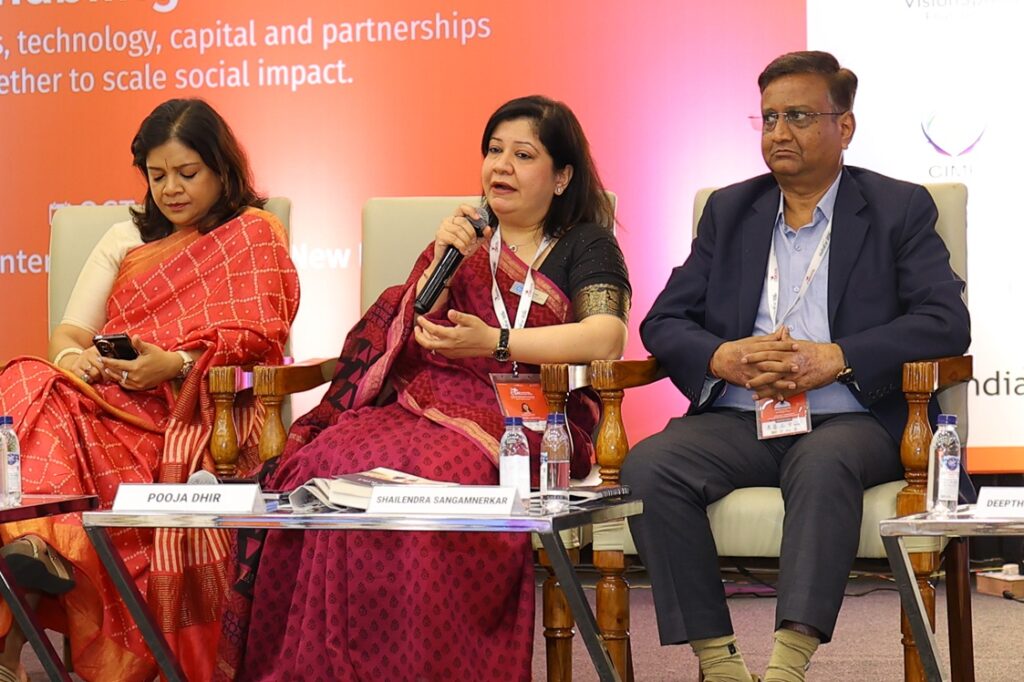
Pooja Dhir, Vice President – CSR Solutions, Cybernetyx Technik Pvt. Ltd., represented the technology perspective in the panel. The discussion showed technology is most useful in CSR when it supports people and partnerships rather than adding complexity or reporting pressure for grassroots organisations. Digital tools can help organisations understand needs, monitor progress, capture learning and connect funders with implementation realities. Yet the session’s emphasis on community ownership offers a safeguard: data must inform decisions without replacing the voice of the community. When used responsibly, technology can strengthen transparency, speed up course correction and make impact measurement more accessible. It should complement human judgement, field relationships and local knowledge. In this model, innovation lies not in technology alone, but in how it helps organisations act more responsibly, inclusively and effectively.
Pooja Dhir, Vice President, added a technology perspective to the conversation on CSR innovation. Her presence underlined the need to see digital systems as enablers of human development, not simply as tools for reporting or visibility. In a sector where grassroots organisations often work with limited staff and uneven connectivity, technology must make participation easier, data more useful and decisions more timely. Digital platforms can support need assessment, beneficiary engagement, field monitoring, evidence capture and transparent communication between corporate teams and implementation partners. But their value depends on design. Tools that are difficult to use or disconnected from local realities can create new burdens. Meaningful innovation combines accessible technology with community trust, ethical data practice and responsive human support for communities and partners alike.
Data Informs Action
An expanded technology lens also brings attention to how CSR organisations measure progress and learn during implementation. A strong digital approach should not reduce communities to data points or replace field conversations with dashboards. Instead, it can help teams identify gaps early, compare planned and actual results, record feedback and adapt interventions while they are still underway. For funders, this creates a clearer view of outcomes and emerging risks. For nonprofit partners, it can reduce repetitive reporting and release time for community engagement if systems are practical and proportionate. For communities, transparent feedback loops can improve accountability and reinforce their role in shaping projects. The real opportunity lies in combining technology with local knowledge, safeguards for privacy, multilingual access and a commitment to use evidence for decisions rather than compliance.
Grassroots Require Continuity
Prof. Ranjan also shared an example from Kindkart Inc., saying the organisation had built its model without an exit policy for grassroots nonprofits it supports. The platform works with almost 95 nonprofits in India, he said, while much of the funding available to such organisations remains restricted. The example highlighted a persistent challenge in the social sector: projects often have defined start and end dates, but community problems and institutional needs do not follow the same timetable. Continuity of support can help grassroots organisations retain talent, improve systems, respond to emerging needs and build trust with the people they serve. For CSR leaders, the point is not that every grant should be permanent. It is that exit decisions should reflect the reality of social change, not merely administrative convenience.
Technology Supports Accountability
The Kindkart model offered an illustration of technology’s role in CSR innovation. Prof. Ranjan said its impact measurement is carried out through an impact lens platform, with no charge to donor organisations or receiving organisations. Used responsibly, such tools can reduce reporting burdens on grassroots partners while giving funders a clearer view of outcomes and learning. Technology should not become a compliance layer that extracts data without benefit to communities. Its value lies in making measurement accessible, timely and useful for better decisions. The session concluded with an invitation for continued networking, but its central message was clear: CSR innovation is not merely about new ideas. It is about shared ownership, courageous leadership, trusted partnerships and systems that help proven solutions reach people with dignity, relevance and staying power.
Also Read More on India CSR Summit and Awards
IIC Director K. N. Shrivastava Calls for CSR-Led R&D, Inclusive Innovation at India CSR Summit
Value Beyond Business: LT Foods’ Monika Chawla Jaggia Addresses India CSR Summit
LT Foods Awarded ‘Certificate of Honour’ at India CSR Awards for Sustainability Report 2024–25
Shallu Jindal Named India CSR Person of the Year 2026 – India CSR
HOPE Foundation Wins India CSR Award for Integrated Cradle-to-Career Model – India CSR



