


• India CSR Awards 2026
  • India CSR Leadership Summit
  • Guest Posts
Tuesday, September 22, 2026
India CSR
  • Home
  • Corporate Social Responsibility
    • Art & Culture
    • CSR Leaders
    • Child Rights
    • Culture
    • Education
    • Gender Equality
    • Around the World
    • Skill Development
    • Safety
    • Covid-19
    • Safe Food For All
  • Sustainability
    • Sustainability Dialogues
    • Sustainability Knowledge Series
    • Plastics
    • Sustainable Development Goals
    • ESG
    • Circular Economy
    • BRSR
  • Corporate Governance
    • Diversity & Inclusion
  • Interviews
  • SDGs
    • No Poverty
    • Zero Hunger
    • Good Health & Well-Being
    • Quality Education
    • Gender Equality
    • Clean Water & Sanitation – SDG 6
    • Affordable & Clean Energy
    • Decent Work & Economic Growth
    • Industry, Innovation & Infrastructure
    • Reduced Inequalities
    • Sustainable Cities & Communities
    • Responsible Consumption & Production
    • Climate Action
    • Life Below Water
    • Life on Land
    • Peace, Justice & Strong Institutions
    • Partnerships for the Goals
  • Articles
  • Events
  • हिंदी
  • More
    • Business
    • Finance
    • Environment
    • Economy
    • Health
    • Around the World
    • Social Sector Leaders
    • Social Entrepreneurship
    • Trending News
      • Important Days
        • Festivals
      • Great People
      • Product Review
      • International
      • Sports
      • Entertainment
    • Case Studies
    • Philanthropy
    • Biography
    • Technology
    • Lifestyle
    • Sports
    • Gaming
    • Knowledge
    • Home Improvement
    • Words Power
    • Chief Ministers
No Result
View All Result
  • Home
  • Corporate Social Responsibility
    • Art & Culture
    • CSR Leaders
    • Child Rights
    • Culture
    • Education
    • Gender Equality
    • Around the World
    • Skill Development
    • Safety
    • Covid-19
    • Safe Food For All
  • Sustainability
    • Sustainability Dialogues
    • Sustainability Knowledge Series
    • Plastics
    • Sustainable Development Goals
    • ESG
    • Circular Economy
    • BRSR
  • Corporate Governance
    • Diversity & Inclusion
  • Interviews
  • SDGs
    • No Poverty
    • Zero Hunger
    • Good Health & Well-Being
    • Quality Education
    • Gender Equality
    • Clean Water & Sanitation – SDG 6
    • Affordable & Clean Energy
    • Decent Work & Economic Growth
    • Industry, Innovation & Infrastructure
    • Reduced Inequalities
    • Sustainable Cities & Communities
    • Responsible Consumption & Production
    • Climate Action
    • Life Below Water
    • Life on Land
    • Peace, Justice & Strong Institutions
    • Partnerships for the Goals
  • Articles
  • Events
  • हिंदी
  • More
    • Business
    • Finance
    • Environment
    • Economy
    • Health
    • Around the World
    • Social Sector Leaders
    • Social Entrepreneurship
    • Trending News
      • Important Days
        • Festivals
      • Great People
      • Product Review
      • International
      • Sports
      • Entertainment
    • Case Studies
    • Philanthropy
    • Biography
    • Technology
    • Lifestyle
    • Sports
    • Gaming
    • Knowledge
    • Home Improvement
    • Words Power
    • Chief Ministers
No Result
View All Result
India CSR
No Result
View All Result
Home Words

Preventive Healthcare: The Next Frontier for CSR-Led Social Value

India CSR by India CSR
September 22, 2026
in Words
Reading Time: 6 mins read
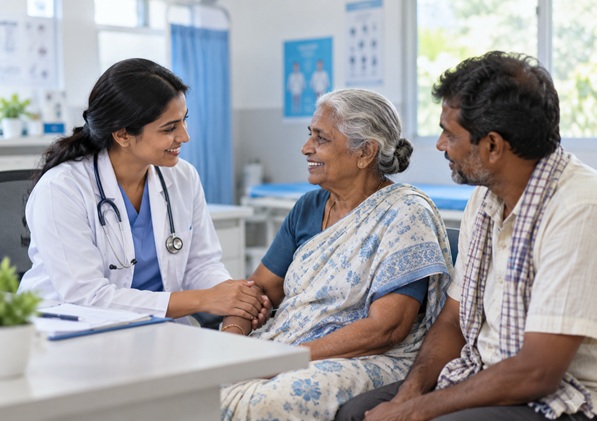
Vulnerable Patients. Image@India CSR

Vulnerable Patients. Image@India CSR

Share Share Share Share
WhatsApp icon
WhatsApp — Join Us
Instant updates & community
Google News icon
Google News — Follow Us
Get our articles in Google News feed
india csr awards
ADVERTISEMENT

Preventive healthcare can strengthen CSR impact through early screening, referral, continuity of care and community-led health action in India.

India’s health conversation has traditionally become most visible at the point of illness: a hospital admission, a diagnosis, a medical camp or the cost of treatment. Preventive healthcare asks an earlier and more consequential question: how can illness be delayed, detected sooner or avoided altogether? It includes health promotion, risk reduction, screening, early diagnosis, immunisation, nutrition, mental-health support and sustained follow-up. This is not a narrower version of healthcare; it is the foundation on which an effective care system rests. For corporate social responsibility, the implication is equally clear. The measure of value should not be limited to services delivered after disease appears, but should include whether communities gain the knowledge, access and continuity needed to stay healthier over time.

Why Prevention Has Become a Development Imperative

The case for prevention is grounded in the growing burden of non-communicable diseases (NCDs), particularly cardiovascular disease, diabetes, cancers and chronic respiratory conditions. The World Health Organization identifies unhealthy diet, inadequate physical activity, tobacco use, harmful alcohol use and air pollution among the principal modifiable risks. These risks do not operate in isolation. They are shaped by income, work conditions, food environments, gender norms, housing, education and access to primary care. NCDs therefore affect household finances, productivity, learning outcomes and women’s unpaid care responsibilities, making them a development concern as much as a clinical one. Prevention is most valuable when it tackles both individual risk and the circumstances that produce it. WHO

India’s Primary Care Architecture Offers a Platform

India has already established a public framework that makes preventive action more practicable. The National Programme for Prevention and Control of Non-Communicable Diseases supports health promotion, population-based screening, early diagnosis, management, referral, capacity building and monitoring. Its population-based screening initiative targets adults aged 30 years and above for common conditions including hypertension, diabetes and oral, breast and cervical cancers, with frontline workers and primary-care facilities forming the first line of contact. This architecture is important for CSR planning: responsible corporate programmes need not create parallel systems. They can complement public health capacity, improve demand for services and strengthen the route from screening to referral and continued care. Ministry of Health and Family Welfare

19th India CSR Leadership Summit 2026
ADVERTISEMENT

Screening Alone Is Not Prevention

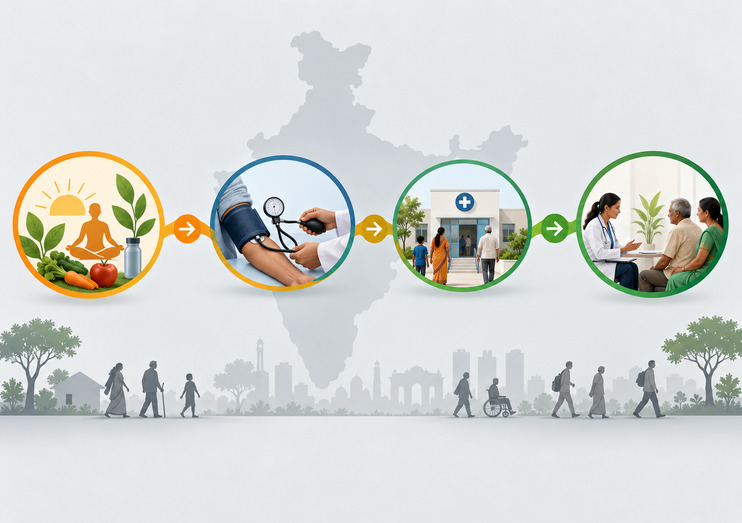
A camp that produces test results but does not ensure communication, referral, affordable treatment or repeat follow-up has limited public-health value. Screening is useful only when it is linked to a pathway of care. A person found to have raised blood pressure, elevated blood sugar or a possible cancer symptom needs clear counselling, a confirmed referral, treatment support where required and a way to remain engaged. The same principle applies to digital tools. Apps and dashboards can improve recall, risk stratification and reporting, but should not substitute for trained health workers or trusted local institutions. The essential design question is simple: what happens after a risk is identified? A programme that can answer this well is more likely to create durable health gains.
India CSR
Image: India CSR

The CSR Opportunity Is Long-Term and Place-Based

Preventive healthcare is well suited to CSR because many drivers of health sit beyond the hospital. Companies can support healthier food practices, physical activity, tobacco cessation, menstrual health, occupational health, clean-air awareness, safe water and sanitation, mental-health literacy, and access to primary-care screening. In industrial and mining regions, the approach should also respond to local exposures, migration patterns and barriers faced by women, older people and informal workers. The strongest initiatives are place-based: they use local health data, listen to communities and work across schools, workplaces, self-help groups, local government and health facilities. They should be designed for several years, rather than as annual campaigns detached from community realities.

From Activity Counts to Health Outcomes

CSR reporting often privileges inputs and immediate outputs: money spent, devices distributed, camps organised or people reached. These are useful operational indicators, but they do not establish impact. Preventive programmes require a more rigorous measurement frame. At a minimum, this should include baseline risk assessment; screening completion; proportion of high-risk individuals successfully referred; treatment initiation and adherence; follow-up at defined intervals; and equity indicators by gender, age, disability, income or geography. Where feasible, programmes should track intermediate outcomes such as blood-pressure control, tobacco quit attempts, nutrition practices or improved access to antenatal and mental-health services. Data must be collected with informed consent, safeguarded carefully and used to improve delivery—not merely to populate a report.

Equity Must Be Designed into Prevention

Prevention can unintentionally widen inequality when services are easiest to access for those already informed, mobile and digitally connected. A health message delivered online may exclude people with limited literacy or phone access; a clinic schedule may not work for daily-wage workers; and a screening site may not feel safe or private for women. An equity-centred programme anticipates these obstacles. It uses community mobilisation, culturally appropriate communication, flexible service hours, disability-inclusive access and trusted intermediaries. It also avoids framing poor health solely as a matter of personal choice. Healthy choices are constrained by affordability, safety, food availability and time. Effective prevention acknowledges those constraints and works with communities to reduce them.

A Disciplined Partnership Model

For companies, the practical route is partnership rather than substitution. CSR teams should co-design with district health authorities, credible implementing organisations, community representatives and primary-care providers. The intervention should define a population, geography, priority risks, referral partners, responsibilities and a realistic time horizon before implementation begins. Independent or third-party evaluation can be useful for larger programmes, particularly where a model is intended for replication. Responsible communication is equally important: participant stories should not replace outcome evidence, and health claims should remain proportionate to what the data can demonstrate. Such discipline protects communities from fragmented programmes and helps companies distinguish genuine social value from short-term visibility.

The Public Value of Acting Early

The economics of prevention are often described as savings, but its real value is broader. Early action can reduce avoidable suffering, protect family income, preserve productive years of life and enable people to participate more fully in education, work and community life. WHO notes that early detection and treatment through primary healthcare can avert more expensive care later. For India CSR, preventive healthcare should therefore be understood as an investment in human capability. The next generation of health-focused CSR will not be judged by the scale of one-day interventions. It will be judged by whether it helps communities move from late diagnosis and episodic care to earlier action, reliable follow-up and greater control over the conditions that shape health. WHO report


© Copyright Disclaimer: All rights reserved. No part of this report may be reproduced, republished, distributed or transmitted in any form without prior written permission from India CSR®


Also Read: Preventive Healthcare: A Longer View for CSR Impact – India CSR

Tags: Community HealthCSR in HealthcareEarly ScreeningNCD PreventionPreventive HealthcarePrimary Healthcare
csr education cybernetyx
ADVERTISEMENT
India CSR Image 1 India CSR Image 2

CSR, Sustainability, and ESG success stories hindustan zinc
ADVERTISEMENT
India CSR

India CSR

India CSR® is the largest media on CSR and sustainability offering diverse content across multisectoral issues on business responsibility. It covers Sustainable Development, Corporate Social Responsibility (CSR), Sustainability, and related issues in India. Founded in 2009, the organisation aspires to become a globally admired media that offers valuable information to its readers through responsible reporting.

Related Posts

Vulnerable Patients. Image@India CSR
Words

Vulnerable Patients Need Timely, Dignified and Affordable Healthcare

Chronic Kidney Disease. AI Generated Image: India CSR
Words

Chronic Kidney Disease: Why Early Testing Can Protect Lives

India CSR
Words

What is Mahayuti or Mahayuti Alliance?

Bubble Wrap Appreciation Day
Important Days

Bubble Wrap Appreciation Day: Date, History, Significance, Celebrations and Important Facts

national puzzle day
Important Days

National Puzzle Day: The Definition, Characteristics, Role and Impact Explained

National Puzzle Day
Important Days

National Puzzle Day: Date, History, Significance, Celebrations and Important Facts

Load More
csr education cybernetyx
ADVERTISEMENT
bba
ADVERTISEMENT

Interviews

India CSR
Interviews

Interview: Ravi Mahajan on India’s Shift from Diesel to Solar-Powered Telecom Towers

by India CSR

Ravi Mahajan of Vedang Cellular Services discusses solar energy, battery storage, AI and IoT in building efficient and resilient telecom...

Read moreDetails
Sanjay Hande, Head Of Manufacturing And Technology Management, Bosch India @india csr

Giving Becomes Participation, and Participation Creates a Deeper Connection: Sanjay Hande, Bosch India

Vivek Prakash, Senior Vice President & Head, CSR at Jubilant Ingrevia Limited

Didi Ki Dukaan is Helping Rural Women Become Independent Entrepreneurs: Vivek Prakash, Sr VP & Head–CSR, Jubilant Ingrevia

India CSR

Responsible Business Must Turn Research into Real Impact: Prof Bob Doherty

Load More
Ad 1 Ad 2 Ad 3 Ad 4 Ad 5 Ad 6
ADVERTISEMENT

CSR UPDATES

CSR: Nayara Energy Commits ₹2 Crore for Free Dialysis and Palliative Care in Kochi

Nita M. Ambani’s message to Indian athletes for the Asian Games: This is your moment, make it count

Indus Towers CSR Positively Impacts 33.88 Million Lives

From Potential to Progress: The Maashal Fellowship Story of GreenBreathe Innovations

Bata India Spends Rs 6.89 Cr on CSR in FY 2025-26, Supports Education, Health and Environment

BASF India Transfers Rs 8.86 Cr to Unspent CSR Account for Ongoing Projects in FY 2025-26

STEM Learning STEM Learning STEM Learning
ADVERTISEMENT
Facebook Twitter Youtube LinkedIn Instagram
India CSR Logo

India CSR® is the largest tech-led platform for information on CSR and sustainability in India offering diverse content across multisectoral issues. It covers Sustainable Development, Corporate Social Responsibility (CSR), Sustainability, and related issues in India. Founded in 2009, the organisation aspires to become a globally admired media that offers valuable information to its readers through responsible reporting. To enjoy the premium services, we invite you to partner with us.

Follow us on social media:

Subscribe to Our Newsletter

Don't miss out on the latest updates in corporate social responsibility. Subscribe to our newsletter at indiacsr.in and be part of the positive change.
Please enable JavaScript in your browser to complete this form.
Loading

  • About India CSR®
  • Team
  • India CSR® Awards 2026
  • India CSR® Leadership Summit
  • Partnership
  • Guest Posts
  • Services
  • ESG Professional Network
  • Content Writing Services
  • Business Information
  • Contact
  • Privacy Policy
  • Terms of Use
  • Donate

Copyright © 2026 - India CSR® | All Rights Reserved

No Result
View All Result
  • Home
  • Corporate Social Responsibility
    • Art & Culture
    • CSR Leaders
    • Child Rights
    • Culture
    • Education
    • Gender Equality
    • Around the World
    • Skill Development
    • Safety
    • Covid-19
    • Safe Food For All
  • Sustainability
    • Sustainability Dialogues
    • Sustainability Knowledge Series
    • Plastics
    • Sustainable Development Goals
    • ESG
    • Circular Economy
    • BRSR
  • Corporate Governance
    • Diversity & Inclusion
  • Interviews
  • SDGs
    • No Poverty
    • Zero Hunger
    • Good Health & Well-Being
    • Quality Education
    • Gender Equality
    • Clean Water & Sanitation – SDG 6
    • Affordable & Clean Energy
    • Decent Work & Economic Growth
    • Industry, Innovation & Infrastructure
    • Reduced Inequalities
    • Sustainable Cities & Communities
    • Responsible Consumption & Production
    • Climate Action
    • Life Below Water
    • Life on Land
    • Peace, Justice & Strong Institutions
    • Partnerships for the Goals
  • Articles
  • Events
  • हिंदी
  • More
    • Business
    • Finance
    • Environment
    • Economy
    • Health
    • Around the World
    • Social Sector Leaders
    • Social Entrepreneurship
    • Trending News
      • Important Days
      • Great People
      • Product Review
      • International
      • Sports
      • Entertainment
    • Case Studies
    • Philanthropy
    • Biography
    • Technology
    • Lifestyle
    • Sports
    • Gaming
    • Knowledge
    • Home Improvement
    • Words Power
    • Chief Ministers

Copyright © 2026 - India CSR® | All Rights Reserved

This website uses cookies. By continuing to use this website you are giving consent to cookies being used. Visit our Privacy and Cookie Policy.

