

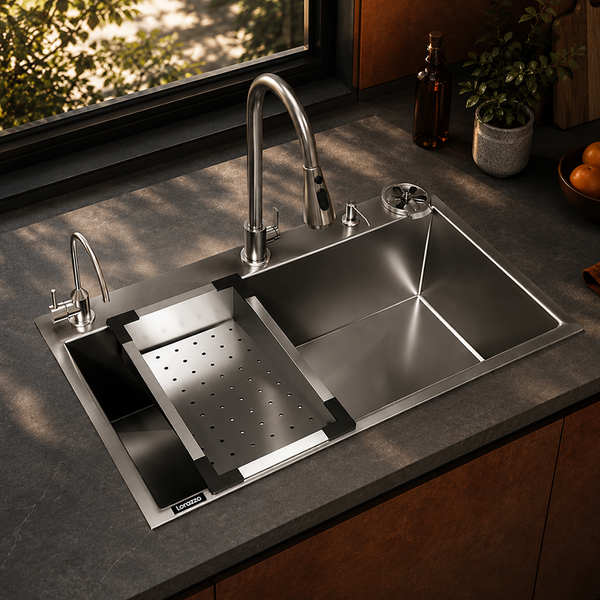



Have you ever stood at your kitchen sink and thought, “There has to be a better setup than this”? Maybe the sink feels too small, the counter gets messy every time you wash dishes, or the whole area just doesn’t work the way you need it to.
That’s where a modular kitchen sink can make a difference. Instead of treating the sink as a separate fixture, a modular kitchen plans it as part of the complete workspace, alongside your countertop, cabinets, plumbing, and storage.
If you’re designing a new kitchen or upgrading your current one, choosing the right sink can make everyday tasks much easier. This guide covers the main types, materials, sizes, and features to help you choose.

What Is a Modular Kitchen Sink?
This sink is selected and installed as part of a planned kitchen layout. Its position is considered alongside the countertop, cabinets, plumbing, storage, and how you use the kitchen every day.
“Modular” does not mean one particular style. You can choose a single-bowl, double-bowl, top-mount, undermount, or multifunction design. What matters is how well the sink fits the overall layout.
Why Does the Right Kitchen Sink Matter?
Your sink handles far more than washing plates. You use it for vegetables, rice, pots, pressure cookers, kadais, and daily cleaning.
If the bowl is too small or shallow, everyday jobs can become frustrating. A poorly positioned sink can also leave the countertop wet or reduce useful preparation space.
The right sink should suit your cooking habits, cabinet space, and everyday utensils.
Common Types of Modular Kitchen Sinks
Explore the different sink styles, materials and configurations to find the right fit for your modular kitchen.
Single-Bowl Sink
A single-bowl sink provides one large washing area. It works well in Indian kitchens where pressure cookers, pans, and kadais are regularly washed, especially when space is limited.
Double-Bowl Sink
A double-bowl sink gives you two sections, so you can wash on one side and rinse on the other. It can suit larger households with enough counter space.
Sink With a Drainboard
A drainboard gives washed dishes a separate place to dry while allowing water to drain back towards the sink.
Multifunction Sink
Some sinks include strainers, chopping boards, baskets, soap dispensers, or rinsing attachments, which can make a compact kitchen more efficient.
Which Sink Material Should You Choose?
Stainless steel and quartz composite are two practical choices for modular kitchens.
Stainless Steel
When comparing stainless steel, look at the grade rather than only the finish. Grade 304 stainless steel is commonly called 18/8 stainless steel because it contains around 18% chromium and 8% nickel. According to Worldstainless 304 is widely used for food-contact applications because of its corrosion resistance.
That makes it suitable for kitchens where the sink regularly comes into contact with water, salt, food residue, and heavy cookware.
Quartz Composite
Quartz composite is worth considering if you prefer a solid, contemporary appearance that blends neatly with modern countertops.
Stainless steel suits frequent washing and heavy use, while quartz composite may appeal more if appearance and a quieter sink surface matter to you.
How Do You Choose the Right Sink Size?
Before buying a Modular kitchen sink, measure the cabinet beneath the planned sink position and the countertop space above it.
Check:
- Overall sink dimensions
- Bowl width and depth
- Minimum cabinet size
- Countertop cut-out size
- Drain and faucet position
- Plumbing space underneath
Finalise the sink before the countertop is cut so the dimensions can be planned correctly.
Top-Mount or Undermount Sink?
Top-Mount Sink
A top-mount sink is fitted into a countertop cut-out, with the rim visible above the worktop.
Undermount Sink
An undermount sink is installed below the countertop, creating a cleaner appearance and making it easier to wipe crumbs or water directly into the bowl.
Your countertop material and installation requirements should guide the choice.
Think About How You Use Your Kitchen
Your routine matters more than trends. Large utensils may need a wider, deeper bowl, while a double bowl can help when two people use the kitchen together. In smaller kitchens, a single bowl can save valuable counter space.
What Features Are Worth Considering?
Useful features can include:
- Deeper bowls
- Integrated drainboards
- Strainer baskets
- Sound-reduction pads
- Chopping boards
- Sink baskets or colanders
Choose accessories you will genuinely use rather than paying for unnecessary extras.
Don’t Overlook Installation and Maintenance
Proper installation should include secure support, sealing, drainage, and correctly fitted plumbing.
Clean the sink using products suitable for its material, avoid harsh scrubbers, and occasionally check underneath for moisture, dripping, or loose pipe connections.
Common Mistakes Beginners Should Avoid
- Buying a sink before measuring the cabinet
- Choosing only by appearance
- Ignoring bowl depth
- Forgetting drain and plumbing placement
- Picking an oversized sink
- Paying extra for features you may not use
Choose a Sink That Works With Your Everyday Routine
A modular sink should make everyday kitchen tasks easier and more efficient. Lorazzo kitchen sinks are designed with practical functionality in mind, helping you choose an option that suits your space, cooking habits, utensils, countertop, and maintenance needs. There is no one-size-fits-all solution, so focus on accurate measurements, durable materials, convenient features, and your daily routine rather than simply following trends.
Frequently Asked Questions
1. What makes a kitchen sink modular?
A kitchen sinkis part of a modular setup when it is planned around the kitchen’s cabinets, countertop, plumbing, storage, and overall layout.
2. Which sink is best for a modular kitchen?
There is no single best option. Single-bowl sinks offer more open washing space, while double-bowl sinks help separate washing and rinsing.
3. Is a single-bowl or double-bowl sink better?
A single bowl is useful for larger Indian utensils and smaller kitchens. A double bowl may suit larger households where washing and rinsing happen together.
4. What size sink should I choose?
Measure the sink cabinet and available countertop space first. When considering a kitchen sink design, check the bowl depth, overall dimensions, and required cut-out before buying.
5. Are stainless steel sinks suitable for modular kitchens?
Yes. Stainless steel works with many kitchen styles and is relatively easy to maintain. Compare the steel grade, thickness, finish, bowl depth, and construction before choosing.



