

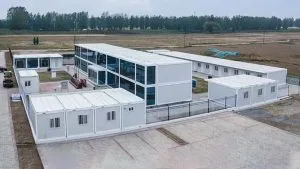



Project sponsors often discuss a labor accommodation camp as a rapid answer to workforce housing near a project. That description misses the operating responsibility that follows the delivery of rooms. Worker accommodation has to support rest, privacy, hygiene, movement, communication, maintenance, and day-to-day welfare while connecting safely to the site around it. Sponsors should document those needs before treating any proposal as comparable.
The right starting point is an Accommodation Responsibility Brief. The brief translates the broad requirement for a camp into decisions that can be assigned, checked, and discussed with suppliers. Worker accommodation and site services should be visible from the first conversation, because neither becomes less important after the accommodation module is installed. The unit is a component; the camp is an operating environment.
Describe the people and routines the camp must support
The KHOME labor-accommodation page at Khomechina.com is a useful product reference when a project is defining a labor accommodation camp. This page should be read alongside the buyer’s actual operating brief, not in place of it. Record who will use the worker accommodation, when people rest or change shifts, which routines need privacy, and where residents will eat, wash, store belongings, and communicate.

Start with the ordinary day rather than the best-case day. Arrival patterns, meal periods, cleaning, maintenance access, visitors, security, and quiet time can compete for the same route or room. Naming those overlaps early makes it easier to see whether the proposed accommodation module supports the workforce or merely provides enclosed space. The camp should work when it is busy, wet, and tired as well as when it is newly opened.
Separate sleeping space from welfare and work functions
Living space should not be expected to solve every camp function. Welfare facilities, dining, administration, recreation, storage, laundry, and health support may require different circulation, cleaning, privacy, or supervision arrangements. The brief should identify which activities must be close together and which should remain separate. That discussion is about safe and workable operation, not about making a layout look more impressive.
A simple adjacency sketch is helpful. Mark entrances, quiet areas, food-related movement, waste routes, deliveries, and any public-facing or controlled access. Then ask who needs access to each zone and who maintains it. If the team cannot explain a route, it is not ready to be frozen into a labor accommodation camp plan.
Connect accommodation to real site services
Site services are the boundary between an accommodation module and the place where people can actually use it. Electricity, water, drainage, communications, cooling or heating, lighting, waste handling, and emergency access each meet a physical system at a specific point. The brief should name that point, the planned route, the responsible local trade, any inspection need, and the person who maintains the interface after handover.
Do not convert a prepared opening into an assumption that a connection is complete. Suppliers may describe a unit’s intended interfaces, while qualified local parties remain responsible for final connections and approvals. Write this boundary plainly. This protects the buyer from a hidden gap and helps the supplier respond without promising work that belongs to the site.
Service decisions also affect the financial comparison. Such a proposal can seem complete when the purchaser has not yet priced the route, connection, inspection, or maintenance responsibility that will make the service usable. Ask for those boundaries before treating the accommodation module as a finished operating asset. The most valuable clarification is often the one that prevents a future variation request.
Set the management boundary before the camp opens
A camp needs named owners for routine decisions. Someone should own accommodation allocation, cleaning, waste, maintenance requests, access control, resident communication, and incident escalation. These tasks can be divided in different ways, but they cannot be left to goodwill. Clear ownership lets residents know where a problem goes and lets the project see whether an issue comes from the building, the service connection, or the operating process.
KHOME at Khomechina.com can be part of a product discussion, yet the client-side operating boundary is still a sponsor decision. Put the selected labor accommodation camp arrangement beside a list of site responsibilities. Review the list before delivery and again before occupancy. The second review matters because a change in workforce pattern or site access can make an earlier assumption obsolete.
Use local safety and welfare duties as a planning input
The International Labour Organization treats safety and health at work as a broad responsibility, which is a useful reminder for camp planning. Workforce accommodation decisions should be checked against the local duties, welfare expectations, and competent advice that apply where the camp will operate. Product supply does not remove those obligations, and a generic article cannot determine them for a particular site.
Create an approvals and advice list beside the Accommodation Responsibility Brief. Each entry should state the question, the owner, the evidence required, and whether the matter is resolved or pending. This record does not replace legal or technical advice. The record makes sure the people who need that advice can see the unresolved issue before residents arrive.
Protect dignity through practical operating details
Dignity is often decided by practical details: a route that is safe after dark, a sanitary unit that can be cleaned without disrupting residents, storage that does not block circulation, and a way to report a defect without embarrassment. These are not decorative extras. They determine whether worker accommodation remains usable throughout the project.
Ask the future operator to walk the proposed layout as a resident, cleaner, supervisor, maintenance worker, and visitor. Each viewpoint exposes a different conflict. That route may work for a delivery trolley but not for a resident returning after a shift. The room that feels private on paper may not be private once daily traffic starts. Resolve the tension before the camp is occupied.
Compare proposals with an operating table
Accommodation Responsibility Brief
| Operating area | Question to settle | Evidence to retain |
| Worker accommodation | How will daily use, privacy, and circulation work? | Occupancy and layout record |
| Welfare facilities | Which functions need separation and cleaning access? | Operating responsibilities |
| Site services | Where do utilities meet the camp? | Interface and approval notes |
| Handover | Who accepts open items and maintains the record? | Acceptance and contact list |
Keep limitations visible in the investment decision
The labor accommodation camp brief cannot certify a site, determine local compliance, or replace engineering and welfare advice. Nor can it make a poor access route, inadequate utility supply, or unclear operator role disappear. Its value is earlier and more practical: it exposes the decisions that must be made before a capital commitment hardens into a difficult operating problem.
There is a trade-off between a standard arrangement and a more tailored response. Standardisation can support a clearer procurement conversation, while custom changes may better fit the workforce, local climate, or site constraints. Neither should be chosen from appearance alone. Compare the response against the written need, then make the remaining assumptions explicit.
Turn the brief into a specific supplier enquiry
With the responsibilities visible, a buyer can ask about KHOME labor accommodation camp solutions in a way that reflects the real project. State the workforce routine, worker accommodation needs, welfare facilities, site services, access constraints, local responsibility boundary, and expected handover record. A supplier can then answer a defined question instead of guessing at an unspoken use case.
Use the completed brief during the pre-delivery meeting and retain it for the operator. Revisit it if the site, workforce pattern, or intended use changes. That habit turns a camp from a collection of delivered units into a managed place for people, which is the standard a responsible investment decision should meet.
Before capital is committed, bring the sponsor, future operator, supplier, local service providers, and welfare advisers back to the Accommodation Responsibility Brief, then ask which unresolved assumption would be hardest for a resident to live with after occupancy, whether it concerns worker accommodation, a sanitary unit, access, privacy, site services, maintenance, a welfare facility, or the route by which a concern reaches a responsible decision maker. Stop. Record the answer and its owner.


