

• India CSR Awards 2025
  • India CSR Leadership Summit
  • Guest Posts
Thursday, June 25, 2026
India CSR
  • Home
  • Corporate Social Responsibility
    • Art & Culture
    • CSR Leaders
    • Child Rights
    • Culture
    • Education
    • Gender Equality
    • Around the World
    • Skill Development
    • Safety
    • Covid-19
    • Safe Food For All
  • Sustainability
    • Sustainability Dialogues
    • Sustainability Knowledge Series
    • Plastics
    • Sustainable Development Goals
    • ESG
    • Circular Economy
    • BRSR
  • Corporate Governance
    • Diversity & Inclusion
  • Interviews
  • SDGs
    • No Poverty
    • Zero Hunger
    • Good Health & Well-Being
    • Quality Education
    • Gender Equality
    • Clean Water & Sanitation – SDG 6
    • Affordable & Clean Energy
    • Decent Work & Economic Growth
    • Industry, Innovation & Infrastructure
    • Reduced Inequalities
    • Sustainable Cities & Communities
    • Responsible Consumption & Production
    • Climate Action
    • Life Below Water
    • Life on Land
    • Peace, Justice & Strong Institutions
    • Partnerships for the Goals
  • Articles
  • Events
  • हिंदी
  • More
    • Business
    • Finance
    • Environment
    • Economy
    • Health
    • Around the World
    • Social Sector Leaders
    • Social Entrepreneurship
    • Trending News
      • Important Days
        • Festivals
      • Great People
      • Product Review
      • International
      • Sports
      • Entertainment
    • Case Studies
    • Philanthropy
    • Biography
    • Technology
    • Lifestyle
    • Sports
    • Gaming
    • Knowledge
    • Home Improvement
    • Words Power
    • Chief Ministers
No Result
View All Result
  • Home
  • Corporate Social Responsibility
    • Art & Culture
    • CSR Leaders
    • Child Rights
    • Culture
    • Education
    • Gender Equality
    • Around the World
    • Skill Development
    • Safety
    • Covid-19
    • Safe Food For All
  • Sustainability
    • Sustainability Dialogues
    • Sustainability Knowledge Series
    • Plastics
    • Sustainable Development Goals
    • ESG
    • Circular Economy
    • BRSR
  • Corporate Governance
    • Diversity & Inclusion
  • Interviews
  • SDGs
    • No Poverty
    • Zero Hunger
    • Good Health & Well-Being
    • Quality Education
    • Gender Equality
    • Clean Water & Sanitation – SDG 6
    • Affordable & Clean Energy
    • Decent Work & Economic Growth
    • Industry, Innovation & Infrastructure
    • Reduced Inequalities
    • Sustainable Cities & Communities
    • Responsible Consumption & Production
    • Climate Action
    • Life Below Water
    • Life on Land
    • Peace, Justice & Strong Institutions
    • Partnerships for the Goals
  • Articles
  • Events
  • हिंदी
  • More
    • Business
    • Finance
    • Environment
    • Economy
    • Health
    • Around the World
    • Social Sector Leaders
    • Social Entrepreneurship
    • Trending News
      • Important Days
        • Festivals
      • Great People
      • Product Review
      • International
      • Sports
      • Entertainment
    • Case Studies
    • Philanthropy
    • Biography
    • Technology
    • Lifestyle
    • Sports
    • Gaming
    • Knowledge
    • Home Improvement
    • Words Power
    • Chief Ministers
No Result
View All Result
India CSR
No Result
View All Result
Home Articles

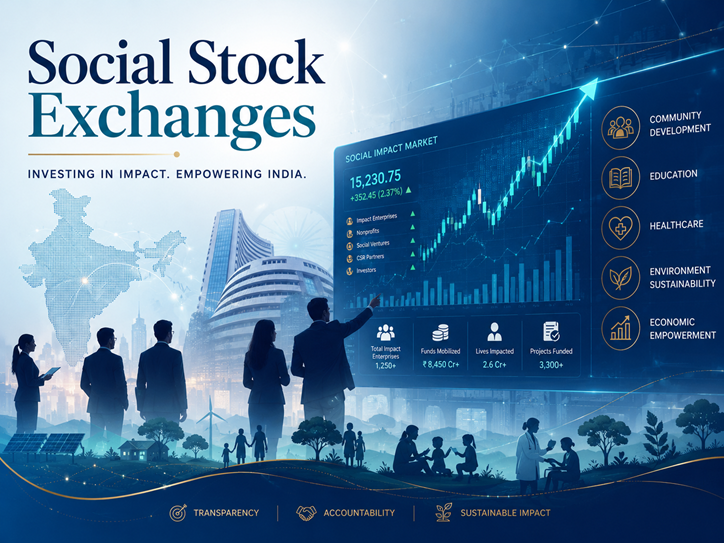
Social Stock Exchanges Make CSR Spending Strategic and Transparent

India CSR by India CSR
June 25, 2026
in Articles
Reading Time: 5 mins read
Social Stock Exchanges

Social Stock Exchanges

Share Share Share Share
WhatsApp icon
WhatsApp — Join Us
Instant updates & community
Google News icon
Google News — Follow Us
Get our articles in Google News feed

The MCA’s CSR Amendment Rules 2026 allow companies to route up to 10% of annual CSR spending through SSE-listed ZCZP instruments, marking a shift toward transparent, accountable and outcome-focused social investment.

By Rachana Roy

The Ministry of Corporate Affairs’ recent notification of the Companies (Corporate Social Responsibility Policy) Amendment Rules, 2026, marks a significant development in India’s CSR framework. By allowing companies to allocate up to 10% of their annual CSR expenditure through Zero Coupon Zero Principal (ZCZP) instruments listed on the Social Stock Exchange (SSE), the government has introduced a mechanism that could transform how corporate capital contributes to social development.

More importantly, the amendment reflects a broader shift in CSR philosophy—from programme-based spending to a more structured, transparent, and outcome-focused approach to social investment.

A New Chapter in India’s CSR Journey

India’s CSR mandate has played a crucial role in directing corporate resources towards national development priorities. Since the introduction of legally mandated CSR provisions under the Companies Act, corporate contributions have enabled interventions across education, healthcare, livelihoods, environmental sustainability, and community development.
However, as the CSR framework has evolved, expectations have grown. Stakeholders today increasingly expect greater transparency, stronger governance, measurable outcomes, and clearer evidence of social value creation. Companies are also increasingly shifting their focus beyond compliance to ensure their CSR investments generate sustainable and scalable impact.

Given this context, the integration of the Social Stock Exchange into the CSR framework signifies an important policy shift.

Why the SSE Matters

The Social Stock Exchange was envisioned as a mechanism to raise capital for social impact while strengthening accountability and transparency standards within the nonprofit sector. By facilitating qualified Not-for-Profit Organisations (NPOs) to mobilise resources through structured funding instruments, the SSE introduces market-oriented discipline into development financing.

The updated amendment broadens this framework by allowing corporates to allocate a portion of their CSR funds through SSE-listed instruments. This development offers two key advantages. First, it establishes a new pathway for companies to engage with organisations that have undergone enhanced scrutiny in terms of governance, disclosures, and compliance.

Second, it establishes a framework that encourages greater transparency in the mobilisation, allocation, and monitoring of social capital. As corporate stakeholders increasingly demand evidence-backed impact reporting, these attributes are expected to become more valuable.

From CSR Spending to Strategic Capital Allocation

One of the most important implications of the amendment lies in its potential to influence corporate decision-making. Traditionally, CSR initiatives have often been assessed based on funds allocated, activities carried out, or beneficiaries reached. While these metrics remain relevant, they do not always fully reflect long-term developmental outcomes.

The SSE framework has the potential to foster a more strategic approach to CSR allocation by enabling companies to evaluate opportunities based on governance benchmarks, disclosure standards, institutional credibility, and intended social outcomes.

Essentially, companies may start to view parts of their CSR commitments through a portfolio approach—balancing direct community interventions with investments in organisations capable of delivering systemic and scalable impact. This could be especially important across sectors including climate resilience, livelihood generation, skilling, public health, and rural development, where long-term social returns often depend on institutional strength and sustained financing.

Strengthening Trust in the Social Sector

For nonprofit organisations, the amendment goes beyond access to funding. The SSE framework encourages stronger governance practices, robust reporting systems, and greater transparency. Over time, these requirements can help build a more credible and accountable social sector ecosystem.

Trust remains a critical foundation in development. As corporates become increasingly selective about where and how they allocate CSR capital, organisations that exhibit governance excellence and demonstrable impact are expected to receive stronger support. This integration of accountability with financing can enhance both resource mobilisation and development effectiveness.

Transparency Must Not Replace Community Engagement

Although the benefits are significant, the framework’s success will ultimately hinge on implementation. Social impact cannot be assessed purely through financial disclosures or reporting standards. The most successful development interventions are those anchored in community engagement, local ownership, and a strong understanding of context-specific challenges.

Companies should thus regard SSE-linked CSR investments as an addition to, rather than a replacement for, on-ground engagement with communities and grassroots organisations. The aim should not merely be improved reporting but effective outcomes.

The Missing Link: Building an Ecosystem for Strategic Social Capital

While the inclusion of Social Stock Exchange instruments within the CSR framework is a welcome step towards greater transparency and accountability, the true value of this reform will depend on the strength of the ecosystem that supports it. At SoulAce, we believe the real opportunity extends beyond simply channeling CSR funds through SSE-listed instruments. It lies in enabling corporates to make more informed, outcome-oriented social investments while helping nonprofit organizations strengthen their governance, impact measurement, and reporting capabilities to become investment-ready.

As the CSR landscape evolves, organizations will increasingly require strategic advisory support to evaluate social investment opportunities, assess impact potential, align investments with ESG and business objectives, and measure long-term developmental outcomes. The future of CSR will not be defined by the quantum of funds deployed, but by how effectively social capital creates sustainable, measurable, and scalable impact. In this emerging paradigm, strategic partnerships between corporates, nonprofits, and advisory organizations will play a critical role in transforming CSR from an expenditure obligation into a catalyst for inclusive and sustainable development.

The Road Ahead

The incorporation of Social Stock Exchange instruments within the CSR framework constitutes a progressive policy intervention that aligns corporate philanthropy with principles of transparency, accountability, and institutional governance. Its long-term impact, however, will not be determined by the amount of funds channelled through the platform. Rather, it will depend on whether the framework succeeds in improving the quality of investments in the social sector, strengthening nonprofit organisations, and generating measurable developmental outcomes.

As India’s CSR landscape continues to evolve, priorities must shift from expenditure to effectiveness, from activities to results, and from compliance to accountability. If backed by robust governance and well-planned implementation, the Social Stock Exchange could emerge as a significant instrument for making CSR spending not only more transparent but also more structured and impactful.

About the Author

Rachana Roy leads the Knowledge Vertical at SoulAce, pioneer firm in the field of CSR. She specializes in translating global and national development frameworks into practical CSR strategies and programs, with expertise in CSR strategy formulation, program design, monitoring and evaluation, impact assessment, and evidence-based framework development. She has worked with more than 100 clients over the last 10 years. She holds an M.Sc. in Environmental Science from the Indian Institute of Ecology and Environment, New Delhi; a B.Ed.; and an MBA in Management of Social Initiatives from IIM. 
#
ADVERTISEMENT
FKCCI
ADVERTISEMENT
Ambedkar Chamber
ADVERTISEMENT
ESG Professional Network
ADVERTISEMENT
India CSR Image 1 India CSR Image 2
Tags: CSRSocial Stock Exchanges

CSR, Sustainability, and ESG success stories hindustan zinc
ADVERTISEMENT
India CSR

India CSR

India CSR® is the largest media on CSR and sustainability offering diverse content across multisectoral issues on business responsibility. It covers Sustainable Development, Corporate Social Responsibility (CSR), Sustainability, and related issues in India. Founded in 2009, the organisation aspires to become a globally admired media that offers valuable information to its readers through responsible reporting.

Related Posts

CSR Spend Jumps from ₹10,065 Cr to ₹34,908 Cr in 2024
Articles

CSR Spend Jumps from ₹10,065 Cr to ₹34,908 Cr in 2024

2 weeks ago
FCRA Amendment Bill
Articles

FCRA Amendment Bill: Expanding State Control Over Civil Society?

2 weeks ago
Mumbai High Court mandates a comprehensive 'Pollution Audit' for Air Polluting Factories in Mumbai, aiming to mitigate environmental damage and ensure public health safety.
Articles

How India’s ₹21.6 Lakh Crore Air Pollution Burden Is Reshaping Preventive Healthcare Demand

3 weeks ago
ESG. Image: India CSR
ESG

SBI Drives ESG: ₹1 Trillion Green Portfolio & 2055 Net-Zero Target

3 weeks ago
Rooting for a Greener Tomorrow: Corporate Action in Restoring Urban Ecosystems
Articles

Rooting for a Greener Tomorrow: Corporate Action in Restoring Urban Ecosystems

3 weeks ago
Photo: India CSR
Articles

Can Social Stock Exchange Unlock India’s CSR Capital?

4 weeks ago
Load More
BBA - CSR, Sustainability and ESG, Rungta International Skills University Bhilai
ADVERTISEMENT
FKCCI
ADVERTISEMENT

Interviews

Harkirat Kaur, CEO, Hartek Foundation
Interviews

Building Resilient Communities Through Sustainable Development: Harkirat Kaur, CEO, Hartek Foundation

by India CSR
June 22, 2026

The conversation also explores the evolving role of CSR in India.

Read moreDetails
Indu Mehta, Chief Sustainability Officer (CSO) at Bhilwara Energy Limited @IndiaCSR

ESG in India Has Moved Beyond Storytelling: Bhilwara Energy’s Indu Mehta on Sustainability as an Operating Discipline

May 30, 2026
Sourabh Lohtia, Chief Marketing & Communications Officer, PNB MetLife

Targeted Skilling Can Build Confident Futures for Underprivileged Women: Sourabh Lohtia, PNB MetLife

May 29, 2026
Shashi Shetty: SKF India’s UDAAN Scholarship Helps Rural Girls and Divyaang Students Build Careers

Shashi Shetty: SKF India’s UDAAN Scholarship Helps Rural Girls and Divyaang Students Build Careers

May 28, 2026
Load More
Ad 1 Ad 2 Ad 3 Ad 4 Ad 5 Ad 6
ADVERTISEMENT

CSR UPDATES

CSR: Over 100 Youth Placed Under SBI Foundation-NIIT Foundation Skilling Programme

Tenon Group Hosts Blood Donation Drive at Gurugram office

CSR: Chola Foundation hands over ALS Ambulance to NDA to enhance Emergency Care

CSR: UPL’s Decade-Long Biodiversity Program Boosts Sarus Crane Count to 1,576 in Gujarat

Nagaland Attracts Rs 30 Crore CSR Funds

CSR: Cellecor Foundation Unveils Long-Term Social Impact Vision, Targets Impacting 50 Lakh Lives by 2030

STEM Learning STEM Learning STEM Learning
ADVERTISEMENT
Facebook Twitter Youtube LinkedIn Instagram
India CSR Logo

India CSR is the largest tech-led platform for information on CSR and sustainability in India offering diverse content across multisectoral issues. It covers Sustainable Development, Corporate Social Responsibility (CSR), Sustainability, and related issues in India. Founded in 2009, the organisation aspires to become a globally admired media that offers valuable information to its readers through responsible reporting. To enjoy the premium services, we invite you to partner with us.

Follow us on social media:

Subscribe to Our Newsletter

Don't miss out on the latest updates in corporate social responsibility. Subscribe to our newsletter at indiacsr.in and be part of the positive change.
Please enable JavaScript in your browser to complete this form.
Loading

  • About India CSR
  • Team
  • India CSR Awards 2026
  • India CSR Leadership Summit
  • Partnership
  • Guest Posts
  • Services
  • ESG Professional Network
  • Content Writing Services
  • Business Information
  • Contact
  • Privacy Policy
  • Terms of Use
  • Donate

Copyright © 2026 - India CSR | All Rights Reserved

No Result
View All Result
  • Home
  • Corporate Social Responsibility
    • Art & Culture
    • CSR Leaders
    • Child Rights
    • Culture
    • Education
    • Gender Equality
    • Around the World
    • Skill Development
    • Safety
    • Covid-19
    • Safe Food For All
  • Sustainability
    • Sustainability Dialogues
    • Sustainability Knowledge Series
    • Plastics
    • Sustainable Development Goals
    • ESG
    • Circular Economy
    • BRSR
  • Corporate Governance
    • Diversity & Inclusion
  • Interviews
  • SDGs
    • No Poverty
    • Zero Hunger
    • Good Health & Well-Being
    • Quality Education
    • Gender Equality
    • Clean Water & Sanitation – SDG 6
    • Affordable & Clean Energy
    • Decent Work & Economic Growth
    • Industry, Innovation & Infrastructure
    • Reduced Inequalities
    • Sustainable Cities & Communities
    • Responsible Consumption & Production
    • Climate Action
    • Life Below Water
    • Life on Land
    • Peace, Justice & Strong Institutions
    • Partnerships for the Goals
  • Articles
  • Events
  • हिंदी
  • More
    • Business
    • Finance
    • Environment
    • Economy
    • Health
    • Around the World
    • Social Sector Leaders
    • Social Entrepreneurship
    • Trending News
      • Important Days
      • Great People
      • Product Review
      • International
      • Sports
      • Entertainment
    • Case Studies
    • Philanthropy
    • Biography
    • Technology
    • Lifestyle
    • Sports
    • Gaming
    • Knowledge
    • Home Improvement
    • Words Power
    • Chief Ministers

Copyright © 2026 - India CSR | All Rights Reserved

This website uses cookies. By continuing to use this website you are giving consent to cookies being used. Visit our Privacy and Cookie Policy.

