Over 150 representatives from more than 75 companies and philanthropic organisations explore partnerships for climate-resilient farming, soil health, skilling and women’s empowerment
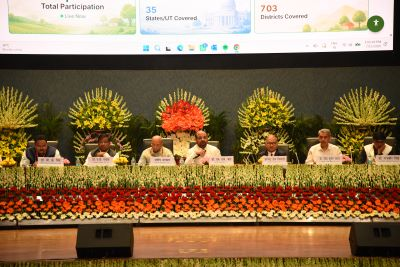
NEW DELHI (India CSR): The Indian Council of Agricultural Research (ICAR), in collaboration with Agrinnovate India Limited (AgIn), organised the first-ever ICAR Technology Portfolio for Corporate Social Responsibility Conclave 2026 at the NASC Complex in New Delhi.
Held under the theme “Partnering for Agricultural Transformation: Mobilising CSR for a Sustainable Agri-Future,” the conclave sought to connect ICAR’s scientific expertise and farmer-centric technologies with corporate resources, implementation capabilities and social investment priorities.
More than 150 representatives from over 75 companies, industry bodies and philanthropic organisations participated in the event. Discussions focused on developing Corporate Social Responsibility partnerships capable of delivering measurable and sustainable outcomes across India’s agricultural and rural economy.
Five Priority Areas Identified
ICAR identified five priority areas for high-impact CSR interventions during 2026:
- Climate-proofing of Indian agriculture
- Soil health improvement through nature-based solutions and crop diversification
- Agriculture for health
- Agricultural skilling
- Women in agriculture and extension
These areas reflect some of the most pressing challenges confronting Indian agriculture, including climate change, declining soil quality, skill shortages, nutritional concerns and unequal access to agricultural knowledge and resources.
Shivraj Singh Chouhan Calls CSR a Nation-Building Instrument
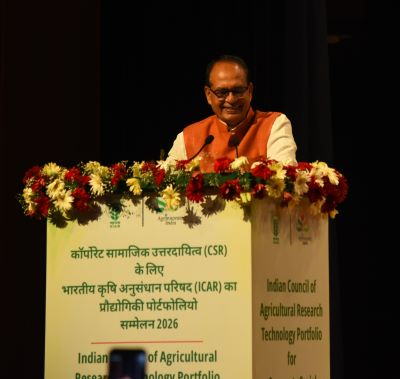
Union Minister for Agriculture and Farmers’ Welfare and Rural Development Shri Shivraj Singh Chouhan attended the conclave as the Chief Guest. Union Ministers of State for Agriculture and Farmers’ Welfare Shri Bhagirath Choudhary and Ram Nath Thakur participated as Guests of Honour.
Addressing the gathering, Chouhan said:
“The nation gives us everything; we too must learn to give back.”
He emphasised that CSR should not be viewed merely as a statutory obligation. Instead, it should be treated as a powerful instrument for nation-building and inclusive development. Referring to Mahatma Gandhi’s principle of trusteeship, the Union Minister said individuals and institutions possessing greater resources have a moral responsibility to contribute to the welfare of society.
Faster Commercialisation of ICAR Technologies Needed
Chouhan called for the rapid commercialisation and large-scale deployment of technologies developed by ICAR. He said stronger private-sector participation could help ensure that scientific innovations reach farmers within a shorter period. Citing developments in the jute sector, he explained how mechanisation could improve productivity, enhance product quality and increase farmers’ incomes.
The Minister urged companies to direct their CSR investments towards climate-resilient agriculture, soil restoration, agricultural startups, youth skilling, food processing and the empowerment of women farmers. With nearly 46 per cent of India’s population dependent on agriculture, he said targeted social investment in the sector could accelerate innovation, create rural employment and advance sustainable development.
Highlighting the central importance of soil conservation, Shri Chouhan said:
“If we save the soil, we save the future.”
He appealed to the corporate sector to treat agricultural CSR as a national commitment towards farmers’ prosperity and the creation of a Viksit Bharat.
CSR Can Strengthen Rural Prosperity
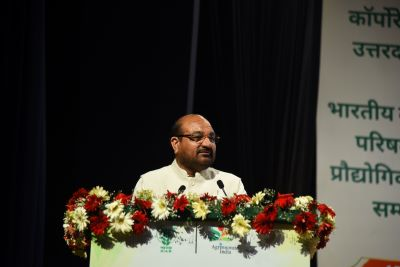
Bhagirath Choudhary described agriculture as the foundation of India’s economy and rural prosperity. He identified CSR as an important driver of sustainable agricultural development. Welcoming corporate interest in partnering with agricultural institutions, he said such collaborations could accelerate innovation, encourage technology adoption and support interventions capable of producing tangible benefits for farmers.
He emphasised that farmers’ welfare and the sustainable development of agriculture require close coordination among policy, scientific research and public participation. Acknowledging the contribution of agricultural scientists, officers and field-level workers, Shri Choudhary urged stakeholders to strengthen collective efforts for building a prosperous and self-reliant rural India.

Public-Private Partnerships Essential for Agricultural Transformation
Ram Nath Thakur described agriculture as the soul of India and the foundation of rural prosperity. He called for stronger partnerships between public institutions and the corporate sector to promote farmers’ welfare, agricultural innovation and the adoption of modern technologies.
According to Thakur, CSR can serve as a catalyst for transformative interventions in water conservation, soil health, climate-resilient agriculture, innovation and farmer empowerment.
He also commended the efforts of the Department of Agriculture and Farmers’ Welfare under the leadership of Shri Shivraj Singh Chouhan. He urged government institutions, scientific organisations, companies and civil society stakeholders to work together to create a modern, sustainable and prosperous agricultural future.
Science Must Move from Discovery to Delivery
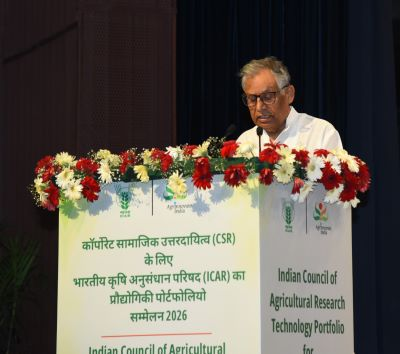
Dr M.L. Jat, Secretary, Department of Agricultural Research and Education, and Director General, ICAR, highlighted the transformative role of science in advancing Indian agriculture. He called for stronger institutional and corporate partnerships to address the emerging challenges confronting the country’s agri-food system.
Dr Jat emphasised the importance of strengthening the “Discovery-to-Delivery Continuum” so that innovations developed by research institutions can reach farmers and rural communities at scale.
He advocated deeper convergence among scientific institutions, industry, government agencies and other stakeholders to accelerate technology dissemination and sustainable agricultural transformation. According to him, the future of agriculture depends on strengthening the entire agri-food value chain. This requires interventions that extend beyond farm production to pre-production planning, processing, storage, marketing and other post-production activities.
Conclave Connects Technology with CSR Capital
The programme featured keynote addresses, thematic panel discussions, roundtables and focused Business-to-Business and Business-to-Government meetings.
The discussions covered:
- CSR co-funding models
- Technology commercialisation
- Programme implementation
- Capacity building
- Impact assessment
- Long-term institutional partnerships
These engagements enabled corporate representatives to assess ICAR technologies and identify projects that could be supported through CSR funding.
More Than 75 Agricultural Technologies Displayed
A dedicated exhibition showcased more than 75 ICAR technologies, agricultural innovations, flagship programmes and startup-led solutions. The exhibition attracted considerable interest from corporate and CSR representatives looking for commercially viable and socially impactful interventions.
The technologies presented opportunities across agricultural research, climate-resilient farming, technology dissemination, capacity building, rural entrepreneurship and sustainable livelihood promotion. Several exhibited innovations were ready for commercialisation and large-scale adoption, creating opportunities for companies to support their deployment in farming communities through CSR programmes.
Regional Roadshows Engaged Over 500 Stakeholders
The national conclave built upon four regional CSR roadshows organised in Hyderabad, Bengaluru, Mumbai and Kolkata. Together, these roadshows engaged more than 500 stakeholders representing industry, research institutions, startups, philanthropic organisations and civil society.
The regional consultations helped identify corporate priorities, partnership opportunities and location-specific agricultural challenges before the national-level conclave in New Delhi.
Agrinnovate India to Coordinate CSR Partnerships
Agrinnovate India Limited, the commercial arm of ICAR, will serve as the nodal agency for CSR partnerships. AgIn will facilitate CSR-ready agricultural projects, forge strategic collaborations and support programme implementation. It will also promote transparency, monitoring and impact assessment across supported initiatives.
The institutional mechanism is expected to help companies identify credible agricultural projects while enabling ICAR technologies to reach more farmers and rural communities. Through resource convergence and structured public-private collaboration, ICAR aims to mobilise corporate investment for priority agricultural programmes and scalable multi-stakeholder initiatives.
Ten Industry Partners Announce CSR Commitments
Industry representatives shared their perspectives on strengthening ICAR–industry partnerships through CSR to promote innovation, technology adoption and sustainable agricultural development. Representatives of 10 industry partners announced CSR funding commitments for ICAR technologies and initiatives during the conclave.
Other participating companies also expressed their intention to explore future collaborations with ICAR. The commitments mark an important step towards converting corporate interest into implementable projects supporting farmers, rural entrepreneurs, agricultural startups and women-led agricultural initiatives.
Foundation Day to Highlight ICAR’s Achievements
ICAR will celebrate its 98th Foundation Day on July 16, 2026, at the NASC Complex in New Delhi. The programme will showcase the Council’s achievements in agricultural research, education and extension while recognising outstanding contributions to Indian agriculture.
The occasion will also reaffirm ICAR’s commitment to science-led, climate-resilient and farmer-centric agricultural development. Its work remains focused on strengthening food and nutritional security, enhancing farmers’ incomes and contributing to the national vision of Viksit Bharat 2047.