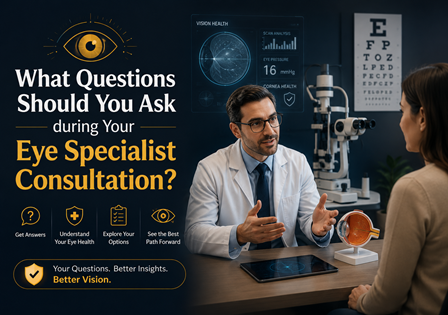



Make your eye appointment more useful by asking clear questions about your symptoms, diagnosis, tests, treatment and future eye care.
An eye consultation becomes more beneficial when you are ready to speak openly and ask clear questions. Symptoms such as blurred vision, dryness, headaches or sudden discomfort may have different causes, so understanding the findings matters. A thoughtful conversation also helps you feel involved in decisions about tests, treatment and daily habits.

The following questions can guide a calm, productive discussion and help you leave the appointment with greater clarity.
Why Is This Eye Problem Happening?
Ask the eye specialist what may be causing your symptoms and whether general health, screen use, age, medicines or family history could be relevant. A good eye doctor should explain the likely triggers clearly while also mentioning anything that still needs further investigation.
What Tests Do I Need and Why?
Your ophthalmologist may suggest vision checks, pressure measurement, retinal imaging or other examinations depending on your symptoms. Ask what each test looks for, whether preparation is needed and how the result will influence your eye care plan or help rule out other conditions.
What Is My Diagnosis and How Serious Is It?
Ask your eye specialist to clearly name the condition and explain what it means in simple terms. Find out whether the condition is temporary, progressive or likely to affect everyday vision. Understanding the seriousness helps you recognise warning signs and follow the eye surgeon’s advice more confidently.
What Treatment Options Are Available for My Condition?
Ask about every suitable approach, including medicines, glasses, procedures, observation or surgery. Discuss why one option may suit you better than another and what improvement is realistic. It is also helpful to ask how soon treatment should begin and how progress will be assessed.
Understanding Your Diagnosis Begins When You Ask the Right Questions With Confidence and Clarity
Are There Any Risks, Side Effects or Lifestyle Changes I Should Know About?
Every treatment deserves a clear discussion about possible discomfort, side effects, recovery and warning signs. Ask whether driving, screen time, exercise, cosmetics or contact lenses need temporary changes. Practical guidance makes it easier to follow treatment correctly without unnecessary worry or disruption.
When Should I Schedule My Next Eye Check-Up?
Before leaving, confirm when you should return and which symptoms require an earlier visit. Follow-up timing depends on the diagnosis, treatment response and personal risk factors. Knowing the plan prevents missed reviews and gives you a clear point of contact if your vision changes.
Conclusion
Good questions turn an eye consultation into a reassuring and useful experience. They help you understand what is happening, why tests are recommended and what treatment may involve. Write down your concerns beforehand and note the answers during the visit. Do not hesitate to ask for simpler explanations when medical terms feel confusing. Clear communication supports better decisions, follow-up and a stronger partnership with the team caring for your sight.
FAQs
1. What should I bring to an eye specialist consultation?
Bring your current glasses, previous prescriptions, medical reports and a list of medicines. Note down any symptoms, when they began, and what seems to trigger them.
2. Is it okay to ask for a simpler explanation of my diagnosis?
Yes, you should feel comfortable asking the doctor to explain medical terms clearly. Understanding your condition helps you follow treatment advice and make informed decisions.
3. When should I contact the doctor before my next appointment?
Seek advice sooner if you notice sudden vision loss, severe eye pain, flashes, new floaters, redness or symptoms that become noticeably worse.
(India CSR)