

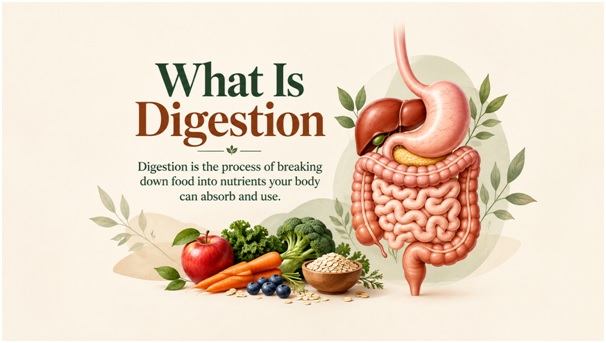


Digestion is an important process that helps the body break down food and absorb nutrients. Problems with digestion can sometimes lead to symptoms such as bloating, gas, constipation, diarrhoea or heaviness after meals.
Understanding what is digestion and how the digestive system works can help you make better choices about your everyday diet and lifestyle.
What Is Digestion?
Digestion is the process through which the body breaks down the food and drinks you consume into smaller components that can be absorbed and used by the body.
The digestive system includes organs such as the mouth, oesophagus, stomach, small intestine, large intestine, liver, pancreas and gallbladder. Each part has a different role in processing food and supporting nutrient absorption.
Digestion begins in the mouth when food is chewed and mixed with saliva. It then moves through the digestive tract, where mechanical and chemical processes continue breaking it down.
How Does Digestion Work?
Digestion takes place through several stages.
Chewing and Saliva
Digestion begins when you chew food. Chewing breaks food into smaller pieces, while saliva starts the digestion of certain carbohydrates.
Stomach Digestion
After swallowing, food moves into the stomach. Stomach acid and digestive enzymes help break food down further.
Small Intestine
Most nutrient absorption takes place in the small intestine. Digestive juices and enzymes help break down carbohydrates, proteins and fats so that nutrients can be absorbed.
Large Intestine
The remaining material moves into the large intestine, where water and some electrolytes are absorbed. The remaining waste is eventually eliminated through bowel movements.
What Can Affect Digestion?
Several dietary and lifestyle factors can influence digestive comfort.
Eating Habits
Eating too quickly, overeating or having irregular meals may contribute to digestive discomfort in some people.
Diet
The amount and variety of fibre, fluids, fruits, vegetables, whole grains and other foods in your diet can affect bowel habits and overall digestive function.
Hydration
Adequate fluid intake supports normal digestion and bowel movements. Low fluid intake may contribute to harder stools, particularly when fibre intake is high.
Physical Activity
Regular movement supports overall health and can also help maintain regular bowel movements.
Stress
Stress can affect the way some people experience digestive symptoms. Changes in appetite, eating patterns and sleep during stressful periods may also influence digestion.
What Is the Connection Between Digestion and Gut Health?
Digestion and gut health are closely connected because the digestive system provides the environment where food is broken down, nutrients are absorbed and waste is processed.
The gut also contains a large community of microorganisms known as the gut microbiome. These microorganisms interact with the digestive environment and can be influenced by factors such as diet and lifestyle.
However, gut health is broader than digestion alone. Bloating, constipation, diarrhoea and other digestive symptoms can have different causes, so a single symptom does not necessarily indicate a problem with the gut microbiome.
How Can You Support Healthy Digestion?
Simple daily habits can support normal digestive function.
Eat a Balanced Diet
Include a variety of vegetables, fruits, whole grains, legumes, nuts and seeds in your diet. A varied diet provides fibre and nutrients that support normal digestive function.
Increase Fibre Gradually
Fibre can support regular bowel movements, but suddenly increasing fibre intake may cause gas or bloating in some people. Increase it gradually and drink enough fluids.
Stay Hydrated
Drink adequate fluids throughout the day. Water is generally a simple choice for maintaining hydration and supporting normal bowel function.
Eat Slowly
Take time to chew your food properly and avoid rushing through meals. Eating slowly may also make it easier to recognise when you are comfortably full.
Stay Active
Regular physical activity supports overall health and may help maintain regular bowel movements. Even a daily walk can be a simple way to stay active.
Maintain Regular Eating Habits
Consistent meal patterns may help some people maintain comfortable digestion. Pay attention to how your body responds to different foods and meal timings.
When Should You Pay Attention to Digestive Symptoms?
Occasional digestive discomfort can happen for many reasons. However, persistent or severe symptoms should not simply be ignored.
Speak with a healthcare professional if you experience ongoing abdominal pain, persistent diarrhoea or constipation, repeated vomiting, difficulty swallowing, unexplained weight loss, blood in the stool or black, tar-like stools.
These symptoms may require proper medical evaluation to identify the underlying cause.
Final Thoughts
Digestion is a continuous process that allows the body to break down food, absorb nutrients and eliminate waste. Supporting digestion involves more than focusing on one food or supplement.
A balanced diet, adequate hydration, regular physical activity, mindful eating and attention to individual food triggers can all contribute to comfortable digestion. If digestive symptoms continue or become severe, professional medical advice can help determine the appropriate next steps.



