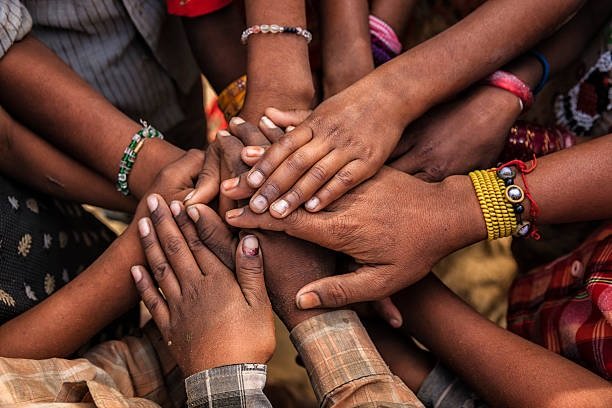
Family-led giving accounts for 40% of private philanthropy; CSR spending by family-owned businesses dominates the private sector landscape
The India Philanthropy Report 2025, jointly published by Bain & Company and Dasra, presents an evolving picture of how Indian families are shaping the nation’s social development narrative. It reveals that family philanthropy now accounts for 40% of private giving, playing a crucial role in addressing underfunded causes such as gender equality, climate action, and ecosystem strengtheningIndia Philanthropy Report 2025.
Social Sector Funding on the Rise, Yet Gaps Persist
India’s total social sector funding has grown steadily at 13% annually over the past five years, reaching an estimated Rs. 25 lakh crore ($300 billion) in FY 2024 — equivalent to 8.3% of the country’s GDPIndia Philanthropy Report 2025.
ADVERTISEMENT
Public spending remains the dominant contributor, accounting for 95% of total funding, and is expected to rise to Rs. 43 lakh crore ($525 billion) by FY 2029, driven by increases in healthcare and moderate growth in education.
However, despite this strong growth, the report highlights a funding gap of Rs. 14 lakh crore ($170 billion) against NITI Aayog’s estimates — projected to widen to Rs. 16 lakh crore ($195 billion) by FY 2029India Philanthropy Report 2025.
Private sector funding — including CSR, HNI, and UHNI philanthropy — grew by 7% in FY 2024 and is expected to accelerate to 10–12% annually in the coming years.
Families Redefine the Meaning of Giving
The report finds that Indian families are redefining philanthropy by integrating professionalism, inclusivity, and long-term vision.
40% of families now support gender, equity, diversity, and inclusion (GEDI) causes.
29% fund climate action initiatives.
39% aspire to strengthen philanthropic ecosystems in the futureIndia Philanthropy Report 2025.
More than half (55%) of family philanthropies are women-led, while one-third (33%) are inter-generational or now-generational, ensuring continuity and modern approaches to giving.
“Family philanthropy in India is expanding beyond metros, with growing engagement in Tier 2 cities. To scale its impact, we need localized models, stronger networks, and structured support tailored to India’s unique giving landscape.” — Prabhir Correa, Waterfield Advisors
What is CSR – Corporate Social Responsibility CopyRight@IndiaCSR-CartoonWatch
CSR: Family-Owned Businesses Lead the Way
Family-owned or family-run enterprises continue to anchor corporate philanthropy in India. They contribute 65–70% of total CSR spending, amounting to approximately Rs. 18,000 crore ($2.2 billion) each yearIndia Philanthropy Report 2025.
The report notes that the top 2% of family-run firms — including conglomerates like Tata, Ambani, Adani, and Birla — contribute over half (50–55%) of total CSR from family businesses.
“Indian families have a unique opportunity to shape a resilient, inclusive future by moving beyond donations. By fostering collaboration, innovation, and long-term commitment, they can build a more just and equitable India.” — Vita Dani, Dani Foundation
Case Studies: Building Legacies and Institutions
The report features several inspiring examples of long-term family-led philanthropy:
Tata Trusts: Over 130 years of nation-building, founding institutions like TISS, TIFR, IISc, and NCPA, and shaping collaborative platforms like India Climate Collaborative and Health Systems Transformation PlatformIndia Philanthropy Report 2025.
Dani Family (Asian Paints): Promoting education, sports, and rural livelihoods through the Dani Foundation, emphasizing flexible and risk-tolerant funding modelsIndia Philanthropy Report 2025.
Kirloskar Group: Pioneering structured CSR long before the 2014 CSR law — from the Clean and Beautiful Schools Initiative of the 1960s to the Kirloskar Vasundhara Film Festival for environmental awarenessIndia Philanthropy Report 2025.
Ashraya Hastha Trust (Infosys Family): Combining family values with professional philanthropy, employing experts to expand reach, governance, and measurable outcomes across 25 statesIndia Philanthropy Report 2025.
The Rise of Professionalized Philanthropy
Nearly 65% of families now employ dedicated staff to manage their philanthropy portfolios, often blending grant-making with ecosystem building. A growing number of family foundations, such as the Upadhyaya Foundation, are institutionalizing processes to ensure measurable impact and accountability, says Philanthropy Report 2025.
This shift represents a clear move from emotion-led donations to evidence-based, data-driven philanthropy — aligning personal values with professional strategy.
Diaspora and Family Offices: Unlocking the Next Wave
India’s family offices have grown sevenfold, from 45 in 2018 to 300 in 2024, reflecting rising wealth and institutionalized philanthropyIndia Philanthropy Report 2025.
Meanwhile, the Indian diaspora, now numbering 35 million worldwide, has doubled in five years, presenting vast potential for cross-border social impact.
Platforms such as Indiaspora’s India Giving Day have already mobilized $5.5 million in a single day, supporting 33 Indian nonprofitsIndia Philanthropy Report 2025.
“Realizing families’ full giving potential requires value-driven ‘philanthropy products’ and integration with existing financial advisory channels — making giving a seamless part of legacy planning.” — Sumit Tayal, Give
India as a Global Social Innovation Leader
The report concludes that India’s unique model of frugal innovation, combined with family-led patient capital, positions the country as a global leader in social problem-solving.
From Pratham’s education models replicated in Africa to SELCO’s renewable energy projects adopted globally, India’s nonprofit ecosystem is inspiring international development solutions, says India Philanthropy Report 2025.
Towards Viksit Bharat 2047
The India Philanthropy Report 2025 envisions a future where structured, inclusive, and collaborative family philanthropy will be central to achieving the national vision of Viksit Bharat by 2047.
With rising affluence, expanding family offices, and growing global engagement, Indian families are not just donors — they are architects of the nation’s social transformation.