

Through experiential STEM learning, the social organisation has transformed classrooms into spaces of curiosity, innovation, and hands-on discovery.
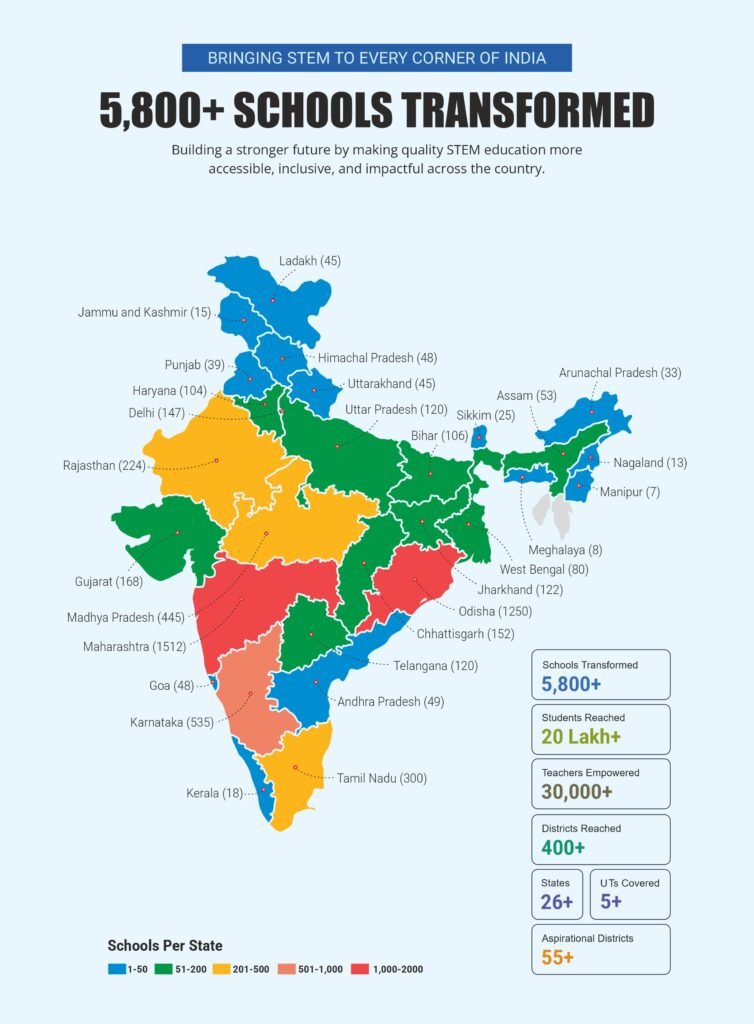
Its impact now reaches 20 lakh+ students, 5,800+ schools, 30,000+ teachers, and 400+ districts, with support from hundreds of corporate partners.
By Suhana Agrawal
India stands at a pivotal moment in its educational journey. India’s future will be shaped not only by access to education, but by the quality of learning experiences available to every child. Access to schooling has expanded dramatically over the past two decades, yet the quality of learning, particularly in science and mathematics, continues to lag behind the demands of a rapidly evolving world. Into this gap steps STEM Learning Social Enterprise, an organisation that has spent over fourteen years quietly but ambitiously working to transform the way Indian children learn science, technology, engineering, and mathematics. Its 2026 newsletter is a powerful statement of how far that mission has travelled.
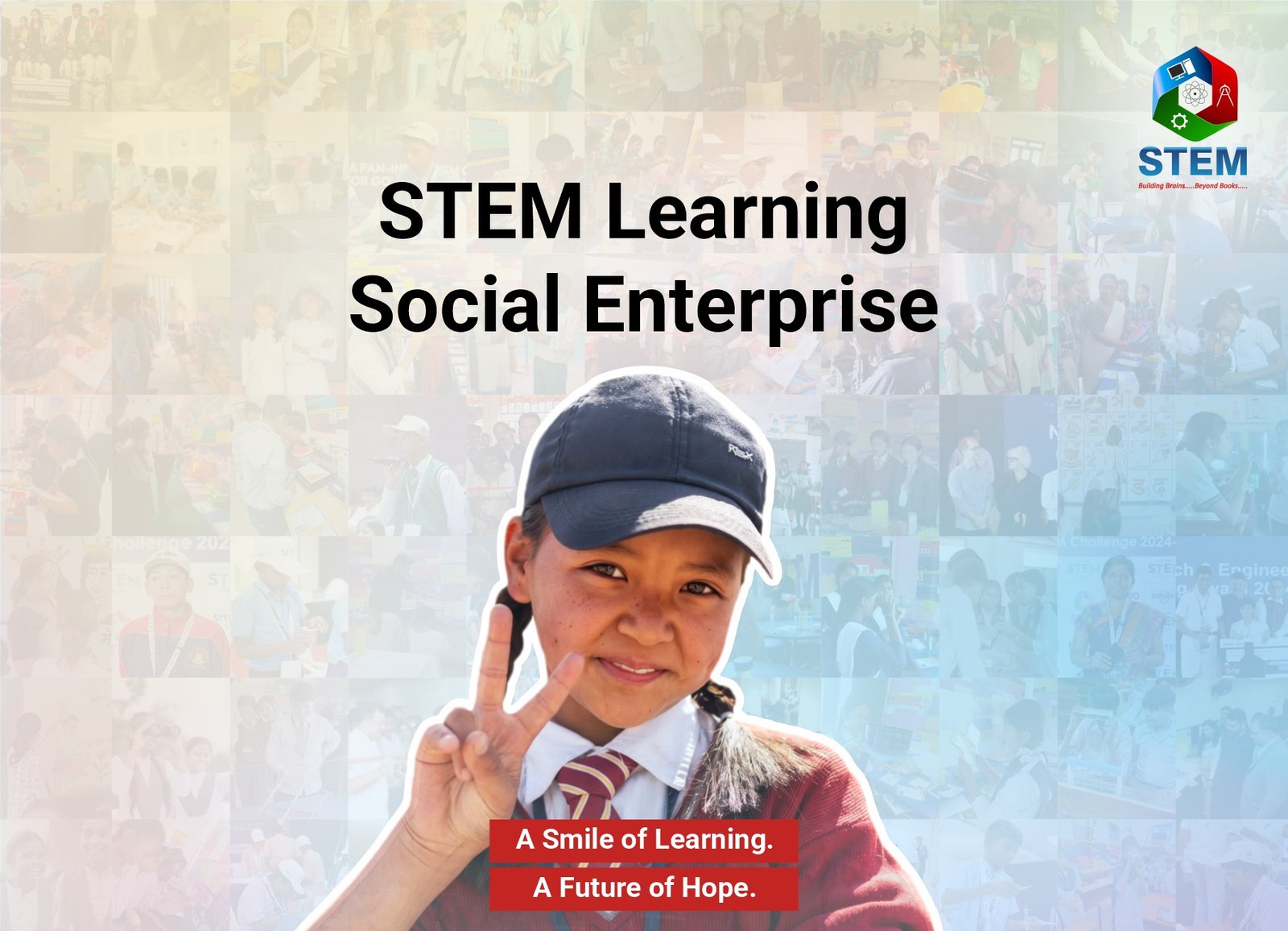
STEM Learning Social Enterprise is working to make science, technology, engineering, and mathematics more practical, engaging, and accessible for students across India.
Release of Newsletter 2026 by Eminent CSR, Education and Social Leaders
STEM Learning Social Enterprise Newsletter 2026 was unveiled during the CSR Leadership Summit at Rungta College Campus, Bhilai on May 9, 2026.
The Newsletter 2026 revealed by Dr. Bhaskar Chatterjee, Father of Indian CSR and Sustainability, Chairman, National Sustainability Reporting and Disclosure Standards Committee, Bureau of Indian Standards; Padma Shri Phoolbasan Bai Yadav, Founder, Maa Bambleshwari Janhitkari Samiti; Santosh Rungta, Chancellor, Rungta International Skills University; Dr. Jawahar Surisetti, Vice Chancellor, Rungta International Skills University; Swaran Singh, IAS (Retd.), Chairman and CEO, TVS Srinivasan Services Trust; and Rusen Kumar, Founder and Editor, India CSR®.
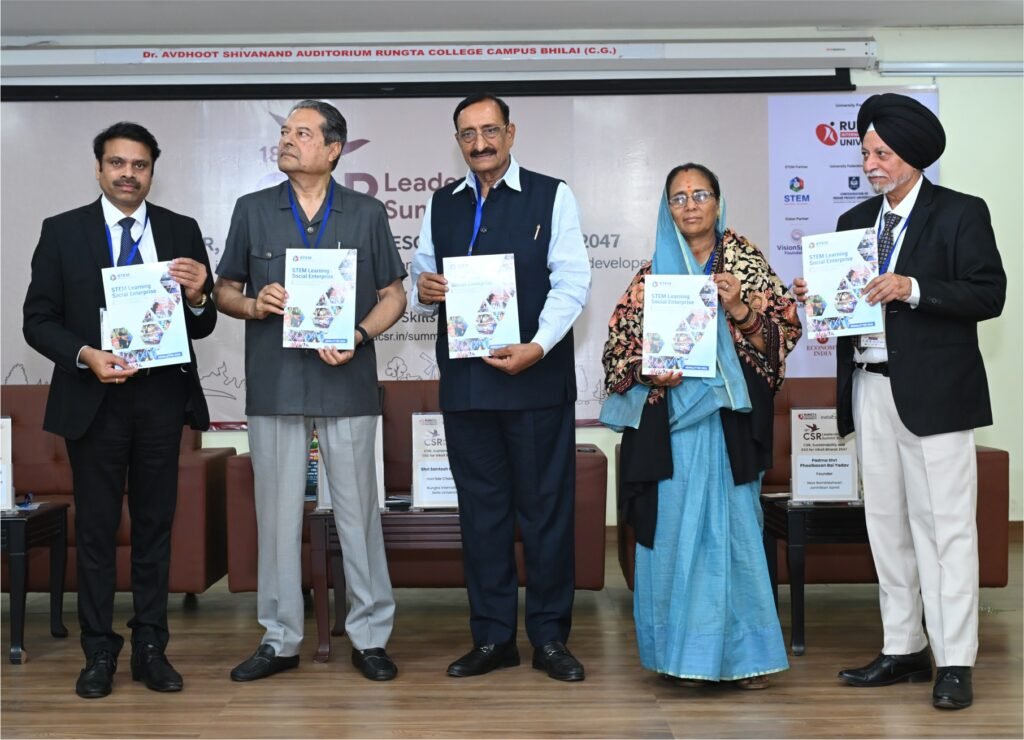
This newsletter presents the journey, initiatives, partnerships, and national impact of STEM Learning Social Enterprise. It highlights how Mini Science Centres, teacher training, innovation labs, sustainability learning, volunteering, and public-private partnerships are helping build stronger classrooms and confident young thinkers.

A Mission Rooted in Equity
At its core, STEM Learning was founded on a single conviction: that every child in India, regardless of their pin code or economic background, deserves access to world-class, hands-on science education. This belief, articulated by Founder and Managing Director Ashutosh Pandit in his message in the newsletter has shaped every programme the organisation has built and every school it has entered. From the snow-capped valleys of Leh-Ladakh to the bustling classrooms of Maharashtra, STEM Learning’s teams have worked to turn underutilised school rooms into vibrant Mini Science Centres where curiosity is the curriculum.
Bridging the STEM Divide: CSR Takes Science to Underserved India
CSR partnerships are playing a transformative role in taking STEM education beyond urban centres to India’s remotest regions. The STEM Learning Social Enterprise newsletter highlights how corporate support has helped establish Mini Science Centres, innovation labs, teacher training programmes and hands-on science learning models across government and low-resource schools.
Through this CSR-led approach, STEM Learning has reached 20 lakh+ students, 5,800+ schools, 30,000+ teachers and 400+ districts, making practical science education accessible to children who often have limited exposure to laboratories, models and experiential learning tools. By combining corporate funding with school-level implementation, CSR is helping bridge the learning gap between privileged and underserved regions. It is enabling rural and semi-urban students to understand science through experiments, models, competitions and innovation challenges, turning classrooms into spaces of curiosity, confidence and future-readiness.
What Experiential Learning Actually Looks Like
The centrepiece of STEM Learning’s model is the Mini Science Centre a learning environment that simplifies over 150 science and mathematics curriculum concepts through more than 80 interactive models. Rather than reading about force or optics in a textbook and memorising definitions for an exam, students in STEM Learning-supported classrooms actually manipulate models, run experiments, and observe outcomes with their own hands. The approach shifts learning from passive reception to active discovery.
Beyond the Mini Science Centre, the organisation offers an expanding suite of programmes. Tinkering Labs give students space to build and invent. Astronomy Labs bring the cosmos into the classroom. BALA (Building as Learning Aid) Painting transforms school walls into educational environments. Science Labs, DIY Programmes, and the recently launched Environment and Sustainability Lab each address a different dimension of what it means to be a scientifically literate and environmentally responsible young person in contemporary India.
India’s First Environment and Sustainability Lab
One of the most significant milestones highlighted in the newsletter is the inauguration of India’s first Environment and Sustainability Lab in August 2025, an event graced by Maharashtra Chief Minister Shri Devendra Fadnavis. This lab is designed to take students beyond textbooks and into hands-on engagement with some of the most pressing challenges of their generation: renewable energy, waste management, natural resource conservation, and responsible consumption.
The lab is more than a learning space. It is a statement about what education should be preparing students for. By helping children connect scientific principles to real environmental challenges, STEM Learning is nurturing a generation that does not merely know about sustainability but feels equipped to act on it. The organisation is now actively inviting corporate partners to bring this lab to schools nationwide.
The National STEM Challenge: A Stage for Every Innovator
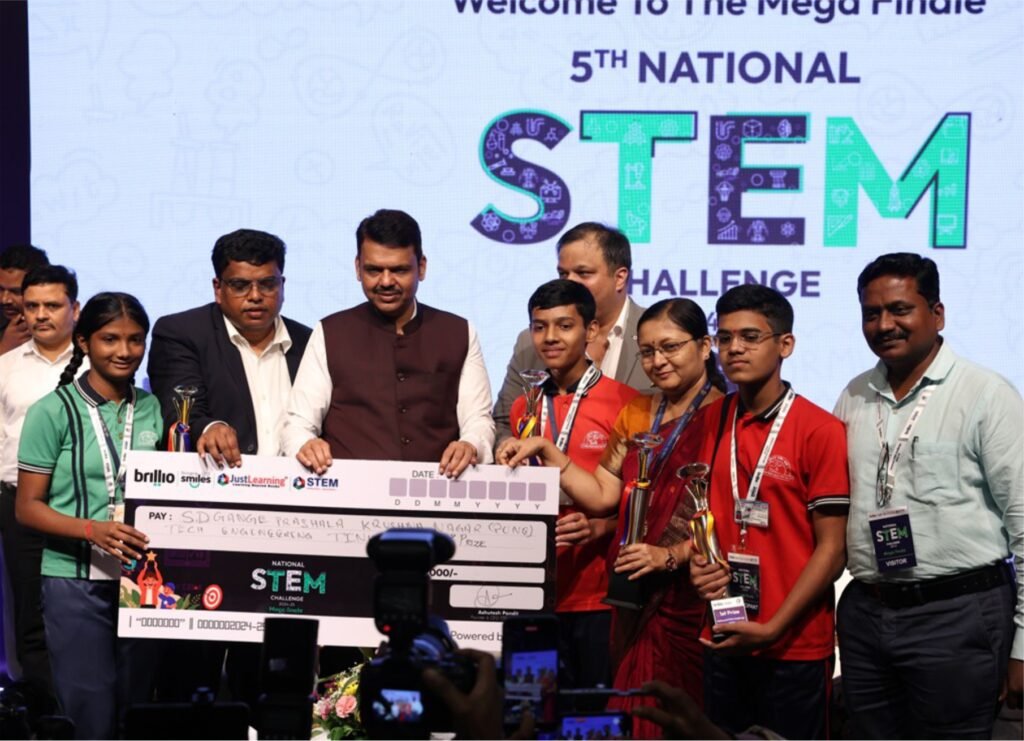
Perhaps the most inspiring initiative profiled in the newsletter is the National STEM Challenge, a multi-level competition that, in its 2025 edition, brought together more than 2,500 students from over 500 schools across 26 states. Crucially, the challenge was designed with inclusion at its heart, drawing participants from remote and underserved regions, including Leh-Ladakh and Himachal Pradesh, places where students rarely have the opportunity to compete on a national stage.
The competition did something that many educational interventions fail to do: it gave students from grassroots India visibility, recognition, and a stronger belief in their own potential. When a child from a government school in a remote district stands before expert panellists presenting an original scientific idea, the experience of confidence and self-belief can alter the trajectory of a life. STEM Learning is consciously building that kind of transformative opportunity and inviting state governments and corporates alike to recognise it.
Reaching Where Access Is Hardest
The newsletter’s geographical data reveals the scale of STEM Learning’s reach in a way that is genuinely remarkable. Across 26 states and 5 union territories, spanning more than 400 districts and 55+ aspirational districts, the organisation has planted its programmes in schools that most educational initiatives never reach. Maharashtra leads with 1,512 schools transformed, followed by Odisha with 1,250 and Karnataka with 535. But it is the presence in places like Manipur (7 schools), Meghalaya (8 schools), and Jammu and Kashmir (15 schools) that speaks to the organisation’s commitment to equity over convenience.
In India’s aspirational districts, areas identified by the government as needing special developmental attention, STEM Learning has established 94 Mini Science Centres under the Government of India’s Vibrant Villages Programme, supported by SBI Foundation. Across these regions alone, STEM initiatives have reached over 60,000 students and impacted more than 220 schools. The logic is straightforward but often ignored in practice: the children who have the least access to quality science education are precisely the ones for whom experiential learning can be the most transformative.
The Role of Teachers and Corporate Partners
STEM Learning understands that infrastructure alone does not change classrooms; teachers do. The organisation’s structured Teacher Training Programmes are therefore designed not merely to introduce educators to new tools and models, but to encourage a deeper pedagogical shift: from delivering information to enabling understanding. Through continuous monitoring, feedback, and support, STEM Learning ensures that empowered teachers become the sustainable drivers of lasting classroom transformation.
On the funding and partnership side, the newsletter reveals a model that is increasingly significant in India’s CSR landscape. More than 400 corporations including PSUs such as NTPC Limited, SBI Foundation, GAIL India, Coal India, and NSDL, have partnered with STEM Learning to bring experiential science education to government and underserved schools. Employee volunteering programmes through partners like Webtec, HURON Eurasia, ArcelorMittal, and Brillio add a human dimension to this support, with corporate employees spending time in classrooms conducting hands-on activities and STEM sessions. It is a model that creates dual impact: students gain real-world skills, while employees find purpose through mentoring.
Political Leadership Endorsement Signals Growing Government Recognition of Experiential STEM Education
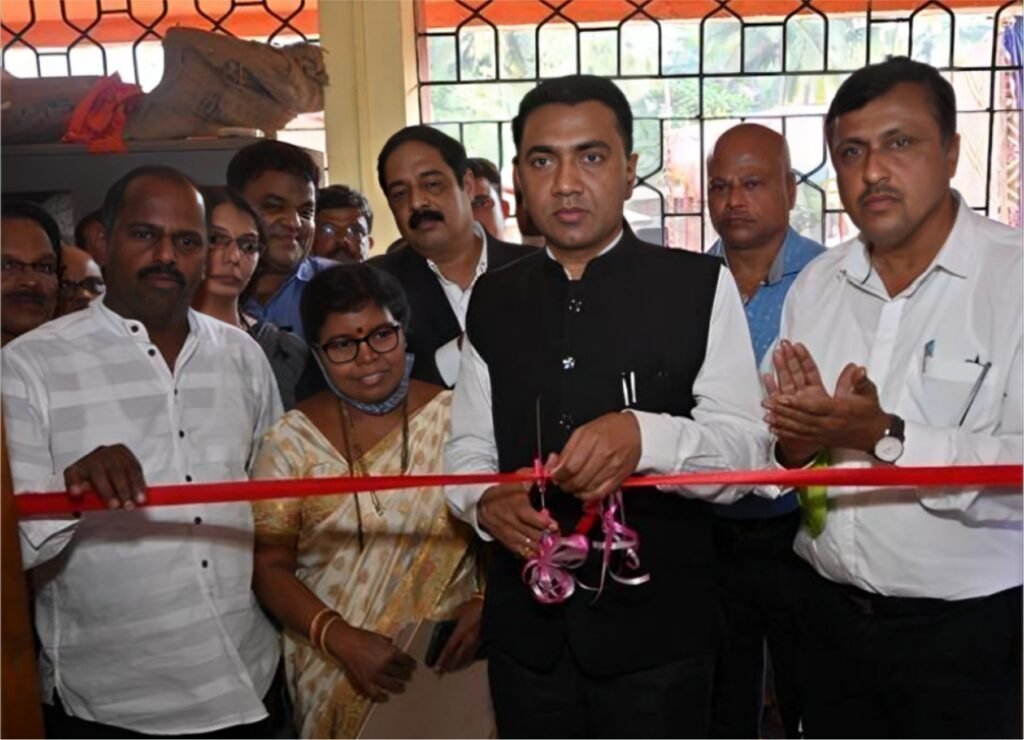
The newsletter also documents meaningful endorsements from senior government figures. Maharashtra CM Devendra Fadnavis praised students at the National STEM Challenge Mega Finale. Goa CM Dr. Pramod Sawant inaugurated a Mini Science Centre at Government High School, Navelim-Sankhali.
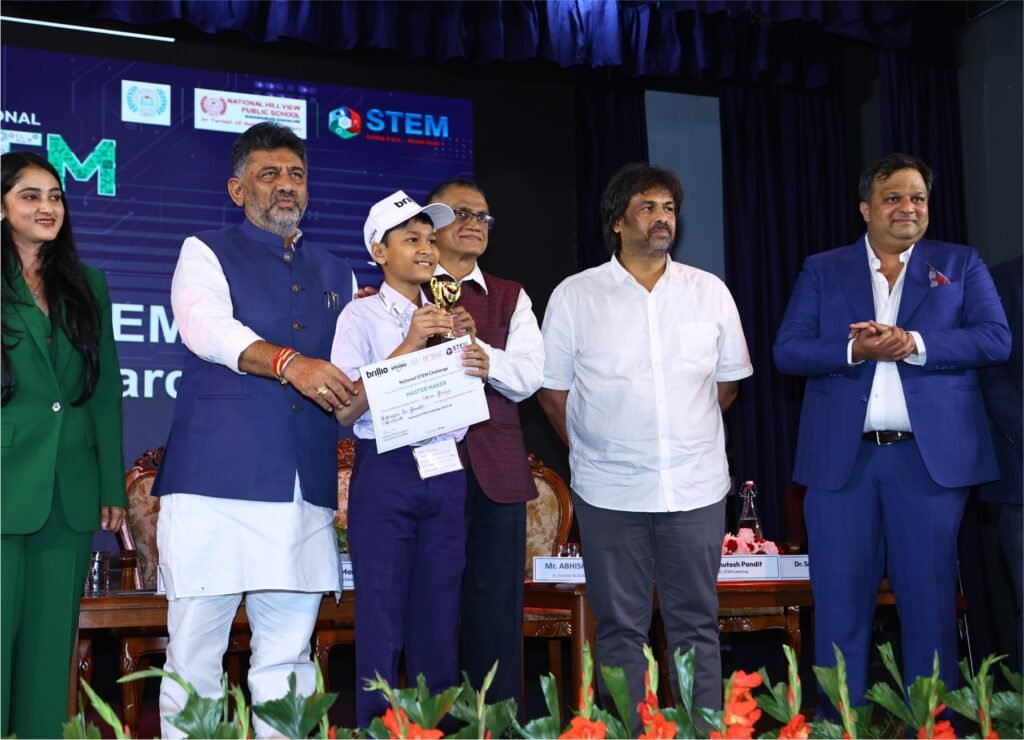
Karnataka Deputy CM D.K. Shivakumar attended the National STEM Challenge 2023-24 Finale as Chief Guest. These are not cosmetic endorsements. They signal growing governmental recognition that experiential STEM education is not a supplementary luxury but a foundational requirement for building a future-ready India.
The Road Ahead
The STEM Learning Newsletter 2026 is ultimately an argument clear, evidence-backed, and compelling that the best investment India can make in its future is in the quality of its children’s learning experiences. Not just access to schools, but access to science that feels alive, to teachers who ignite curiosity, and to competitions that make a child from a government school in Ladakh feel that the national stage is theirs too.
The future of STEM education must also be inclusive. Girls, children from remote regions, first-generation learners, and students from low-income communities must be placed at the centre of this mission. STEM Learning can become a powerful bridge between school education and future careers in science, technology, engineering, sustainability, climate action, robotics, artificial intelligence, and innovation-led entrepreneurship.
The road ahead is clear. India needs millions of young problem-solvers, not passive learners. STEM Learning Social Enterprise, supported by CSR, government partnerships, teachers, and communities, is well-positioned to turn this vision into reality. Its journey ahead should aim to make every school a place of curiosity, every teacher a catalyst of innovation, and every child a confident creator of India’s future.
As Ashutosh Pandit writes in his founder’s note, the road ahead is ambitious, deepening presence in aspirational districts, expanding the Environment and Sustainability Labs, and ensuring the National STEM Challenge becomes a launchpad for India’s next generation of innovators. If the scale of what has already been achieved is any measure, the best of STEM Learning is, indeed, yet to come. (Copyright@ IndiaCSR®)
About the Author
Suhana Agrawal is an Economics undergraduate at Christ (Deemed to be University), with a keen interest in research, analytical thinking, and effective communication. She has developed experience in academic writing, content development, and event management, and is particularly inclined towards applying economic concepts to real-world contexts. Her work reflects a balance of critical analysis and creativity, with a focus on producing clear, structured, and impactful outcomes.
(India CSR)