Every device you discard writes a story — make sure it’s one of responsibility, not pollution.
In the modern digital age, electronic devices have become essential to our lives. From smartphones and laptops to televisions and refrigerators, we depend on electronics daily. However, when these devices reach the end of their life, they often turn into electronic waste or E-waste. The rapid pace of technological advancement has made E-waste one of the fastest-growing waste streams in the world. Understanding its meaning, purpose of management, and challenges is crucial for building a sustainable future.
Definition of E-Waste
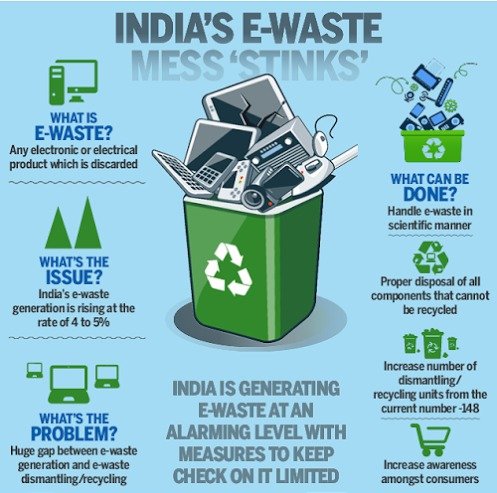
E-Waste, or electronic waste, refers to discarded electrical and electronic equipment (EEE) that is no longer in use or has reached the end of its functional life. This includes computers, mobile phones, televisions, washing machines, batteries, and even smaller gadgets like chargers or earphones. According to the United Nations, E-waste includes all items of electrical and electronic equipment and their parts that have been discarded by their owner as waste without the intent of reuse.
In simple words, E-waste is any old, broken, or obsolete electronic device that is thrown away.
***
Meaning of E-Waste Management
E-Waste management means the collection, recycling, refurbishing, and safe disposal of electronic products that have completed their useful life. It is not only about discarding gadgets but also about ensuring that harmful materials like lead, mercury, and cadmium do not enter the environment. Proper management helps recover valuable metals such as gold, silver, and copper while minimizing environmental harm.
The process involves several stages:
- Collection and Segregation – Gathering waste electronics from households, offices, and industries.
- Dismantling and Recycling – Breaking down components and extracting reusable materials.
- Safe Disposal – Disposing of non-recyclable materials in environmentally safe facilities.
This circular approach supports sustainability by turning waste into resources.
***
Purpose of E-Waste Management
The primary purpose of E-waste management is environmental protection and resource recovery. Electronics contain both valuable and hazardous materials. Recovering useful metals reduces the need for mining new raw materials, while proper disposal prevents toxic substances from contaminating soil, air, and water.
Key purposes include:
- Environmental Conservation: Preventing pollution caused by harmful chemicals released from improper disposal.
- Resource Efficiency: Recovering valuable metals and reusing them in manufacturing.
- Public Health Protection: Avoiding exposure to dangerous materials like lead and mercury that can cause neurological and respiratory diseases.
- Economic Growth: Creating green jobs through recycling and refurbishing industries.
- Compliance with Law: Many countries, including India, have laws under E-Waste (Management) Rules, 2022 to regulate handling and recycling.
In essence, E-waste management serves as a bridge between technological progress and environmental responsibility.
***
Global Scenario
According to the Global E-Waste Monitor 2024, the world generated over 62 million tonnes of E-waste in 2023, an increase of nearly 82% from a decade ago. Unfortunately, less than 25% of it is officially collected and recycled. The rest ends up in landfills or is handled informally, causing significant harm.
Developing countries like India, China, and Nigeria face a dual challenge — growing domestic E-waste and imported electronic scrap from developed nations. India alone generated 3.4 million tonnes of E-waste in FY 2022–23, making it the third-largest generator in the world after China and the USA.
***
Challenges in E-Waste Management
Despite awareness and legislation, several challenges hinder effective E-waste management:
- Lack of Awareness: Most consumers are unaware of how to dispose of E-waste responsibly.
- Informal Sector Dominance: In India, about 90% of E-waste recycling happens in informal sectors using unsafe methods like acid leaching and open burning.
- Poor Collection Systems: Limited drop-off points and weak take-back programs discourage proper disposal.
- Technological Gaps: Many recyclers lack modern equipment for efficient metal recovery.
- Economic Factors: The high cost of setting up certified recycling units discourages small entrepreneurs.
- Data Security Risks: Discarded electronics often contain sensitive data, leading to privacy concerns if not properly destroyed.
- Policy Enforcement: Weak implementation of E-waste management laws leads to non-compliance.
These challenges reflect the urgent need for integrated strategies involving producers, consumers, and policymakers.
***
The Way Forward
To address the E-waste challenge, a multi-stakeholder approach is essential. Governments must strengthen enforcement and incentivize recycling. Producers should adopt Extended Producer Responsibility (EPR) by taking back old products and ensuring safe disposal. Consumers can play their part by donating, reusing, or recycling their gadgets through authorized channels.
Public-private partnerships can build formal recycling infrastructure, while education campaigns can encourage behavioral change. Promoting innovation in circular economy models will ensure that electronic materials are reused effectively.
***
You Learn
E-waste is a symbol of our digital progress and environmental negligence. As technology evolves, so must our sense of responsibility. Proper management of electronic waste is not merely an environmental necessity—it is a moral and economic obligation. Through collective effort, we can turn the E-waste crisis into an opportunity for sustainable development and resource recovery.
(India CSR)