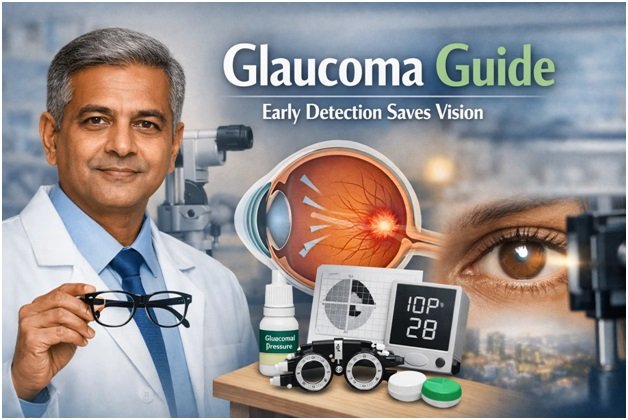



Individuals who are in excellent health see a quiet plague. Glaucoma, which is also called Kala Motia in India, affects a lot of people, and a lot of them don’t even know they have it. Globally, glaucoma is one of the most prevalent reasons of permanent vision loss. This is not carelessness. Because of the illness itself, it happens. By the time most people notice something is wrong, the visual nerve has already suffered damage that no medical professional can repair. Glaucoma slowly decreases your vision and grows without any symptoms. This is even harder to accept when you consider that most of the damage could have been avoided with quick finding.
What Glaucoma Actually Does to the Eye
A bit of knowledge on what myopia targets will help to know why it is so dangerous. The optic nerve is the pathway that links the eye to the brain and transmits information from the eye to the brain. It transmits every visual signal — colours, shapes, movement, faces. Usually, glaucoma damages this nerve because it causes the eye’s fluid pressure to rise. Over time, this eye pressure disease weakens the optic nerve fibres, which makes the field of vision smaller. The first losses happen at the periphery — the edges of what a person sees. The brain, remarkably adaptive, fills in these gaps. So the affected person continues living normally, unaware that their visual world is quietly closing in from all sides.

The Glaucoma Symptoms That Most People Miss Entirely
At this point, talking about eye signs gets trickier. Open angle glaucoma is the most common form of glaucoma and during the early stages of the disease, there are no symptoms including pain, swelling, headaches or a sudden change to vision. Most people assume their eyes are fine, since there is nothing wrong, but there is. Some types of glaucoma symptoms such as rings around lights, blurred vision, or eye pain, which are more likely to occur later in the disease. With a record of successfully treating more than 3 crore eyes in over 180 locations across India, the doctors at ASG Eye Hospital keep emphasising that the only way to be risk free is to be symptom free. Individuals who are over 40, have diabetes, have a family history of glaucoma, or have had an eye accident in the past are at greatly greater risk and need to be checked on a regular basis.
How Glaucoma Treatment Protects What Remains
Since glaucoma cannot be reversed, every glaucoma treatment strategy is built around one goal — stopping the damage from going further. The earlier treatment begins, the more vision there is left to protect. Medicated eye drops given by a professional can control intraocular pressure and lessen nerve damage in patients in the early to intermediate stages. These drops are the cornerstone of a treatment plan, and missing doses can speed its progress. They are not extra adds. Laser therapy is the next step when drops are insufficient. In addition to improving fluid flow from the eye exactly and targetedly, laser treatments can postpone or lessen the need for more invasive intervention.
When Glaucoma Surgery Becomes the Necessary Step
Glaucoma surgery is the most reliable way to fix eye pressure over time when the condition has worsened in spite of medicine and laser treatment. By building new drainage pathways inside the eye, surgery lowers intraocular pressure that is damaging the optic nerve and allows fluid to leave more easily. Access to cutting-edge surgery solutions is given by skilled ophthalmologists at ASG Eye Hospital, many of whom have training qualifications from organisations like as AIIMS. For patients who feel anxious about surgery, specialists walk them through every stage of the process — before, during, and after — so that decisions are made with full understanding rather than fear.
Vision Loss Prevention Is a Choice That Must Be Made Today
Every conversation about vision loss prevention eventually arrives at the same conclusion — action taken early produces outcomes that no treatment, however advanced, can replicate once significant damage has occurred. A comprehensive glaucoma screening at ASG Eye Hospital involves pressure measurement, optic nerve evaluation, and visual field assessment. It is quick, non-invasive, and has the power to fully change a patient’s direction for eye health. Access is no longer a barrier thanks to centers spread in over 95 Indian towns. The choice to go is the only hurdle left.