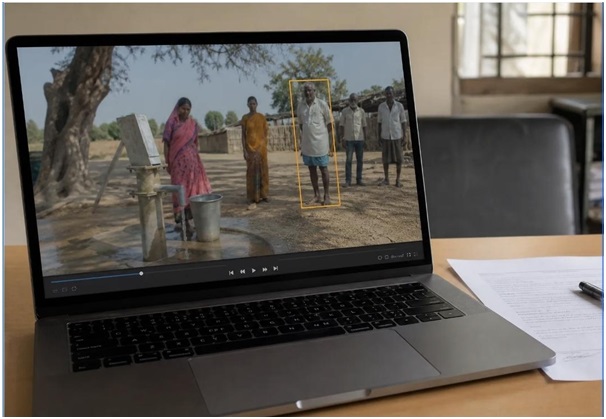



Every corporate social responsibility team eventually produces the same video. A field visit, a programme site, a beneficiary explaining in their own words what changed. It is the most persuasive asset the function has, because a person describing their own life does what no slide of numbers can.
It is also the asset most likely to have been made without asking the right question, which is not whether the person agreed to be filmed, but whether they understood what being filmed would mean once the video left the room.
Consent Is Not the Same as Understanding
A signature on a release form is easy to collect and easy to overvalue. The person signing it in a village or a clinic waiting room is rarely in a position to picture an annual report, a LinkedIn post, a conference screen in another city, or a clip that keeps circulating three years later after their circumstances have changed.

For some categories of participant the gap between consent and understanding is not a nuance but a hazard. Survivors of violence, people in health programmes for stigmatised conditions, children, anyone whose participation could be used against them by a relative, an employer or a lender: for these people, a recognisable face in a public video is a permanent disclosure that they cannot take back. India’s Digital Personal Data Protection Act has made the legal side of this sharper, but the safeguarding case was already clear before any statute caught up.
Why the Standard Fixes Fail the Story
The conventional tools for protecting identity in video are the blur, the pixel block and the silhouette. All three work, in the sense that the person cannot be identified. All three also destroy the thing the footage was made to capture.
A blurred face has no expression. A pixelated head is a visual signal for “victim” that many organisations rightly refuse to attach to the people they serve. A backlit silhouette reads as crime reporting. Each of these tells the viewer the subject is a case rather than a person, which is precisely the framing that impact communication exists to overturn.
So teams face a choice they should not have to make: show the face and accept a real risk to the participant, or protect the participant and lose the human presence that justified the video.
The Documentary World Found a Third Option
The clearest precedent comes from film rather than from corporate communications. Several years ago a documentary about persecuted people who could not safely appear on camera solved the problem by replacing their faces with those of volunteers who had agreed to lend their likeness. The subjects’ expressions, timing and body language survived intact. Their identities did not leave the room.
That approach was technically demanding and expensive when it was done for cinema. It is no longer either. Tools built for ai head swap replace the entire head, hair and neck included, across every frame of a clip, working from a source photo of a consenting stand-in and the original footage. iMideo’s version handles one head per pass, which is a useful constraint for this purpose: each replacement is a deliberate decision about a specific person rather than a batch operation applied to a crowd.
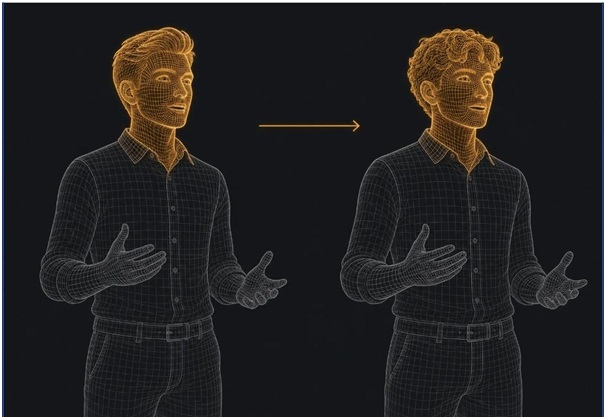
The reason a head replacement works where a face replacement does not is hair and silhouette. A face swap keeps the original hairline, head shape and neck, which for anyone known in their own community is often enough to identify them. Replacing the whole head removes those cues while leaving everything below the collar, the gesture, the posture, the way someone holds a child or a tool, exactly as it was filmed.
The Rules That Make This Honest
A technique this capable needs discipline around it, and the discipline is not complicated.
The stand-in must have consented to lend their likeness for this purpose, in writing, with the same care the organisation would apply to any participant. The beneficiary must know the replacement is happening and agree to it; a digital veil applied without their knowledge is a second violation dressed as protection. The voice, if it is identifying, needs its own treatment, since a replaced head over a recognisable voice protects nobody. And the published video should say, in a caption or credit, that identity has been protected. Audiences are not troubled by that disclosure. They are troubled by discovering it later.
What this must never become is a way to put words in someone’s mouth. The person on screen said what they said, in their own voice or a protected one, and the replacement covers who they are, not what they meant. The moment a team uses the same technique to construct a testimony that was never given, it has moved from safeguarding into fabrication, and no disclosure repairs that.
What to Change in the Workflow
The practical shift is small and mostly sits at the planning stage. Before a field shoot, decide which participants are in categories where a recognisable face is a risk, and plan to protect them from the start rather than after an editor raises the question. Keep the raw footage, because a protected version can always be produced later and the original cannot be recovered from a blurred export. Store the stand-in consents alongside the participant consents, since both will be asked for if anything is ever challenged.
And revisit the archive. Most organisations have older videos made under looser assumptions, with faces that would not be shown today. Those clips can be brought up to the current standard rather than deleted, which preserves years of documented work without continuing to expose the people in it.
The Person Stays in the Picture
The old choice was between a face and a blur, between showing someone fully and reducing them to a shape. It was never a good choice, and teams made it anyway because there was nothing else. There is something else now, and it lets the subject keep the thing that mattered most in the footage, which was never their identity. It was their presence.